Artwork
Efficiunt mores uxoris...
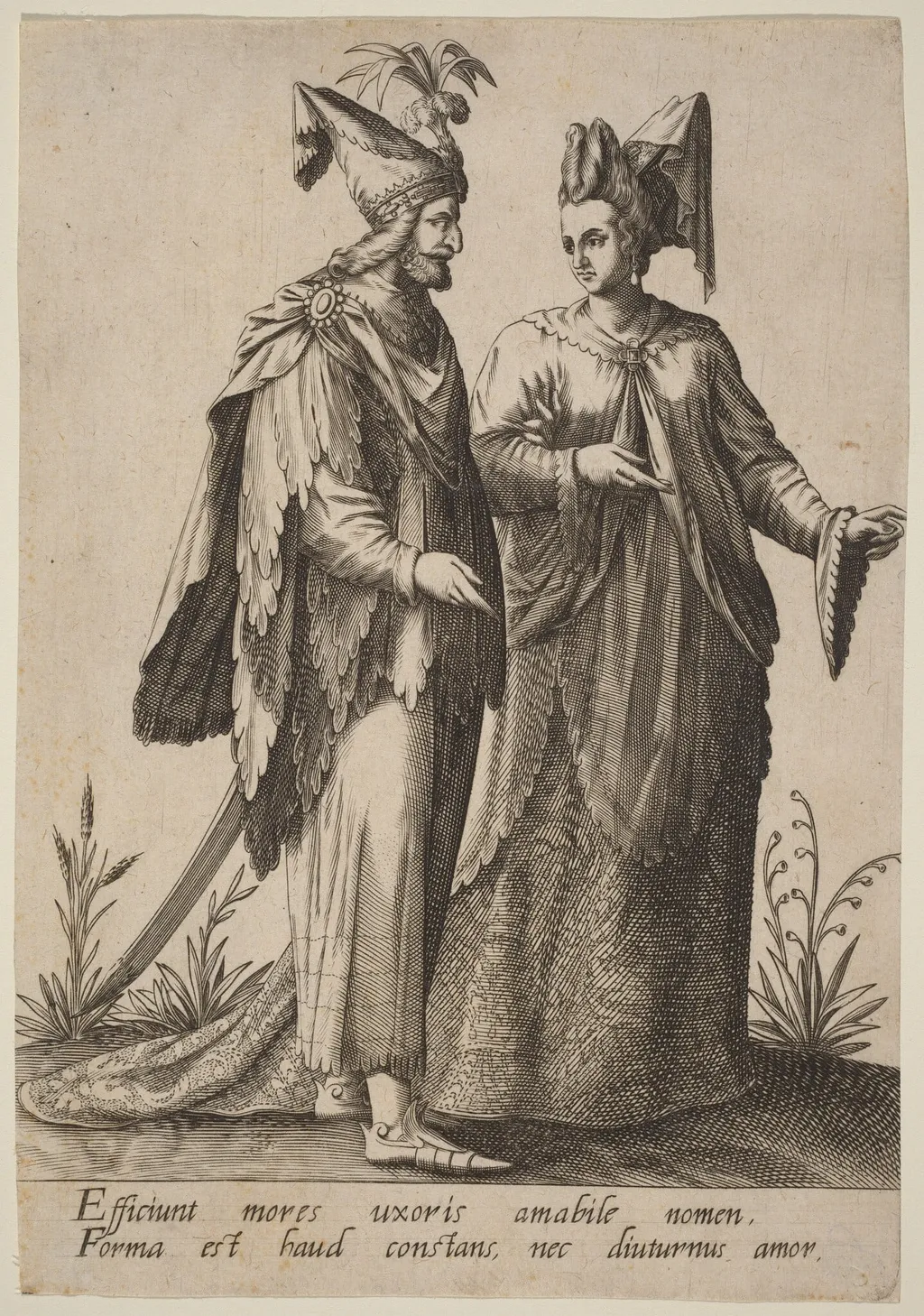
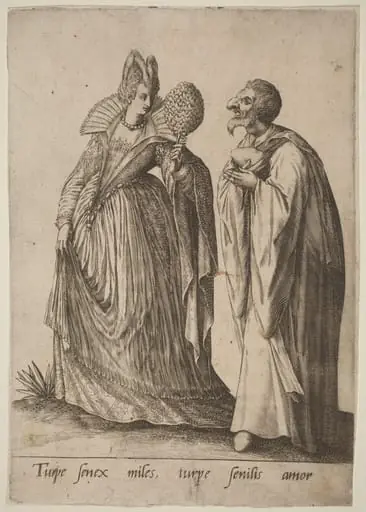
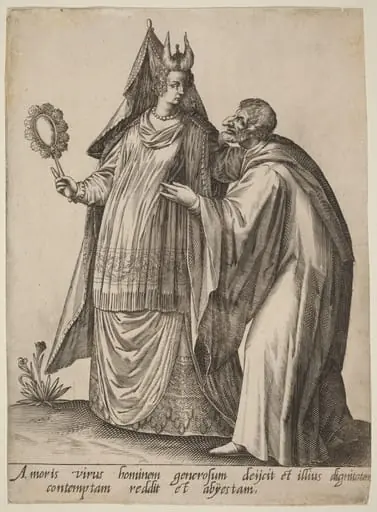
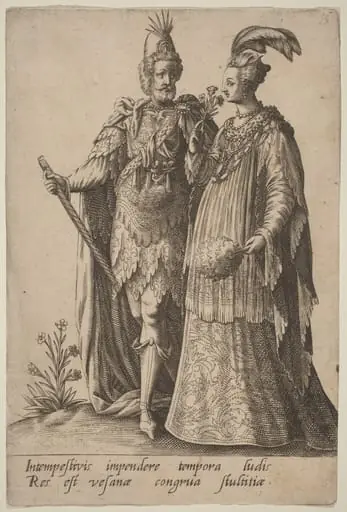
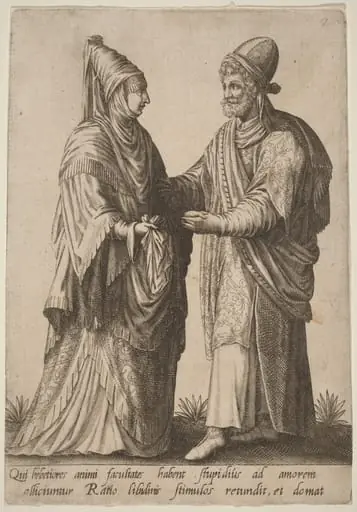
Efficiunt mores uxoris... is an ink print by the Renaissance artist Robert Boissard. It dates from 1597 and is held in the collection of the National Gallery of Art.
- Inscription
- Inscribed:lower margin in plate: Efficiunt mores uxoris amabile nomen, / Forma est haud constans, nec diurturnis amor,; by later hand, upper right verso, in graphite, 58
- Markings
- Marked:stamp, verso lower left, in purple ink: seraph [L. 780b]
About this work
Overview
Their expressions are composed yet lack overt joy, inviting contemplation of the scene’s underlying narrative.
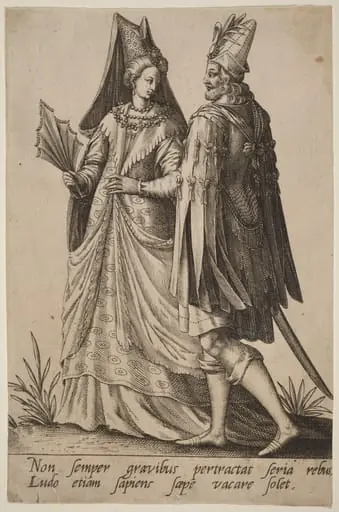
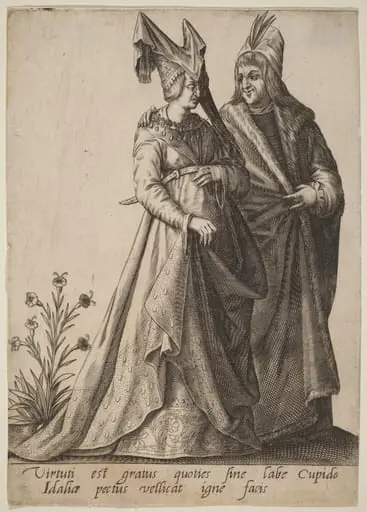
Robert Boissard’s 1597 engraving, titled Efficiunt mores uxoris..., presents a paired figure composition in stark black‑and‑white. A man and a woman stand side by side; the male figure is clad in a tall feathered hat and a flowing robe, while the female figure wears an elaborate headdress, veil, and a ruffled dress. Their expressions are composed yet lack overt joy, inviting contemplation of the scene’s underlying narrative.
Subject & Meaning
The accompanying Latin inscription at the bottom reflects on the mutable nature of outward appearances and names, suggesting that while external traits may shift, an individual’s true character remains constant. This moralizing text frames the two figures as exemplars of the proverb, prompting viewers to consider the contrast between superficial presentation and inner virtue.
Technique & Style
Executed as an intaglio engraving, Boissard employed fine line work to render intricate costume details and delicate facial features. The contrast between deep shadows and crisp highlights creates a clear delineation of form, typical of late‑Renaissance printmaking. The precise hatching and cross‑hatching convey texture in the fabrics and the feathered hat, demonstrating the artist’s skill in translating complex surfaces onto a copper plate.
History & Provenance
Created in 1597, the print belongs to the late sixteenth‑century tradition of moralizing genre prints that circulated widely across Europe. Boissard, a Swiss engraver active in Basel, produced works for both devotional and secular markets. Surviving copies of Efficiunt mores uxoris... are held in several museum collections, indicating its distribution among collectors of the period.
Context
The engraving emerges during a period when printed images served as vehicles for didactic messages, often accompanying Latin epigrams. Such works reflected contemporary concerns with virtue, reputation, and the social roles of men and women. Boissard’s composition aligns with the broader Northern European trend of pairing portraiture with moral commentary, a practice that informed both private study and public instruction.
Own this work as a print
Artist & collection