Artwork
Untitled
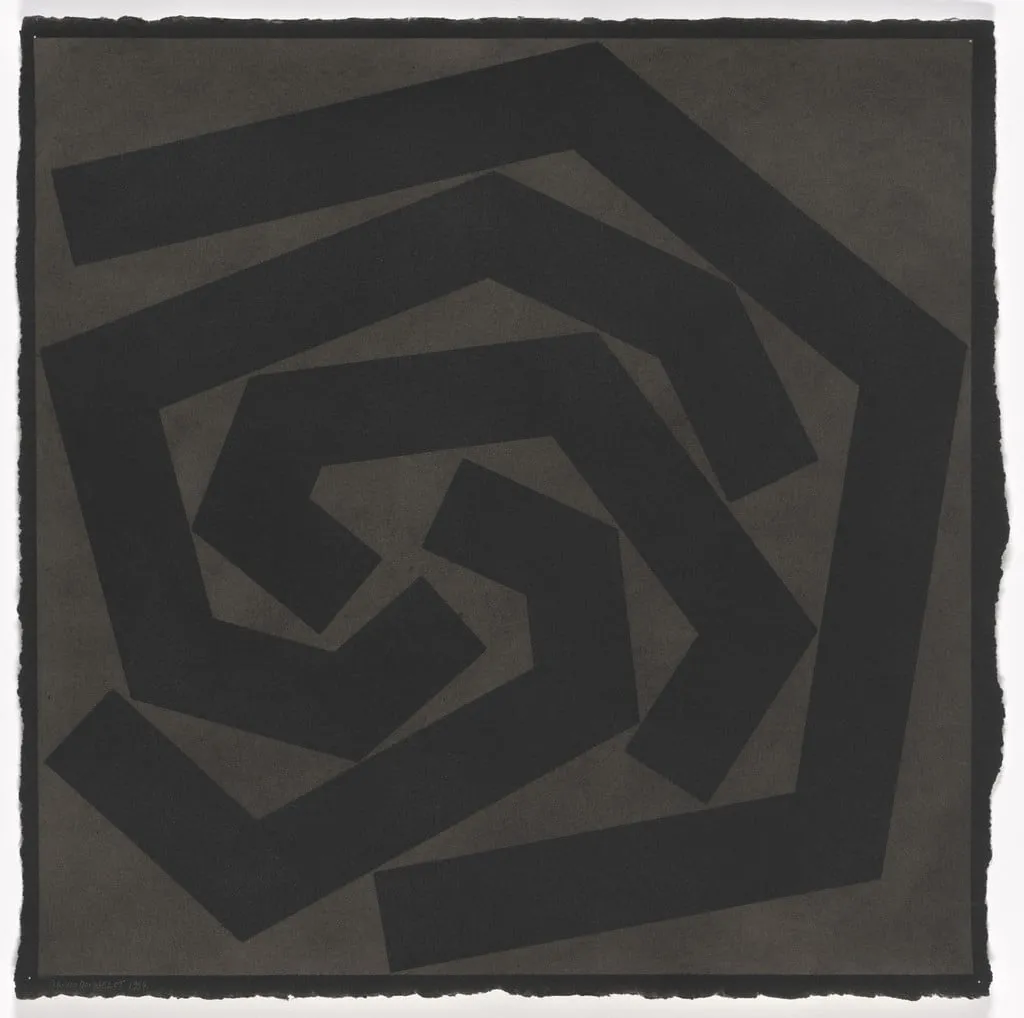
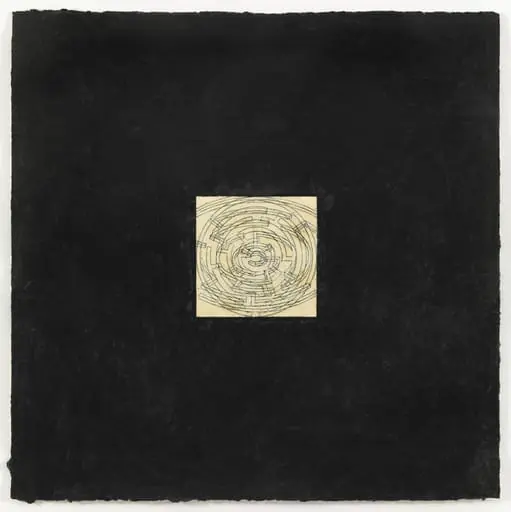
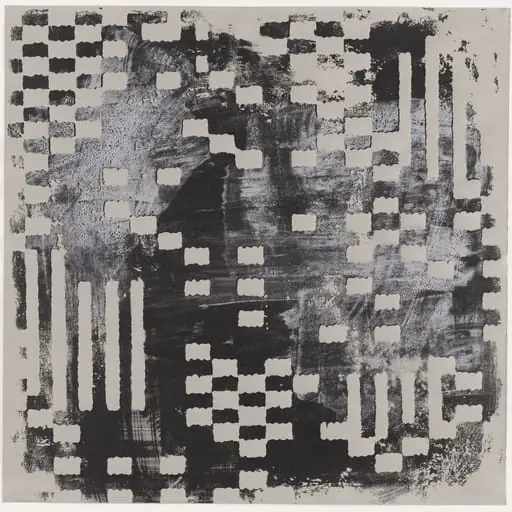
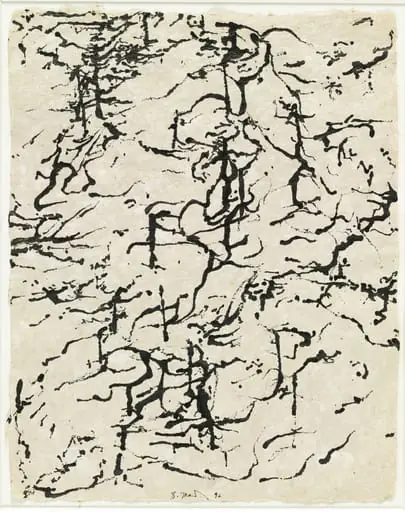
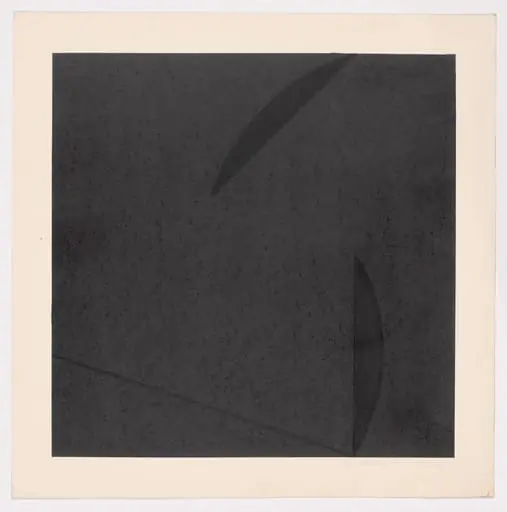
Untitled is an ink drawing by Bruno Rousselot. It dates from 1994 and is held in the collection of the Museum of Modern Art.
About this work
Overview
The work avoids narrative or representational cues, instead emphasizing spatial tension through negative space and rhythmic repetition.
Created in 1994, this ink drawing by Bruno Rousselot is part of The Museum of Modern Art’s collection. Executed on paper, it presents a composition of tightly interwoven black lines forming abstract, labyrinthine forms. The work avoids narrative or representational cues, instead emphasizing spatial tension through negative space and rhythmic repetition.
The paper’s natural texture subtly interrupts the ink’s surface, adding a quiet irregularity to an otherwise controlled structure.
Subject & Meaning
The drawing resists clear interpretation, offering no identifiable figures or symbols. Its forms suggest internal movement, spirals, overlapping rectangles, and enclosed voids, but lack a beginning or endpoint. This ambiguity invites contemplation of structure and containment rather than storytelling.
The work may reflect an interest in systems, perception, or the limits of visual order, leaving meaning open to the viewer’s engagement with its geometric stillness.
Technique & Style
Rousselot employs precise, clean ink lines to construct dense, interlocking shapes. The contrast between solid black and the untouched paper creates areas of light gray, enhancing depth without shading. The hand is deliberate, yet the paper’s fibrous texture occasionally breaks the ink’s uniformity, introducing subtle variation.
The style is minimalist but not reductive; each line serves a structural purpose, balancing control with the material’s inherent unpredictability.
History & Provenance
The work was completed in 1994 and entered The Museum of Modern Art’s collection shortly thereafter. No public record details its prior ownership or exhibition history before acquisition. Its inclusion in MoMA’s holdings suggests recognition within contemporary drawing practices of the 1990s, though Rousselot’s broader career remains relatively understudied in major art historical narratives.
Context
Emerging in the mid-1990s, this piece aligns with a broader interest in non-representational drawing among artists exploring geometry, process, and materiality. It shares affinities with minimalist and conceptual practices that privileged structure over expression, yet avoids the industrial aesthetic common in contemporaneous work. Its intimacy and hand-drawn quality distinguish it from larger-scale installations or mechanized forms of the era.
Legacy
Though not widely reproduced or cited in major art historical texts, the work contributes to a quieter lineage of abstract ink drawings that prioritize spatial inquiry over spectacle. Its presence in MoMA’s collection ensures continued access for study and reflection. Rousselot’s approach, precise yet unassuming, remains a quiet counterpoint to more dominant trends in late 20th-century abstraction.
Artist & collection