Artwork
La Maison Maudite (The House of the Damned)
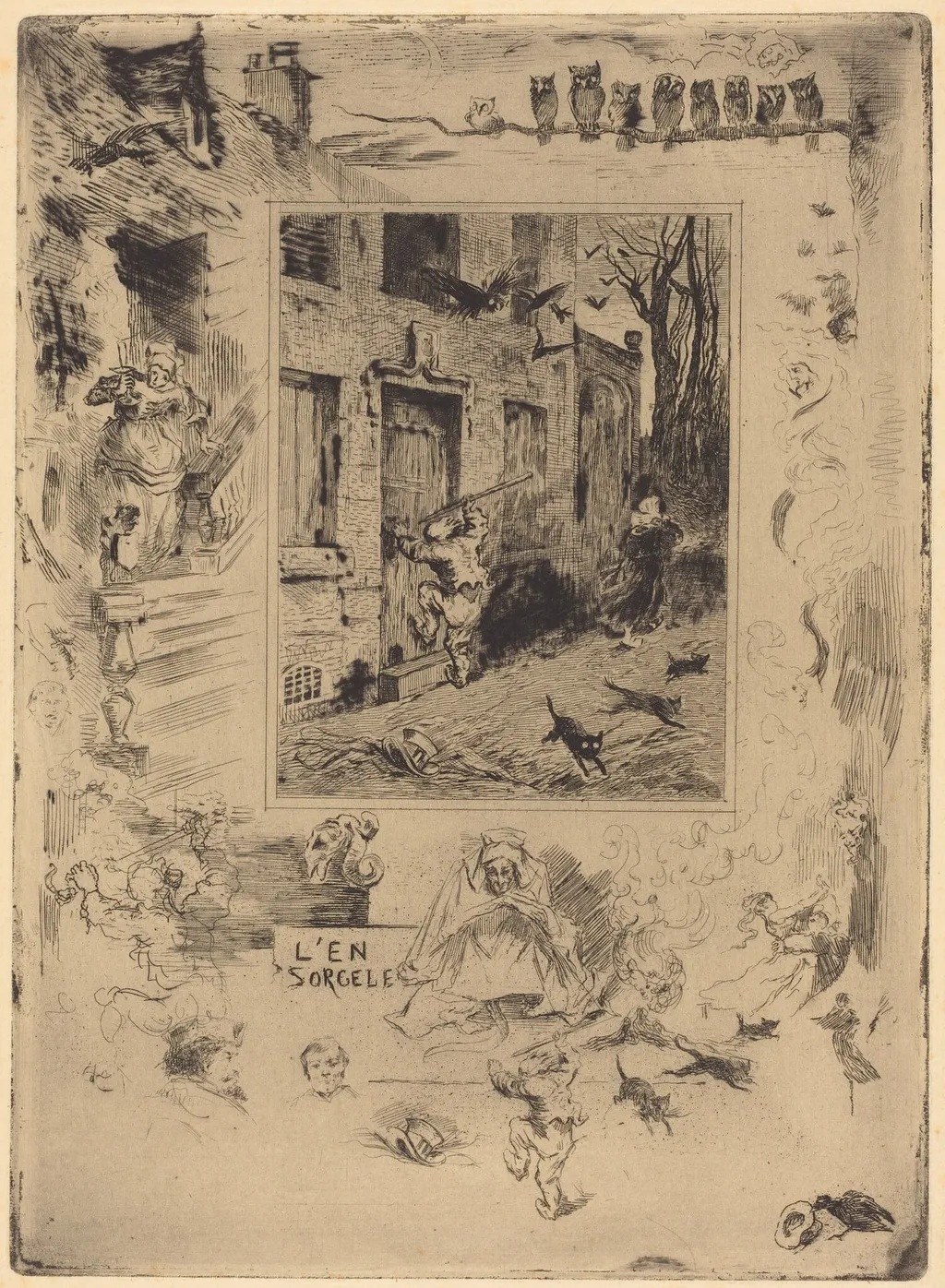
La Maison Maudite (The House of the Damned) is an ink print by the Impressionist artist Félix-Hilaire Buhot. It dates from 1884 and is held in the collection of the National Gallery of Art.
About this work
Overview
The composition is dense with figures in various states of distress: some flee in panic, while others lie slumped or crawl across the debris-strewn ground.
Félix-Hilaire Buhot's 1884 etching, La Maison Maudite (The House of the Damned), depicts a violent, chaotic street scene centered on a crumbling building. The composition is dense with figures in various states of distress: some flee in panic, while others lie slumped or crawl across the debris-strewn ground. A fallen horse anchors the lower foreground, emphasizing the scene's devastation.
The artist employs his characteristic experimental etching techniques, utilizing rich bitumen textures and varied line weights to render cracked walls and airborne dust, creating a sense of immediate turmoil. Surrounding the central narrative are smaller, marginal sketches of faces, animals, and abstract forms, a format Buhot frequently used to explore diverse subjects within a single plate. Created in 1884, this work reflects Buhot's mature period, where he moved beyond traditional illustration to push the technical boundaries of the etching medium.
The piece stands as a significant example of his interest in capturing fleeting, dramatic moments and his innovative approach to surface texture and atmospheric density in late 19th-century French printmaking.
Subject & Meaning
The composition suggests a scene of catastrophe or disaster, with individuals fleeing, collapsing, or crawling amid the ruin. The title, a likely misspelling of the French L’Enfer (“Hell”), reinforces a symbolic reading of the setting as a terrestrial inferno, where the chaotic movement of bodies and the crumbling architecture evoke themes of panic and existential dread.
Technique & Style
Created through the etching process, Buhot employed loose, sketch‑like lines that convey rapid motion and instability. The artist’s handling of line work emphasizes texture, cracked walls, fragmented debris, and the contorted forms of figures, while the peripheral ghostly sketches of faces and animals add a layered, almost spectral quality to the print.
History & Provenance
The work dates to the mid‑1880s, a period when Buhot was active in the French printmaking scene. Although specific ownership records are scarce, the etching has been catalogued in several collections of 19th‑century French graphic art, reflecting its relevance to studies of urban anxiety and the development of expressive etching techniques.
Own this work as a print
Artist & collection

 Ex-Libris pour "L'Ensorcelée" (Bookplate for "L'Ensorcelée")
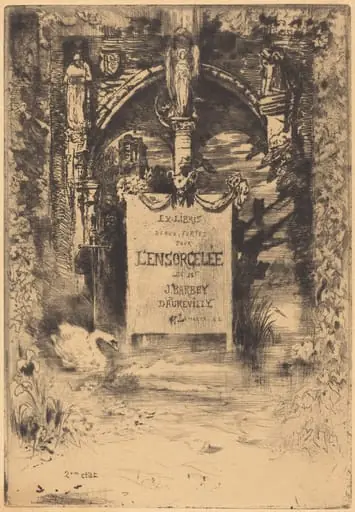 Ex-Libris pour "L'Ensorcelée" (Bookplate for "L'Ensorcelée")
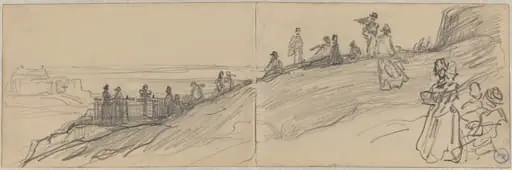 Figures on Top of a Hill, Overlooking the Sea
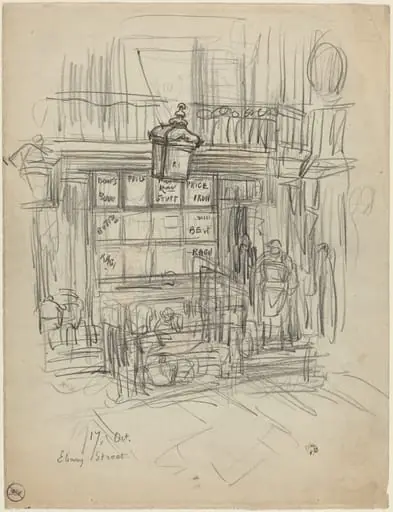 Ebury Street
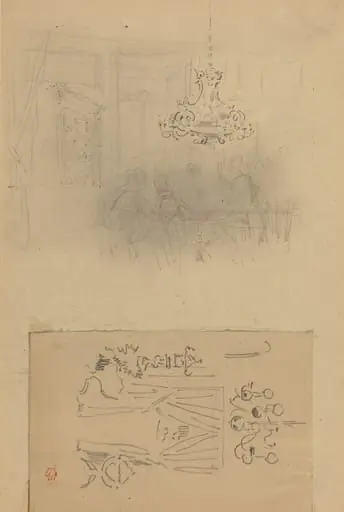 A Gathering in an Interior; A Curtained Doorway
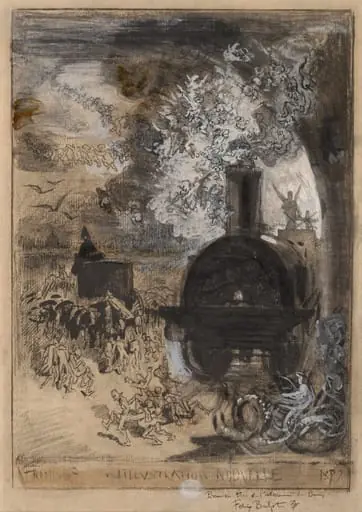 Frontispiece for L'Illustration Nouvelle: The Burial of the Burin
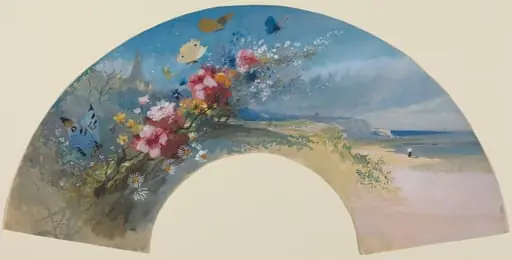 Fan with Wildflowers and Butterflies against the Norman Coast
![Gillingham Pier, London [verso], by Félix-Hilaire Buhot](https://artifactworldgallery.com/img/felix-hilaire-buhot--gillingham-pier-london-verso--641e03dd7de8217b-w320.webp) Gillingham Pier, London [verso]
Gillingham Pier, London [verso]
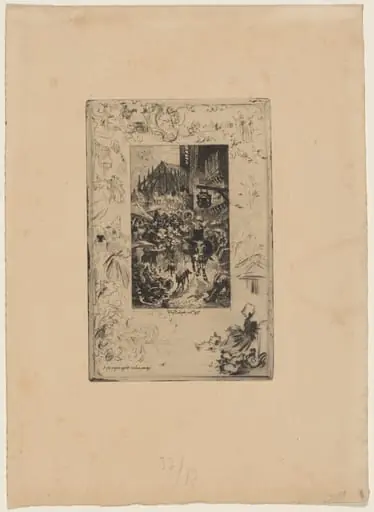 Je fis ce qu'on appelle un bon marche.
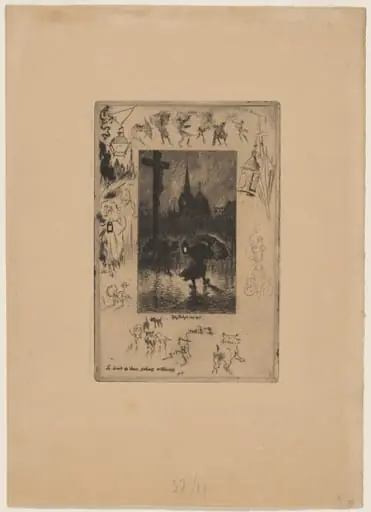 Le Bruit de deux sabots trainant...
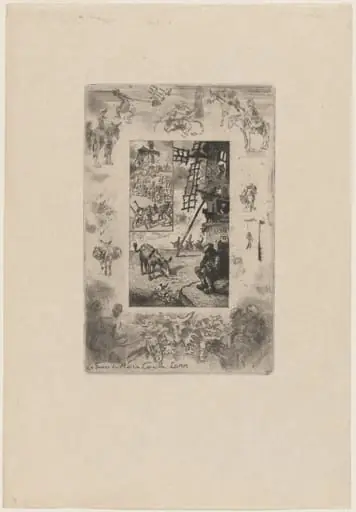 Le Secret du Maîtres Cornille
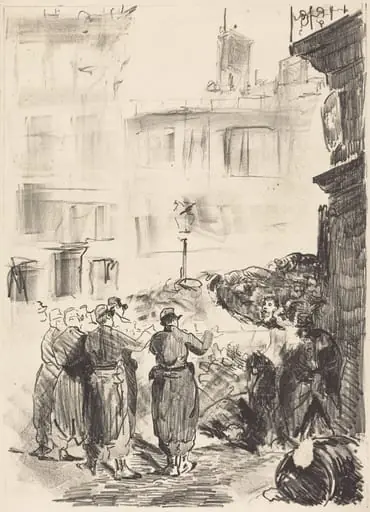 The Barricade (La barricade)
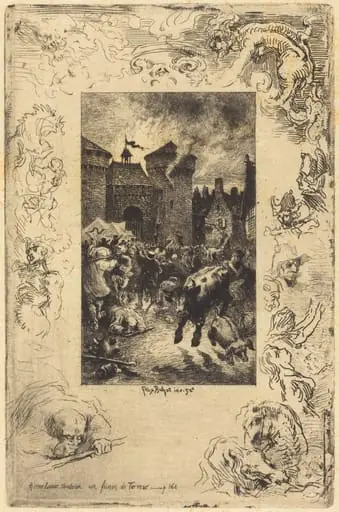 A cette lueur soudaine... (In the sudden gleam of light...)
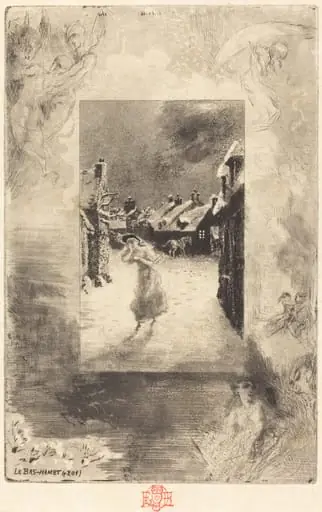 Le Bas-Hamet
 Thomas Le Hardouaye
 Le Curé de Cucugnan (The Vicar of Cucugnan)
 Jewish Quarters in Amsterdam
 A cette lueur soudaine...
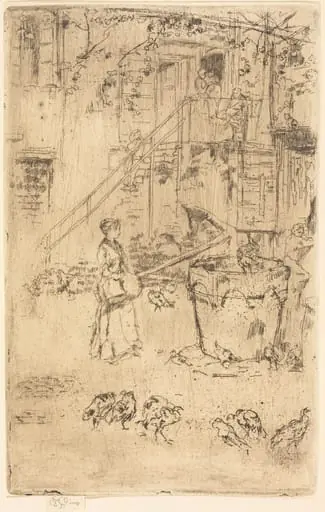 Turkeys
- La Maison Maudite (The House of the Damned)