Artwork
Entry into Jerusalem; Last Supper; Crucifixion; Resurrection
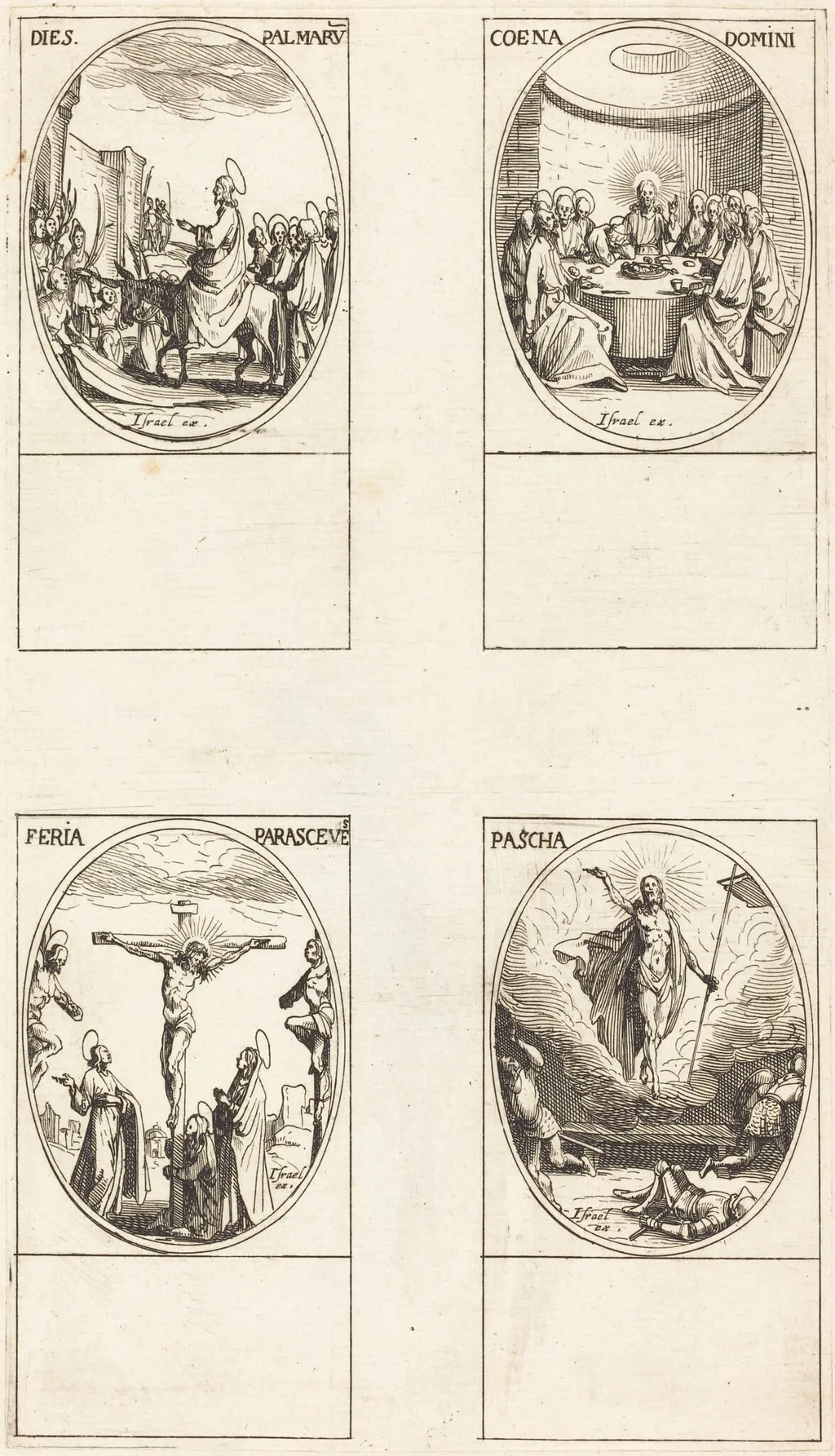
Entry into Jerusalem; Last Supper; Crucifixion; Resurrection is an ink print by the Baroque artist Jacques Callot. It dates from 1634 and is held in the collection of the National Gallery of Art.
About this work
Overview
Created circa 1634, this etching by Jacques Callot presents four pivotal episodes from the New Testament within separate oval frames. Executed on laid paper, the work combines narrative clarity with the intricate line work characteristic of Callot’s printmaking, offering a compact visual chronicle of Christ’s entry into Jerusalem, the Last Supper, the Crucifixion, and the Resurrection.
Subject & Meaning
Each panel isolates a distinct biblical moment: the triumphant crowd greeting Jesus on a donkey, the intimate gathering at the Passover meal, the stark depiction of the crucified Christ, and the risen figure ascending with outstretched arms. Together they trace the theological arc of passion and triumph, inviting contemplation of the events that shape Christian belief.
Technique & Style
Callot employs fine, incisive lines to delineate figures and architecture within the limited oval spaces, achieving a dense sense of movement. The etching’s contrast of light and shadow, achieved through careful acid biting on the copper plate, enhances the drama of each scene while maintaining the delicate texture of the laid paper substrate.
History & Provenance
The print originates from Callot’s prolific period in the Duchy of Lorraine, where he produced over a thousand etchings covering military, courtly, and religious subjects. While specific ownership records for this sheet are scarce, it reflects the broader circulation of devotional prints in early‑17th‑century Europe, intended for private contemplation or small‑scale distribution.
Context
During the Baroque era, visual narratives of Christ’s life were popular in both public worship and private devotion. Callot’s work aligns with contemporary trends that favored detailed, emotionally resonant representations, and his skill in rendering complex scenes on a modest scale made such prints accessible to a wide audience.
Artist & collection
Artist
Jacques Callot (French: ; c. 1592 – 1635) was a baroque printmaker and draftsman from the Duchy of Lorraine. He is an important person in the development of the old master print. He made more than 1,400 etchings that…

 Holy Family at supper
 Restoration of the Aqueduct at Pisa
 Restoration of the Aqueduct at Pisa
 Square in Paris with Many Figures
 Square in Paris with Many Figures
 Horsemen Attacked by Robbers
 HOW WILL A COVERED PART BE CORRECTED?HOW WIKA A COVERED HEART DEED CORRECTED?
![Christ Walking on the Water [second plate], by Jacques Callot](https://artifactworldgallery.com/img/jacques-callot--christ-walking-on-the-water-second-plate--2069f3bfe4cb2126-w320.webp) Christ Walking on the Water [second plate]
Christ Walking on the Water [second plate]
 Ascension; Pentacost; Trinity; Corpus Christi
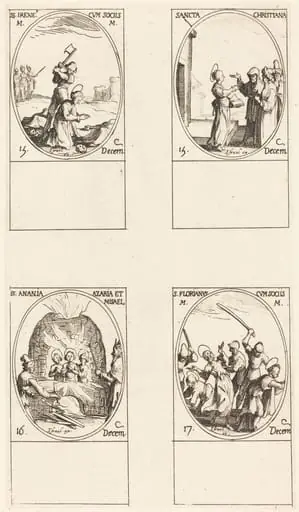 St. Irene & Companions; St. Christiana; Sts. Anania, Azaria & Misael; St. Florianus & Companions
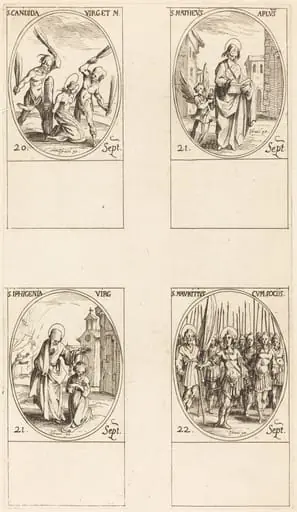 St. Canida; St. Matthew; St. Ipigenia; St. Maurice and Companions
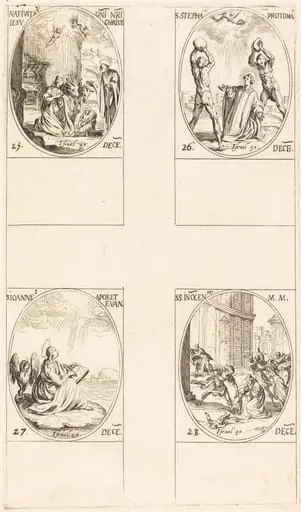 The Nativity; St. Stephen; St. John; Holy Innocents
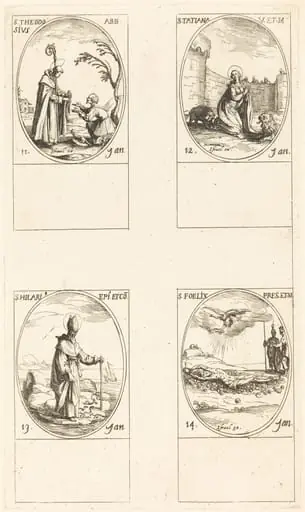 St. Theodosius; St. Tatiana; St. Hilary; St. Felix
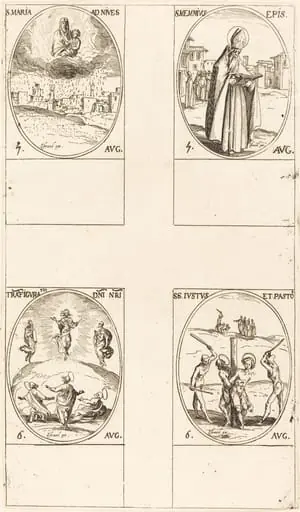 St. Mary of Snow; St. Memmius, Bishop; The Transfiguration; Sts. Justus and Pastor
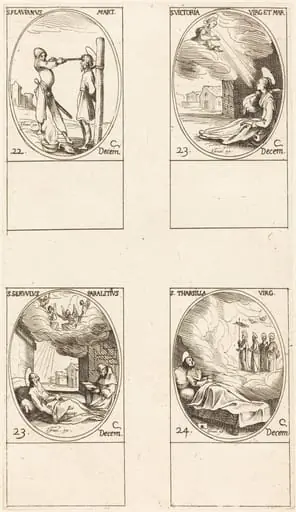 St. Flavian; St. Victoria; St. Servulus; St. Tharsilla
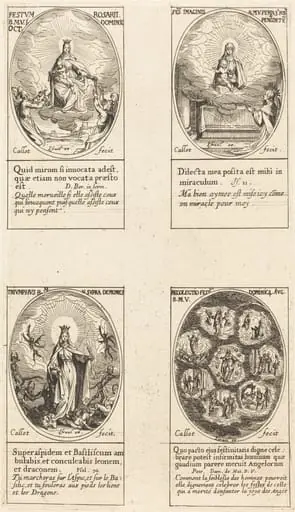 Our Lady of the Rosary; Virgin and Child Appearing in a Cloud; Triumphant Virgin; Collection of the Feasts Dedicated to the Life of the Virgin
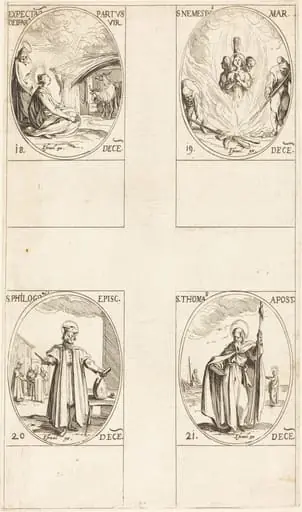 Waiting for the Virgin to Give Birth; St. Nemesius; St. Philogonius; St. Thomas