Artwork
Sts. Maxentius & Leander; Sts. Sergius & Paul; Sts. Eustratius & Orestes; St. Lucy
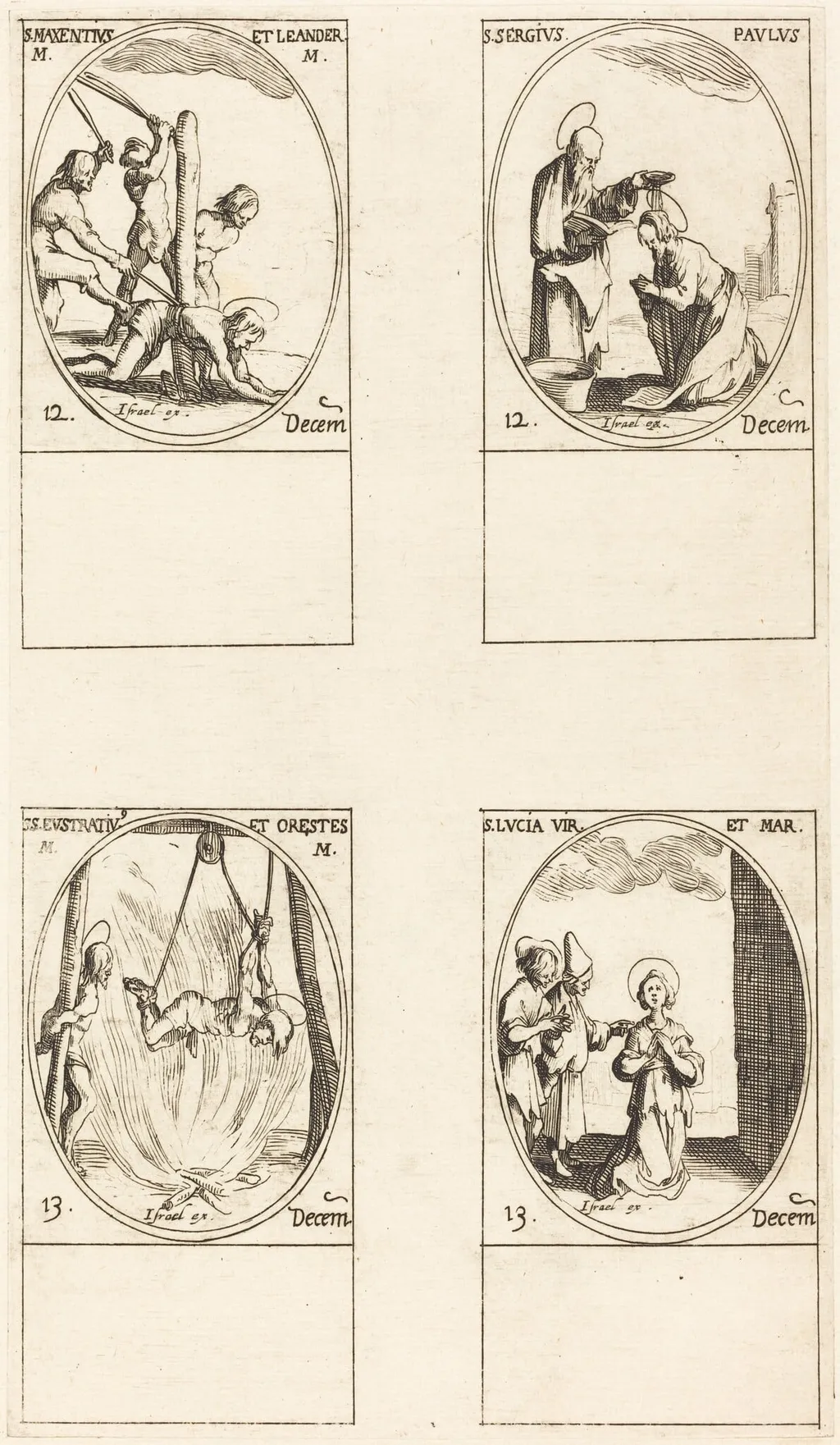
Sts. Maxentius & Leander; Sts. Sergius & Paul; Sts. Eustratius & Orestes; St. Lucy is an ink print by the Baroque artist Jacques Callot. It dates from 1634 and is held in the collection of the National Gallery of Art.
About this work
Overview
Created around 1634 by Jacques Callot, this etching on laid paper presents four distinct scenes of Christian saints, arranged in oval frames.
Created around 1634 by Jacques Callot, this etching on laid paper presents four distinct scenes of Christian saints, arranged in oval frames. As one of over 1,400 prints by the Lorrainer artist, the work exemplifies his mastery of fine-line etching and his consistent engagement with religious narratives. The composition reflects a devotional format common in early modern print culture, designed for private contemplation or educational use.
Subject & Meaning
Each panel portrays a martyrdom or sacred moment from the lives of four pairs of saints: Maxentius and Leander, Sergius and Paul, Eustratius and Orestes, and Lucy. The scenes emphasize sacrifice, divine intervention, and steadfast faith. The inclusion of halos, crosses, and gestures of offering or elevation underscores their sanctity and the spiritual significance of their deaths, aligning with Counter-Reformation ideals of veneration and moral example.
Technique & Style
Callot employed fine etching needles to achieve intricate linework and subtle tonal gradations, capturing texture in fabric, architecture, and anatomy with precision. The sharp, controlled lines define movement and emotion, while delicate cross-hatching models volume and depth. The compact oval frames concentrate attention on each narrative, enhancing clarity without sacrificing expressive detail, a hallmark of Callot’s approach to small-scale religious scenes.
History & Provenance
The print emerged during Callot’s mature period in Nancy and Paris, when he was widely sought after for his religious and genre subjects. Though no specific early ownership records are documented, its format suggests it was likely circulated among clergy, collectors, or religious communities in Lorraine and beyond. Its survival in multiple institutional collections indicates enduring interest in his devotional prints during the 17th and 18th centuries.
Context
In the 1630s, etching was a dominant medium for disseminating religious imagery across Europe, especially in regions affected by the Reformation and Counter-Reformation. Callot’s work responded to demand for portable, affordable devotional aids. His depictions of saints aligned with Jesuit and Catholic efforts to reinforce faith through visual storytelling, blending historical tradition with contemporary artistic precision.
Legacy
Callot’s detailed etchings influenced generations of printmakers, particularly in their treatment of narrative and emotion. While this specific grouping of saints is not among his most widely reproduced works, it exemplifies his broader contribution to the evolution of printmaking as a vehicle for spiritual and historical storytelling. His technical rigor helped elevate etching from a reproductive tool to a respected artistic medium.
Artist & collection
Artist
Jacques Callot (French: ; c. 1592 – 1635) was a baroque printmaker and draftsman from the Duchy of Lorraine. He is an important person in the development of the old master print. He made more than 1,400 etchings that…

 Holy Family at supper
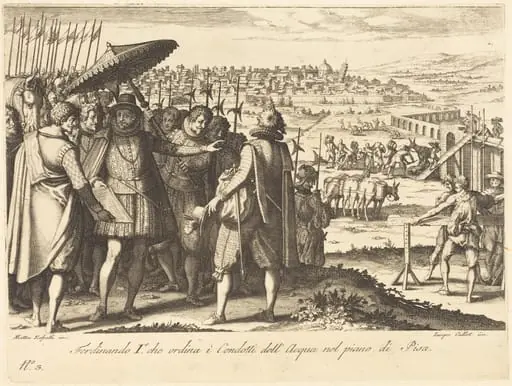 Restoration of the Aqueduct at Pisa
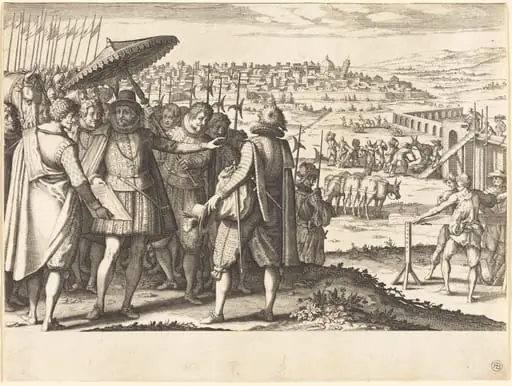 Restoration of the Aqueduct at Pisa
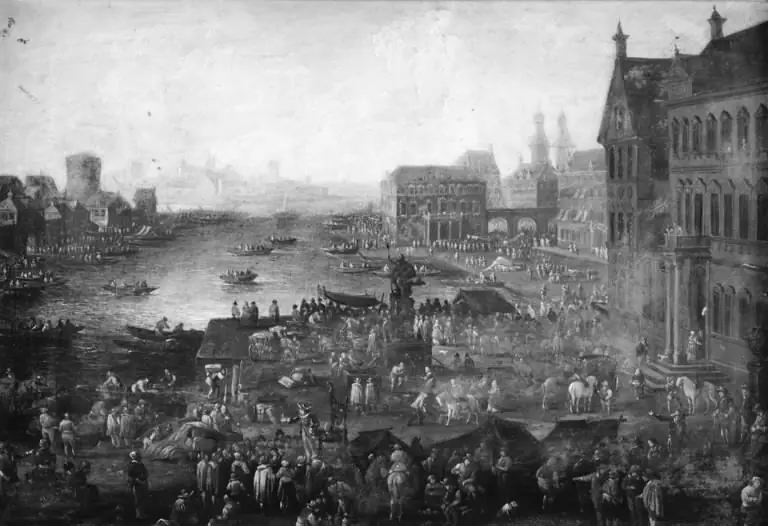 Square in Paris with Many Figures
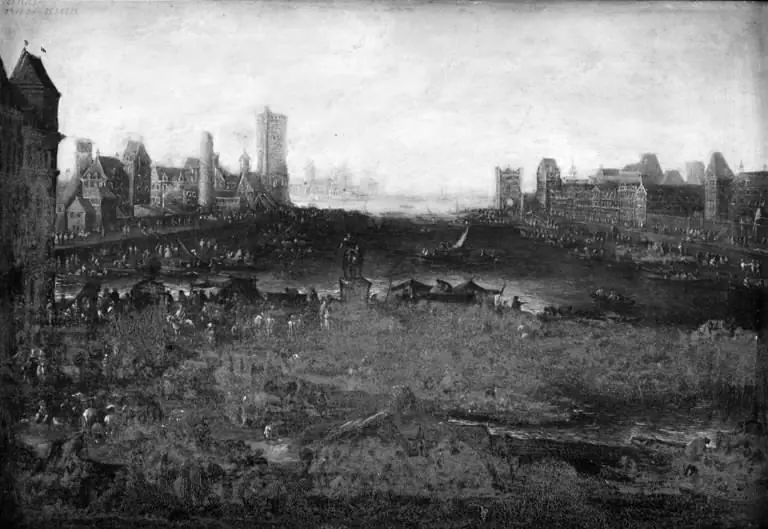 Square in Paris with Many Figures
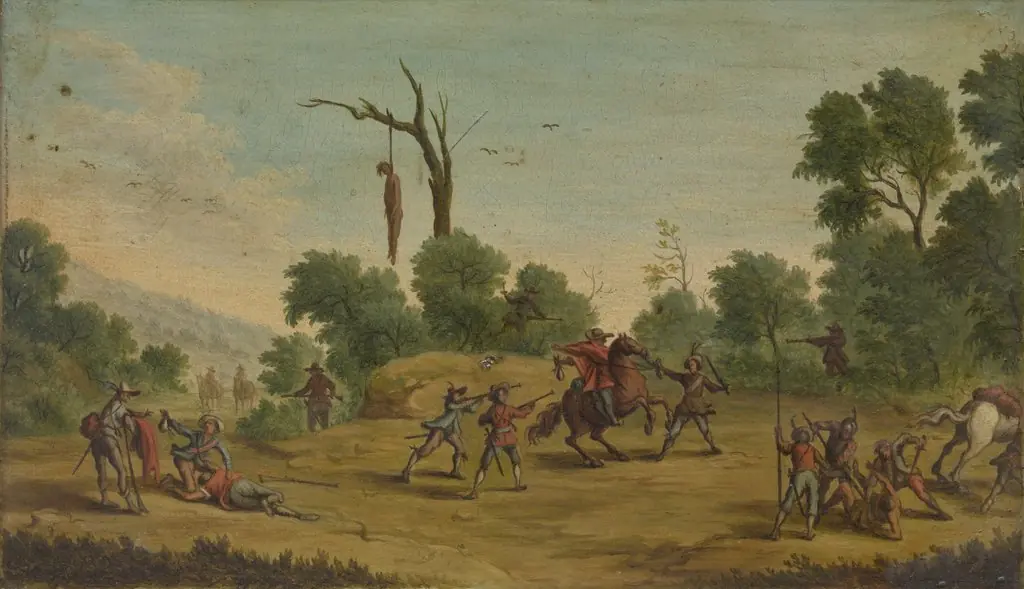 Horsemen Attacked by Robbers
 HOW WILL A COVERED PART BE CORRECTED?HOW WIKA A COVERED HEART DEED CORRECTED?
![Christ Walking on the Water [second plate], by Jacques Callot](https://artifactworldgallery.com/img/jacques-callot--christ-walking-on-the-water-second-plate--2069f3bfe4cb2126-w320.webp) Christ Walking on the Water [second plate]
Christ Walking on the Water [second plate]
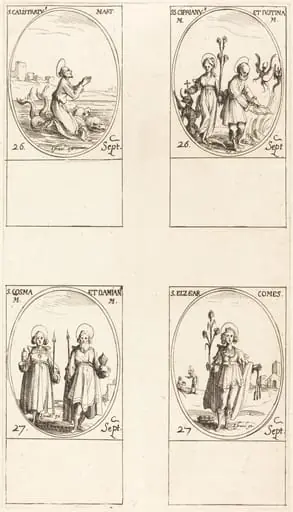
- St. Calistratus; Sts. Cyprian and Justina; Sts. Comus and Damian; St. Elzear, Count
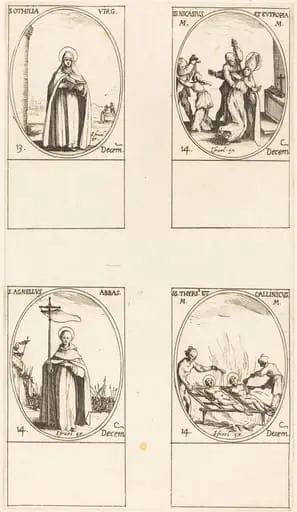 St. Othilia; Sts. Nicasius & Eutropia; St. Agnelus; Sts. Thyrsus & Callinicus
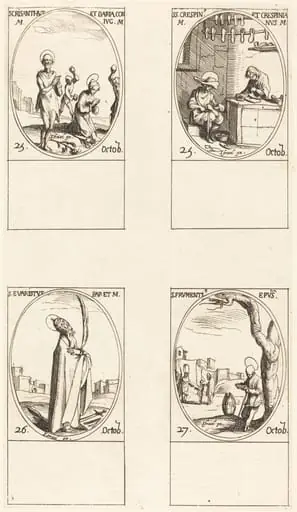 Sts. Chrysanthus & Daria; Sts. Crispin & Crispinian; St. Evaristus; St. Frumentius
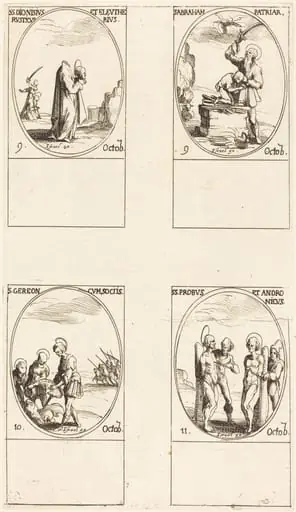 St. Dionysius, Rusticus & Eleutherius; St. Abraham; St. Gereon & Companions; Sts. Probus & Andronichus
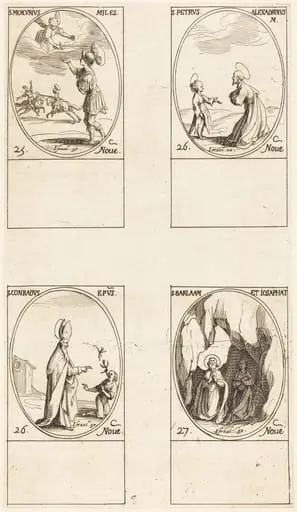 St. Mercury; St. Peter of Alexandria; St. Conrad; Sts. Barlaam and Josaphat
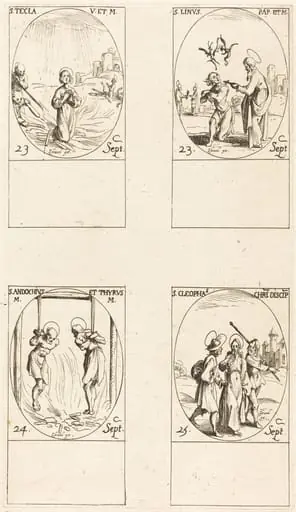 St. Thecla; St. Linus; Sts. Andochius and Thyrsus; St. Cleophas
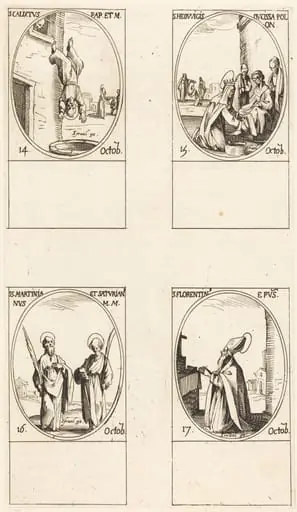 St. Calixtus; St. Hedwiges; Sts. Martinian and Saturian; St. Florentinus
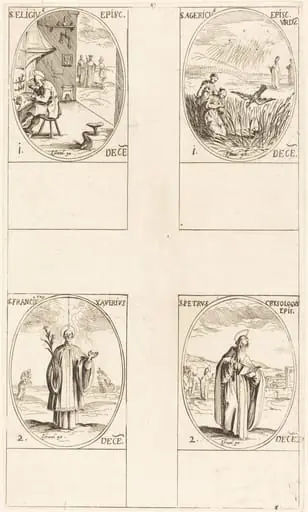 St. Eligius; St. Agericus; St. Francis Xavier; St. Peter Chrysologus
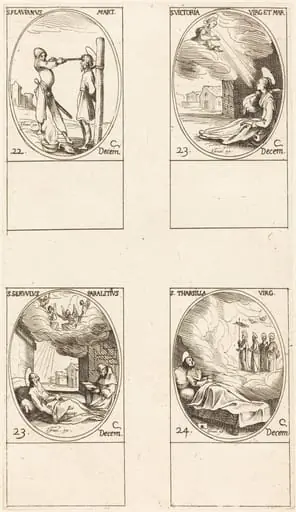 St. Flavian; St. Victoria; St. Servulus; St. Tharsilla