Artwork
The Cured Sick Person
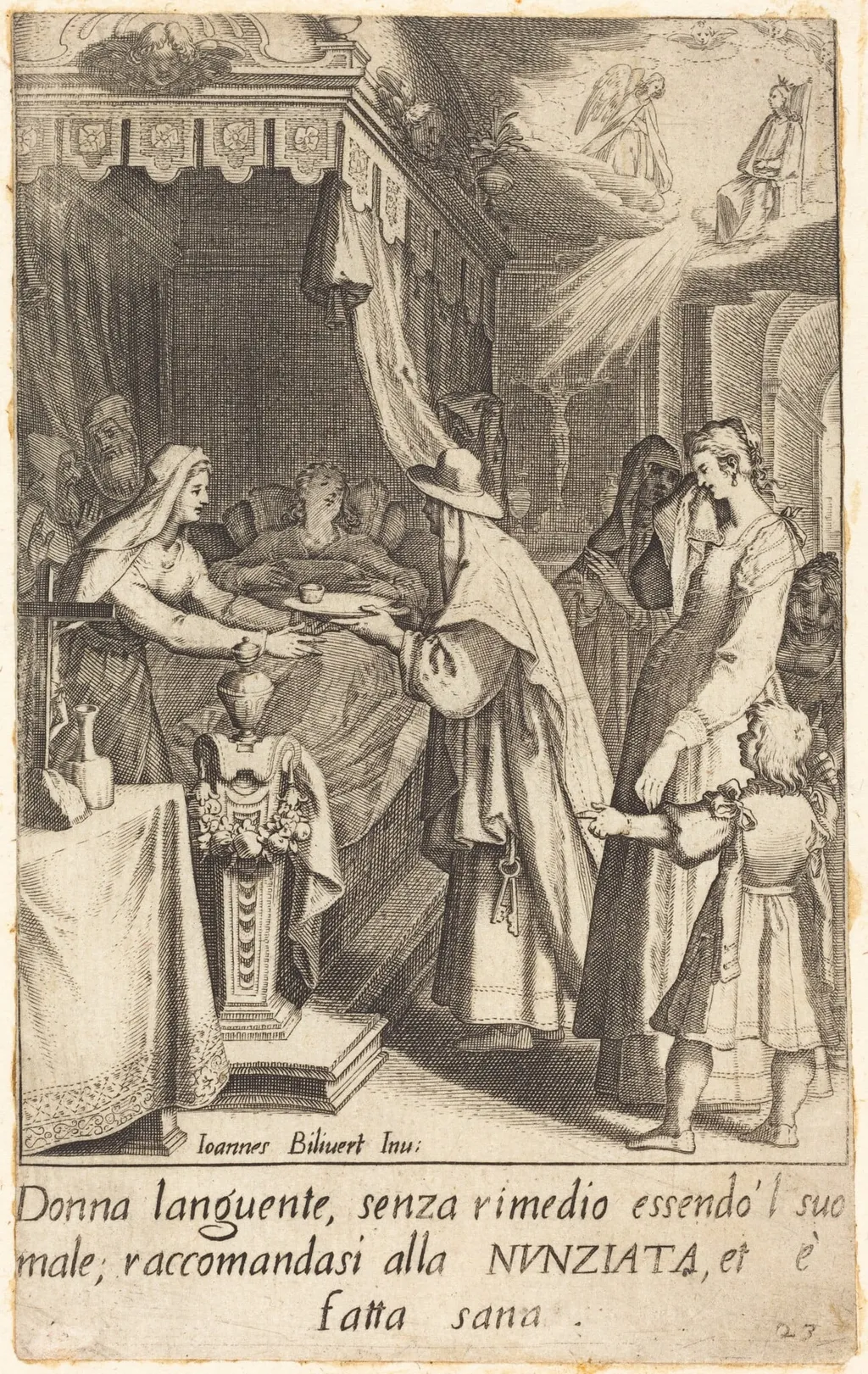
The Cured Sick Person is an ink print by the Baroque artist Jacques Callot. It dates from 1619 and is held in the collection of the National Gallery of Art.
About this work
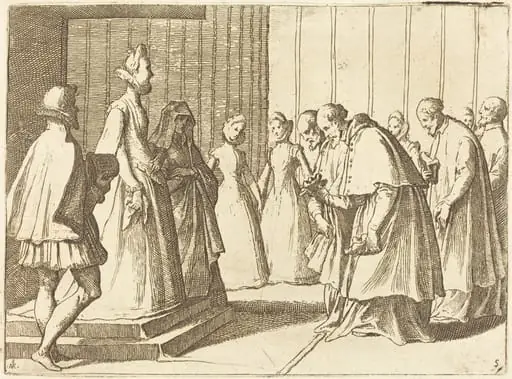
This engraving shows a crowd around a sick man standing up. A doctor checks his pulse while others watch. They look relieved.
Jacques Callot made this in 1619. It comes from a series about how plague doctors treated people. The sick man wears a long coat and holds a stick.
This print uses fine lines and shadows called engraving, cross-hatching.
Overview
Created in 1619 by the French baroque printmaker Jacques Callot, The Cured Sick Person is an engraving executed on laid paper. Part of a series that portrays the work of plague physicians, the image captures a moment of communal relief as a previously ill figure stands upright, surrounded by onlookers and a medical attendant.
Subject & Meaning
The composition centers on a man, dressed in a long coat and grasping a staff, who appears to have recovered from illness. A doctor, positioned nearby, feels the man's pulse, while a crowd of observers watches with evident relief. The scene conveys both the anxiety surrounding disease and the hopeful affirmation of medical intervention in early‑modern society.
Technique & Style
Callot employed the precise line work of engraving, using fine cross‑hatching to render texture, depth, and subtle shadows. The meticulous incisions on the laid paper allow for a delicate gradation of tone, characteristic of his broader oeuvre, which often combines rigorous detail with a compositional clarity that guides the viewer’s eye through the narrative.
History & Provenance
The print originates from a larger series documenting the practices of plague doctors, a subject that resonated with contemporary audiences confronting recurrent epidemics. While the exact ownership trail is unclear, the work has been preserved in several European print collections, reflecting its continued relevance to scholars of early modern medical and social history.
Context
Produced in the Duchy of Lorraine during the early seventeenth century, the image reflects the baroque fascination with dramatic human experiences and public health concerns. Callot’s focus on everyday figures, soldiers, beggars, and the infirm, places the engraving within a broader cultural effort to record and comment on the lived realities of his time.
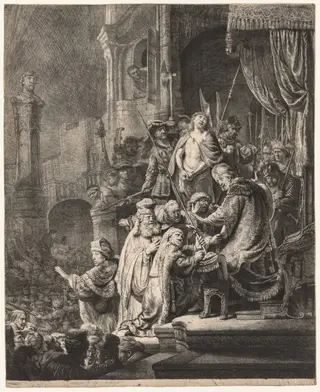
Own this work as a print
Artist & collection
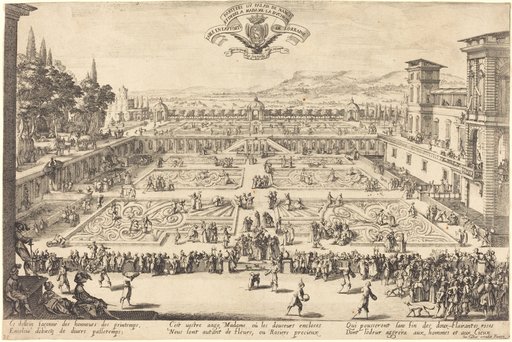
Artist
Jacques Callot (French: ; c. 1592 – 1635) was a baroque printmaker and draftsman from the Duchy of Lorraine. He is an important person in the development of the old master print. He made more than 1,400 etchings that…

 Holy Family at supper
 Restoration of the Aqueduct at Pisa
 Restoration of the Aqueduct at Pisa
 Square in Paris with Many Figures
 Square in Paris with Many Figures
 Horsemen Attacked by Robbers
 HOW WILL A COVERED PART BE CORRECTED?HOW WIKA A COVERED HEART DEED CORRECTED?
![Christ Walking on the Water [second plate], by Jacques Callot](https://artifactworldgallery.com/img/jacques-callot--christ-walking-on-the-water-second-plate--2069f3bfe4cb2126-w320.webp) Christ Walking on the Water [second plate]
Christ Walking on the Water [second plate]
- Christ Before Pilate: Large Plate
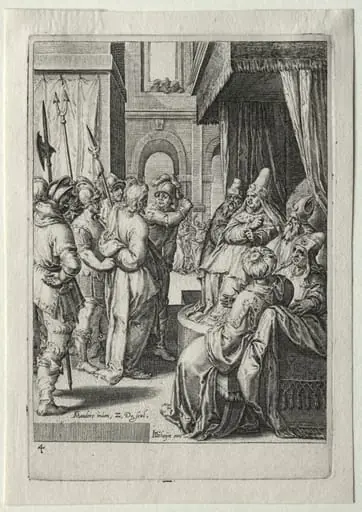 Passion Set: Christ before Herod
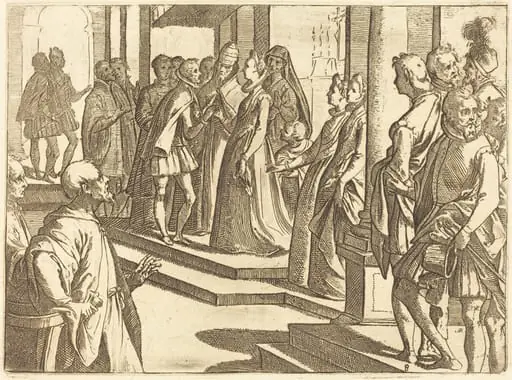 The Betrothal of Margaret of Austria to Philip III, King of Spain
![Margaret of Austria Giving Audience to a Nobleman [verso], by Raffaello Schiaminossi](https://artifactworldgallery.com/img/raffaello-schiaminossi--margaret-of-austria-giving-audience-to-a-nobleman-verso--86ac2347af277f00-w320.webp) Margaret of Austria Giving Audience to a Nobleman [verso]
Margaret of Austria Giving Audience to a Nobleman [verso]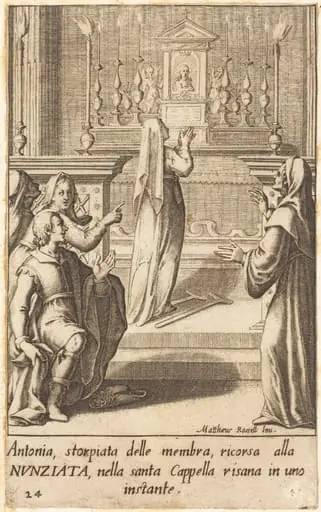 Antonia
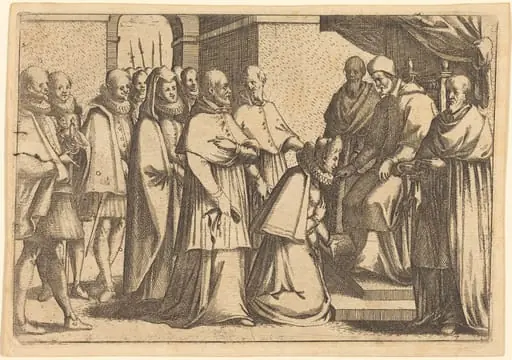 Papal Audience
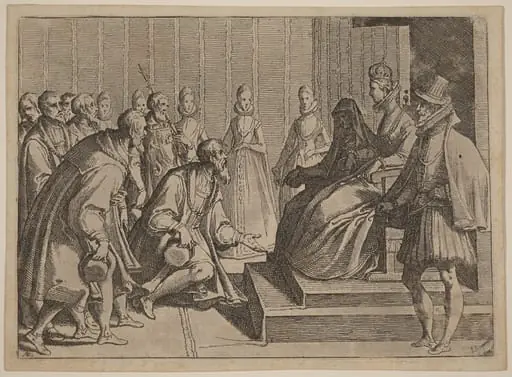 Margaret of Austria Giving Audience to a Nobleman
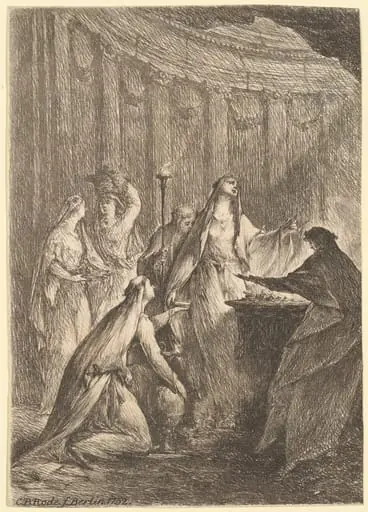 Antique Sacrifice
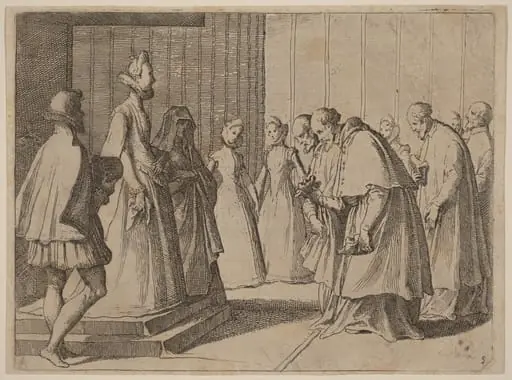 Margaret of Austria Receiving the Homage of Cardinals and Prelates
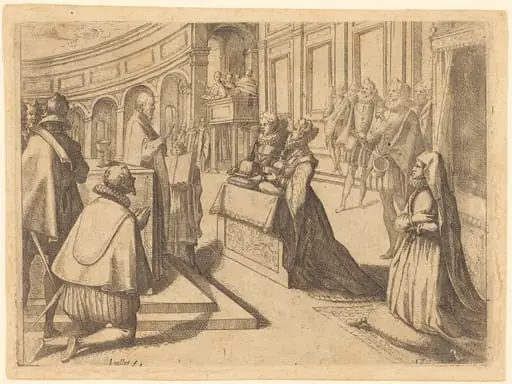 Marriage of Margaret of Austria and Philip III
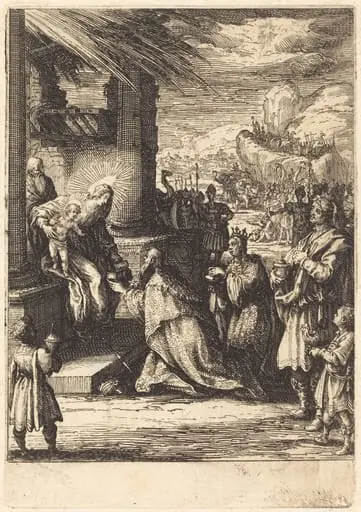 The Adoration of the Magi
 Margaret of Austria Receiving the Homage of Cardinals and Prelates