Artwork
The Hangman
The Hangman is an ink print by the Baroque artist Jacques Callot. It dates from 1619 and is held in the collection of the National Gallery of Art.
About this work
Overview
Jacques Callot, a printmaker from the Duchy of Lorraine, produced The Hangman in 1619 as an engraving on laid paper.
Jacques Callot, a printmaker from the Duchy of Lorraine, produced The Hangman in 1619 as an engraving on laid paper. Part of a vast oeuvre exceeding 1,400 prints, this work exemplifies his focus on everyday life and social rituals. Unlike many contemporaries who idealized subjects, Callot captured unvarnished moments with precision, using the medium to observe human behavior in its most ordinary and harsh forms.
Subject & Meaning
The scene depicts a public execution in its preparatory moment: a condemned man, hands bound, stands atop a broken ladder as the hangman fastens the noose. A crowd of onlookers, dressed in early 17th-century attire, reacts with varied expressions, some avert their gaze, others fixate with grim curiosity. The image does not show death itself, but the tension of its approach, making it an early example of psychological realism in printmaking.
Technique & Style
Callot employed fine, controlled engraving lines and minute dot work to render texture and depth. The rough grain of the laid paper enhances the tactile quality of the scene, while subtle shading gives weight to clothing, skin, and wood. His meticulous attention to detail, down to the folds of fabric and the splintered ladder, demonstrates a mastery of line and composition that elevated engraving beyond mere illustration.
History & Provenance
Created during Callot’s early career in Nancy, the print emerged from a period when printmaking was increasingly used to document social realities. Though no specific early ownership records survive, the work was likely circulated among collectors and artists familiar with Northern European print traditions. Its survival in multiple institutional collections attests to its enduring recognition among scholars of early modern graphic art.
Context
In early 17th-century Europe, public executions were common spectacles, often attended by all social classes. Callot’s depiction aligns with broader trends in Northern art that turned toward secular, observational subjects. His focus on the crowd’s reactions, rather than the condemned, reflects a growing interest in collective psychology and the moral ambiguity of public punishment.
Legacy
Callot’s The Hangman influenced later artists who sought to portray social conditions with unflinching detail. His technical innovations in engraving, particularly in rendering texture and atmosphere, set a precedent for generations of printmakers. The work remains a key reference in studies of early modern visual culture, valued for its quiet intensity and unembellished humanity.
Own this work as a print
Artist & collection
Artist
Jacques Callot (French: ; c. 1592 – 1635) was a baroque printmaker and draftsman from the Duchy of Lorraine. He is an important person in the development of the old master print. He made more than 1,400 etchings that…

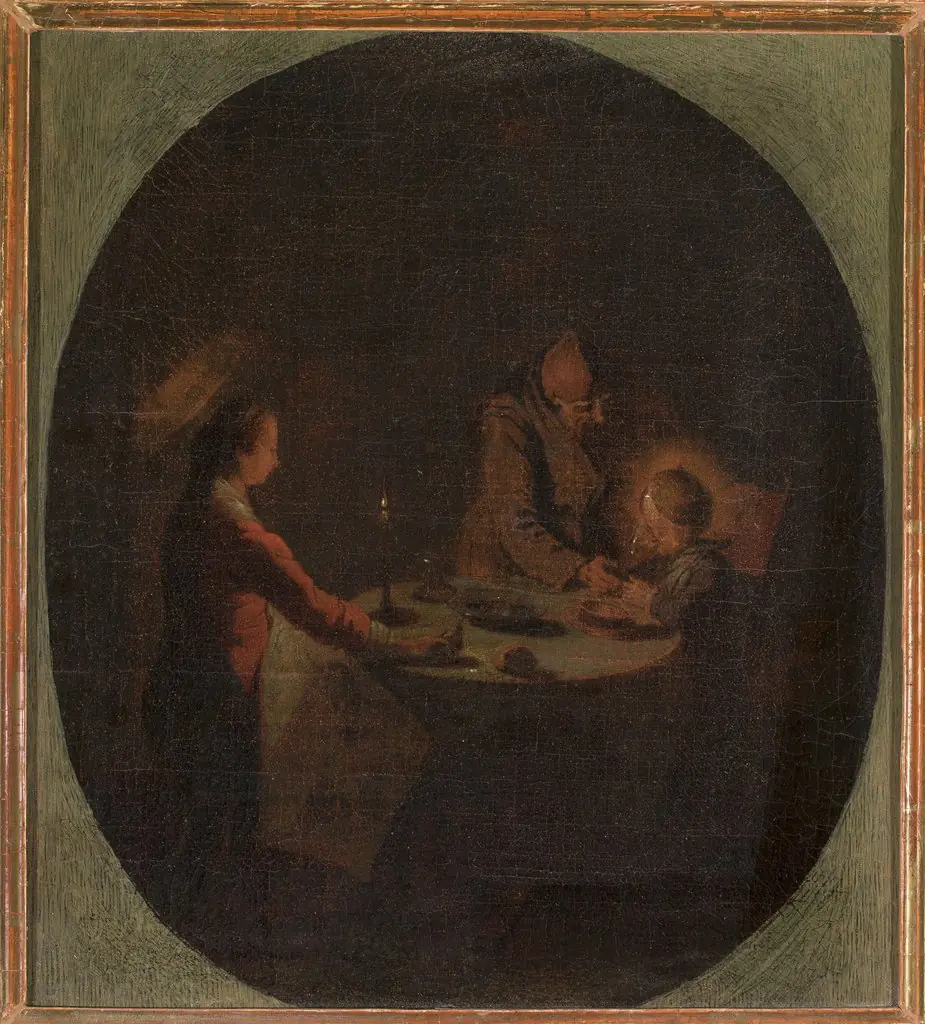 Holy Family at supper
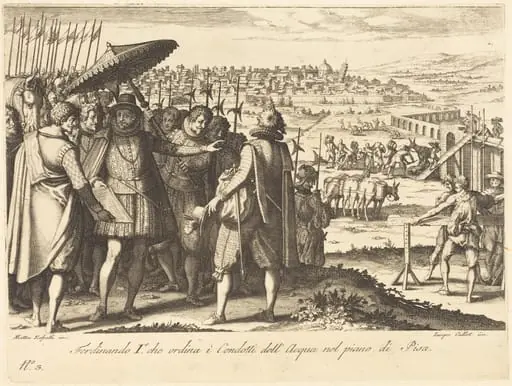 Restoration of the Aqueduct at Pisa
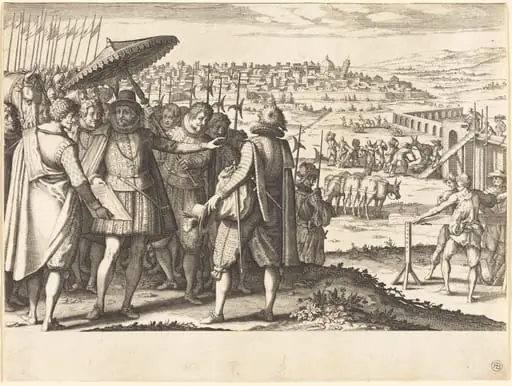 Restoration of the Aqueduct at Pisa
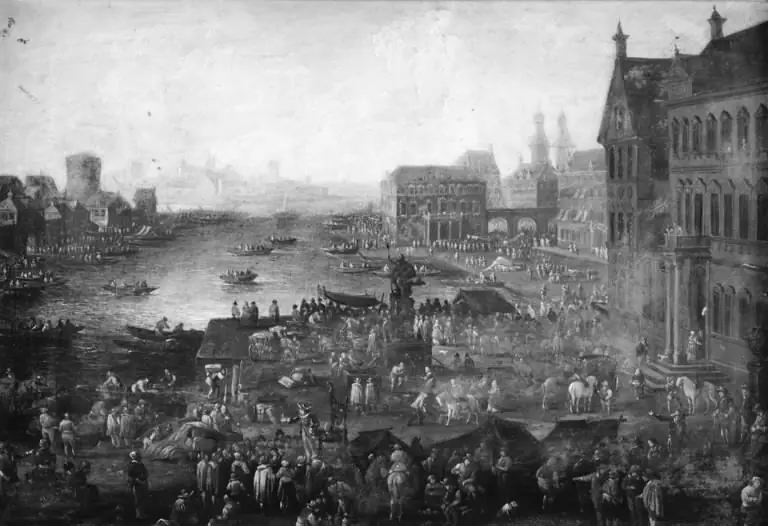 Square in Paris with Many Figures
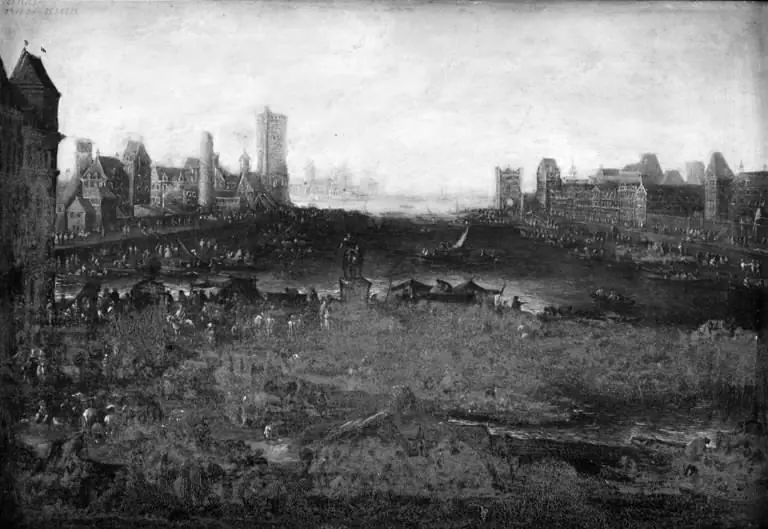 Square in Paris with Many Figures
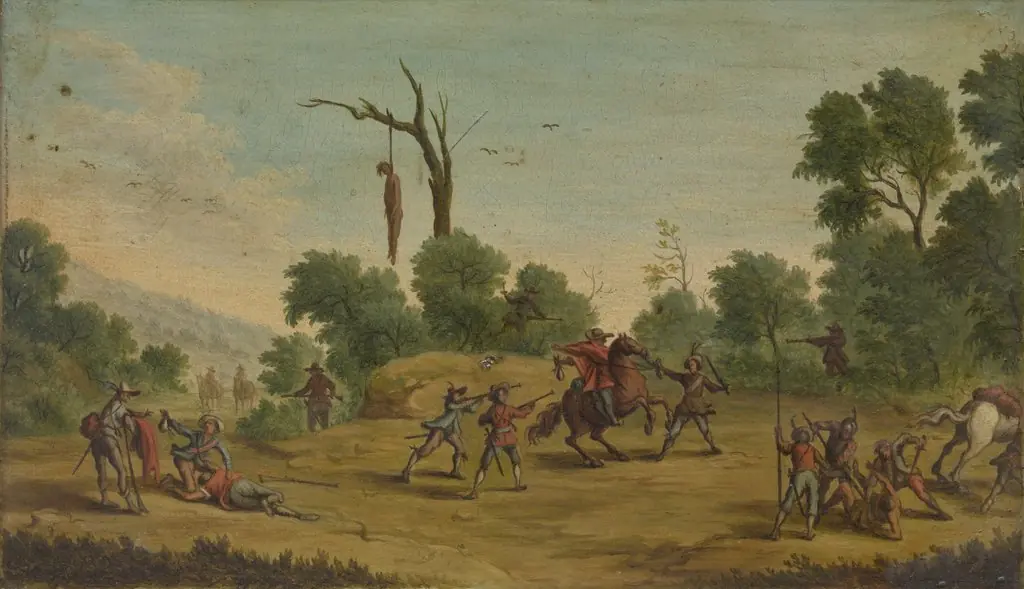 Horsemen Attacked by Robbers
 HOW WILL A COVERED PART BE CORRECTED?HOW WIKA A COVERED HEART DEED CORRECTED?
![Christ Walking on the Water [second plate], by Jacques Callot](https://artifactworldgallery.com/img/jacques-callot--christ-walking-on-the-water-second-plate--2069f3bfe4cb2126-w320.webp) Christ Walking on the Water [second plate]
Christ Walking on the Water [second plate]