Artwork
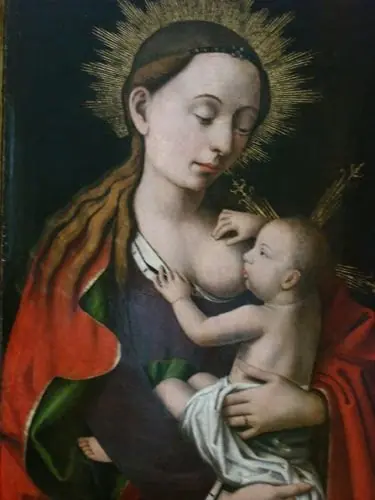
Maria mit dem Kind
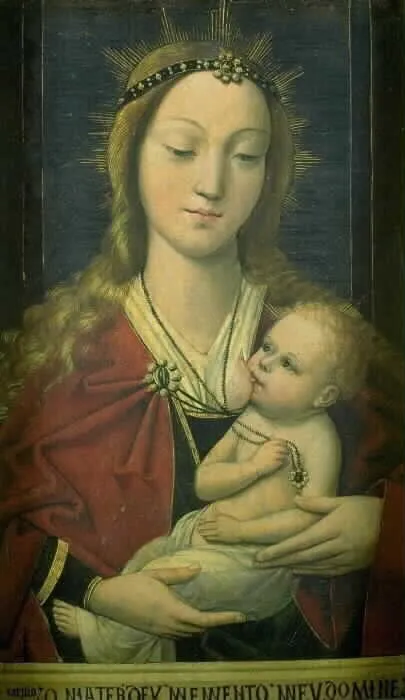
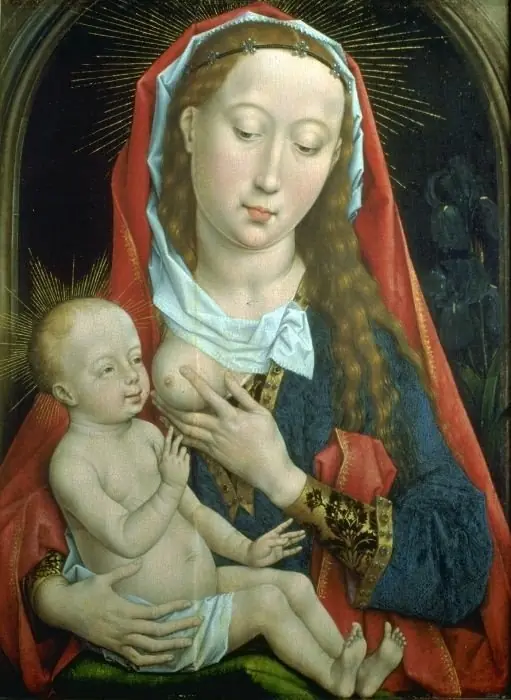
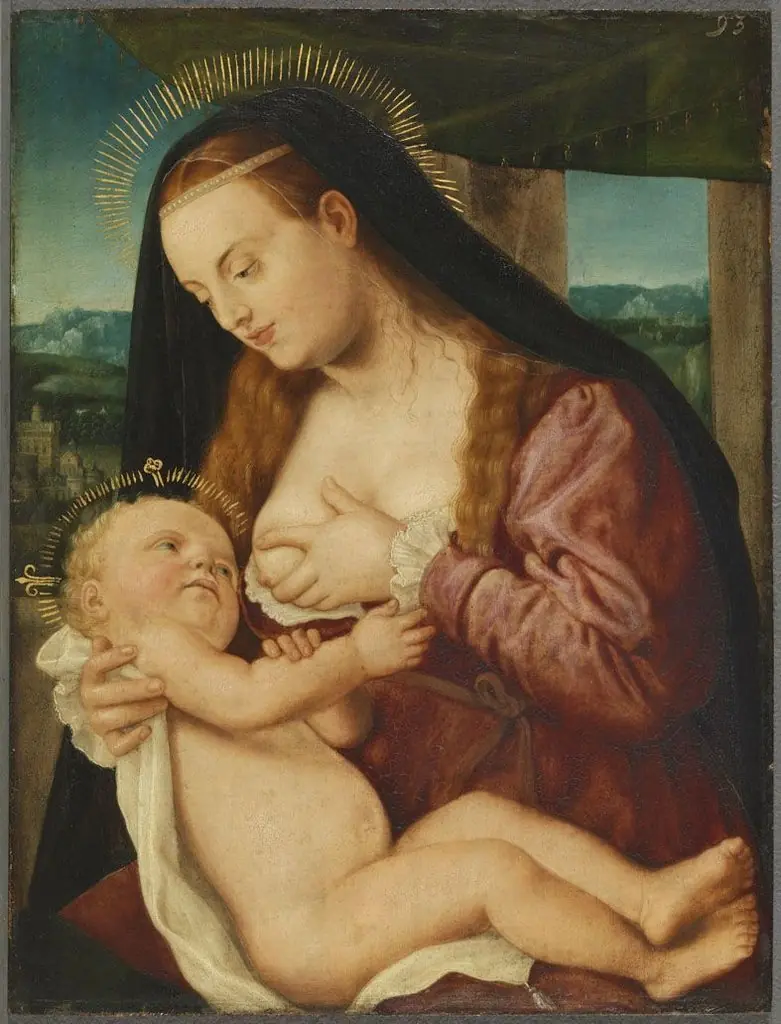
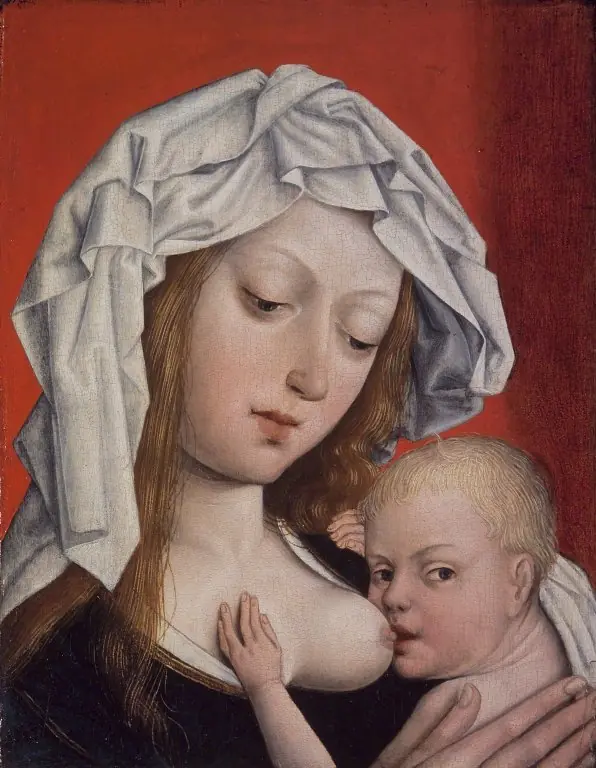
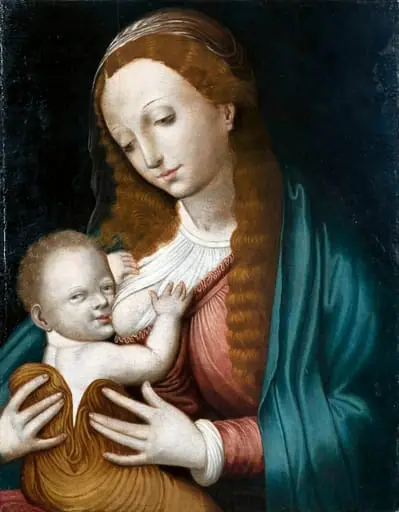
Maria mit dem Kind is a paint painting by the Early Renaissance artist Carillo. It dates from 1450 and is held in the collection of the Gemäldegalerie Berlin.
About this work
Overview
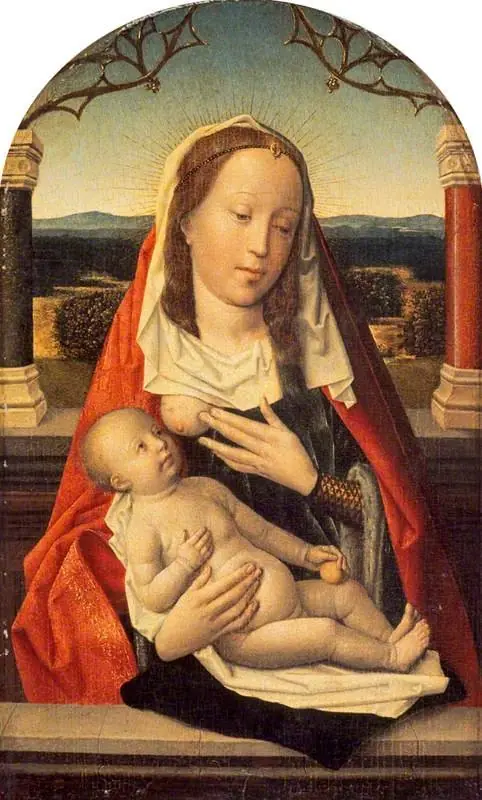
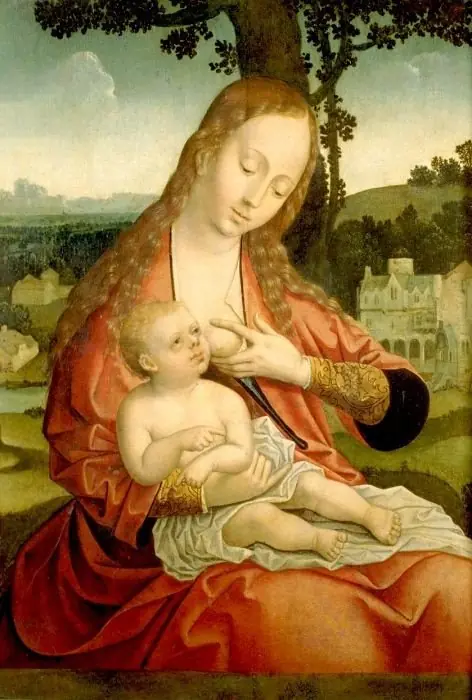
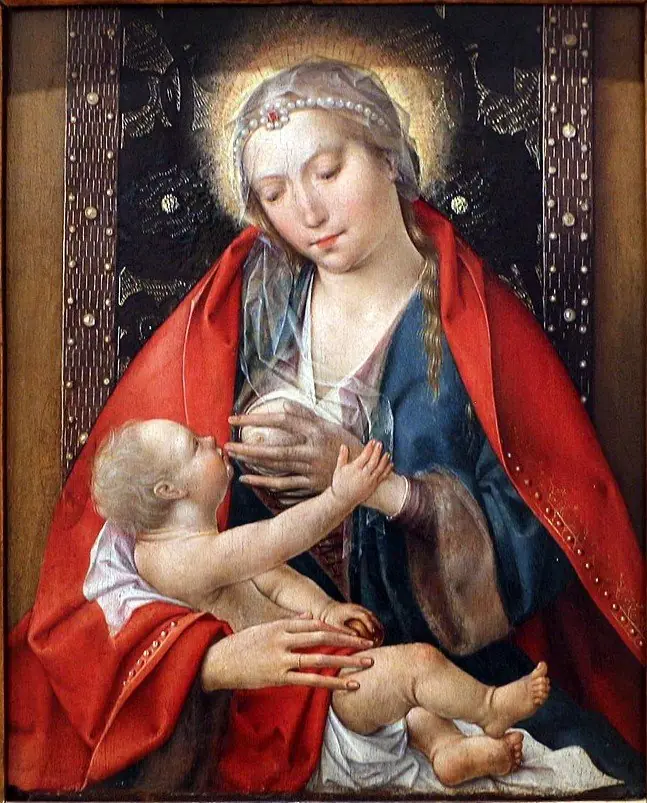
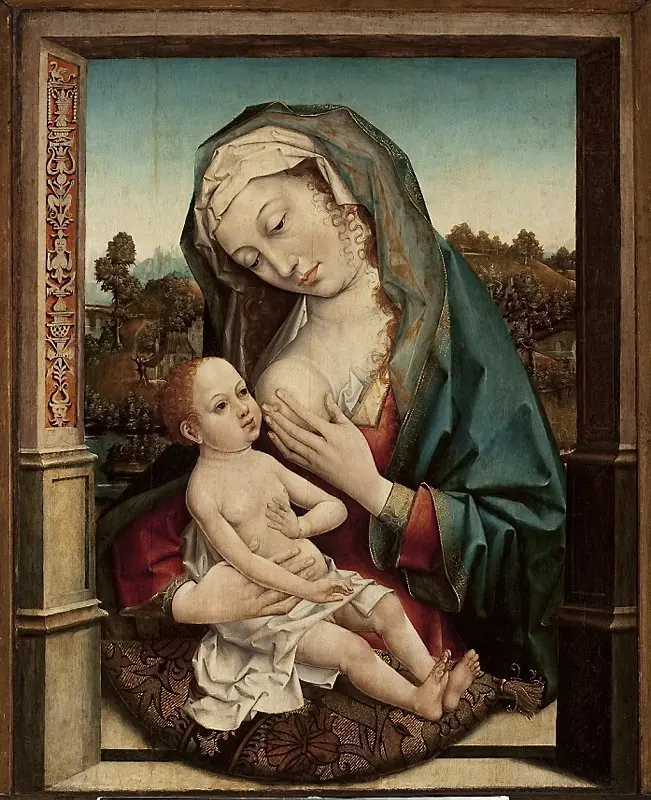
Maria mit dem Kind is a small panel painting by the Spanish artist Carillo, dated to 1450, depicting the Virgin Mary nursing the Christ Child.
Maria mit dem Kind is a small panel painting by the Spanish artist Carillo, dated to 1450, depicting the Virgin Mary nursing the Christ Child. Executed in paint on an oak panel measuring 37 by 25 centimeters, it belongs to the genre of private devotional images that proliferated in late medieval and early modern Europe. The work is held in the Gemäldegalerie Berlin, where it is catalogued as number 1215. Its attribution to Carillo, an obscure painter active around 1480 in the province of Toledo, remains provisional due to the uncertain contours of this artistic personality. Nevertheless, the painting offers valuable evidence for the circulation of Northern European devotional conventions in fifteenth-century Spain and preserves a rare signed example from a period when Spanish painters of this region are poorly documented.
Subject & Meaning
The painting presents the Madonna lactans type, in which Mary breastfeeds the infant Jesus. Mary faces forward with downcast eyes, wearing a blue dress, red mantle fastened with a circular brooch, and a jeweled headband with a radiating halo. Her long wavy hair falls past her shoulders, framing the figures. The nude Christ Child turns toward her, mouth at her breast, while playing with a chain or necklace during nursing. Both figures bear rayed halos, and the infant wears a beaded necklace with light cloth wrapped below the waist. An inscribed band runs across the bottom of the panel, reading "Carillo / O MATER DEY MEMENTO MEY DOMINE." The dark, plain background with subtle vertical divisions focuses attention entirely on the intimate physical and spiritual bond between mother and child. The Madonna lactans theme emphasized Christ's humanity and the Incarnation, while also serving as a focus for private meditation on the mysteries of salvation through Christ's body.
Technique & Style
The painting is executed in paint on oak panel, a support typical for Northern European and Spanish panel painting of the period. The technique appears smooth with careful blending in the flesh tones and detailed rendering of jewelry and fabrics. Light falls evenly across the figures with soft shadows modeling the faces and hands. The palette consists of deep reds, dark browns, creamy whites, and golden flesh tones. The surface shows fine craquelure throughout, consistent with its age and medium. The detailed treatment of the pearl headband, the brooch, the beaded necklace, and the textural variations between the dark dress, white undergarment, and red mantle demonstrate a practiced hand attentive to material richness. The inscription is integrated into the frame, which is fixed to the panel, suggesting the work was conceived as a unified devotional object.
Context
Carillo remains an enigmatic figure in Spanish art history. Active around 1480 in the province of Toledo, he has been tentatively identified with either Alonso Carrillo, mentioned in 1476 in Guadalupe, or Juan Carillo, documented in Seville in 1513, though neither identification is resolved. The Berlin panel's stylistic affinities with Carillo's other known works support its provisional attribution to this uncertain artistic personality. The painting exemplifies the widespread demand for private devotional images in late medieval and early modern Europe, a genre that allowed for intimate, personal engagement with sacred subjects outside liturgical settings. Its small scale and domestic subject matter align it with the broader European tradition of Madonna and Child imagery, while its specific Spanish authorship contributes to understanding regional variations within this international visual culture. The work has been discussed in scholarship by Danesi Squarzina, Salerno, and Delaroche, and appears in reference works including the Allgemeines Künstlerlexikon and J. A. Gaya-Nuño's study of Spanish painting outside Spain.
Legacy
The painting's legacy rests primarily on its value as a rare signed and documented work from a poorly understood phase of Spanish painting. Its inclusion in the prestigious Giustiniani collection from at least 1621 attests to its recognition as a significant devotional image among early modern collectors. The erroneous 1826 catalogue entry as "Corillo" illustrates the challenges of maintaining artistic identities for minor masters before the development of rigorous art historical methods. In modern scholarship, the panel has served as a fixed point for reconstructing the oeuvre of Carillo, however tentatively. The 1911 Munich exhibition of old Spanish painting, which included another Carillo Madonna, contributed to wider awareness of Spanish primitives outside Iberia. Today, the work remains in the Gemäldegalerie Berlin as a testament to the museum's historical interest in building encyclopedic collections of European painting, including regions and periods that were less familiar to nineteenth-century connoisseurs. Its continued display alongside Italian and Northern European devotional images invites comparison across regional schools and contributes to ongoing efforts to integrate Spanish art more fully into narratives of late medieval European visual culture.
Artist & collection
Artist
Carillo’s real name is lost, but the city keeps whispering it, Florence, where he painted on scraps of leather because canvas was too expensive for a shoemaker’s son.