Artwork
'Alvéa'
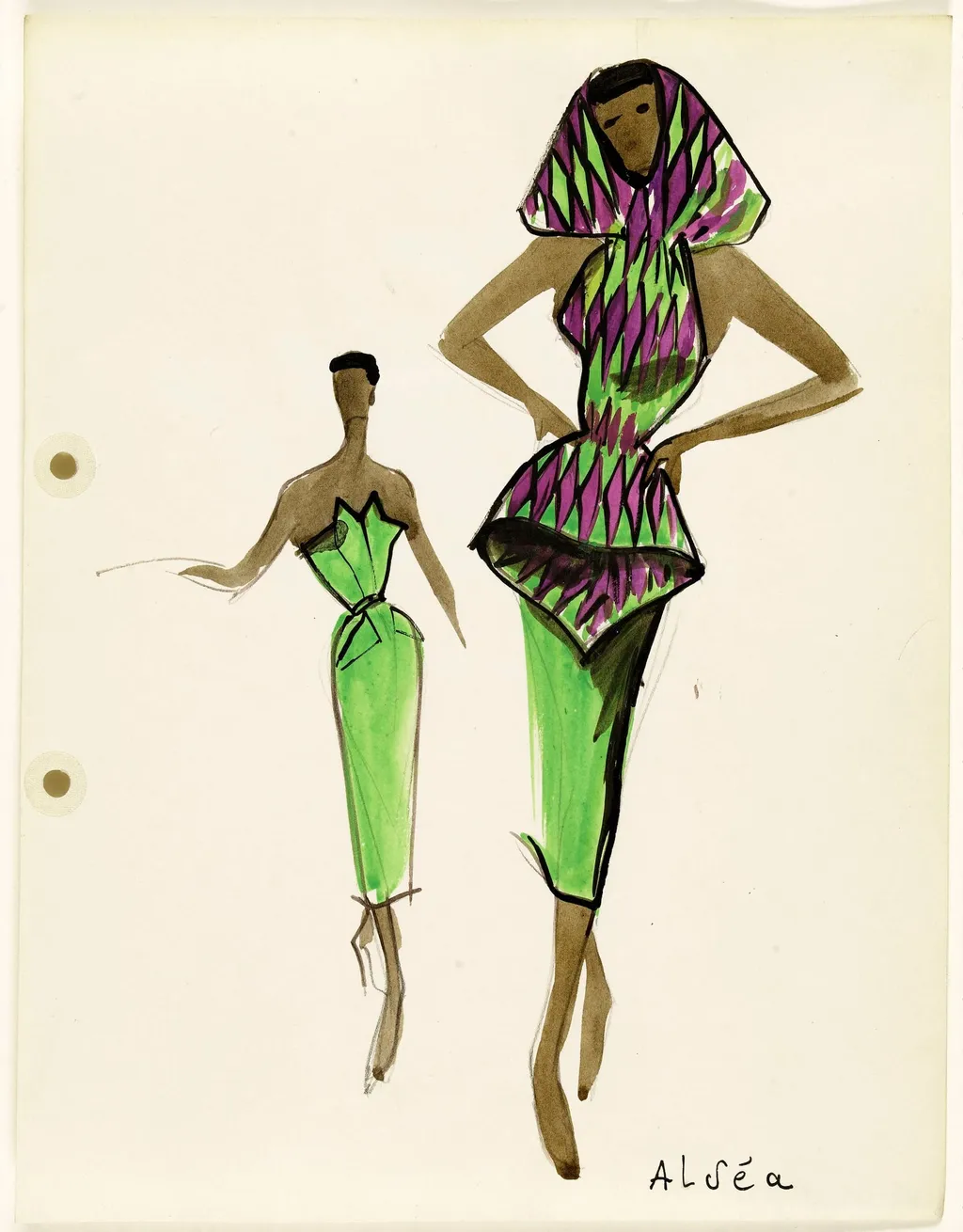
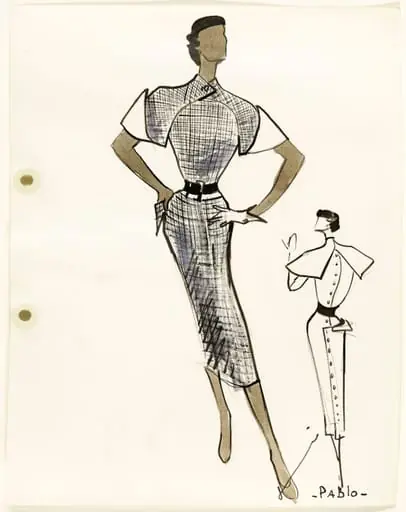
'Alvéa' is a drawing by Carven. It dates from 1951 and is held in the collection of the Palais Galliera - Musée de la Mode de la Ville de Paris.
About this work
Overview
The drawing resides in the collection of the Museum of Ethnography, where it is preserved as part of mid-century fashion documentation.
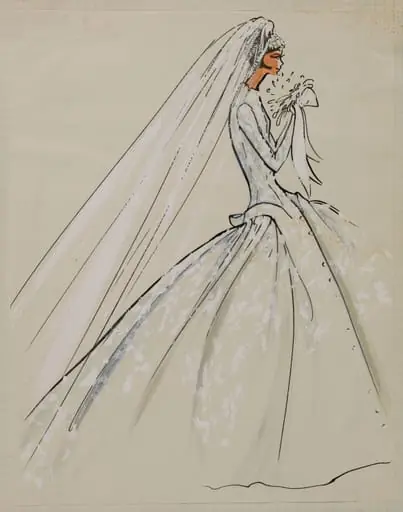
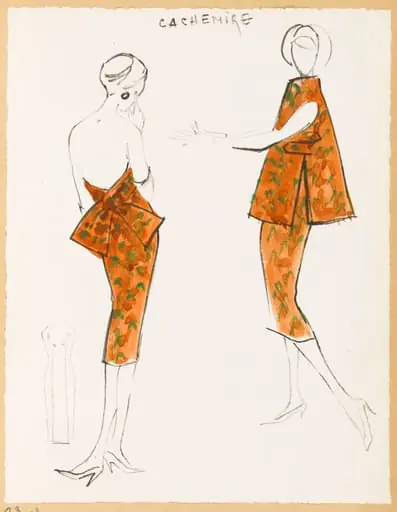
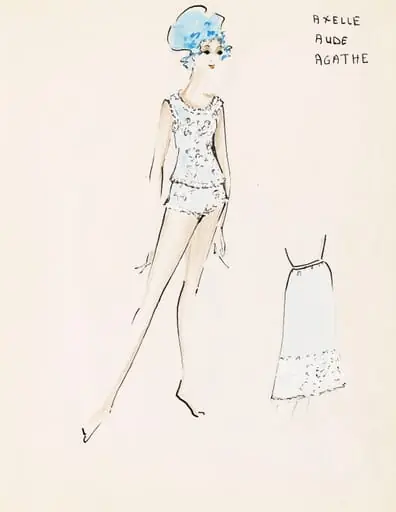
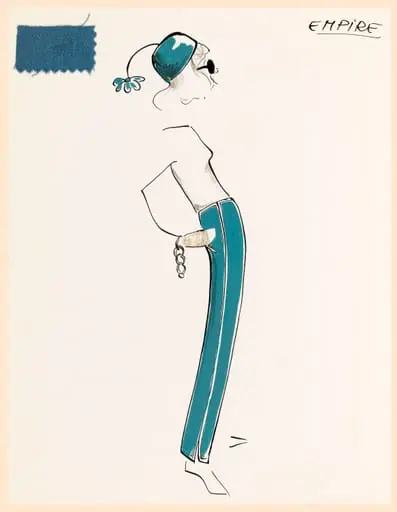
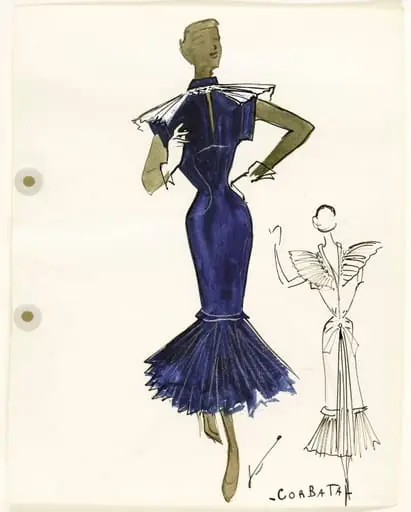
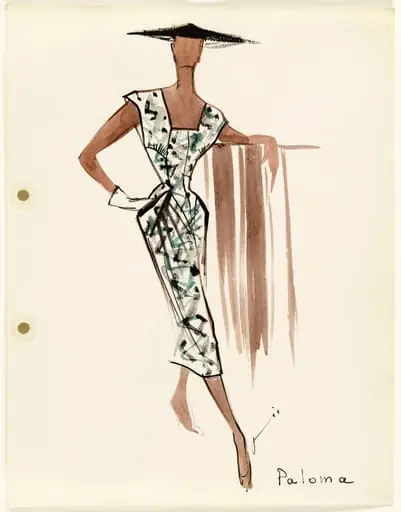
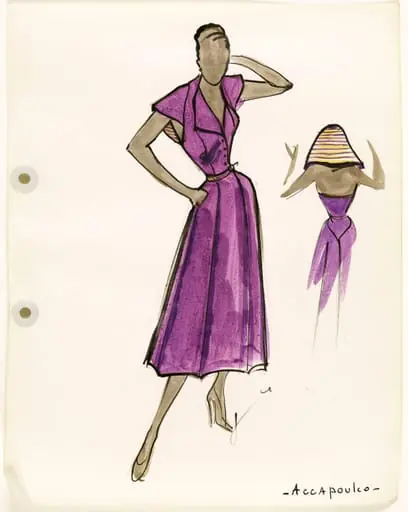
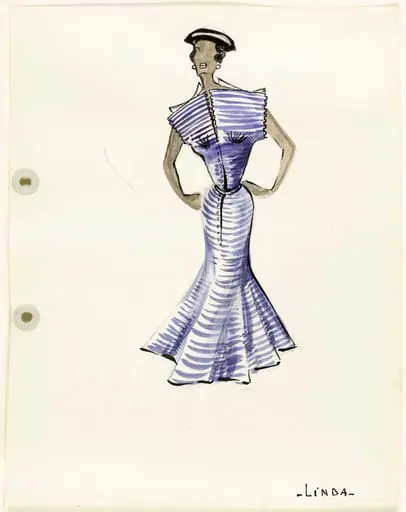
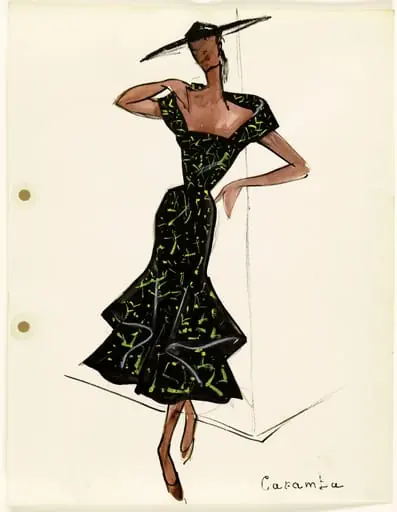
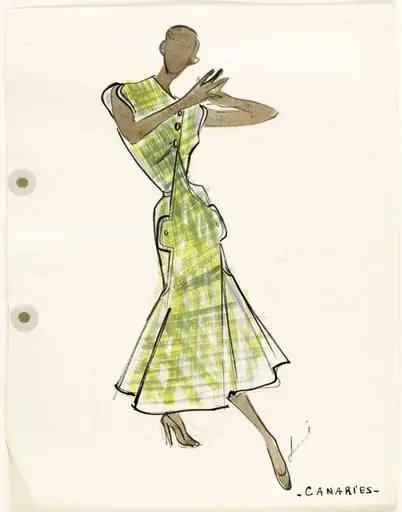
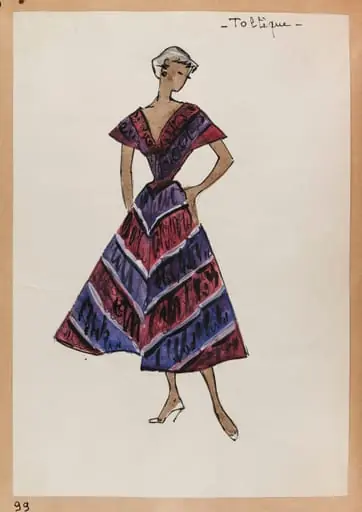
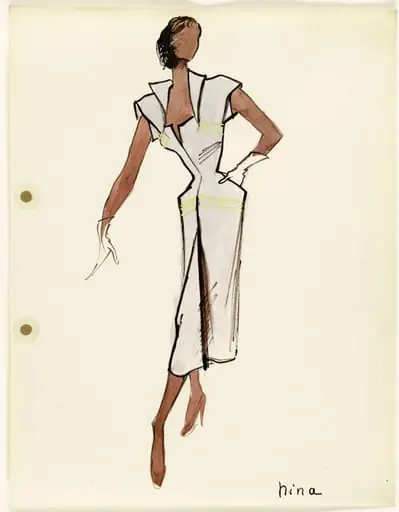
Created in 1951, 'Alvéa' is a fashion sketch by the French design house Carven. Executed in ink and flat washes, it depicts two figures in minimalist attire, rendered with loose, expressive lines. Though labeled as an artwork, it functions as a garment study, not a fine art piece.
The drawing resides in the collection of the Museum of Ethnography, where it is preserved as part of mid-century fashion documentation.
Subject & Meaning
The drawing portrays two women wearing distinct versions of the same dress design, identified by the label 'Alvéa.' The figures are stylized, lacking individualized features, emphasizing the clothing over identity. The contrast between solid and striped fabrics highlights the design’s structural play, suggesting a focus on silhouette and textile interaction rather than narrative or emotion.
Technique & Style
The sketch employs rapid, fluid linework and unmodulated color fields, typical of fashion illustration of the period. Fabric folds are simplified into clean, angular planes, and the palette is restrained, green and purple dominate with minimal shading. The absence of background or context directs attention entirely to the garments, reinforcing its purpose as a design blueprint.
History & Provenance
The drawing was produced during Carven’s active years in postwar Paris, when the house was known for its modernist approach to women’s wear. It entered the Museum of Ethnography’s collection as part of a broader effort to document everyday fashion as cultural artifact. The signature 'Alvéa' refers to the dress model, not the artist, reflecting industry practice of naming designs rather than attributing them to individual illustrators.
Context
In the early 1950s, Parisian fashion houses routinely produced such sketches to communicate designs to clients and ateliers. Carven stood out for its clean lines and bold color contrasts, departing from ornate postwar trends. This sketch aligns with a movement toward functional elegance, where clothing was designed for movement and modern life, not just ceremony or status.
Legacy
'Alvéa' remains a representative example of how fashion design was visually articulated before digital tools. Its preservation in an ethnographic museum underscores the shifting recognition of clothing as cultural expression. While not widely exhibited, it contributes to scholarly understanding of mid-century French fashion practices and the role of illustration in design development.
Artist & collection
Artist
These delicate ink-on-paper drawings capture the quiet poetry of everyday things: pinecones, reeds, apples.
Museum
Palais Galliera - Musée de la Mode de la Ville de Paris
Continue through works from the same source collection.