Artwork
Le temps des cerises
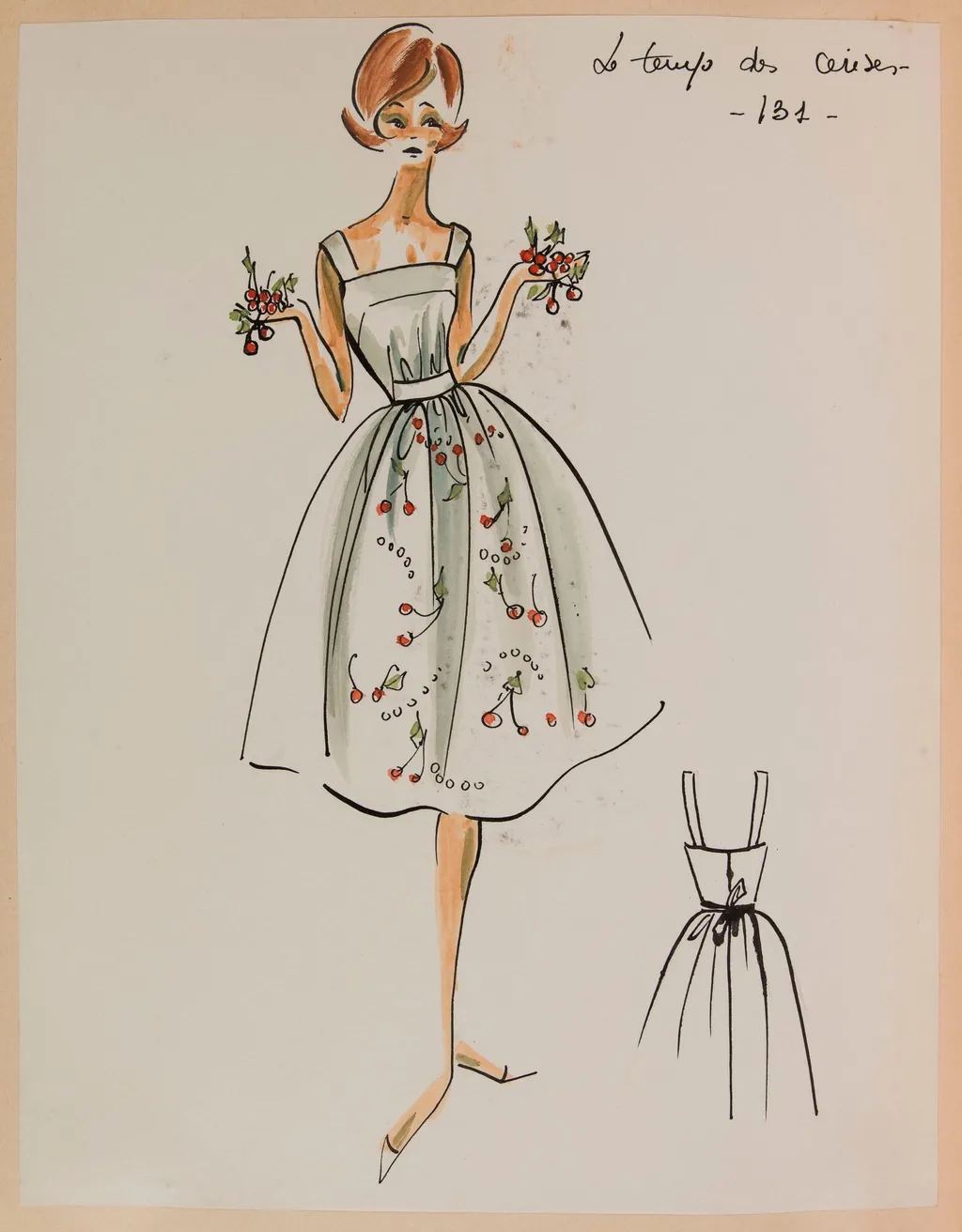
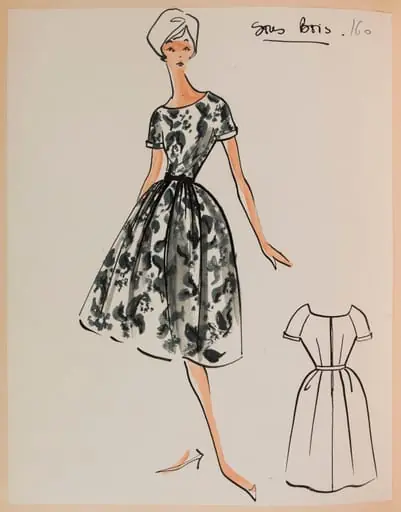
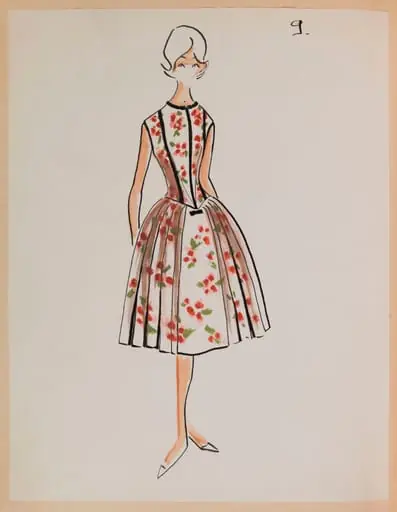
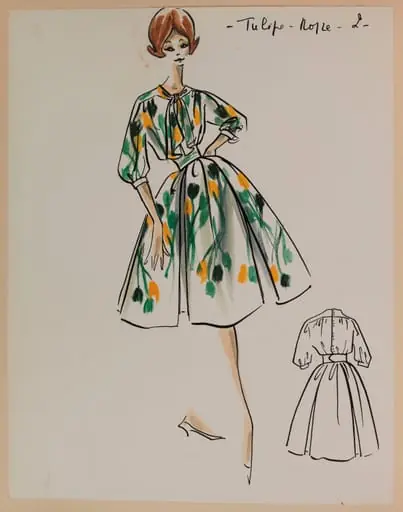
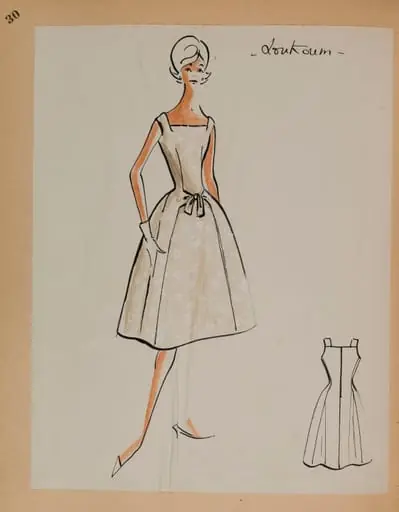
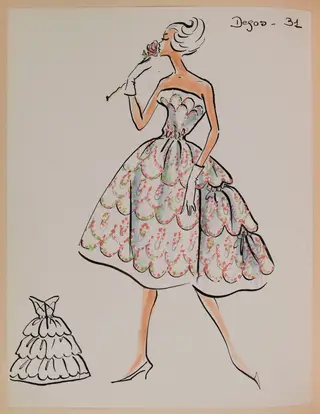
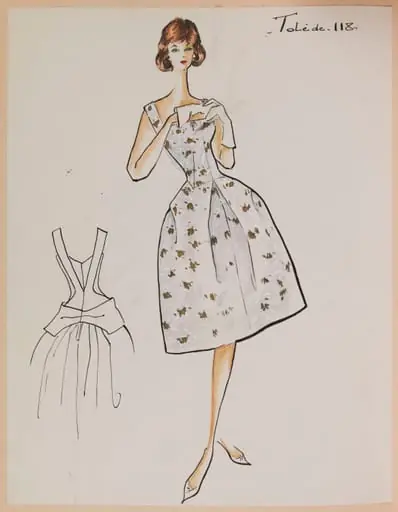
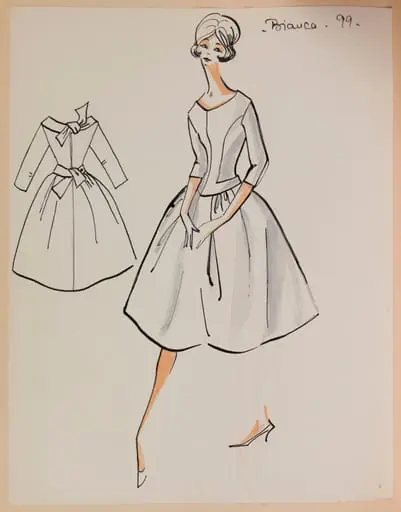
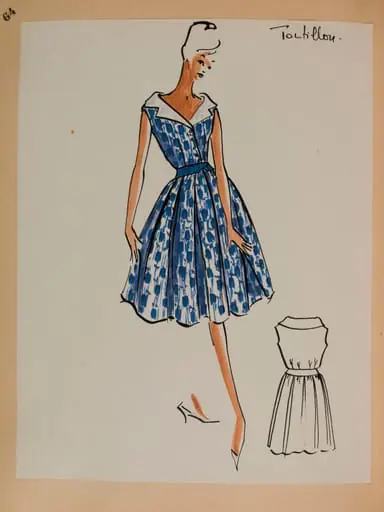
Le temps des cerises is a drawing by Carven. It dates from 1958 and is held in the collection of the Palais Galliera - Musée de la Mode de la Ville de Paris.
About this work
Overview
Created around 1958 by the French designer Carven, this drawing titled Le temps des cerises is part of the Museum of Ethnography’s collection.
Created around 1958 by the French designer Carven, this drawing titled Le temps des cerises is part of the Museum of Ethnography’s collection. It presents a stylized female figure in a dress patterned with cherries and foliage, holding two bouquets of fruit. The composition emphasizes quiet harmony between figure and garment, rendered in restrained tones against a pale background.
The work reflects a moment in mid-century fashion illustration where textile design and human form were intertwined in poetic simplicity.
Subject & Meaning
The woman in the drawing embodies a quiet celebration of seasonal abundance, referencing the French phrase 'le temps des cerises,' associated with spring and fleeting joy. Her stillness and the repetition of cherries on dress and in hands suggest a ritualized connection to nature’s cycles. The absence of context or narrative implies an idealized, timeless figure, more symbol than individual, inviting contemplation of beauty rooted in natural motifs rather than social narrative.
Technique & Style
Executed in ink or pencil on paper, the drawing employs clean, flowing lines to define the figure and her dress. The cherries and leaves are rendered with delicate precision, their repetition forming a rhythmic pattern across the fabric. The limited palette, white dress, deep red cherries, beige background, enhances visual clarity.
The style is illustrative yet restrained, avoiding ornamentation in favor of balanced form and subtle detail, characteristic of mid-century fashion sketches.
History & Provenance
The drawing entered the Museum of Ethnography’s collection in the late 20th century, likely acquired as part of a broader effort to document fashion as cultural expression. While Carven’s fashion house was known for ready-to-wear designs, this work appears to be a standalone illustration, possibly created for editorial or archival purposes. Its preservation in an ethnographic context signals its value as a cultural artifact rather than a commercial design.
Context
In the 1950s, fashion illustration flourished as a bridge between haute couture and public imagination. Carven, a prominent French designer, often infused her work with lyrical, nature-inspired motifs. This drawing aligns with postwar trends favoring feminine elegance and subtle symbolism.
The cherry motif, tied to French folklore and seasonal poetry, resonated culturally, making such imagery a quiet but potent expression of national aesthetic sensibility during a period of reconstruction and renewal.
Legacy
Though not widely reproduced, the drawing remains a quiet example of how fashion illustration captured emotional and cultural undertones beyond mere clothing. It contributes to scholarly understanding of mid-century design as a form of visual storytelling. Its presence in an ethnographic museum underscores the recognition of fashion as a material expression of identity, memory, and seasonal ritual, influencing later studies of textile symbolism in everyday life.
Artist & collection
Artist
These delicate ink-on-paper drawings capture the quiet poetry of everyday things: pinecones, reeds, apples.
Museum
Palais Galliera - Musée de la Mode de la Ville de Paris
Continue through works from the same source collection.