Artwork
Mandarin
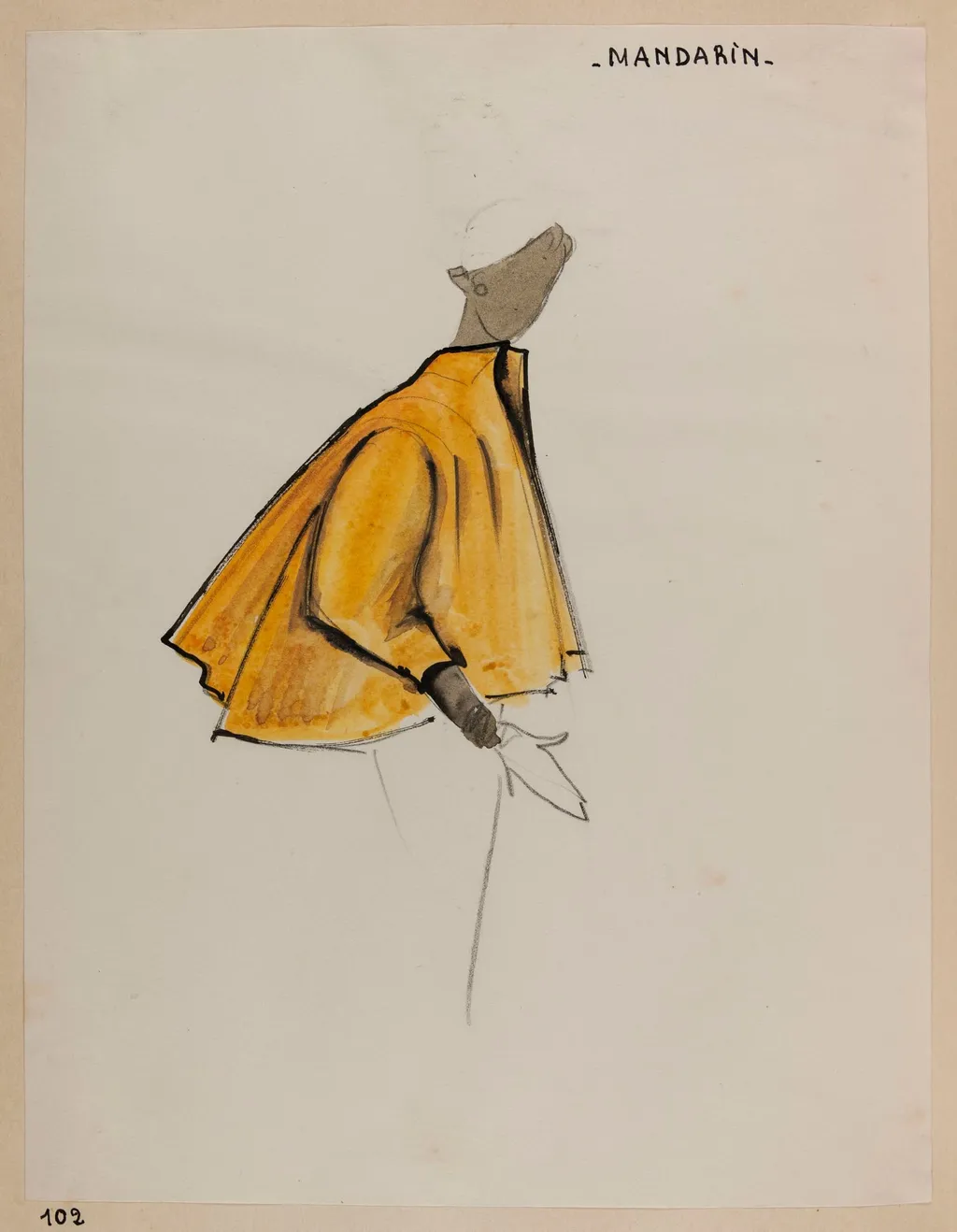
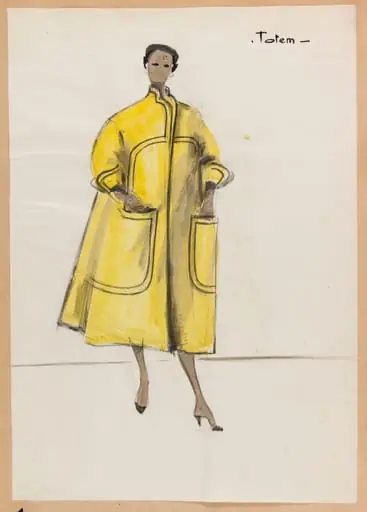
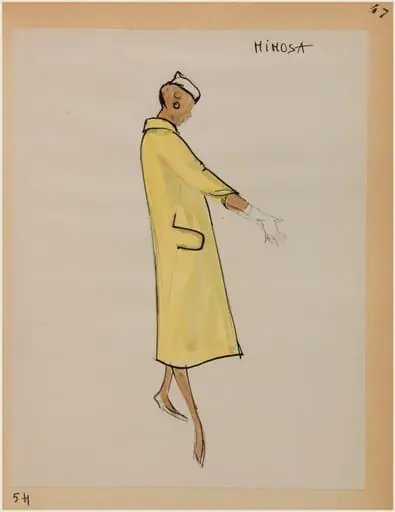
Mandarin is a drawing by Carven. It dates from 1952 and is held in the collection of the Palais Galliera - Musée de la Mode de la Ville de Paris.
About this work
Overview
Mandarin, executed in 1952 by the artist known as Carven, is part of the collection of the Museum of Ethnography. The piece is a graphic image that presents a stylized animal rendered in profile, distinguished by a vivid yellow coat and a dark collar. The composition is minimal, relying on bold contour lines and a sparse indication of form.
Subject & Meaning
The figure appears to be an animal, though its species is not explicitly identified. The inclusion of the word “MANDARIN” at the top suggests a possible reference to a name or a cultural association rather than a literal description. The upward tilt of the head and the simple, almost whimsical posture invite an interpretation of alertness or curiosity.
Technique & Style
Carven employs a loose, sketch‑like approach, using thick outlines that define the silhouette while leaving interior surfaces largely unshaded. The limited palette, primarily the bright yellow coat against a neutral background, creates a graphic impact. The tail is reduced to a single, fluid line, emphasizing the artist’s preference for suggestion over detailed rendering.
History & Provenance
Created in the early 1950s, Mandarin entered the Museum of Ethnography’s holdings at an unspecified date, where it remains accessible to the public. The work reflects Carven’s broader practice of producing playful animal drawings, a recurring motif in the artist’s output during that period.
Artist & collection
Artist
These delicate ink-on-paper drawings capture the quiet poetry of everyday things: pinecones, reeds, apples.
Museum
Palais Galliera - Musée de la Mode de la Ville de Paris
Continue through works from the same source collection.