Artwork
'Tambour de Basque'
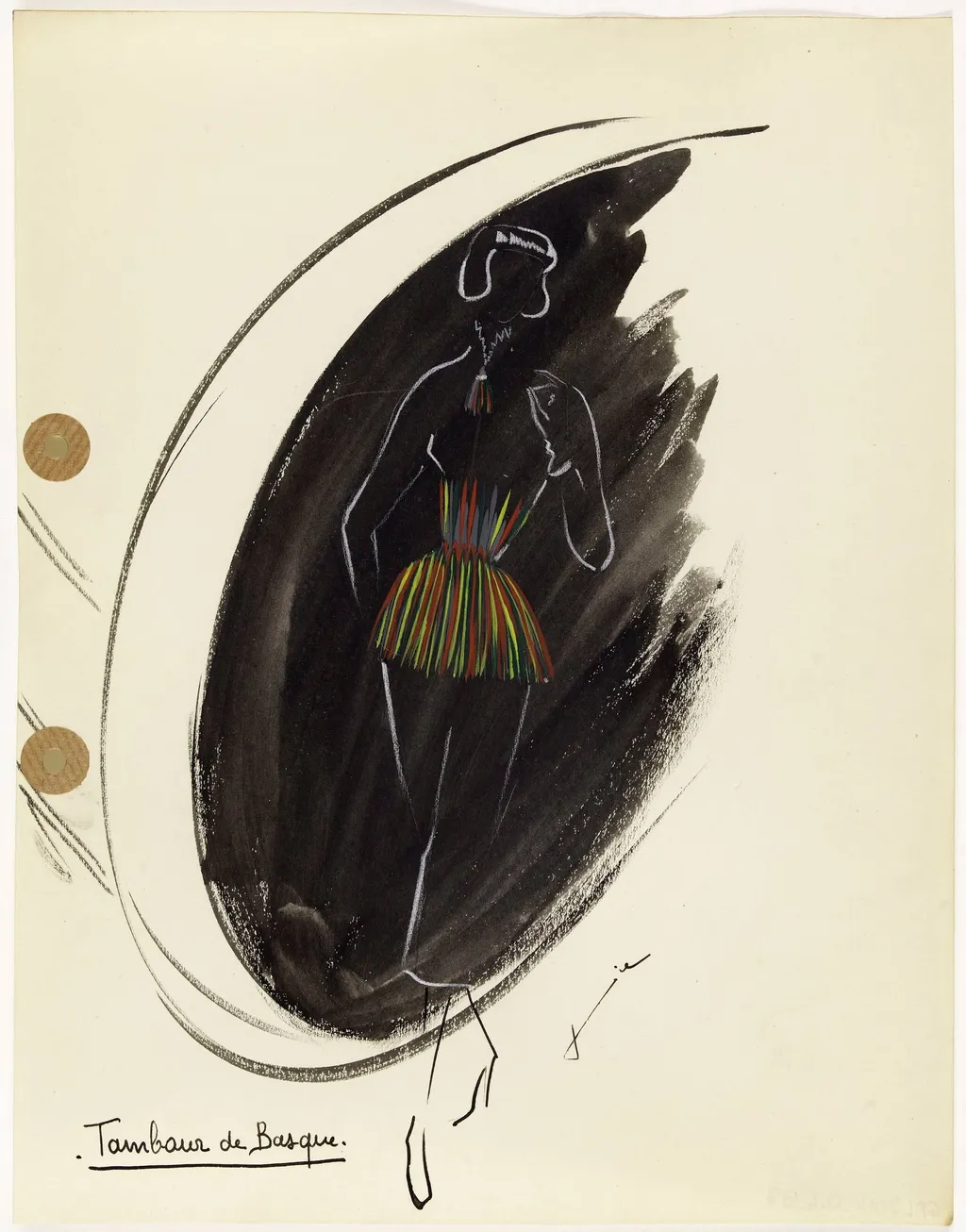
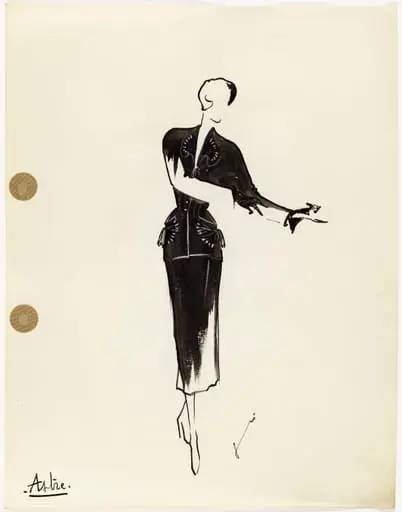
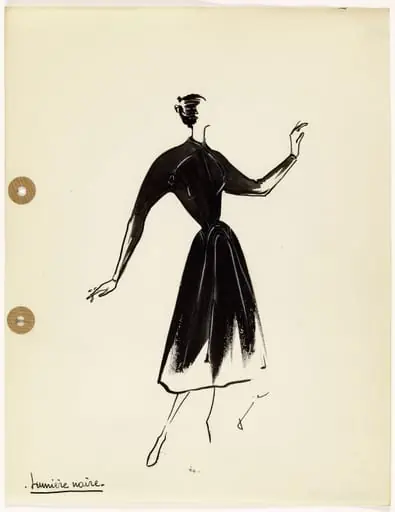
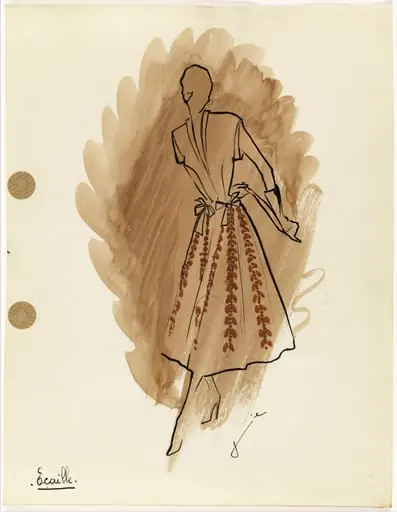
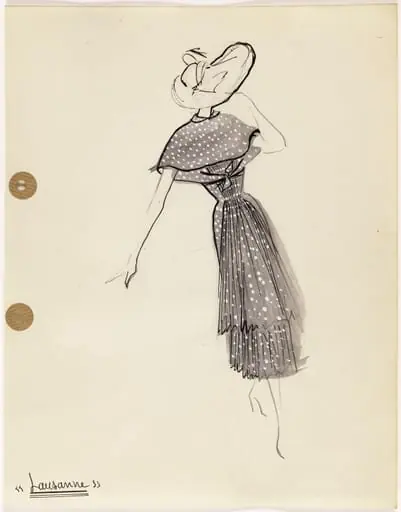
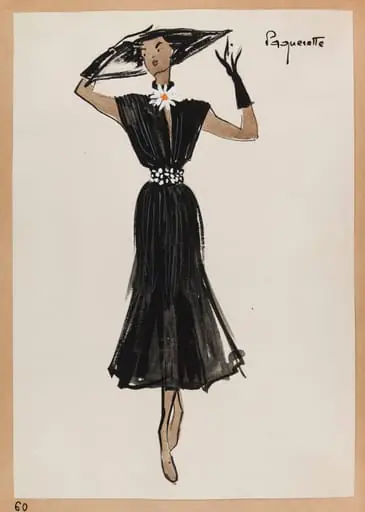
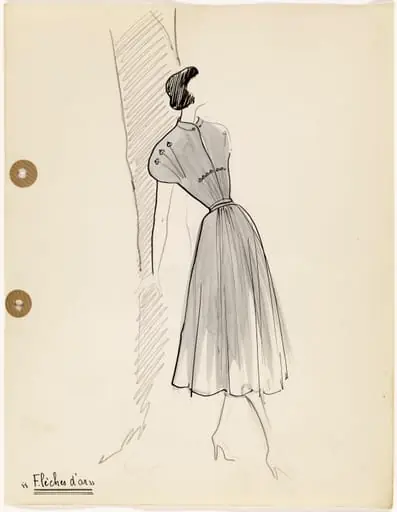
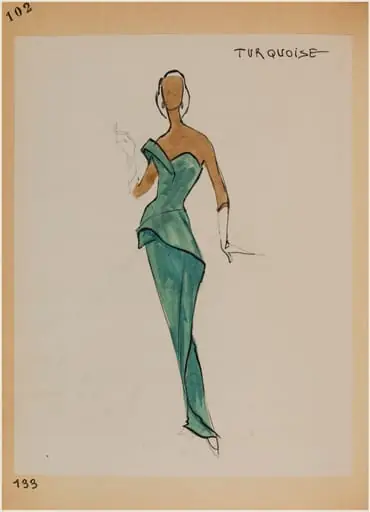
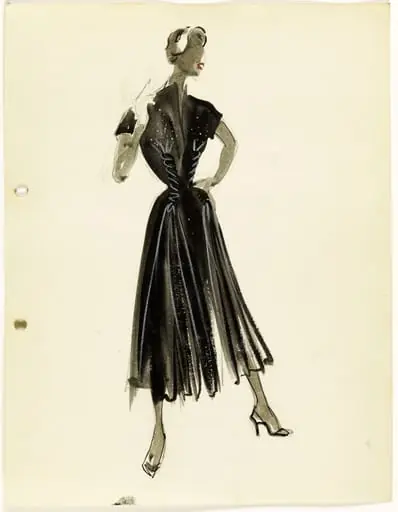
'Tambour de Basque' is a drawing by Carven. It dates from 1949 and is held in the collection of the Palais Galliera - Musée de la Mode de la Ville de Paris.
About this work
Overview
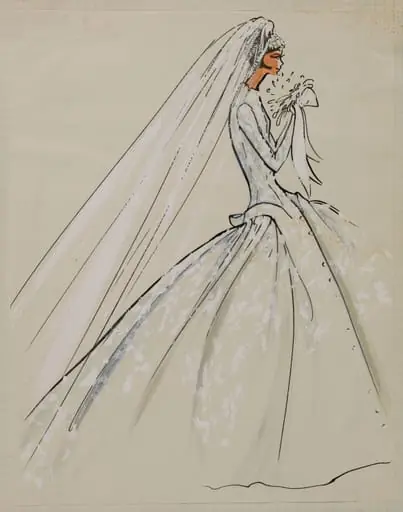
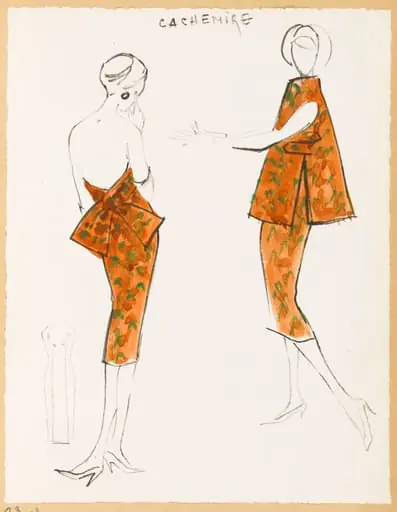
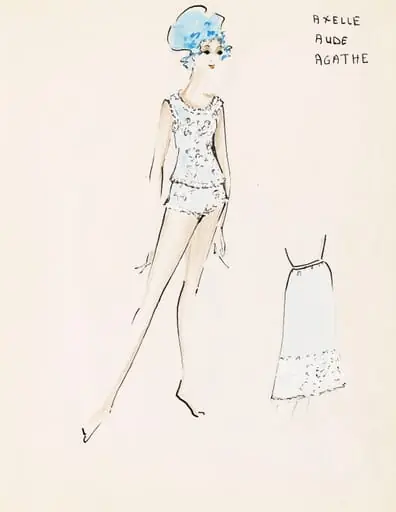
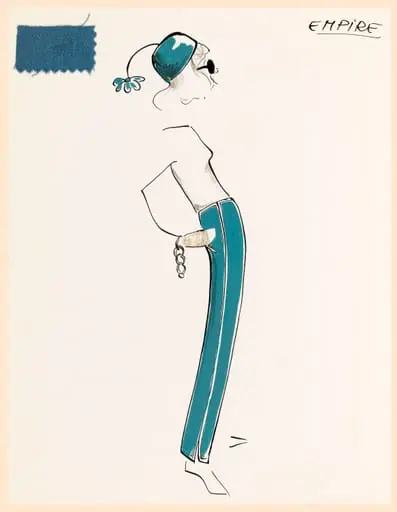
Tambour de Basque is a pencil and watercolor drawing attributed to the French fashion designer Carven, dated around 1949. It is part of the collection at the Museum of Ethnography. The work depicts a solitary female figure in motion, rendered with restrained line work and vivid color. The composition isolates the subject against a dark, rounded backdrop, emphasizing form over environment.
Subject & Meaning
The figure is a woman dressed in a traditional Basque-style garment, characterized by a striped bodice and a full, flared skirt. The pose suggests a rhythmic movement, possibly linked to regional dance or ceremonial practice. The absence of context or narrative detail invites focus on cultural attire as a marker of identity, rather than a specific moment or story.
Technique & Style
The drawing employs bold, fluid contours to define the figure’s silhouette, with minimal internal detail. Color is applied in flat, saturated washes, primarily red, blue, and white, to suggest pattern and volume. The dark oval background enhances contrast, drawing attention to the dress’s geometry and the figure’s posture without distraction.
History & Provenance
Created during Carven’s active years in fashion design, the work likely originated as a personal sketch or study, possibly related to textile or costume inspiration. It entered the Museum of Ethnography’s holdings in the mid-20th century, where it was cataloged as an artifact reflecting cultural dress rather than fine art.
Context
In postwar France, designers like Carven often drew from regional folk traditions to inform modern silhouettes. This drawing aligns with a broader interest in ethnographic motifs within fashion circles, where traditional garments were reinterpreted for contemporary audiences, blending authenticity with aesthetic abstraction.
Legacy
Though not widely exhibited, the drawing remains a quiet example of how fashion designers engaged with cultural heritage outside commercial production. It offers insight into Carven’s visual language beyond garments, revealing a sensitivity to form and pattern rooted in observation rather than ornament.
Artist & collection
Artist
These delicate ink-on-paper drawings capture the quiet poetry of everyday things: pinecones, reeds, apples.
Museum
Palais Galliera - Musée de la Mode de la Ville de Paris
Continue through works from the same source collection.