Artwork
Truite
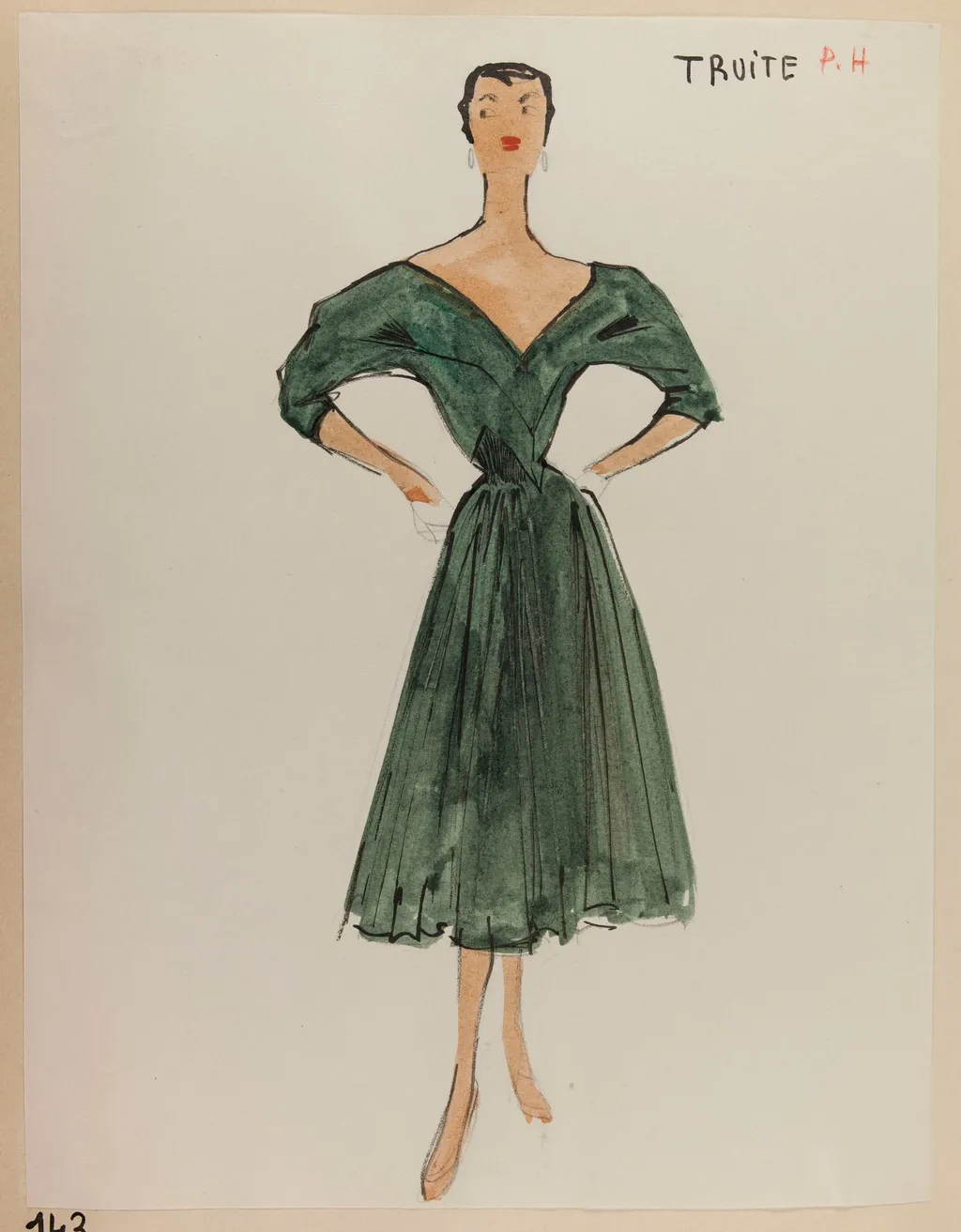
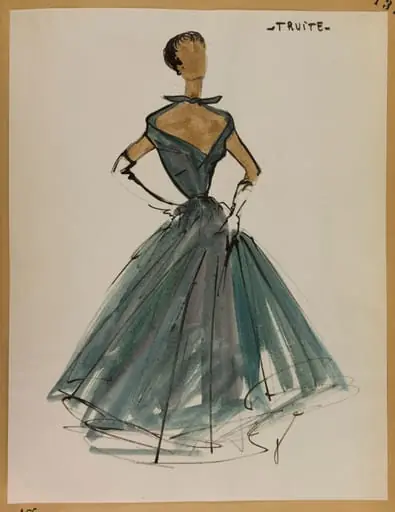
Truite is a drawing by Carven. It dates from 1952 and is held in the collection of the Palais Galliera - Musée de la Mode de la Ville de Paris.
About this work
Overview
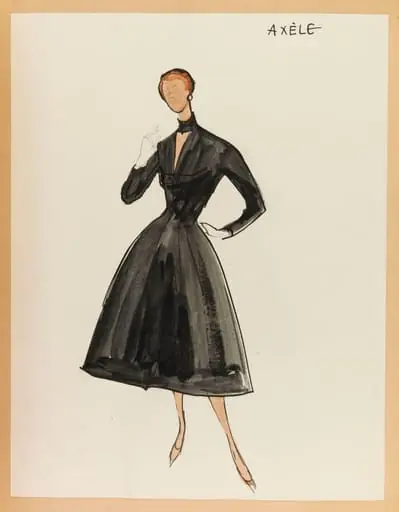
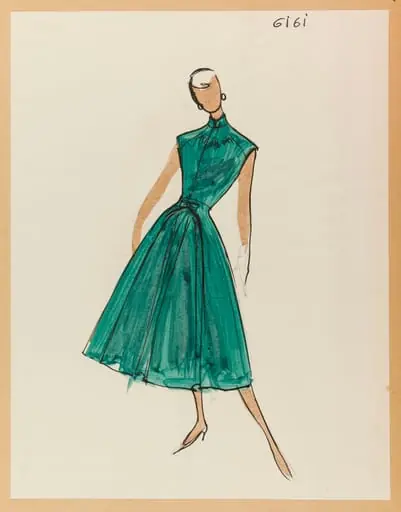
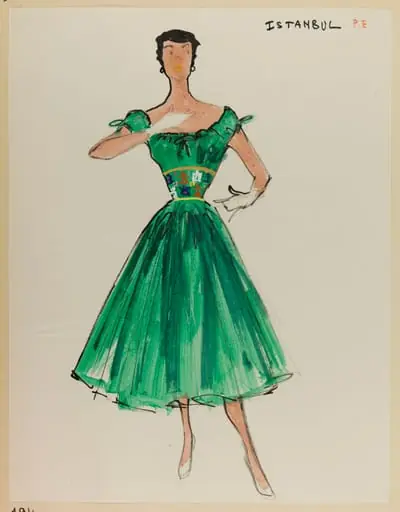
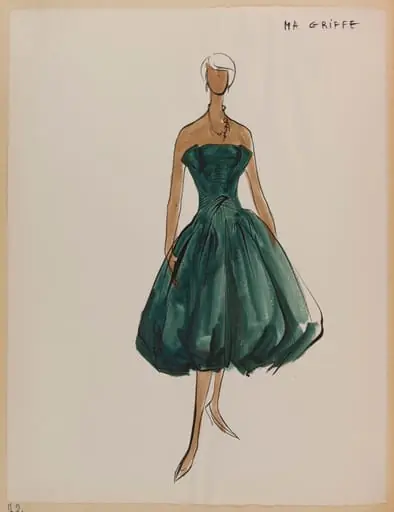
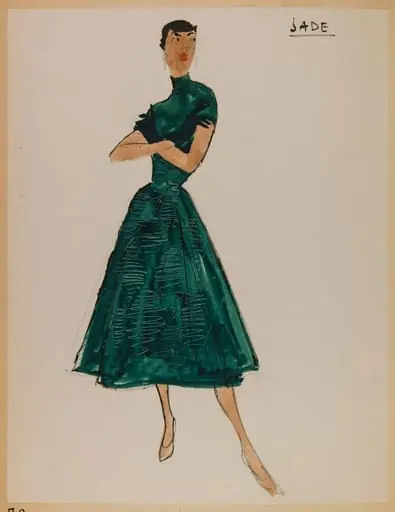
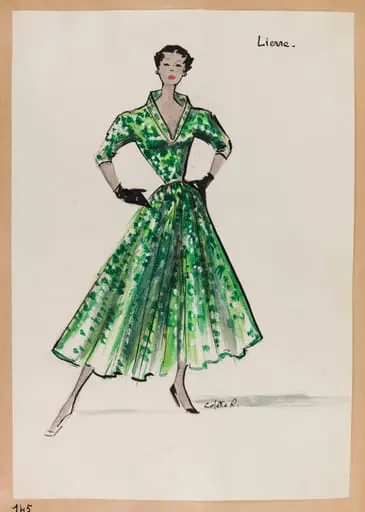
Truite, created around 1952 by the designer Carven, is a painted portrait that captures a woman in a tailored green dress.
Truite, created around 1952 by the designer Carven, is a painted portrait that captures a woman in a tailored green dress. The work is held in the collection of the Museum of Ethnography. Unlike traditional portraiture, it emphasizes clothing as the central subject, presenting fashion as a cultural artifact. The composition is restrained, with minimal background detail, directing focus entirely to the figure and her attire.
Subject & Meaning
The subject is a woman standing with hands on hips, feet together, conveying poise and quiet confidence. Her attire, a fitted green dress with a V-neck and full knee-length skirt, reflects mid-century feminine ideals of structure and grace. The absence of facial detail or contextual clues shifts attention to the garment as a symbol of personal and societal identity, suggesting fashion as a silent language of self-presentation.
Technique & Style
The painting employs flat, even brushwork and a limited palette dominated by deep green and beige. The dress is rendered with precise contours, emphasizing its cut and volume, while the skin tone is softly modeled. The solid beige background eliminates spatial depth, creating a graphic, almost textile-like presentation. This stylistic choice aligns with mid-century design aesthetics that valued clarity and form over naturalism.
History & Provenance
Truite was produced during Carven’s active years as a fashion designer, likely as part of a series documenting contemporary dress. It entered the Museum of Ethnography’s collection in the latter half of the 20th century, where it was preserved as an example of postwar European fashion design. Its origin as a painted study, rather than a commercial illustration, suggests an archival or pedagogical intent.
Context
Created in the early 1950s, Truite reflects a period when haute couture was still central to women’s daily attire. The dress’s silhouette, fitted bodice, full skirt, mirrors the dominant postwar silhouette promoted by Parisian ateliers. As ethnographic material, the work documents how fashion functioned not merely as adornment but as a marker of social norms and gendered expectations in mid-century Europe.
Legacy
Truite remains a quiet but significant record of how fashion was visually codified outside commercial media. Its inclusion in an ethnographic museum underscores a shift in scholarly interest toward clothing as cultural expression. While Carven is better known for textile design, this painting offers insight into the broader visual culture of mid-century fashion, influencing later studies on dress as material history.
Artist & collection
Artist
These delicate ink-on-paper drawings capture the quiet poetry of everyday things: pinecones, reeds, apples.
Museum
Palais Galliera - Musée de la Mode de la Ville de Paris
Continue through works from the same source collection.