Artwork
Guerfeh Hassan - Nubia
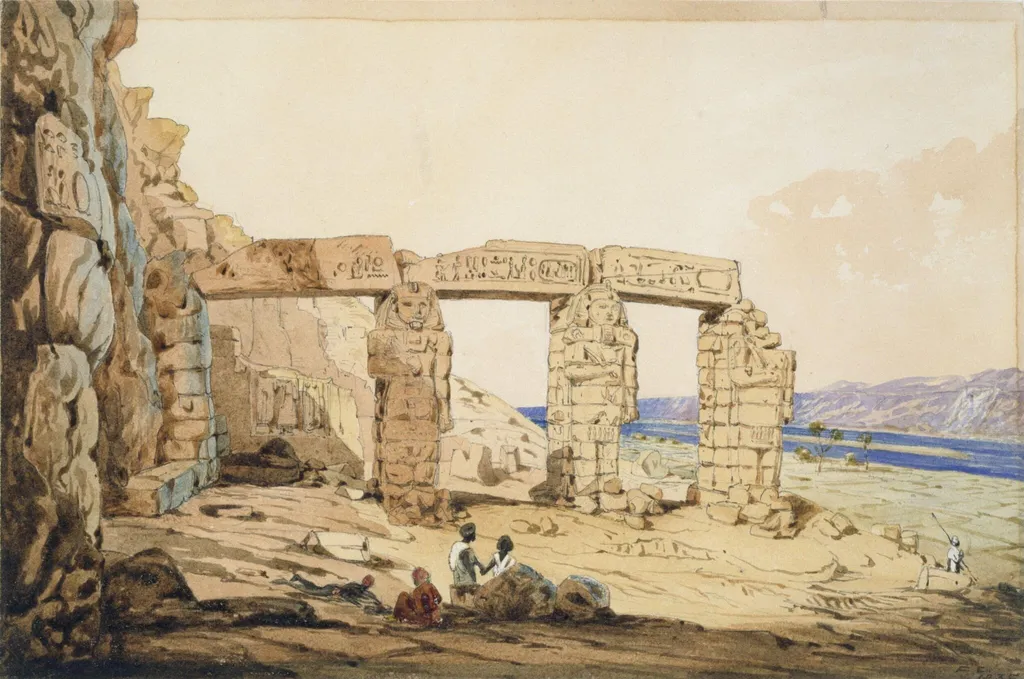
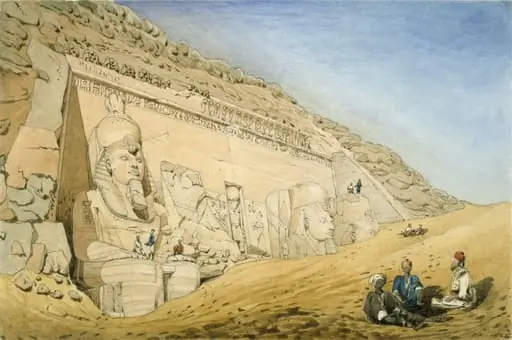
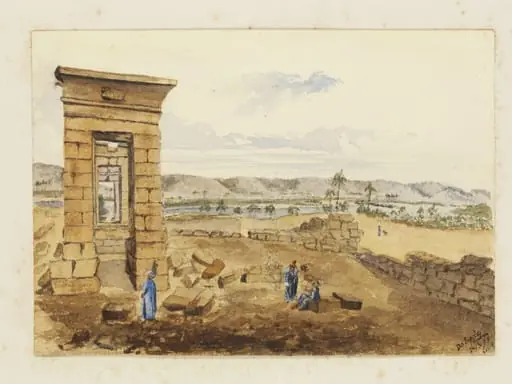
Guerfeh Hassan - Nubia is a watercolor work on paper by the British Romanticist artist Frederick Catherwood. It dates from 1834 and is held in the collection of the Victoria and Albert Museum.
About this work
Overview
Guerfeh Hassan - Nubia is a watercolour painting depicting the rock-cut Temple of Ramesses II at Girf Husayn.
Subject & Meaning
The painting shows the temple, later submerged beneath Lake Nasser, in a desert landscape with a body of water and mountains in the background. The temple's carved figures and hieroglyphics are rendered in detail.
Technique & Style
The artist employed earth tones, ranging from sandy beige to weathered brown, to capture the scene. The use of colour and attention to detail evoke a serene and timeless atmosphere.
History & Provenance
Created in 1834 during the Westcar expedition, the painting records the temple's appearance before its inundation. It was sold at Sotheby's on 12 October 1977.
Own this work as a print
Artist & collection
Artist
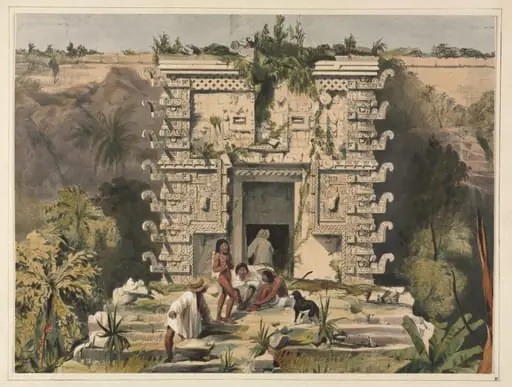
Frederick Catherwood was an English artist, architect and explorer, best remembered for his meticulously detailed drawings of the ruins of the Maya civilization.