Artwork
In Vrindaban
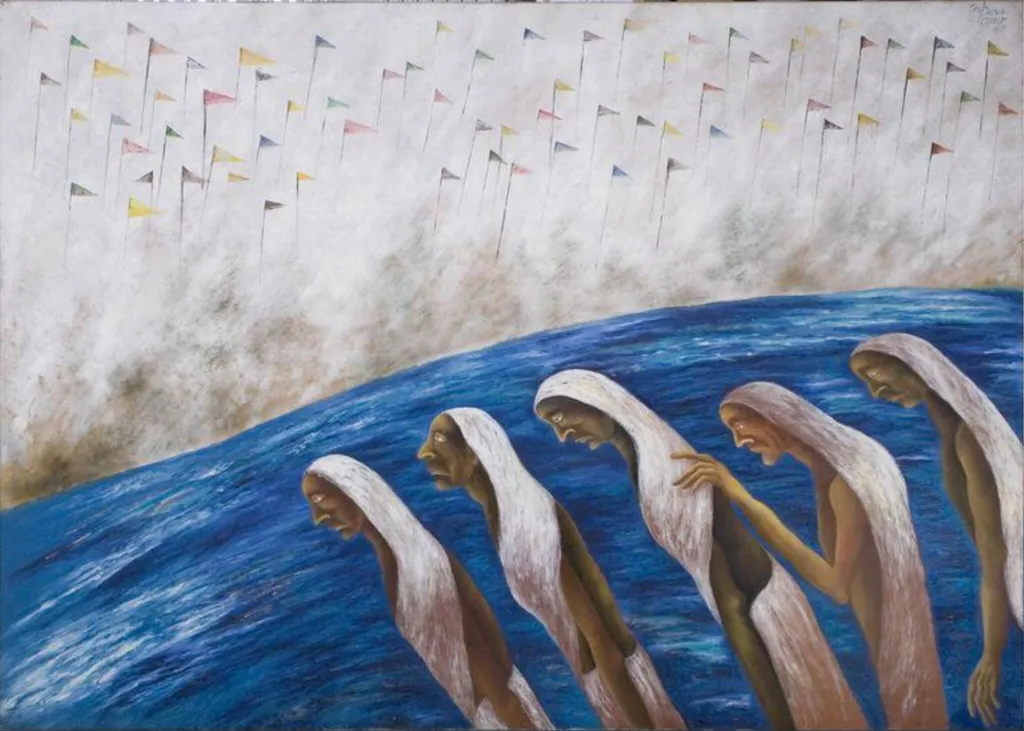
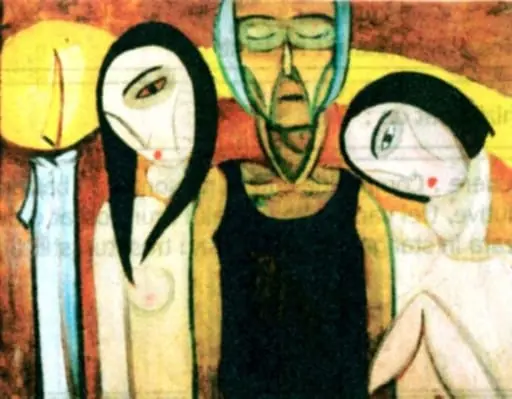
In Vrindaban is a paint painting by the Pahari Painting artist Arpana Caur. It dates from 1987 and is held in the collection of the Victoria and Albert Museum. Created in 1987, this painting forms part of a series produced after the artist’s visit to the sacred town of Vrindavan.
About this work
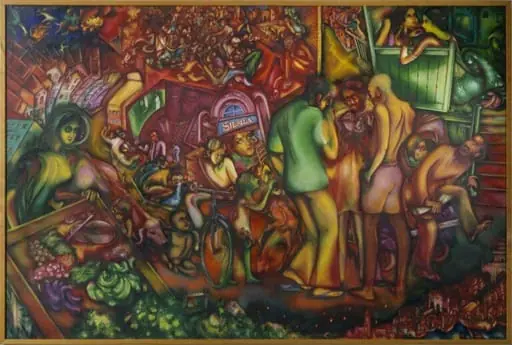
This 1987 painting shows a crowded riverside scene with young women in bright saris moving through a misty forest.
This 1987 painting shows a crowded riverside scene with young women in bright saris moving through a misty forest. Krishna hides among the trees, playing his flute. The gopis look happy but the city behind them is crumbling.
Arpana Caur visited Vrindavan to make this series. She painted the old legends against today’s cracked walls and trash heaps. The bright colors make the story feel alive even as the setting falls apart.
Check out more of Caur, Arpana’s work.
Overview
Created in 1987, this painting forms part of a series produced after the artist’s visit to the sacred town of Vrindavan. It reinterprets the traditional narrative of Krishna’s youthful encounters with the gopis, placing the scene within a contemporary, deteriorating environment. The composition is densely populated, showing a riverside setting where figures in vivid saris move through a mist‑filled forest while the distant city appears in ruin.
Subject & Meaning
The work juxtaposes the classic mythic motif of Krishna’s flute‑playing among the gopis with visual signs of decline. The women, traditionally portrayed as youthful maidens, are rendered in older, widow‑like attire, suggesting the passage of time and loss. Flags and remnants of former splendor hint at Vrindavan’s historic glory, while the crumbling backdrop underscores a commentary on cultural erosion.
Technique & Style
Employing bright, saturated pigments, the artist balances a lively palette against a muted, decayed setting. Figures are rendered with fluid outlines that recall Pahari miniature conventions, yet the overall composition adopts a more modern, narrative realism. The misty forest and reflective river surface are suggested through soft washes, creating depth while maintaining a decorative surface quality.
History & Provenance
The painting emerged from a series initiated after the artist’s field trip to Vrindavan, where she documented the juxtaposition of mythic stories with present‑day urban decay. Since its completion, the work has been exhibited in several contemporary Indian art shows, illustrating the artist’s ongoing engagement with the tension between tradition and modernity.
Context
Vrindavan, revered as the site of Krishna’s early life, has long inspired Pahari painters who depicted its pastoral charm. This piece diverges by embedding the legend within a landscape marked by cracked walls and litter, reflecting broader social and environmental concerns in late‑20th‑century India.
Legacy
The painting contributes to a body of work that reexamines sacred narratives through a critical contemporary lens. Its vivid coloration and stark contrast between mythic joy and physical decay continue to influence artists exploring the intersection of heritage and present‑day realities.
Artist & collection
Artist
Arpana Caur paints scenes from everyday life in ink and color, often focusing on places of worship and ritual.