Movement
Pahari Painting
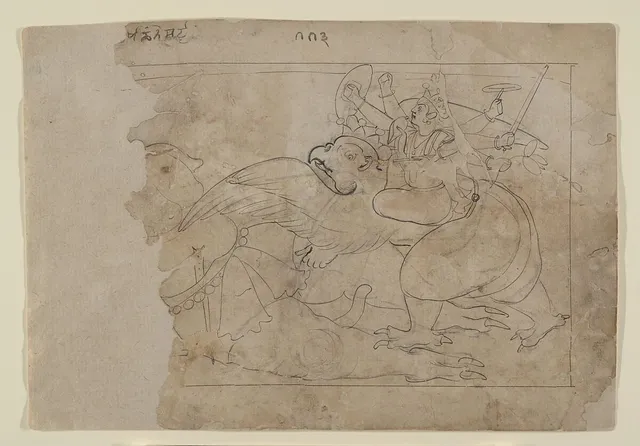
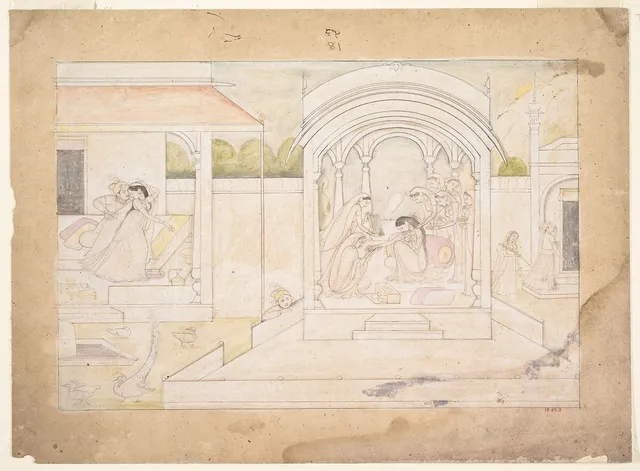
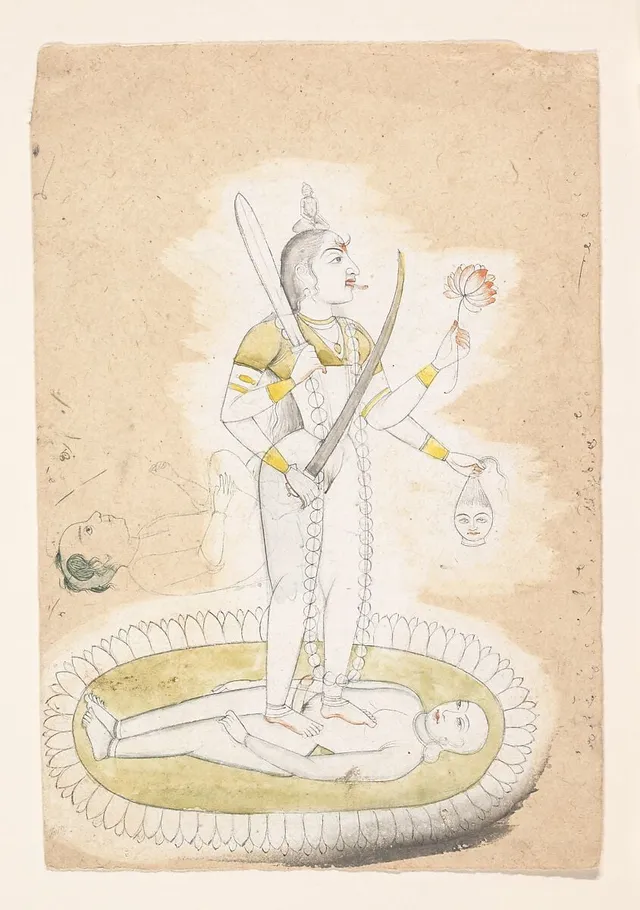
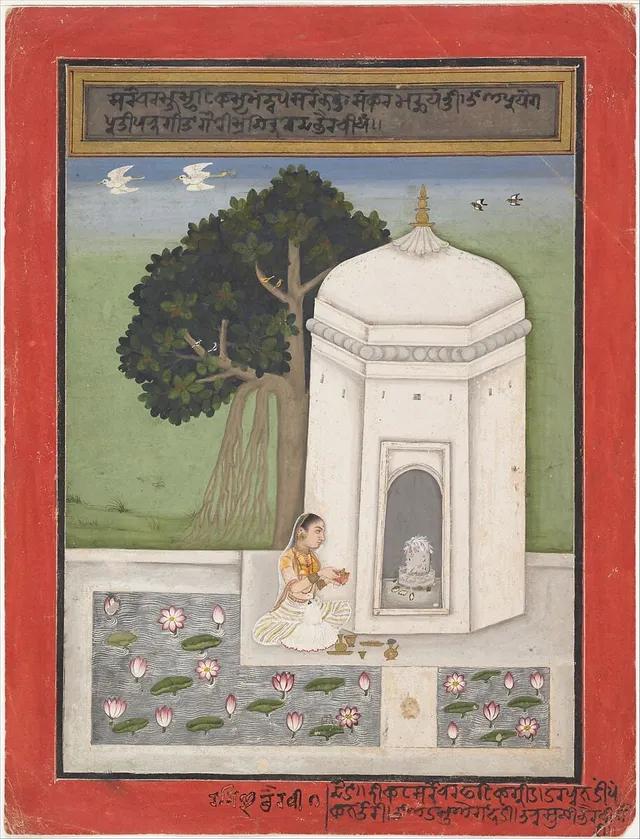
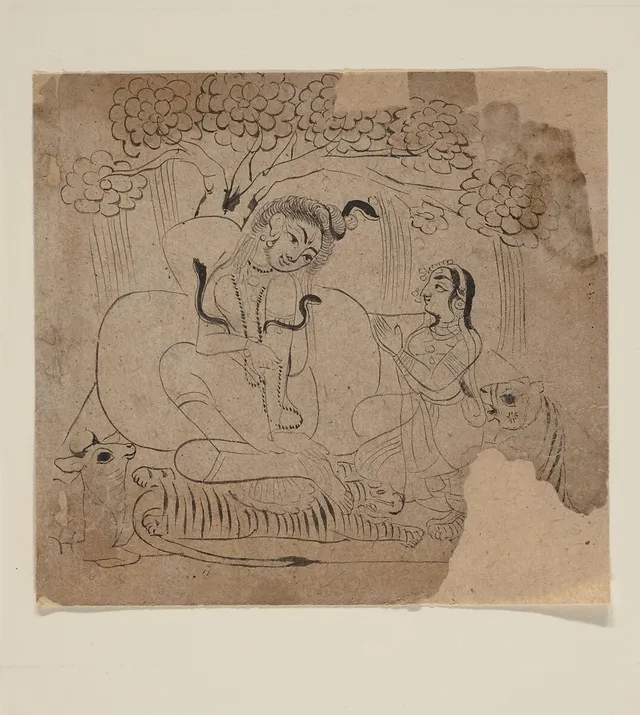
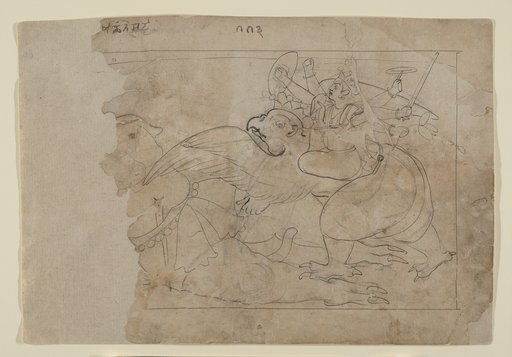
Pahari Painting is an art movement. The gallery holds 117 works in this movement, including works by Seu Family, Nainsukh and Devidasa of Nurpur. Browse Pahari Painting paintings, portraits, pictures and artworks from the world's public-domain museum collections.
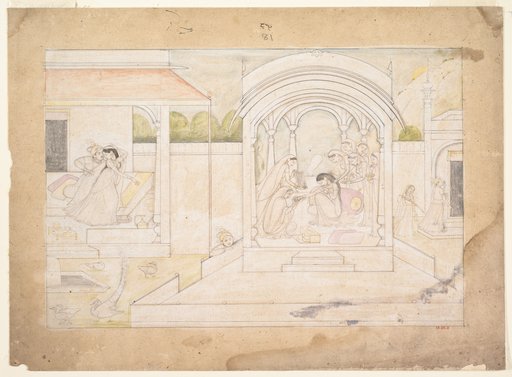
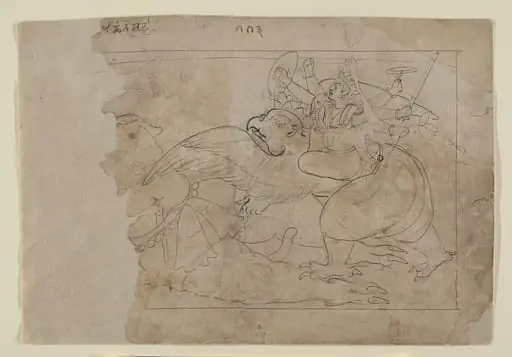
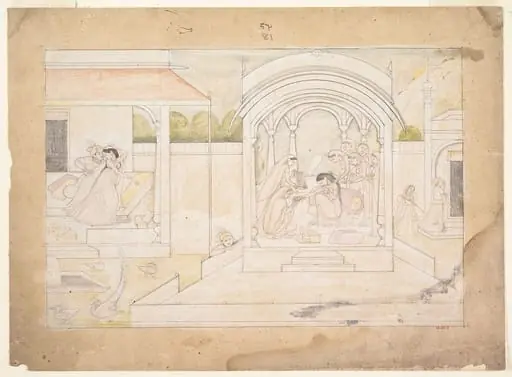
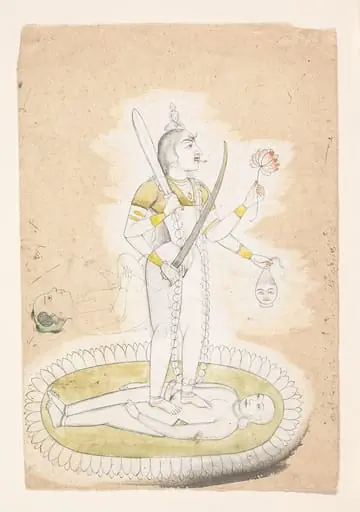
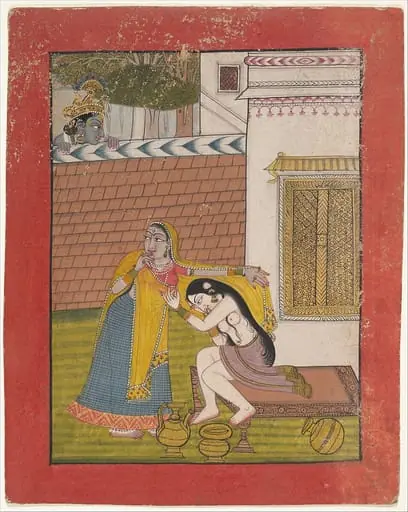
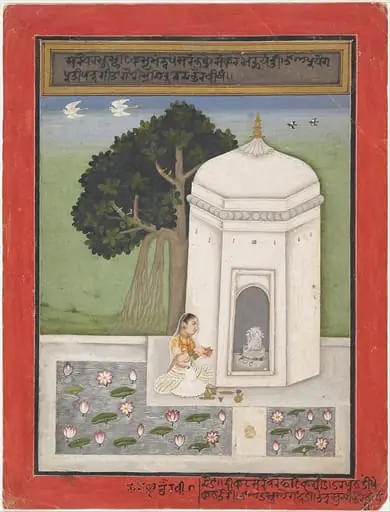
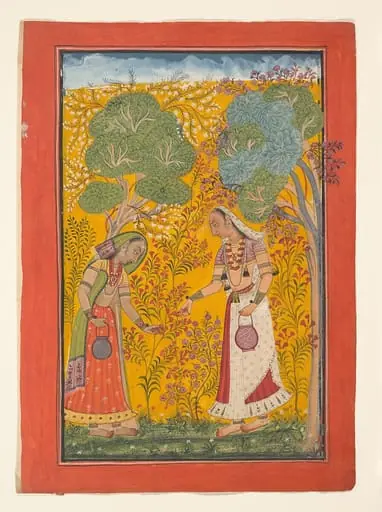
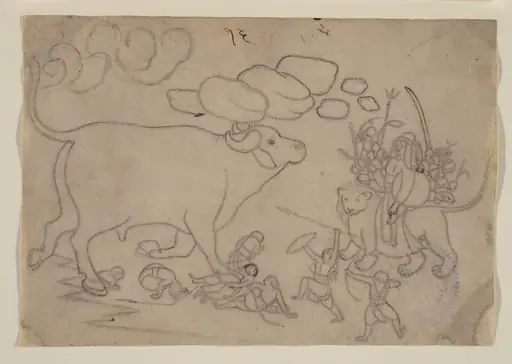
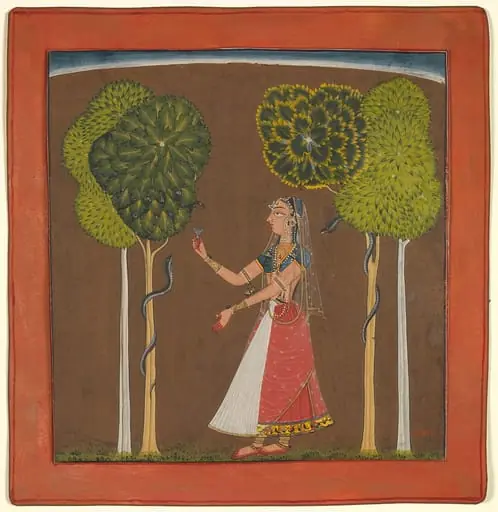
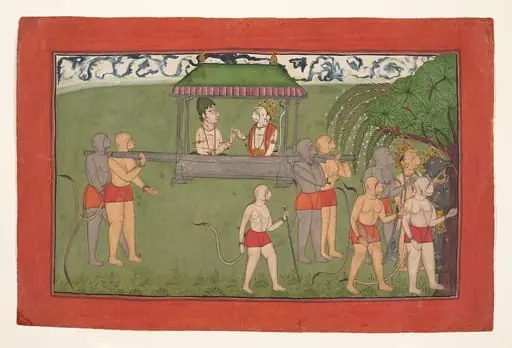
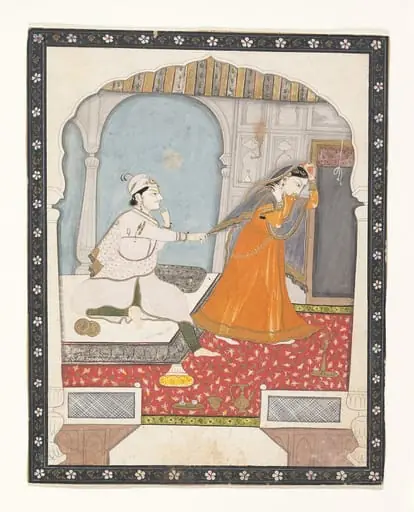
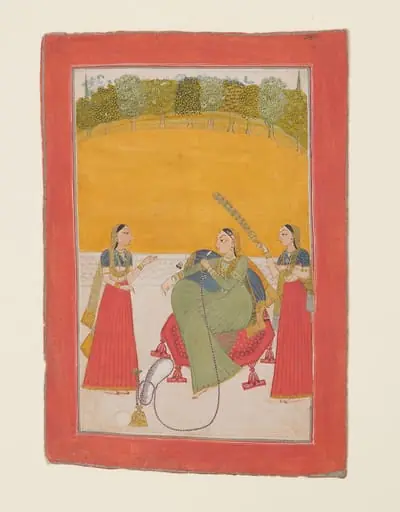
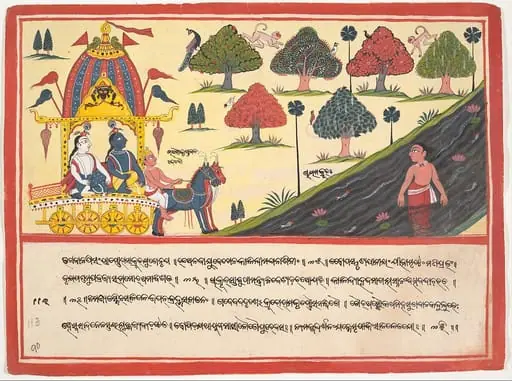
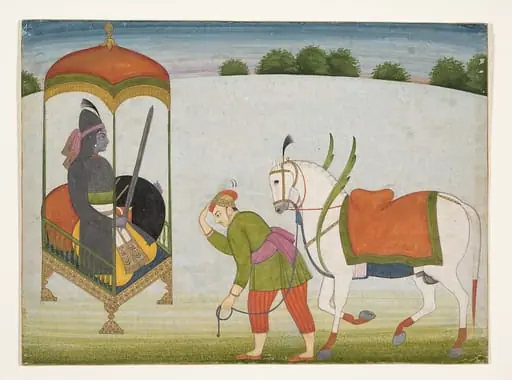
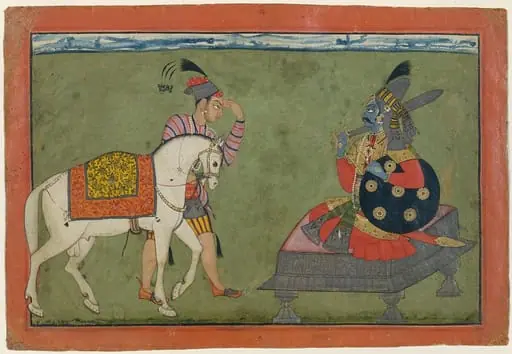
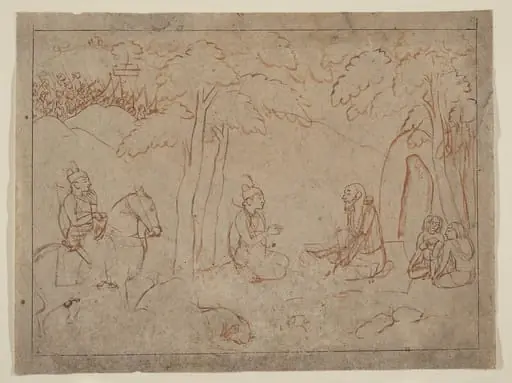
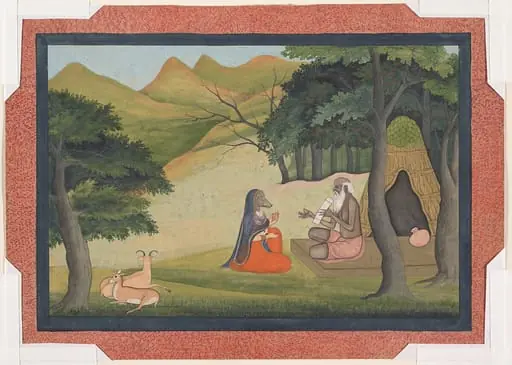
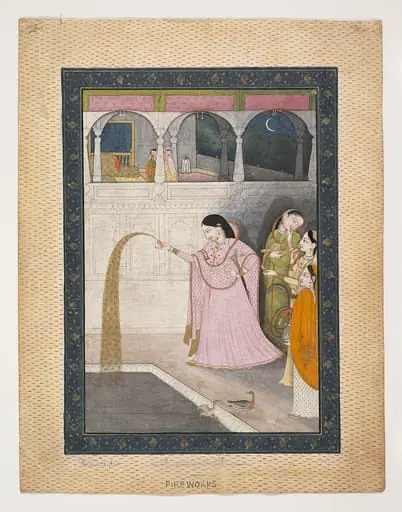
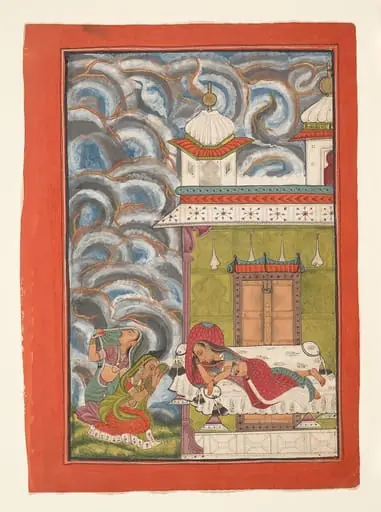
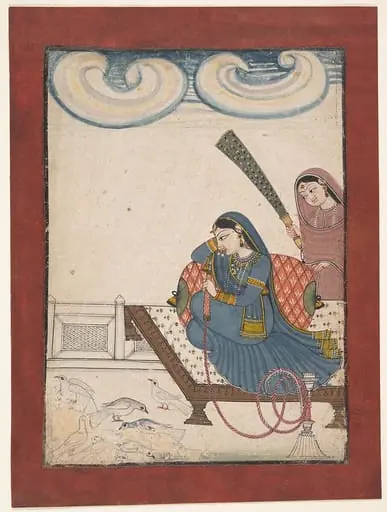
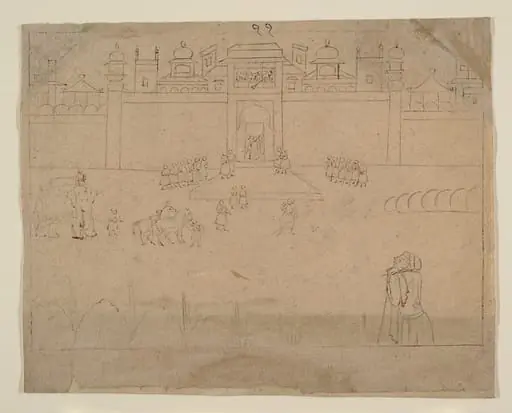
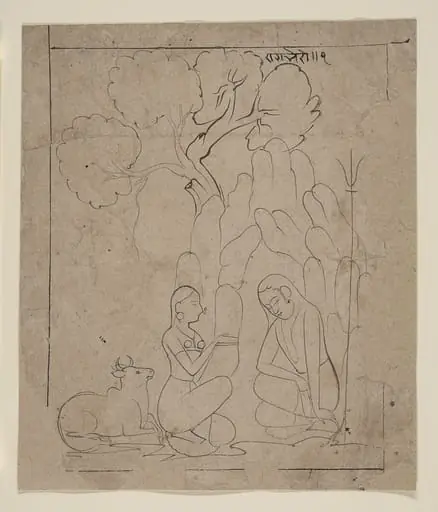
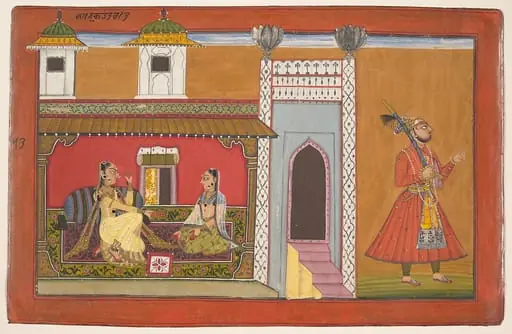
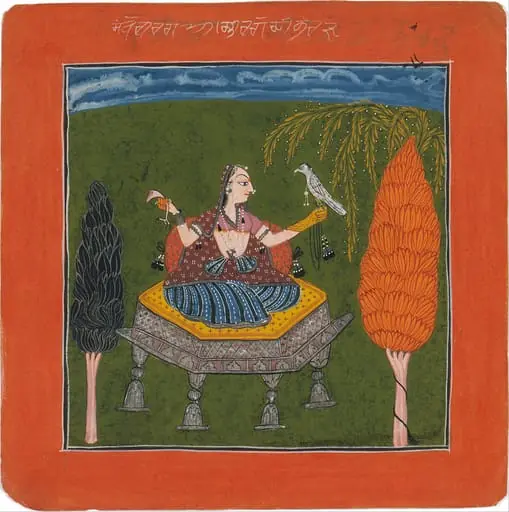
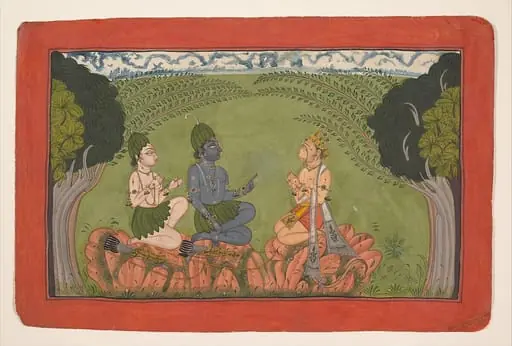
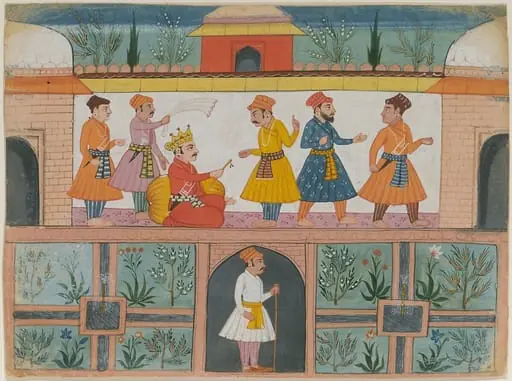
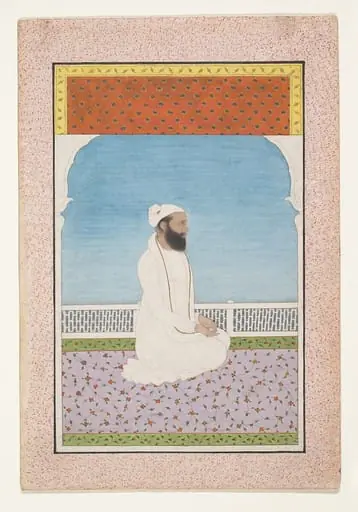
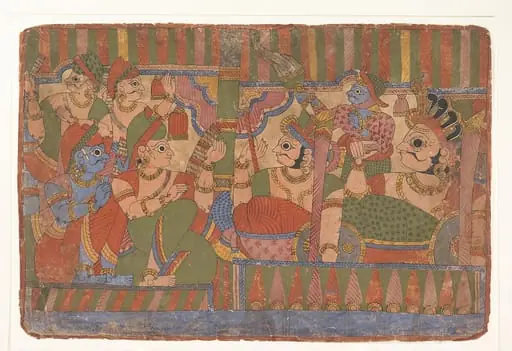
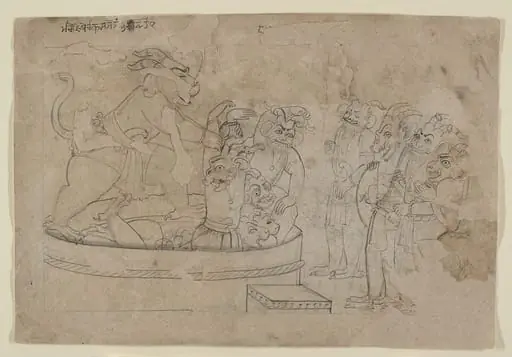
Pahari painting (from the Hindi pahar, "hill") is the tradition of Rajput miniature painting that flourished from roughly the late seventeenth to the mid-nineteenth century in the small Hindu courts of the Punjab Hills—the sub-Himalayan belt spanning present-day Himachal Pradesh, Jammu, and Uttarakhand. It emerged in princely states such as Basohli, Mankot, Nurpur, Chamba, Guler, Kangra, Mandi, and Garhwal, where Rajput rulers patronized hereditary workshops of painters. The idiom drew on indigenous Rajput conventions while absorbing the naturalism and refinement of Mughal painting, often carried into the hills by artists migrating after the decline of imperial patronage. Its themes were overwhelmingly devotional and lyrical, centered on the loves of Krishna and Radha, Shaiva subjects, and the codified moods of Sanskrit and Hindi poetry.
Scholars broadly distinguish an early, intense Basohli manner from the later, lyrical Kangra manner, with the Guler workshop bridging the two. Basohli work, exemplified by the Rasamanjari series painted by Kripal of Nurpur and continued by his son Devidasa of Nurpur, is bold and hieratic: vivid monochrome grounds, flat planes of saturated red and yellow, strong outlines, stylized faces with large eyes, and the celebrated inlay of iridescent green beetle-wing cases to simulate emeralds. By the mid-eighteenth century this hard brilliance gave way to softer palettes, supple line, atmospheric landscapes, and gentle, oval-faced figures—the so-called Guler-Kangra style.
The transformation centers on a single remarkable family, that of Pandit Seu of Guler (c. 1680–1740) and his two sons, Manaku (c. 1700–1760) and Nainsukh (c. 1710–1778). Nainsukh, who left Guler around 1740 to serve Raja Balwant Singh of Jasrota, is regarded as one of the most original of all Indian painters; his intimate, naturalistic portraits and his absorption of Mughal subtlety reshaped the entire tradition. Manaku, more conservative, produced ambitious series such as the Gita Govinda and Bhagavata Purana. Their descendants and pupils—including artists such as Fattu, Bhagvan, and Purkhu of Kangra—carried the manner into the Kangra ateliers under Raja Sansar Chand, where the lyrical Gita Govinda, Bihari Satsai, and Bhagavata Purana series were produced.
The finest Pahari painting balances exquisite draftsmanship with deep poetic feeling, translating literary texts on love and devotion into rhythmic line and luminous color. The tradition declined in the nineteenth century with the spread of Sikh power and, later, photography and printing, yet its legacy endures: the Pahari schools, alongside neighbouring Rajasthani painting, represent the last great flowering of Indian miniature art, and the achievement of the Seu family workshop—long anonymous until reconstructed by scholars such as B. N. Goswamy—remains among its most studied subjects.
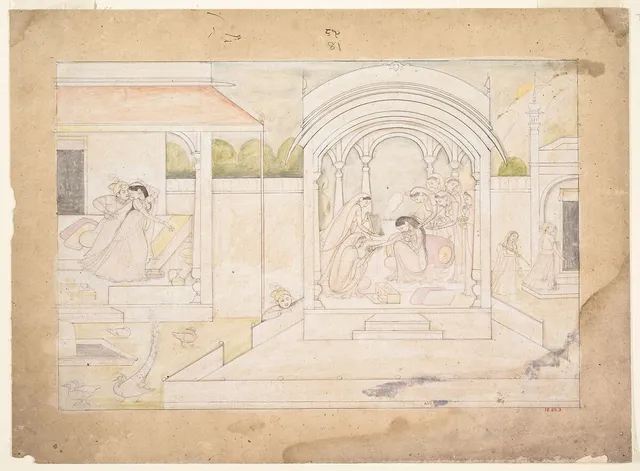
Key artists

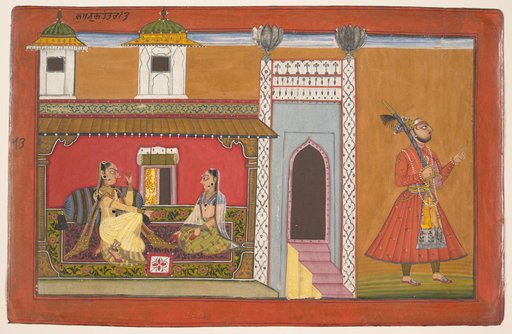
Works
 Untitled
 Untitled
 Untitled
 Untitled
 Untitled
 Untitled
 Untitled
 Untitled
 Untitled
 Untitled
 Untitled
 Untitled
 Untitled
 Untitled
 Untitled
 Untitled
 Untitled
 Untitled
 Untitled
 Untitled
 Untitled
 Untitled
 Untitled
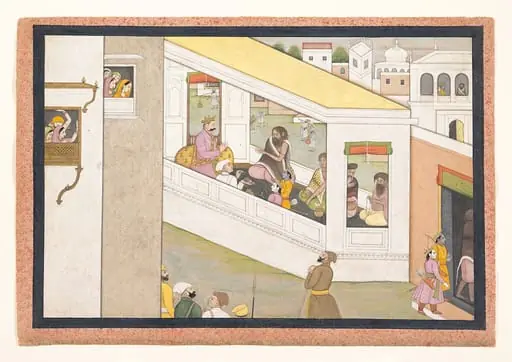 Untitled
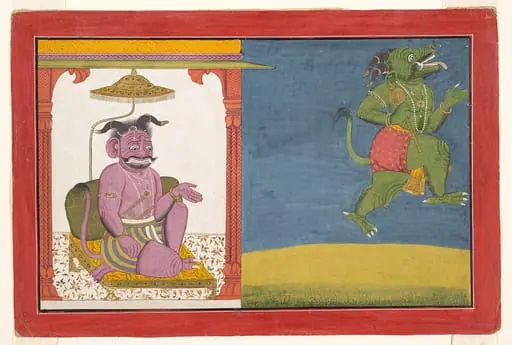 Untitled
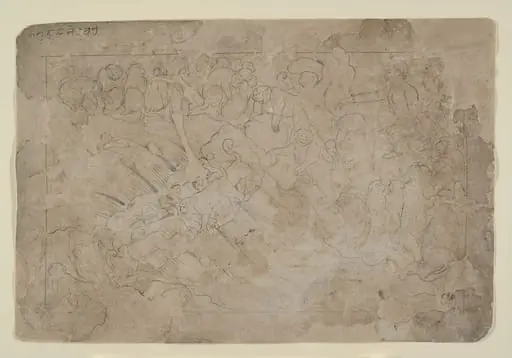 Untitled
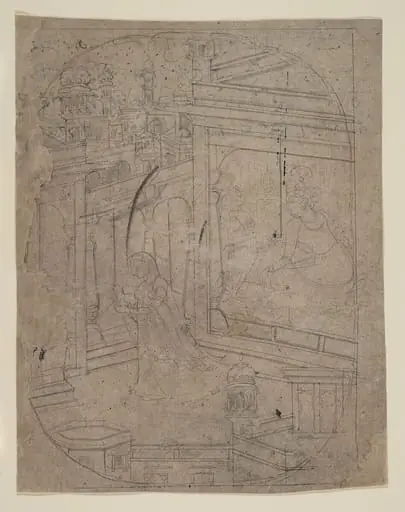 Untitled
 Untitled
 Untitled
 Untitled
 Untitled
 Untitled
 Untitled
 Untitled
 Untitled
 Untitled
 Untitled
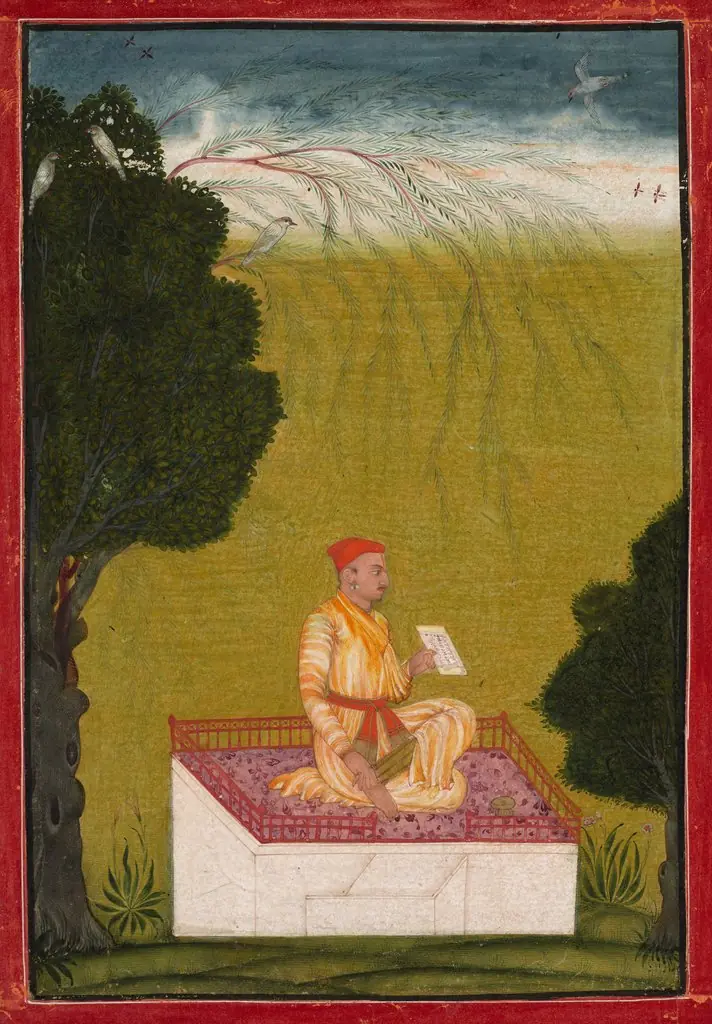 Raja Dalip Singh of Guler on a Dais
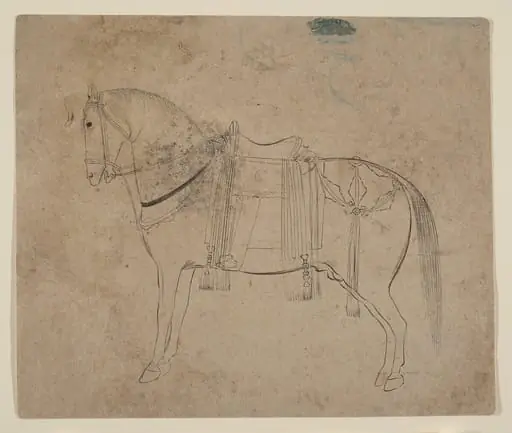 Untitled
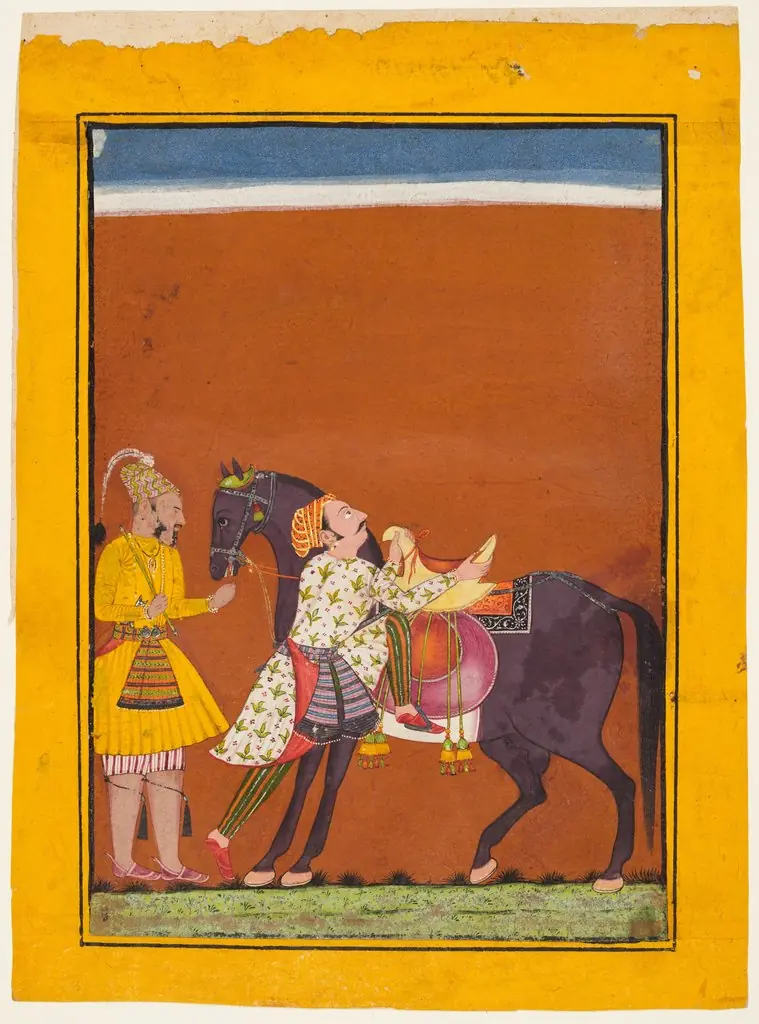 A Warrior Mounting a Held Horse: Saindhava Ragaputra of Shri, from a Chamba Ragamala
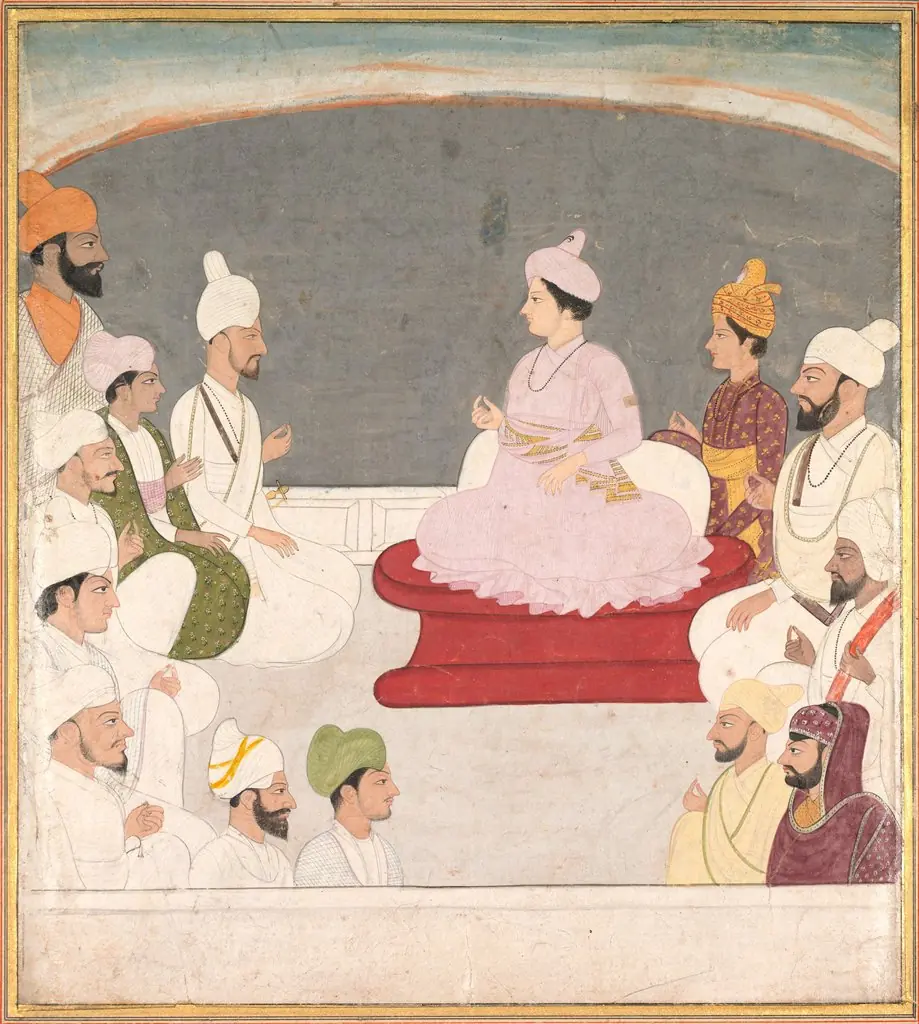 Raja Sansar Chand of Kangra and Courtiers
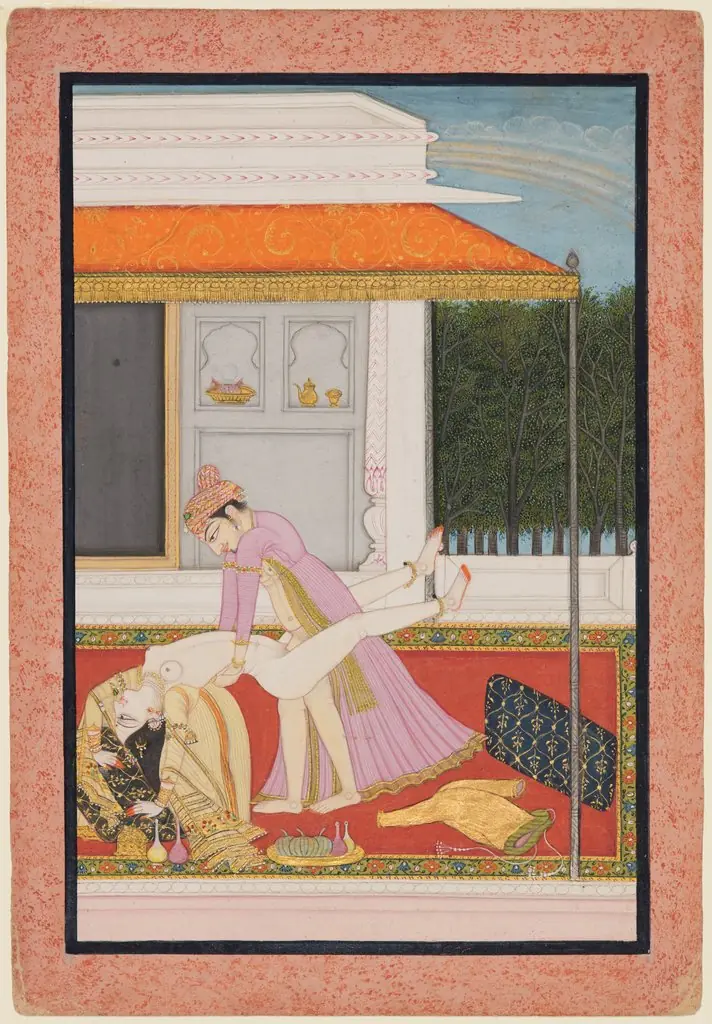 An Amorous Couple, Probably Raja Mahendra Pal of Basohli (r. 1806–13) with a Favorite Queen
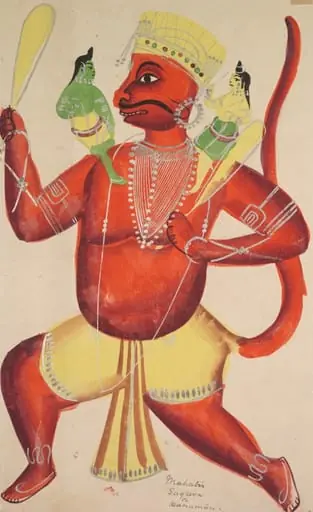 Hanuman with Rama and Lakshmana on his shoulders, from a Kalighat album
![Rama and Lakshmana Fighting Ravana, from a Dashavatara (Ten Incarnations [of Vishnu]) series, 1765](https://artifactworldgallery.com/img/rama-and-lakshmana-fighting-ravana-from-a-dashavatara-ten-in--5e1e27c9fffbe47d-w320.webp) Rama and Lakshmana Fighting Ravana, from a Dashavatara (Ten Incarnations [of Vishnu]) series
Rama and Lakshmana Fighting Ravana, from a Dashavatara (Ten Incarnations [of Vishnu]) series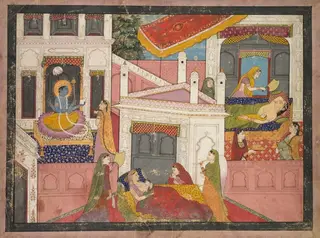 The birth of Rama and his brothers, from Chapter 17 of the Bala Kanda (Book of Childhood) of the Adhyatma Ramayana (Rama's Journey of the Supreme Spirit) from the Brahmanda Purana (Ancient Scripture of the Cosmic Egg)
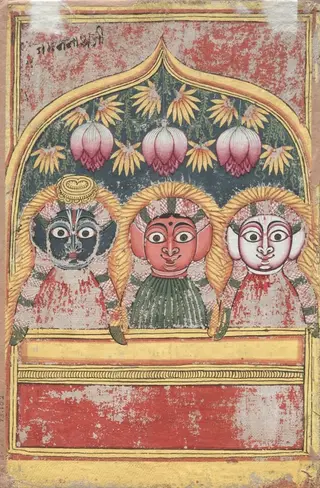 Jagannath, Subhadra and Balarama in an Arch (verso)
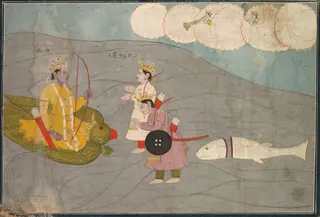 Vanasura's Sons Submit to Krishna: Scene from the Aniruddha Usha Section of Krishna Lila
![The Marriage of Rukmini [Mangal], 1775](https://artifactworldgallery.com/img/the-marriage-of-rukmini-mangal--7178947364f7bdb5-w320.webp) The Marriage of Rukmini [Mangal]
The Marriage of Rukmini [Mangal]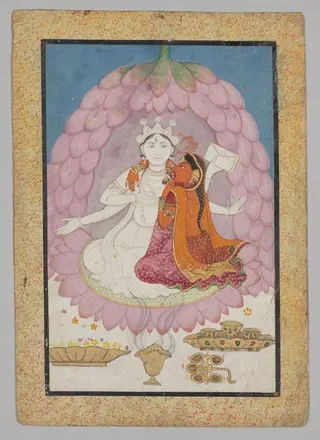 Divine couple seated in a lotus blossom
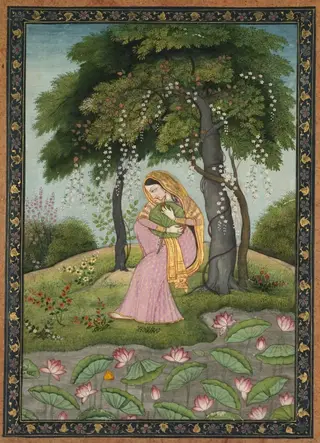 Virahini Nayika, Love-Torn Heroine
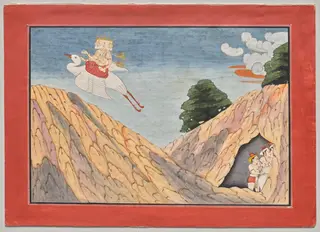 Brahma Hides the Cowherds and the Calves in the Cave, page from a Bhagavata Purana
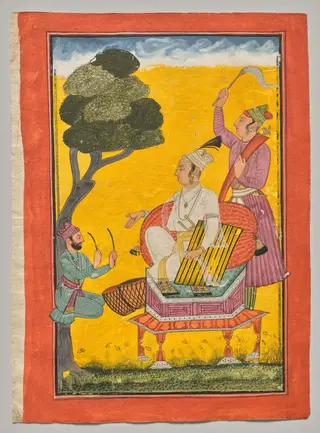 Vivaca Ragaputra, a Leaf from Ragamala Series
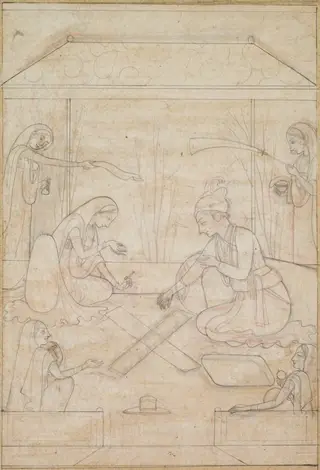 Couple Playing Chaupar on a Terrace
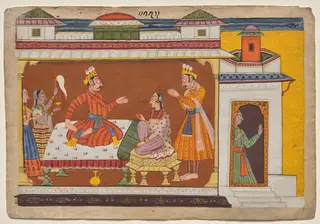 King Dasharatha sends his chief minister Sumantra to summon Rama, from the "Shangri" Ramayana
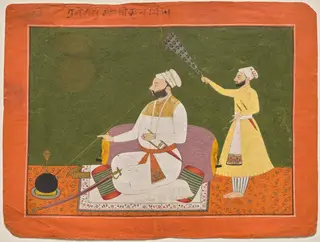 Raja Bikram Singh of Guler smoking a hookah
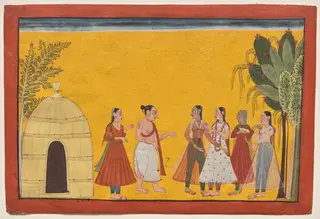 Rishyashringa addresses the courtesans, from the "Shangri" Ramayana
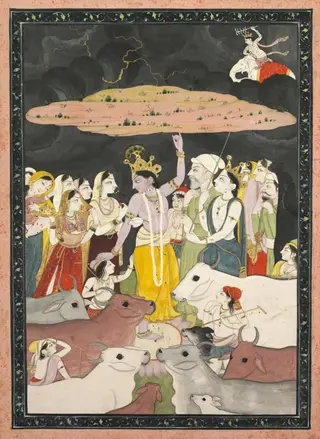 Krishna Lifting Mount Govardhan
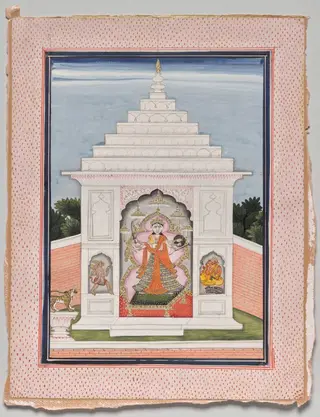 Devi Shrine
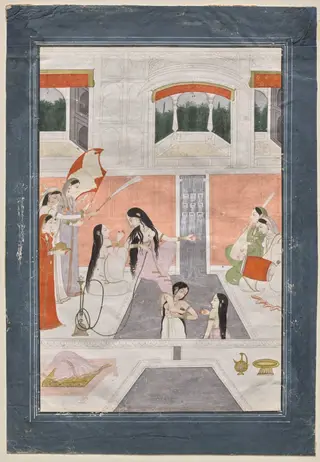 Palace women enjoy music by the side of a cascade
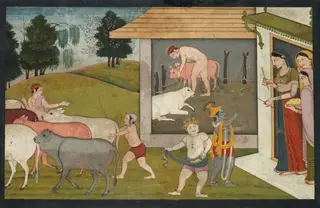 Krishna and Balarama taking the cattle out to graze, from a Bhagavata Purana
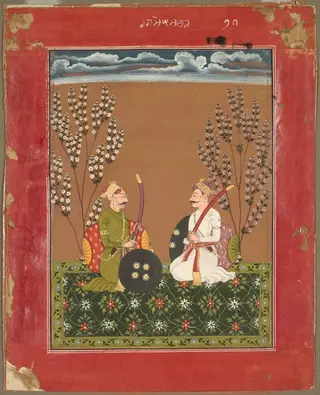 Surmananda Ragaputra of Hindol, from a Ragamala
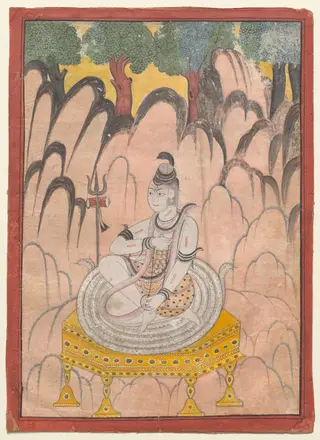 Shiva Seated on a Throne in a Landscape
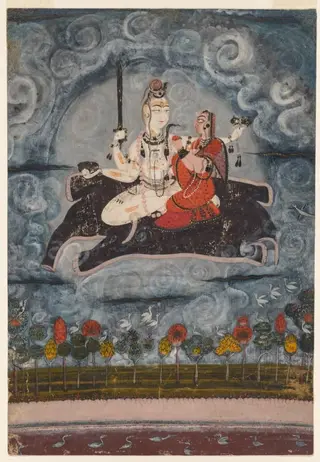 Shiva and Devi on Gajasura's hide
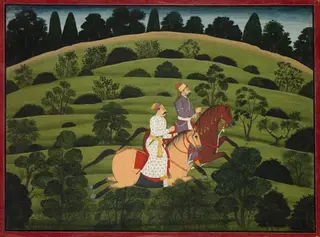 Akrura and Kritavarma flee Dvaraka, page from the "Large Basohli Bhagavata Purana"
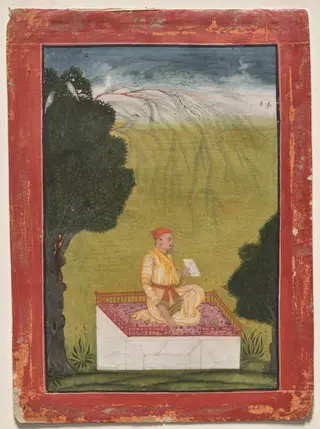 Raja Dilip Singh of Guler on a dais
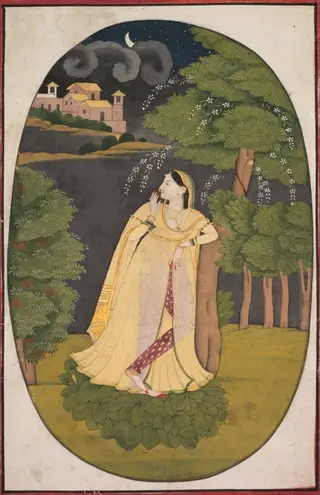 The heroine who waits anxiously for her absent lover (Utka Nayika)
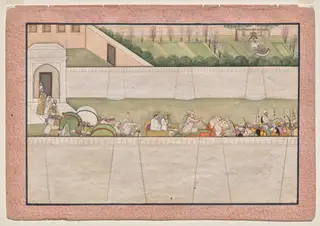 Rama’s brothers Bharata and Shatrughna set out from Ayodhya to find Rama and Lakshmana in the forest to inform them of the death of their father Dasharatha, from Chapter 77 of the Ayodhya Kanda (Book of Ayodhya) of a Ramayana (Rama’s Journey)
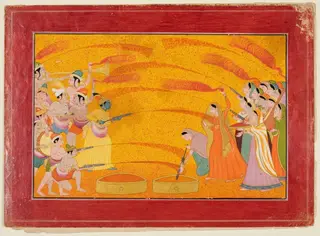 Krishna celebrates Holi
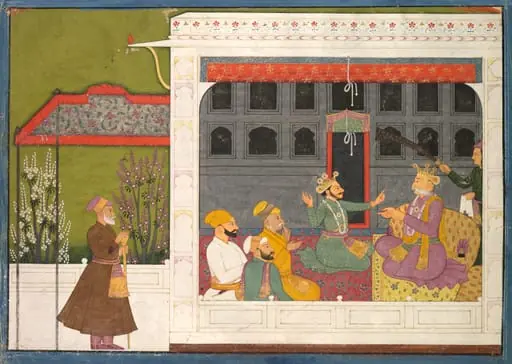 Shishupala arguing with Rukmini’s father, Bhishmaka, from a Rukmini Haran
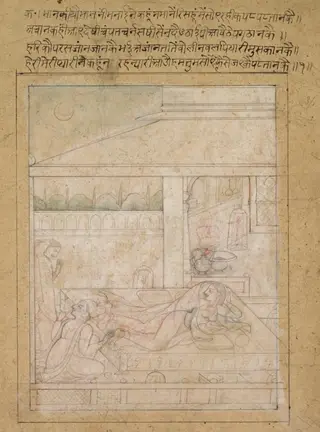 Radha and Krishna's reconciliation
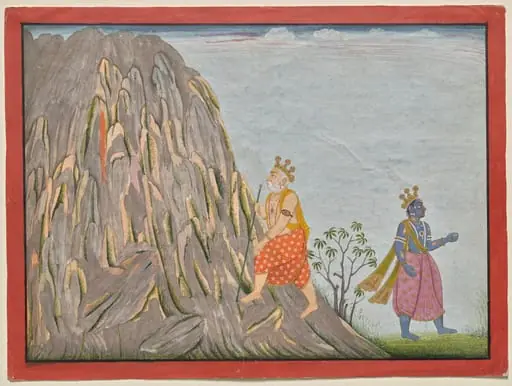 King Muchukunda Enters the Realm of Mount Gandhamadana to Attain Salvation, from the “Fifth Basohli Bhagavata Purana”
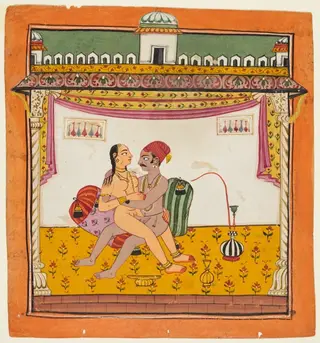 A couple seated against two pillows engaged in sex, from an erotic series
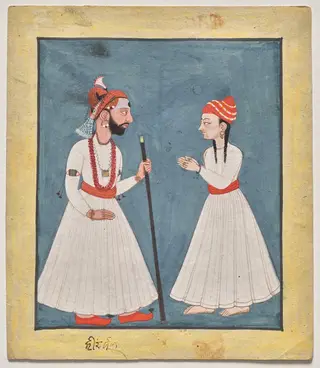 Shamsher Sen of Mandi with a youth
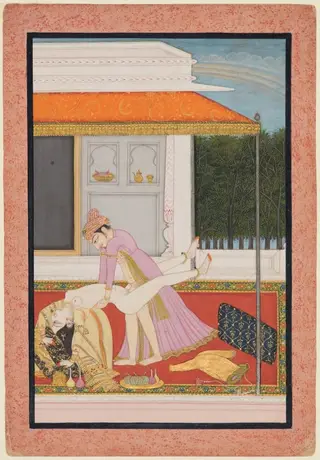 An amorous couple, probably Raja Mahendra Pal of Basohli with a favorite queen
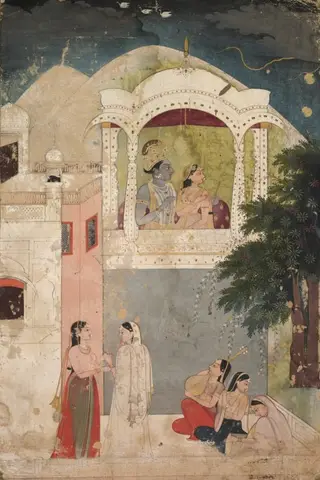 Radha and Krishna seated on a balcony
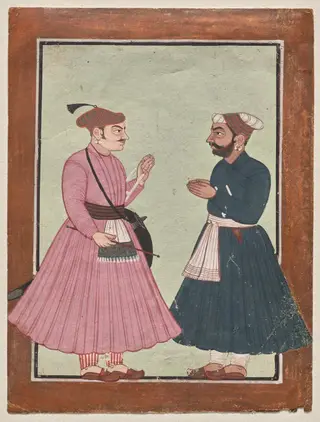 A Mandi royal family member receives a noble
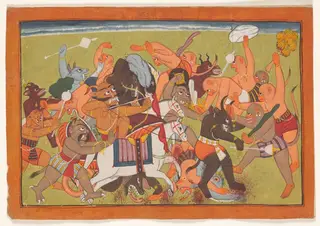 Battle between monkeys and demons, from the “Shangri” Ramayana
 Shiva and His Followers Return to Mount Kailash (verso), from a Romance of Chandrabhanu and Lavanyavati of Upendra Bhanja (1670–1740)
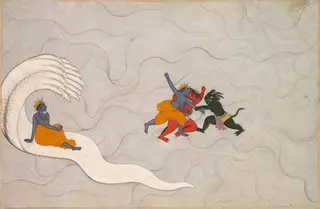 Vishnu Battles Madhu and Kaitabha, from a Markandeya Purana
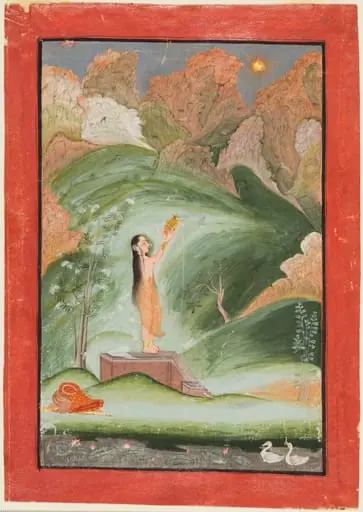 A girl worshipping the rising sun (Surya puja)
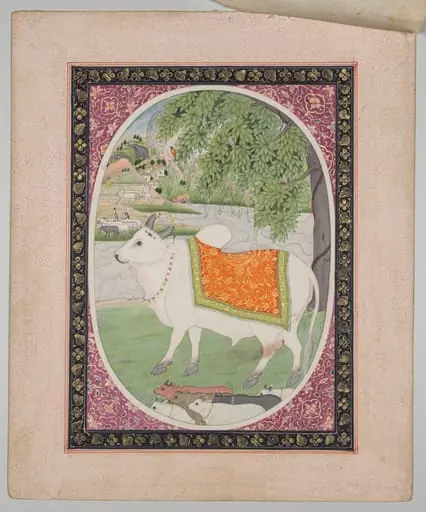 Taurus, from a "Mandi Astrology Series"
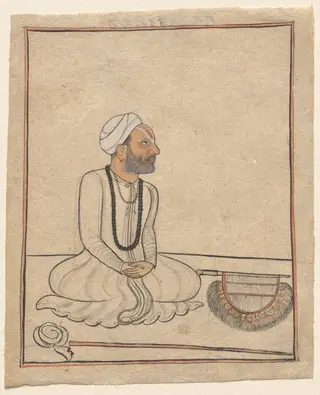 Gosain Narottam Das
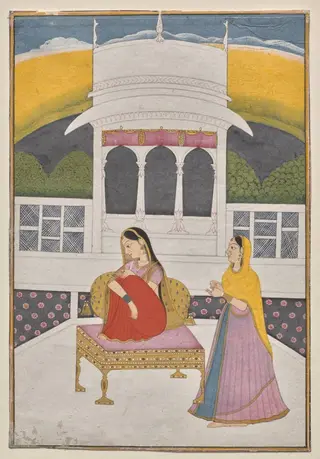 A Nayika, probably Proshitaperyasi Nayika
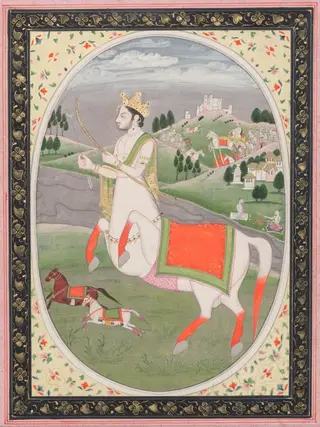 Sagittarius
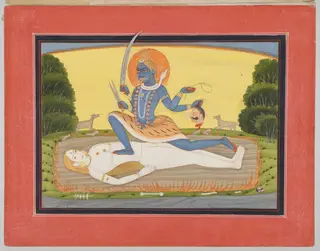 Tantric Devi on Shiva, from a Mandi Devi Series
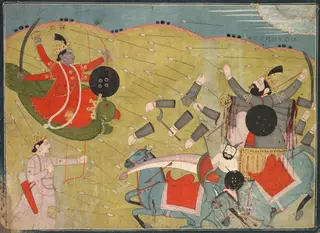 Krishna vanquishing King Bana, from an Usha-Aniruddha
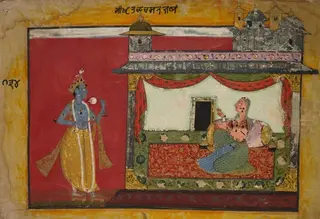 The Approach of Krishna. Page from a Rasamanjari
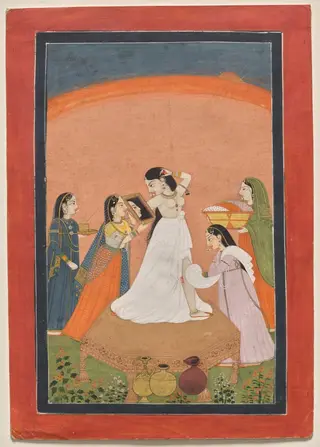 The Morning Toilette
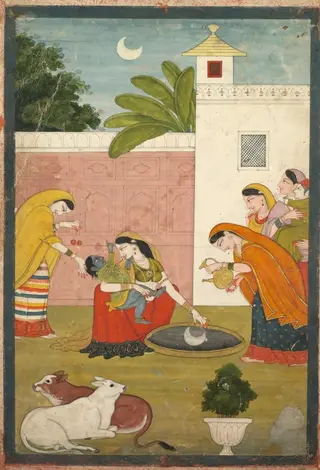 Krishna reaching for the moon
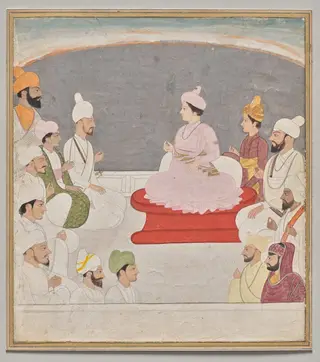 Raja Sansar Chand of Kangra and courtiers
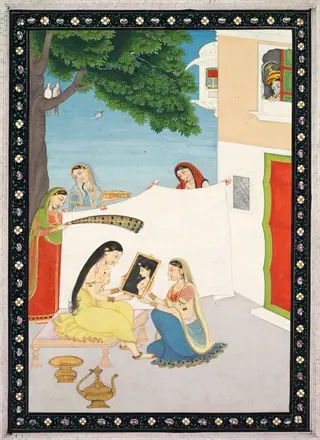 Toilette of Radha
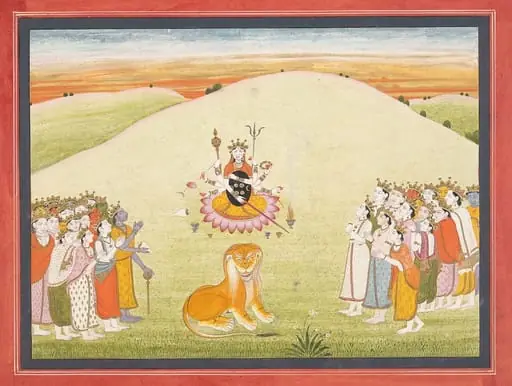
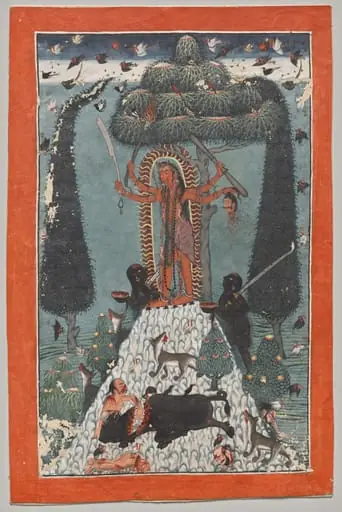 Goddess standing on a mountaintop
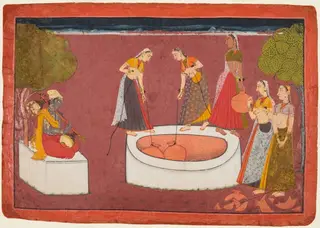 Madhava plays his vina before five women drawing water from a well, folio 3 from a Madhavanala-Kamakandala
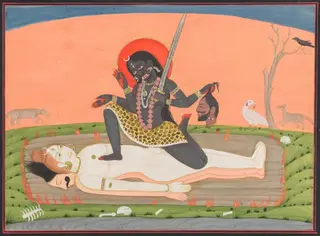 Kali on Shiva, from a Tantric Devi Series
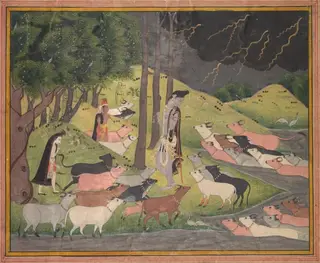 Krishna summoning the cows
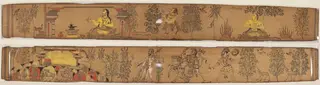 A Prince Performs Austerities (recto); Shiva and His Followers Return to Mount Kailash (verso), from a Romance of Chandrabhanu and Lavanyavati of Upendra Bhanja (1670–1740)
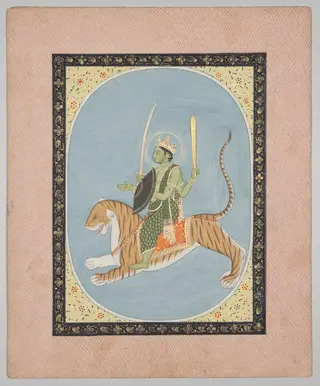 Mars, from a Mandi Astrology Series
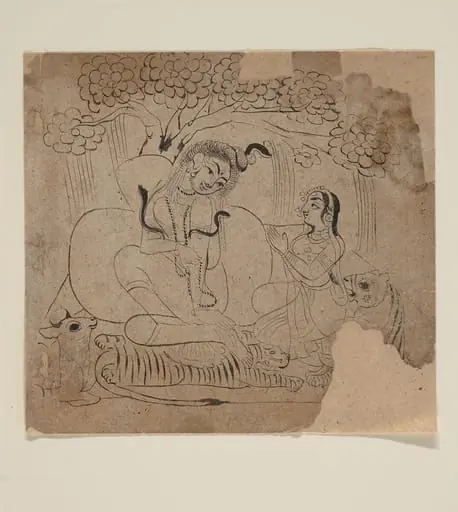
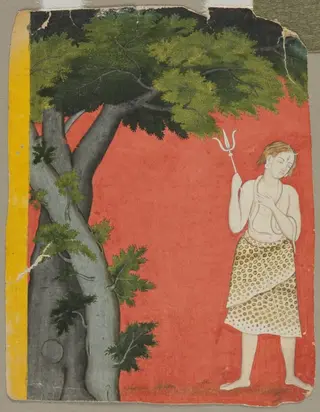 Shiva under trees
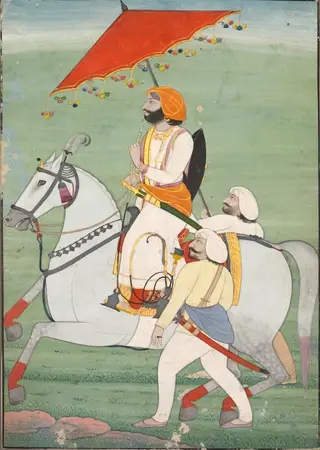 Raja Gulab Singh (1792–1857) of Jammu and Kashmir
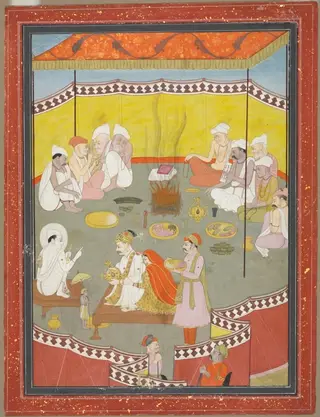 King Bali gives a gift of land to Vamana
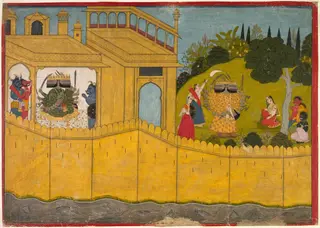 Ravana addresses Sita in the garden of Lanka, from Chapters 53 and 54 of the Aranya Kanda (Book of the Forest) of a Ramayana (Rama’s Journey)
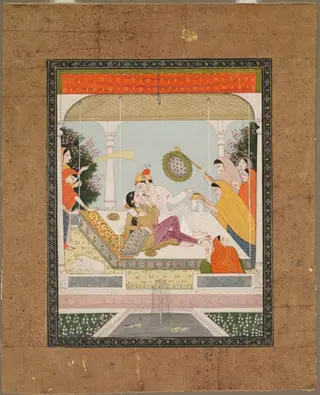 Raja with his beloved
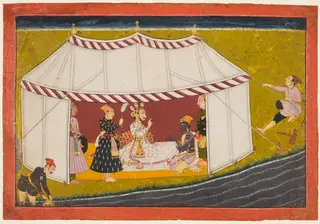 King Vikrama summons Madhava, folio 15 from a Madhavanala-Kamakandala
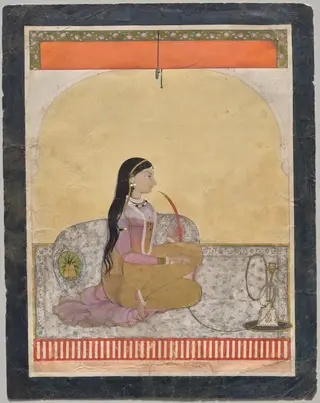 Princess smoking a hookah
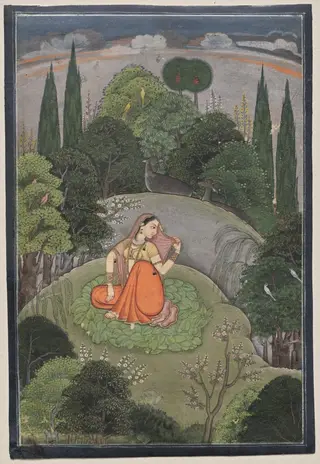 The Heroine Who Waits Anxiously for Her Absent Lover: Utka Nayika
 A Prince Performs Austerities (recto), from a Romance of Chandrabhanu and Lavanyavati of Upendra Bhanja (1670–1740)
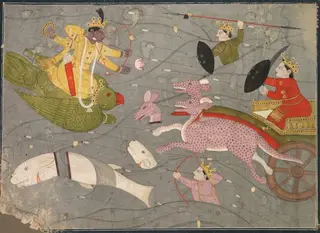 Krishna fighting the sons of King Bana, from an Usha-Aniruddha
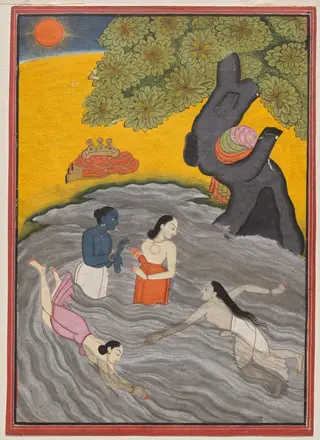 Krishna Playing with the Gopis in the Yamuna
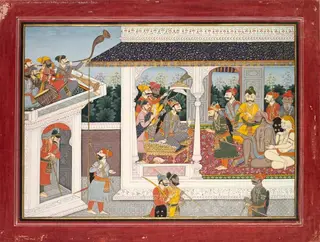 Kamsa deploys Akrura and Keshi to Braj, from a Bhagavata Purana
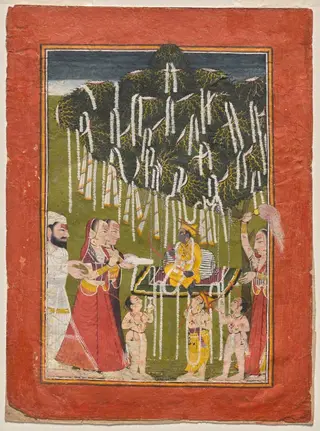 Adoration of young Krishna
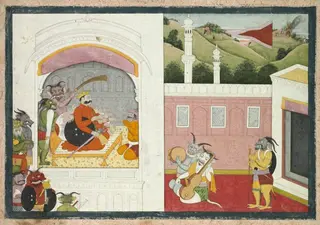 King Bana in his court, from an Usha-Aniruddha
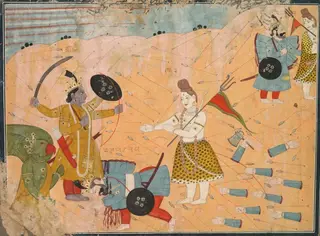 Shiva intercedes for King Bana, from an Usha-Aniruddha
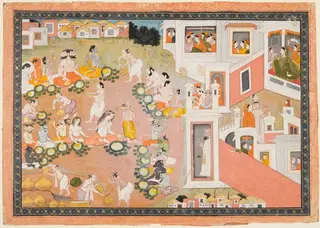 Feast where Vishnu decides he will incarnate as King Dasharatha’s sons, from Chapters 14–15 of the "Bala Kanda" (Book of Childhood) of a Ramayana (Rama’s Journey)
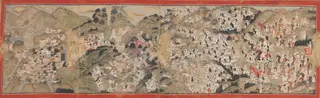 Raja Sansar Chand attacking Kangra Fort
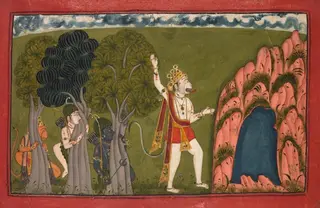 Sugriva challenges his brother Vali, King of the Forest Dwellers, to a duel, folio 10 from the Kishkindha Kanda (Book of Kishkindha) of a Ramayana (Rama’s Journey)
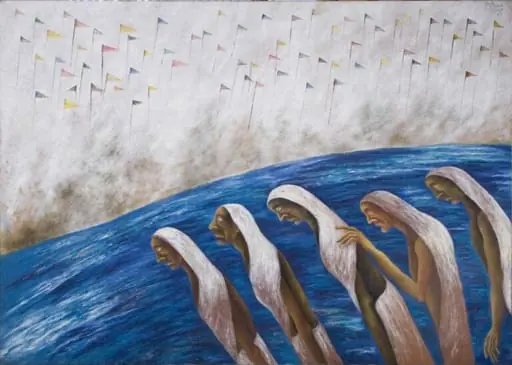 In Vrindaban
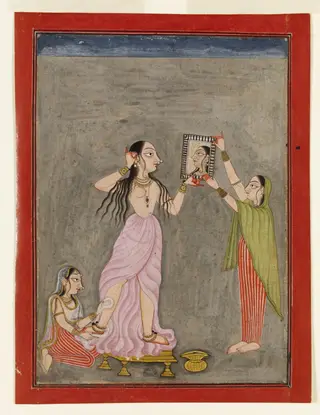 Untitled
Frequently asked questions
What is Pahari Painting?
Pahari Painting is an art movement. A tradition of miniature painting from the Hill States of the Punjab Himalayas (17th–19th centuries), distinct from Mughal and Rajput court painting.
How many Pahari Painting works does Artifact World Gallery have?
Artifact World Gallery holds 117 public-domain Pahari Painting works, all free to view and download.
Who are the key Pahari Painting artists?
Key Pahari Painting artists in the collection include Seu Family, Nainsukh and Devidasa of Nurpur.
Where can I see Pahari Painting works?
Pahari Painting works in the collection are held by Cleveland Museum of Art, Metropolitan Museum of Art and Victoria and Albert Museum.