Artwork
Binnenzicht
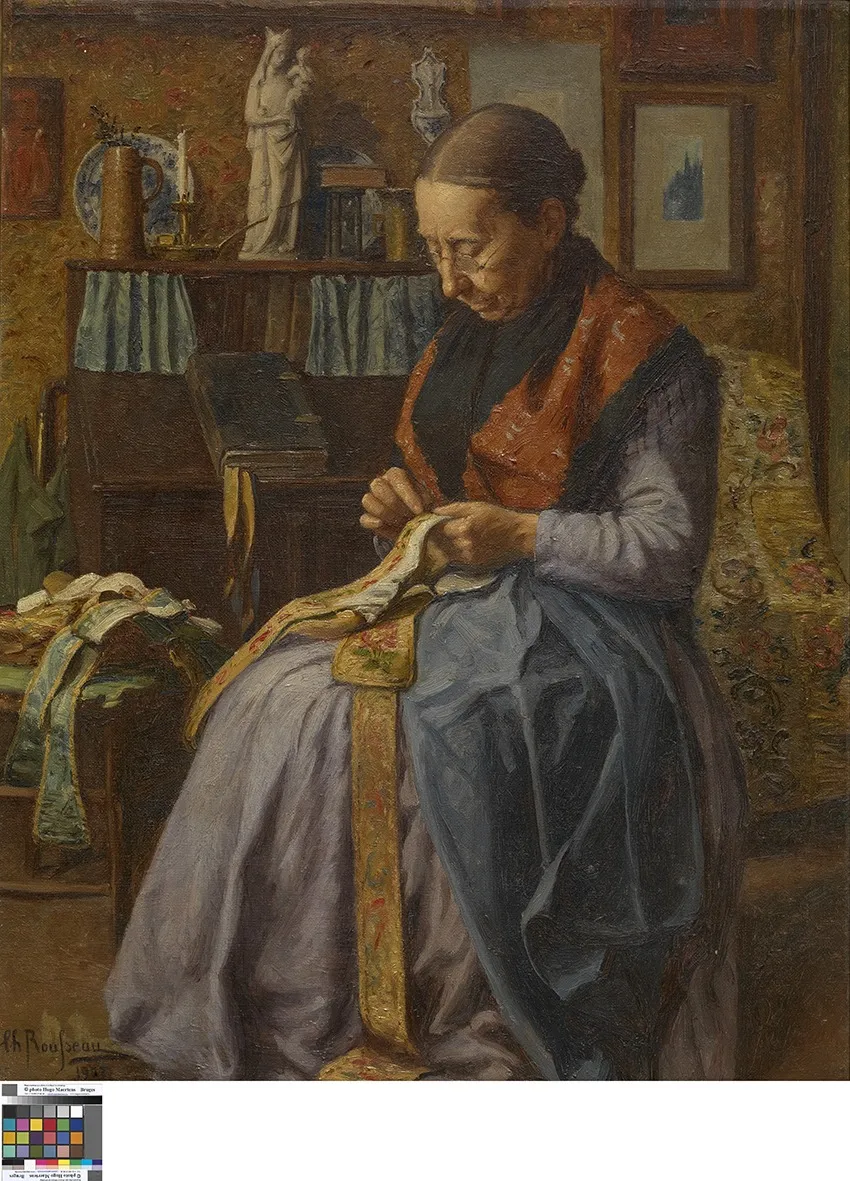
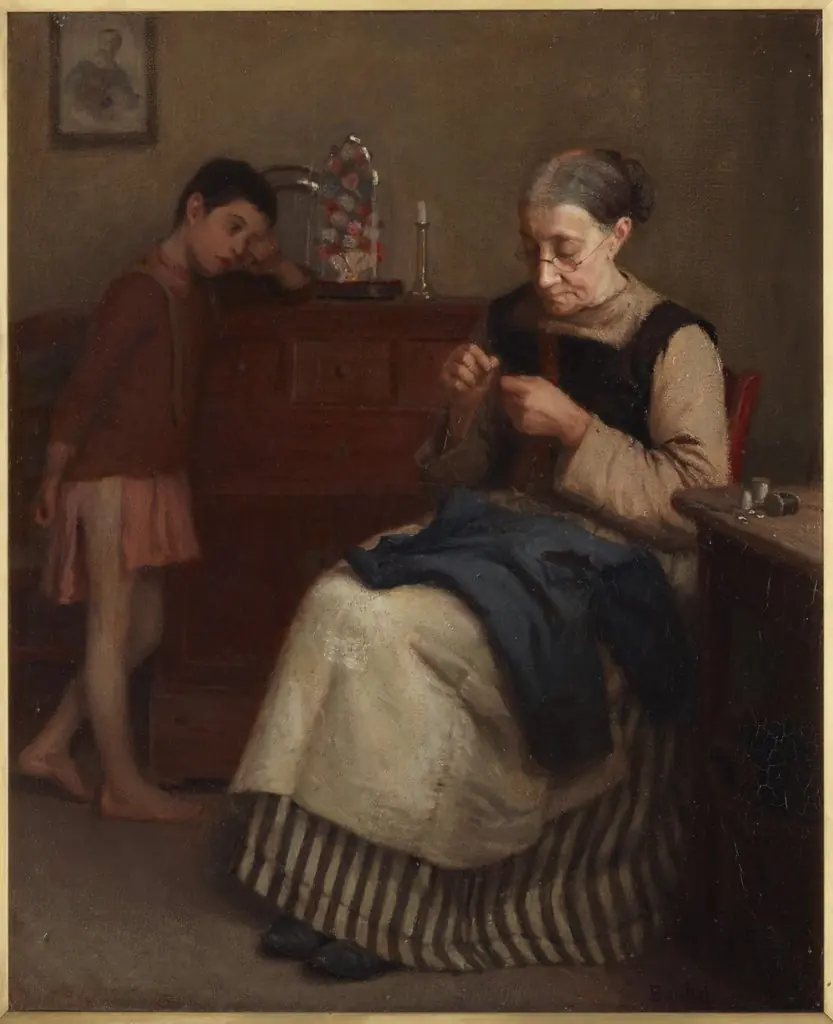
Binnenzicht is an oil painting by the Post-Impressionist artist Charles Rousseau. It dates from 1903 and is held in the collection of the Groeningemuseum.
About this work
Overview
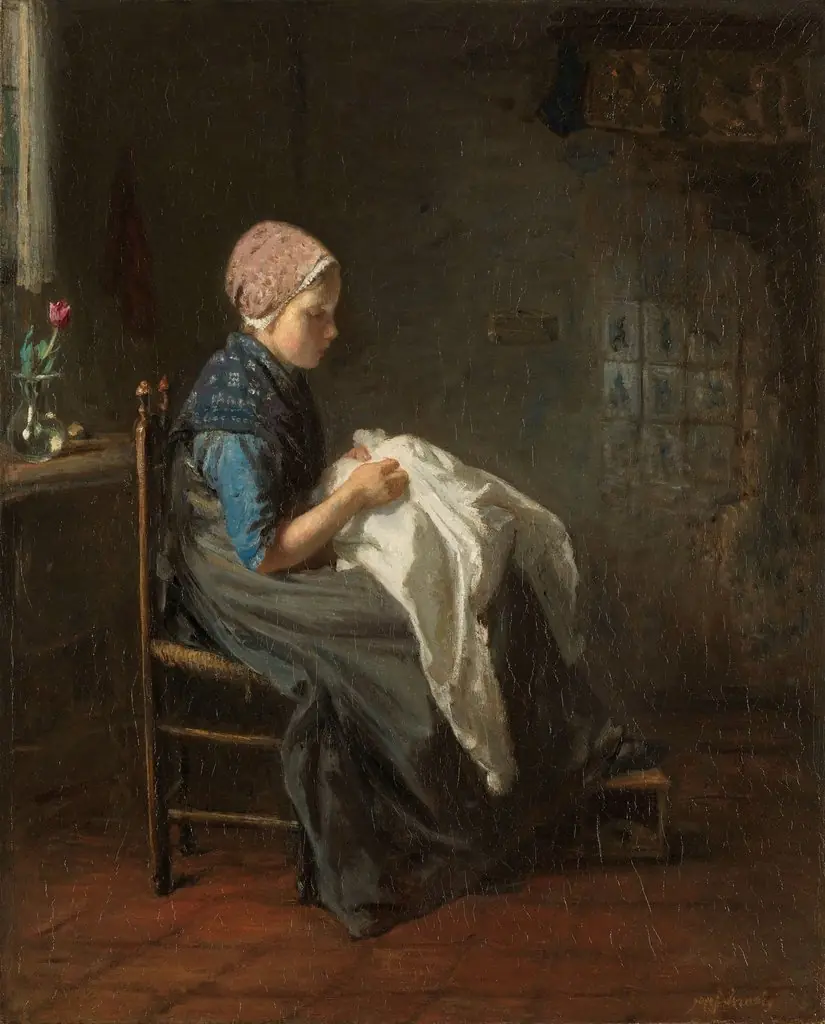
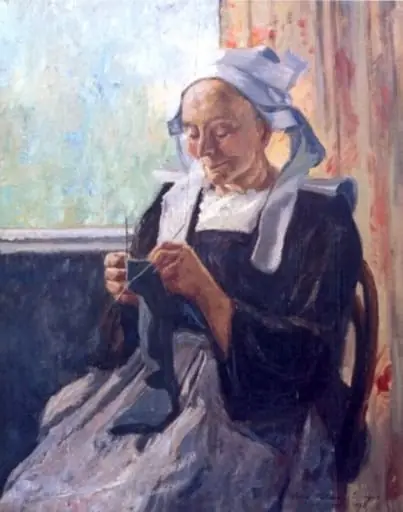
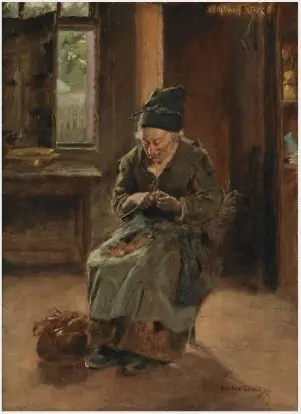
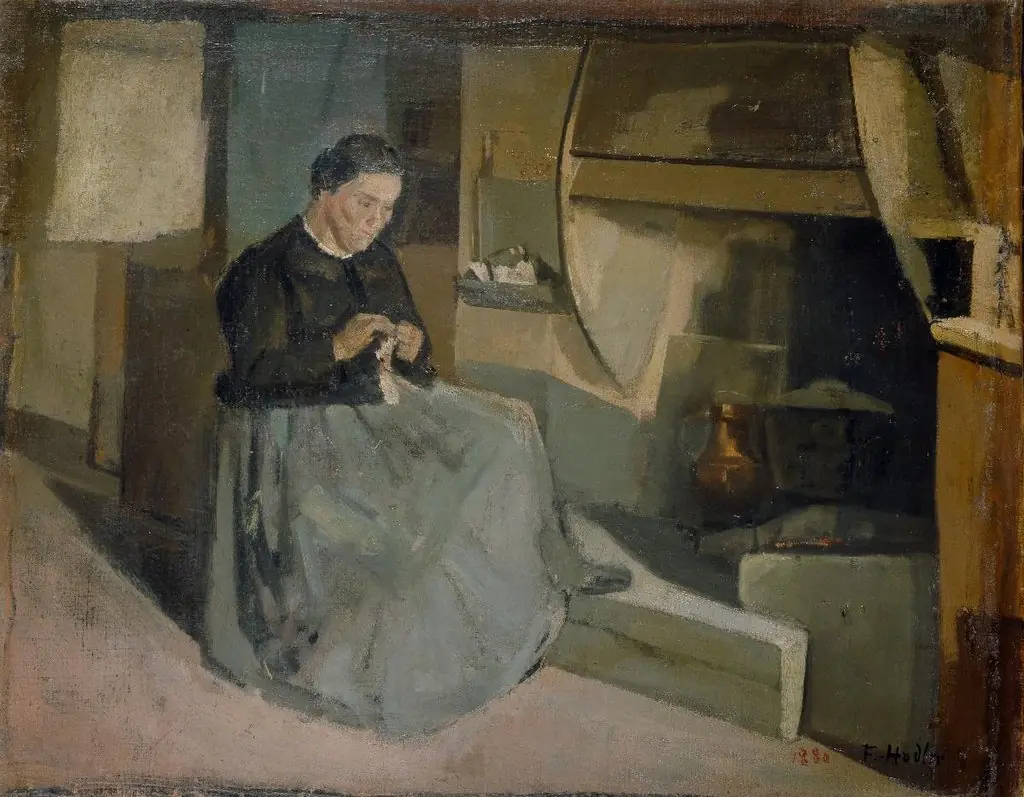
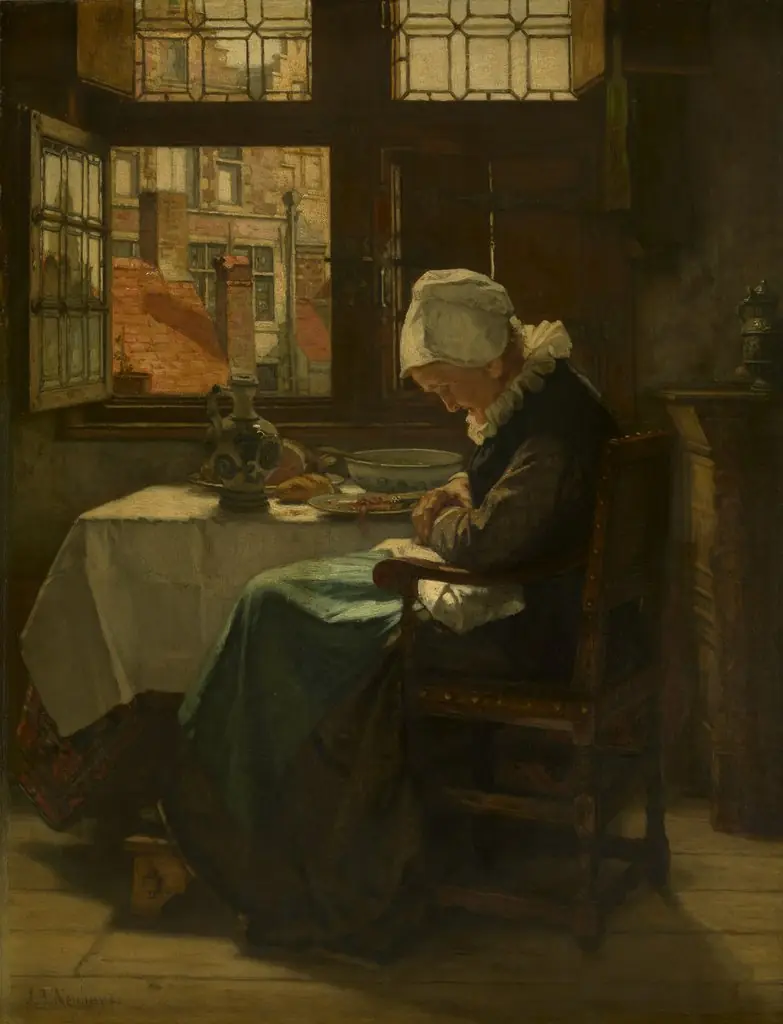
Measuring 55 by 43 centimeters, the work is a genre painting that depicts a seamstress absorbed in her needlework within a domestic interior.
Binnenzicht is an oil on canvas painting created in 1903 by the Belgian artist Charles Rousseau. Measuring 55 by 43 centimeters, the work is a genre painting that depicts a seamstress absorbed in her needlework within a domestic interior. It is held in the Groeningemuseum in Bruges, where it is cataloged under inventory number 0000.GRO0126.I. The painting is a representative example of Rousseau's genre scenes and serves as a notable work within the collection of the Groeningemuseum, which holds several of the artist's paintings.
Subject & Meaning
The composition centers on a seamstress seated in a domestic interior, her body angled slightly to the left as she concentrates on the needlework in her hands. She wears a long lavender dress with a rust-colored shawl draped over her shoulders. The surrounding environment is rich with objects that carry conventional associations of domesticity and the passage of time: a wardrobe, a book, a candle, eyeglasses, and an hourglass. Behind her, a wooden shelf holds a white figurine, a candlestick, books, and a blue-and-white plate, while a framed picture hangs on the wall to her right and a small table supports folded fabrics to her left. The title, translating to interior view, emphasizes the contemplative, enclosed nature of the scene and the quiet focus of the woman's labor.
Technique & Style
Rousseau executed Binnenzicht in oil paint on canvas, employing a matte, naturalistic finish throughout the composition. The palette is characterized by warm browns, muted purples, and earthy oranges, which anchor the scene in a subdued, domestic atmosphere. Light enters from the left, illuminating the seamstress's hands and face while casting soft shadows across the room. The brushwork is visible and textured, particularly in the rendering of the fabrics and the background elements, lending a tactile quality to the materials depicted. The artist signed and dated the work in the lower left corner.
History & Provenance
Charles Rousseau painted Binnenzicht in 1903. The canvas is now part of the permanent collection of the Groeningemuseum in Bruges, carrying the inventory number 0000.GRO0126.I. While the specific commission or early ownership chain of the painting is not documented in available records, the work has been in the museum's possession long enough to be included in H. Pauwels's 1960 catalog of the Groeningemuseum. The painting remains in the public domain under the care of Musea Brugge.
Context
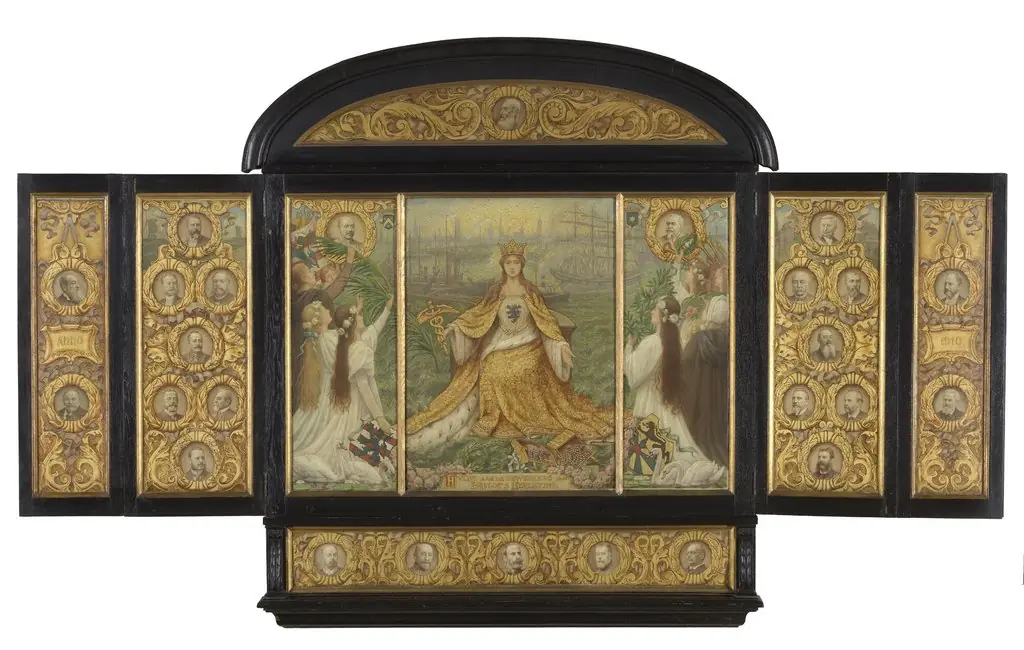
Charles Rousseau was a Belgian painter born in Bruges in 1862, and he died there in 1916. He belonged to the Bruges School. Initially trained in architecture at the Academy of Fine Arts in Bruges, he switched to painting at the urging of Bruno van Hollebeke and subsequently studied under Jan Portael at the Academy of Brussels. Rousseau was known as a portrait, history, genre, and architecture painter. His works are largely held in private collections, though the Groeningemuseum holds several significant pieces, including Binnenzicht, Samson and Delila from 1887, and a polyptych homage to the initiators of the Bruges sea port. The Holy Blood Chapel in Bruges also houses his painted chronological list of the bishops of Bruges.
Artist & collection