Artwork
The Clock Tower, St. Albans
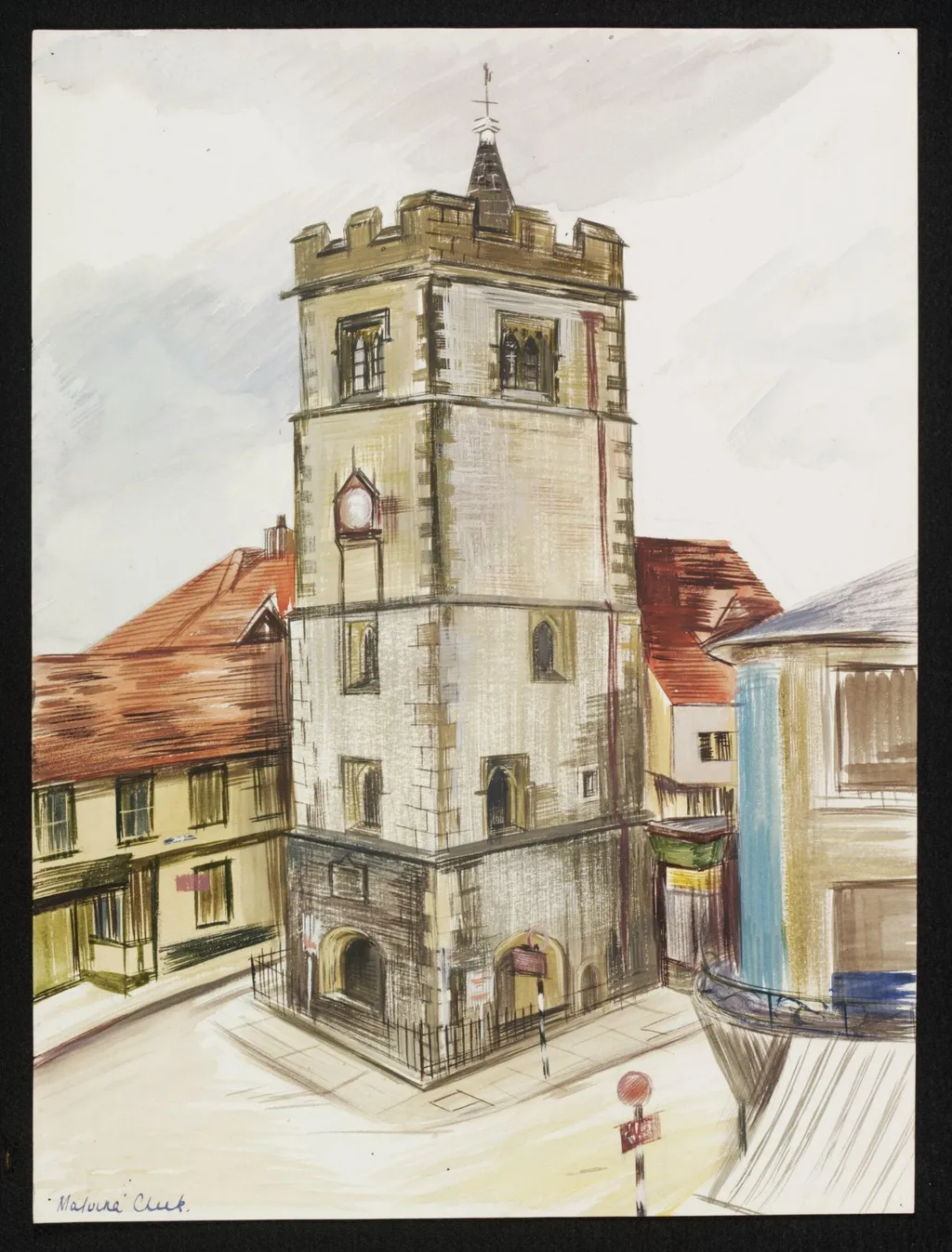
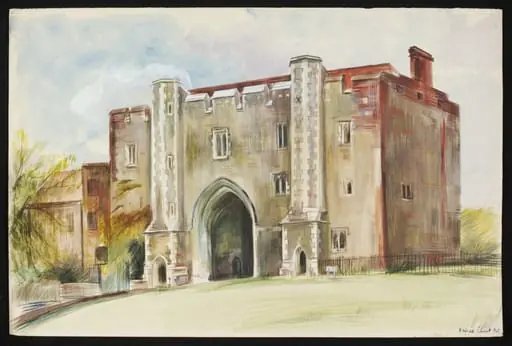
The Clock Tower, St. Albans is a watercolor work on paper by the Regionalist artist Cheek. It dates from 1943 and is held in the collection of the Victoria and Albert Museum. This watercolour, signed by the artist, portrays the historic clock tower of St.
About this work
Overview
The work is part of a broader effort to safeguard cultural memory through topographical art amid threats of conflict and urban change.
This watercolour, signed by the artist, portrays the historic clock tower of St. Albans, a structure dating to the 15th century that originally served as a bell tower. Created between 1940 and 1943, it belongs to the 'Recording Britain' initiative, a government-backed project during wartime to visually archive the nation’s architectural heritage. The work is part of a broader effort to safeguard cultural memory through topographical art amid threats of conflict and urban change.
Subject & Meaning
The painting centers on a modest yet enduring civic landmark, emblematic of England’s medieval townscapes. Its inclusion in the 'Recording Britain' collection underscores a deliberate focus on vernacular architecture, structures that embodied local identity rather than grand monuments. The quiet presence of the tower among surrounding buildings suggests a reverence for everyday historical continuity, resisting the erasure of tradition during a period of national upheaval.
Technique & Style
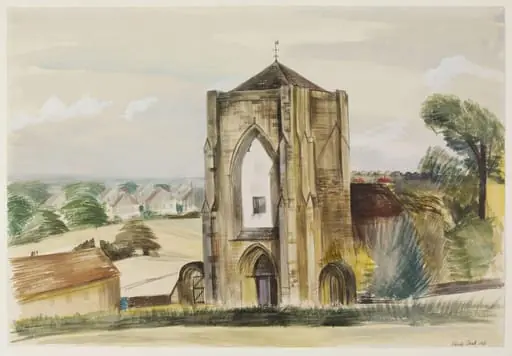
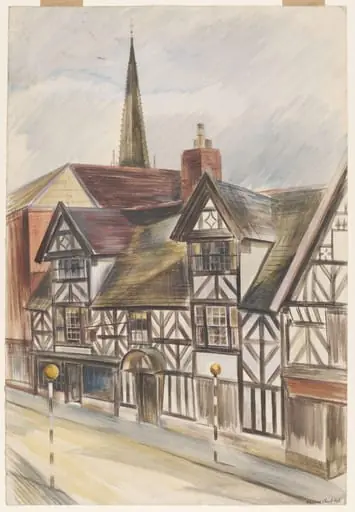
Rendered in loose, fluid watercolour, the scene employs muted tones of gray, brown, and pale blue to evoke a subdued atmosphere. The tower’s tapering form is defined by soft, sketchy brushwork, while the surrounding buildings are suggested with minimal detail. Red roofs provide subtle contrast, drawing the eye without disrupting the overall restraint.
The technique prioritizes atmosphere over precision, capturing the essence of place through light and texture rather than architectural fidelity.
History & Provenance
Commissioned under the 'Recording Britain' scheme led by Sir Kenneth Clark, the work was produced as part of a national effort to document vulnerable sites during World War II. The project collected over 1,500 watercolours and drawings, many of which were later acquired by the Victoria and Albert Museum. This painting entered the collection as a deliberate act of cultural preservation, ensuring that regional architecture remained visible in the national record.
Context
During the early 1940s, Britain faced widespread destruction and rapid modernization. The 'Recording Britain' initiative responded by mobilizing artists to record landscapes and buildings at risk from bombing or redevelopment. This watercolour reflects a broader cultural impulse to affirm national identity through its physical fabric, emphasizing market towns, parish churches, and civic towers as anchors of communal memory amid uncertainty.
Legacy
The painting endures as a quiet testament to the value of topographical art in times of crisis. Its inclusion in the Victoria and Albert Museum’s permanent collection ensures ongoing access to a visual archive shaped by wartime imperatives. Though unassuming in scale, the work contributes to a larger historical record that continues to inform understandings of British heritage, landscape, and the role of art in collective memory.
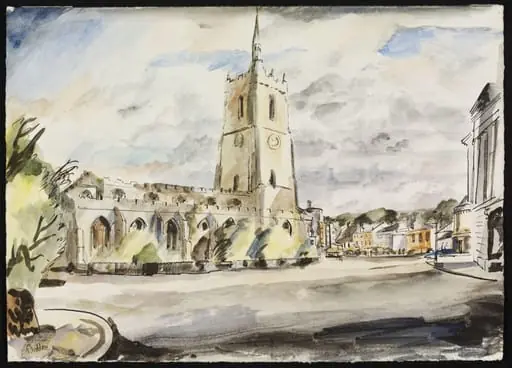
Artist & collection
Artist
Cheek painted quiet British streets and landmarks in watercolor during the 1940s, leaving behind soft, unhurried scenes of St.

![Marlborough House [garden front], Falmouth, by Cheek](https://artifactworldgallery.com/img/cheek--marlborough-house-garden-front-falmouth--3a2b89526c7641e3-w320.webp)
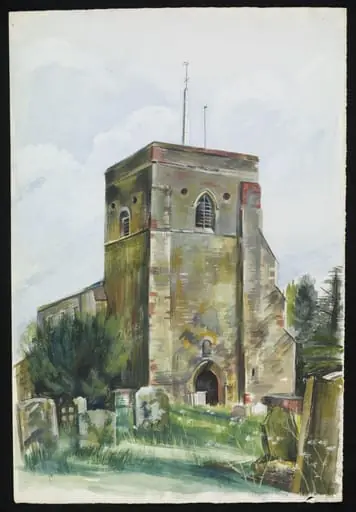
- St. Peter's Church and Market Hill, Sudbury
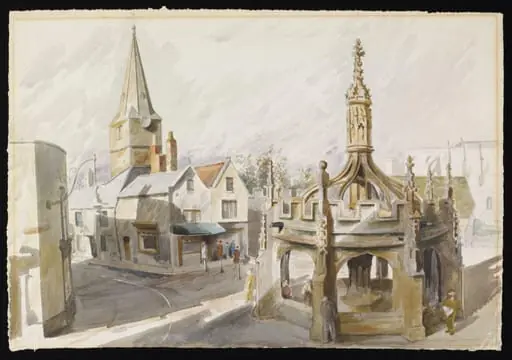 Market Cross, Malmesbury
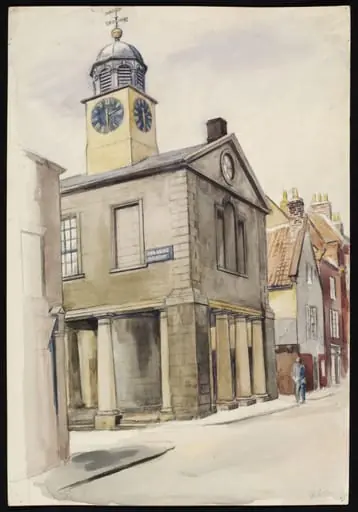 Town Hall, Whitby
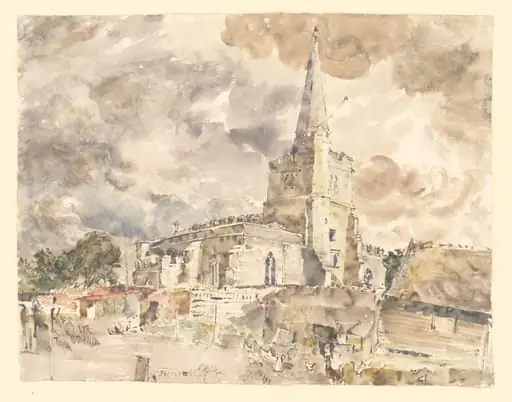 Church of St. Werburgh's, Hoo
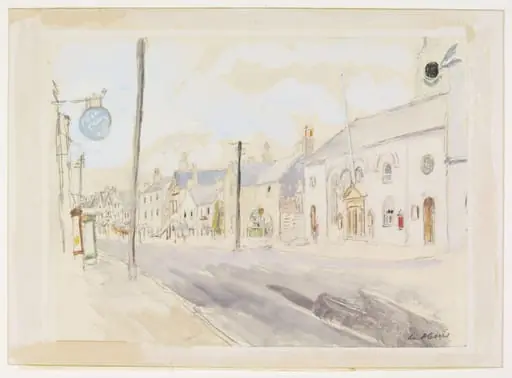 Cowbridge, Glamorganshire
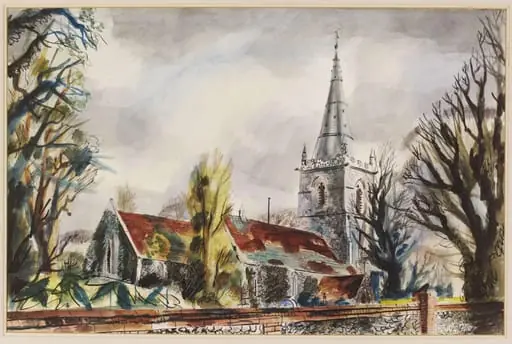 St. Edmund's Church, Tendring, Nr. Harwich
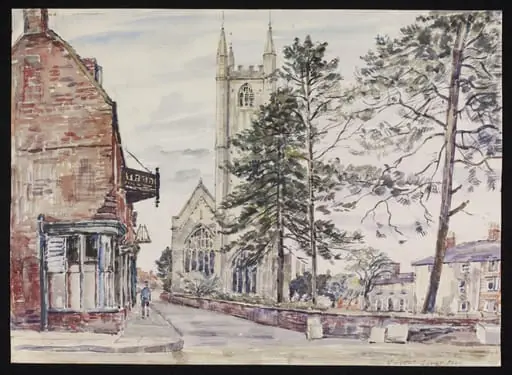 St. Peter's, Marlborough
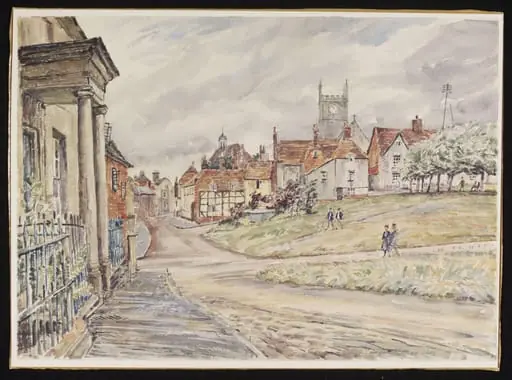 The Green and St.Mary's Church, Marlborough
 Ashbourne
 The Church of S.S.Peter and Paul, from the Market, Deddington