Artwork
Beauchief Abbey
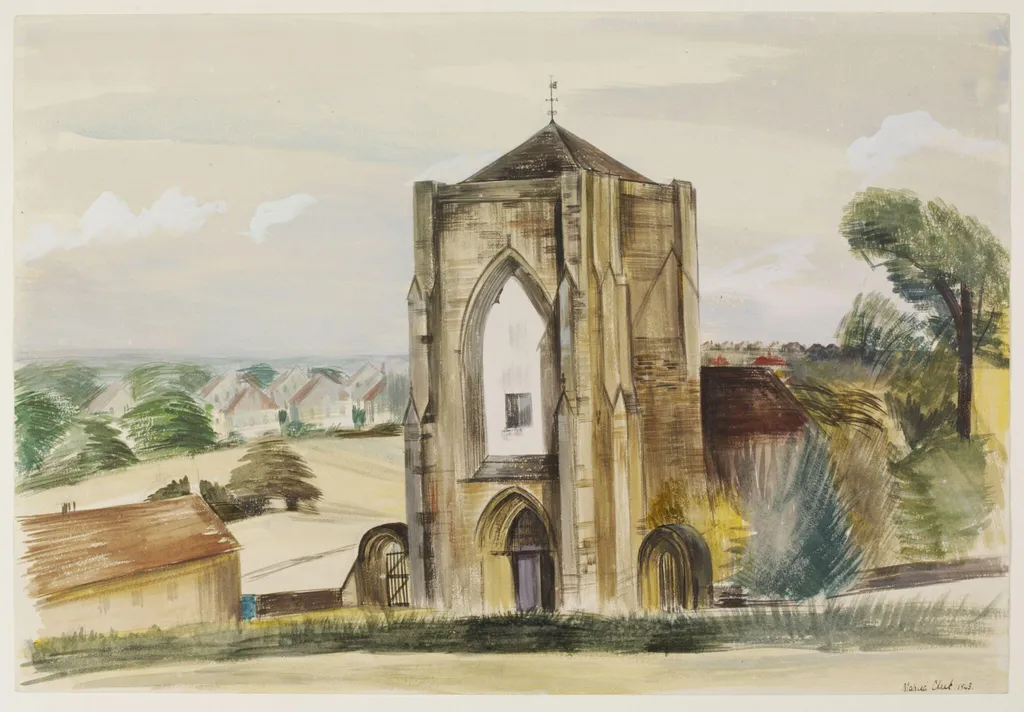
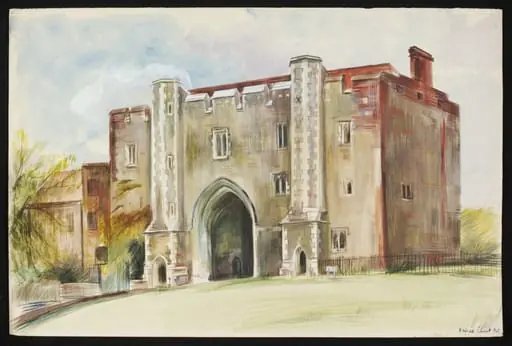
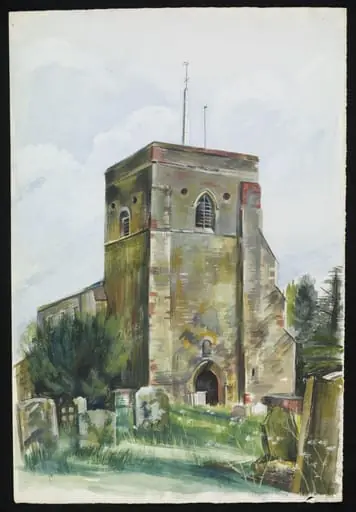
Beauchief Abbey is a watercolor work on paper by the British Romanticist artist Cheek. It dates from 1943 and is held in the collection of the Victoria and Albert Museum.
About this work
Overview
Beauchief Abbey is a 1943 watercolour by Cheek, created as part of the 'Recording Britain' project. The work captures the tower of Beauchief Abbey set amidst a rural landscape.
Subject & Meaning
The subject is the tower of Beauchief Abbey, depicted with worn, weathered stone, contrasting with the softer surroundings of a village, trees, and fields. The painting reflects the project's aim to document British heritage during wartime.
Technique & Style
Cheek employed quick, sketchy brushstrokes, particularly in the sky and trees, to imbue the scene with a sense of vitality and looseness, juxtaposing the detailed, rugged texture of the abbey tower.
History & Provenance
Commissioned under the 'Recording Britain' initiative (1940-1943), funded by the Pilgrim Trust and directed by Sir Kenneth Clark, this work is one of over 1,500 pieces by 97 artists documenting England's landscapes and buildings.
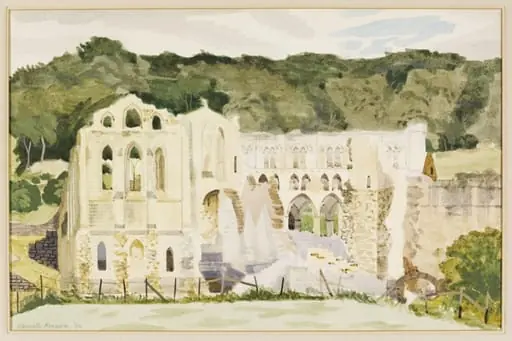
Artist & collection
Artist
Cheek painted quiet British streets and landmarks in watercolor during the 1940s, leaving behind soft, unhurried scenes of St.

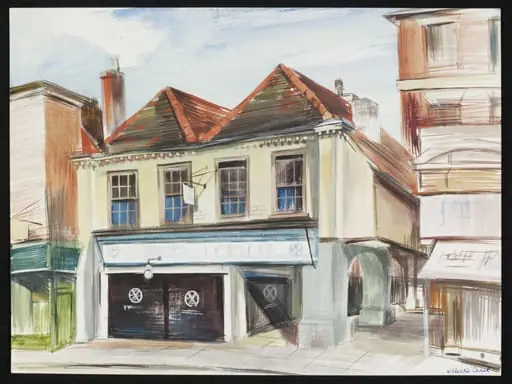
![Marlborough House [garden front], Falmouth, by Cheek](https://artifactworldgallery.com/img/cheek--marlborough-house-garden-front-falmouth--3a2b89526c7641e3-w320.webp)
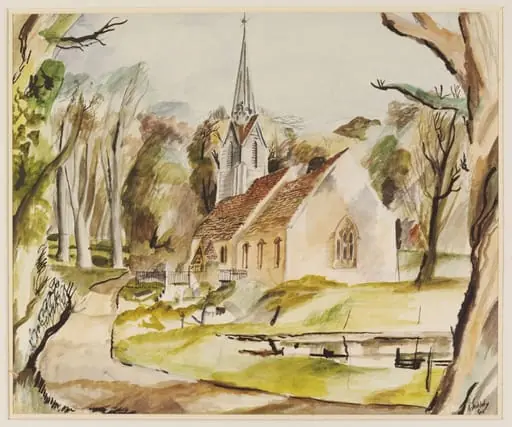 Middleton Church
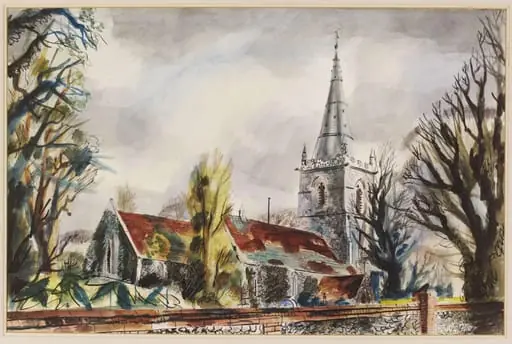 St. Edmund's Church, Tendring, Nr. Harwich
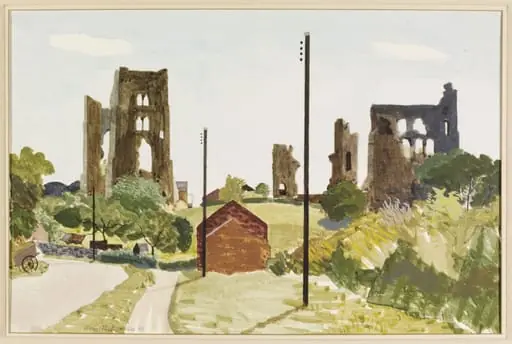 The Castle, Sheriff Hutton
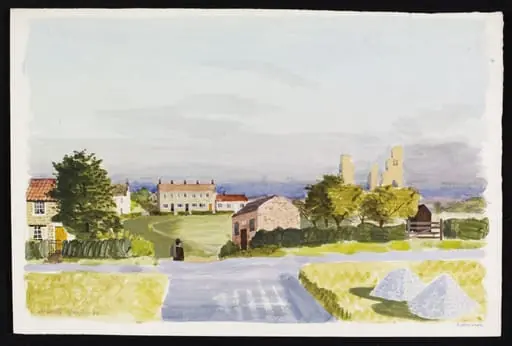 Sheriff Hutton; view over the plain of York, with York Minster in the distance
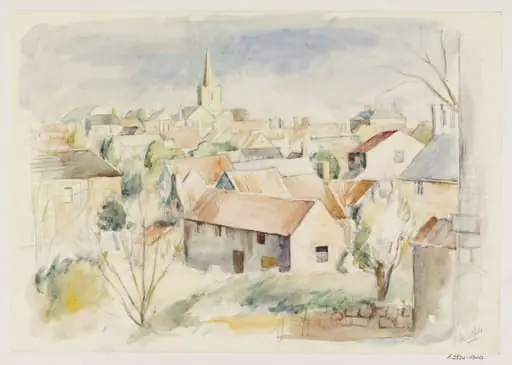 View of Pickering
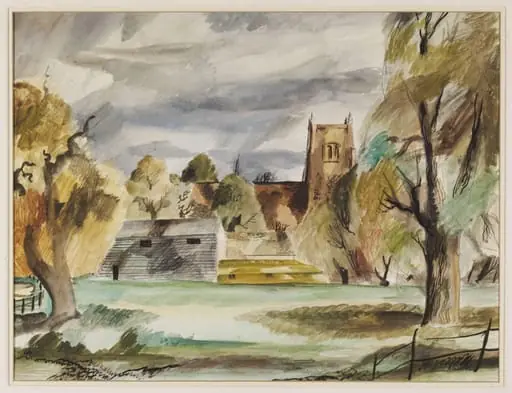 Wickham St. Paul's Church
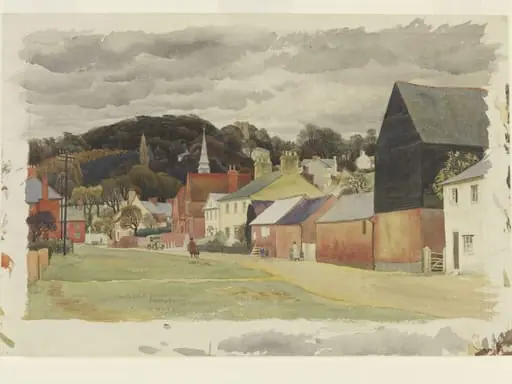 Bow Brickhill, Bletchley, Buckinghamshire
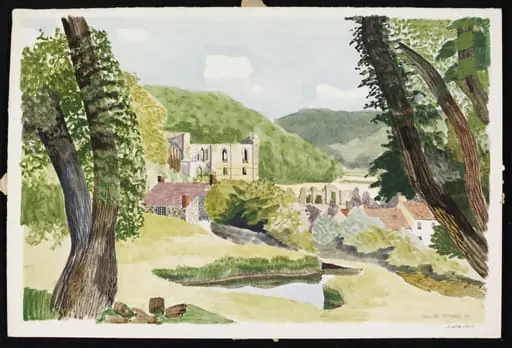 Distant view of Rievaulx Abbey
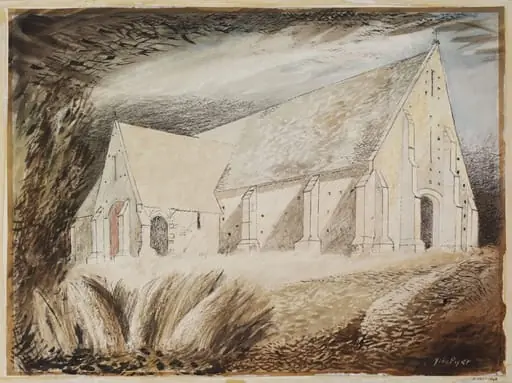 The Tithe Barn, Great Coxwell
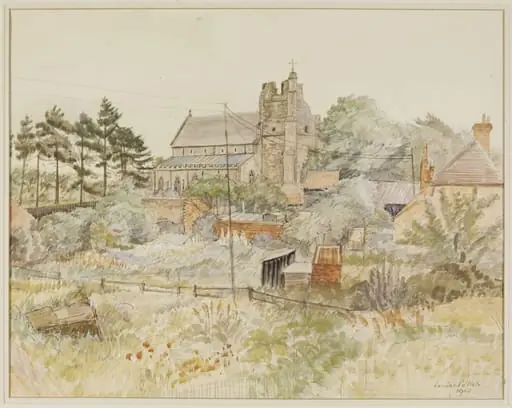 St. Bartholomew's Church, Orford, from the North-West