Artwork
Boy on a Ladder
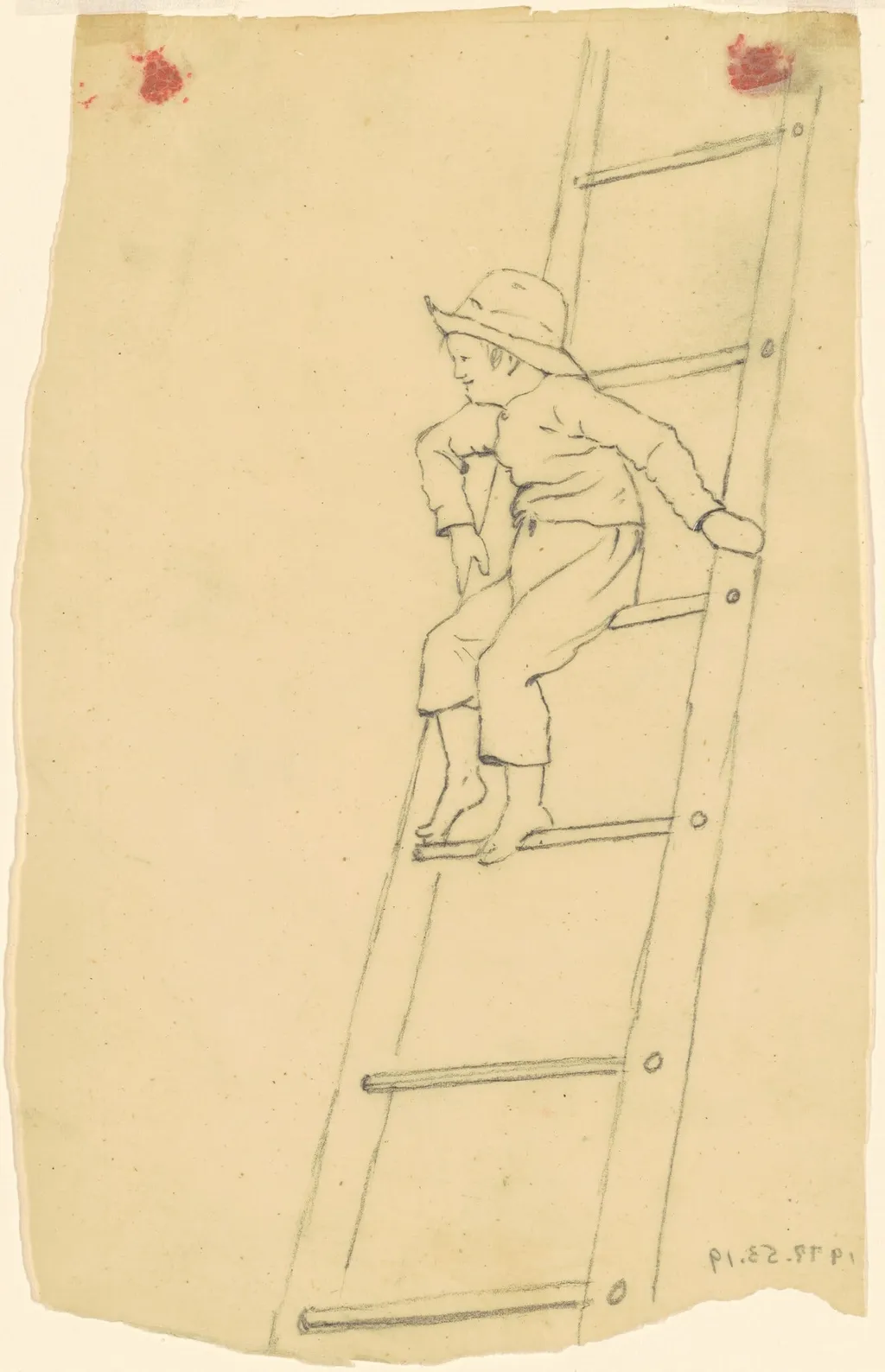
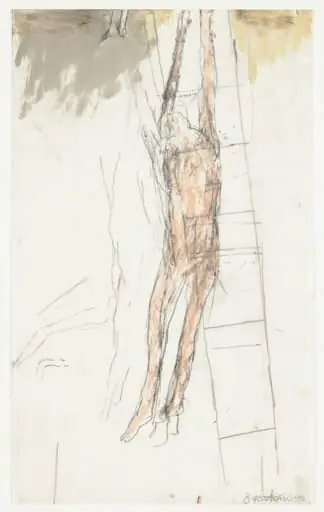
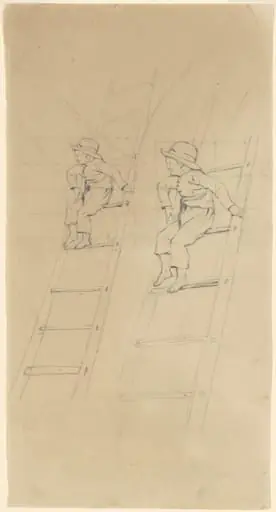
Boy on a Ladder is a graphite drawing by the Romanticist artist James Goodwyn Clonney. It dates from 1845 and is held in the collection of the National Gallery of Art.
About this work
Overview
Created around 1845 by English-born American artist James Goodwyn Clonney, this graphite drawing on wove tracing paper captures a fleeting moment of rural life. Executed in a small scale, it reflects Clonney’s preference for intimate, observational works over grand narratives. The medium’s translucency and lightness suggest a spontaneous, on-site study rather than a polished composition.
Subject & Meaning
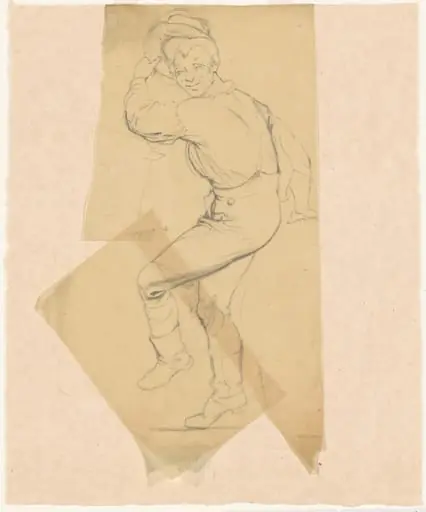
The drawing portrays a young boy ascending a wooden ladder, his face turned away, emphasizing posture over expression.
The drawing portrays a young boy ascending a wooden ladder, his face turned away, emphasizing posture over expression. The scene lacks overt drama, focusing instead on quiet, unremarkable labor. While no explicit social message is visible here, Clonney’s broader practice often included understated references to class and race, hinting that this moment may be part of a larger, unspoken social context.
Technique & Style
Clonney employed delicate, confident graphite lines with minimal shading, avoiding embellishment to preserve the sketch’s immediacy. The ladder’s diagonal lean imparts a sense of motion, as if the boy’s climb is suspended mid-action. The use of tracing paper, uncommon for finished works, supports the idea that this was a preparatory or observational study, valued for its spontaneity.
History & Provenance
The drawing’s early history is undocumented, but its materials and style align with Clonney’s known practice of producing small-scale drawings during the 1840s. As a genre painter active in the northeastern United States, he frequently recorded scenes from everyday life, often in portable formats. This work likely remained in private hands until entering institutional collection.
Context
Clonney worked within the 19th-century American genre painting tradition, which sought dignity in ordinary moments. His approach paralleled European Romanticism’s interest in naturalism and emotional subtlety, though his focus remained grounded in local, unidealized settings. Unlike grand historical scenes, his drawings captured transient, unheroic acts that reflected the rhythms of rural existence.
Legacy
Though not widely exhibited during his lifetime, Clonney’s drawings like this one contribute to a quieter strand of American art history, one that values observation over spectacle. His use of humble materials and everyday subjects helped pave the way for later realist and impressionist approaches, emphasizing the artistic potential of the mundane.
Own this work as a print
Artist & collection
Artist
James Goodwyn Clonney (28 December 1812, Liverpool (?) – 7 October 1867, Binghamton, NY) was an English-born American genre painter and lithographer.