Artwork
Battle of Gibraltar in 1607
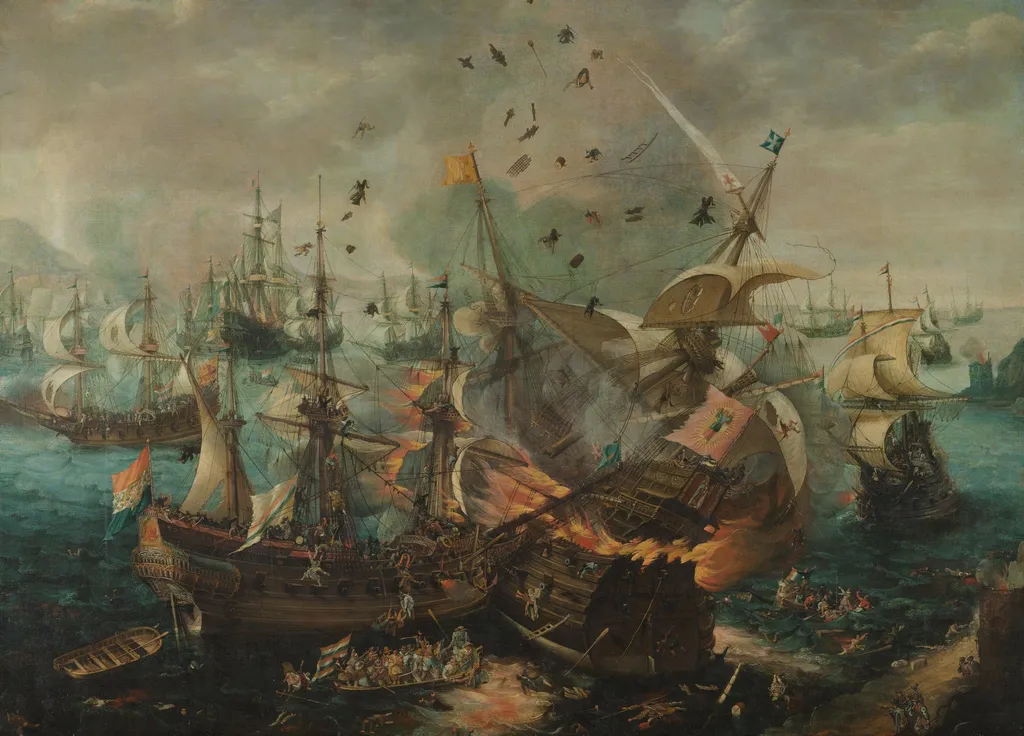
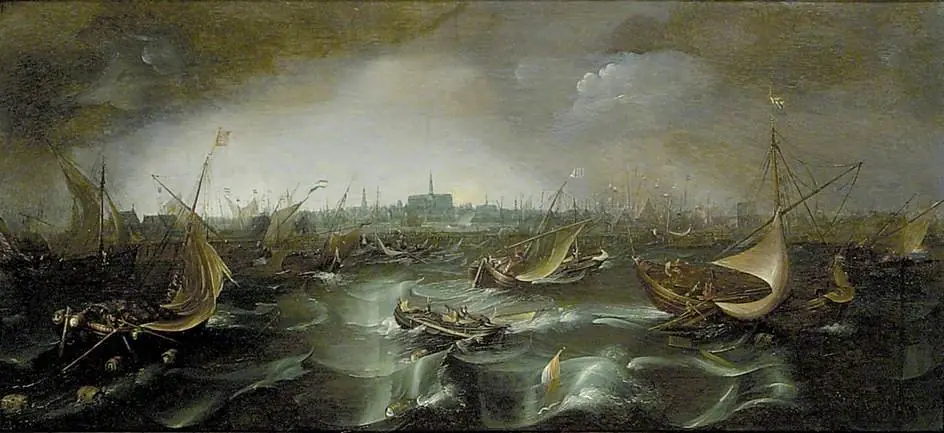
Battle of Gibraltar in 1607 is an unspecified painting by the Dutch Golden Age artist Cornelis Claesz van Wieringen. It dates from 1621 and is held in the collection of the Rijksmuseum. The canvas depicts the naval clash of 25 April 1607 in the Bay of Gibraltar, when a Dutch squadron engaged a Spanish flagship.
About this work
Technique & Style
Cornelis Claesz van Wieringen employed oil on canvas to render the 1607 Battle of Gibraltar, a marine painting reflecting his specialization in naval subjects.
Cornelis Claesz van Wieringen employed oil on canvas to render the 1607 Battle of Gibraltar, a marine painting reflecting his specialization in naval subjects. The work depicts a fleet engaged in combat, showcasing his characteristic use of dynamic composition and dramatic lighting to convey maritime action. Executed in the early Dutch Golden Age, the painting aligns with his documented practice of creating large-scale works for civic commissions, including tapestries based on similar naval themes. His technique emphasized precise rendering of ships and sea conditions, contributing to the formal stylistic qualities of the genre.
Context
Cornelis Claesz van Wieringen, active in the Dutch Golden Age, specialized in marine scenes depicting naval conflicts such as the 1607 Battle of Gibraltar. His work, including The Surrender of Gibraltar, reflects the era's fascination with maritime power and received municipal commissions, notably from Haarlem and Amsterdam authorities. The painting's subject aligns with his broader oeuvre of ship battles, a genre prominent in Dutch art of the early 17th century. Van Wieringen's reputation was cemented through high-profile projects like the 1629 tapestry commission for Haarlem's City Hall, documented in municipal archives, which established his standing in the local art market and guild structures. His influence extended through the Haarlem School, where he was noted alongside contemporaries like Hendrick Goltzius, shaping regional approaches to marine art and civic patronage.
Legacy
The 1607 Battle of Gibraltar scene became a widely recognized motif in Dutch marine art, largely due to Van Wieringen's influential depiction which was reordered as tapestry for Haarlem's city hall and remained on public display annually. His composition of a Haarlem ship breaking a chain during the Fifth Crusade achieved such contemporary fame that it was reproduced in both paint and textile, with the tapestry still hanging in the vroedschapskamer as documented in municipal archives from 1629. This legacy cemented his reputation as the preeminent painter of naval narratives in the Dutch Golden Age, directly shaping how maritime triumphs were visually commemorated in civic spaces.
Own this work as a print
Artist & collection
Artist
Cornelis Claesz van Wieringen (1577–1633) was an artist, born in Haarlem.

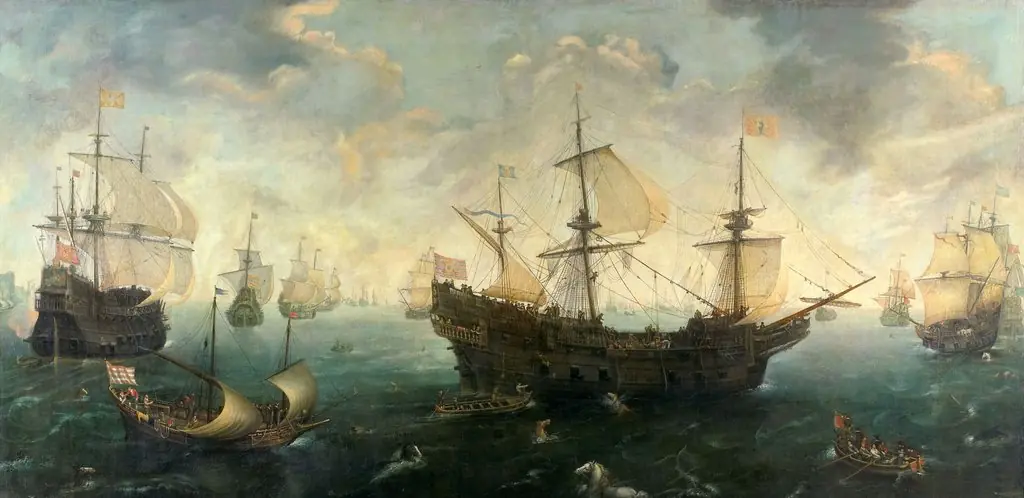
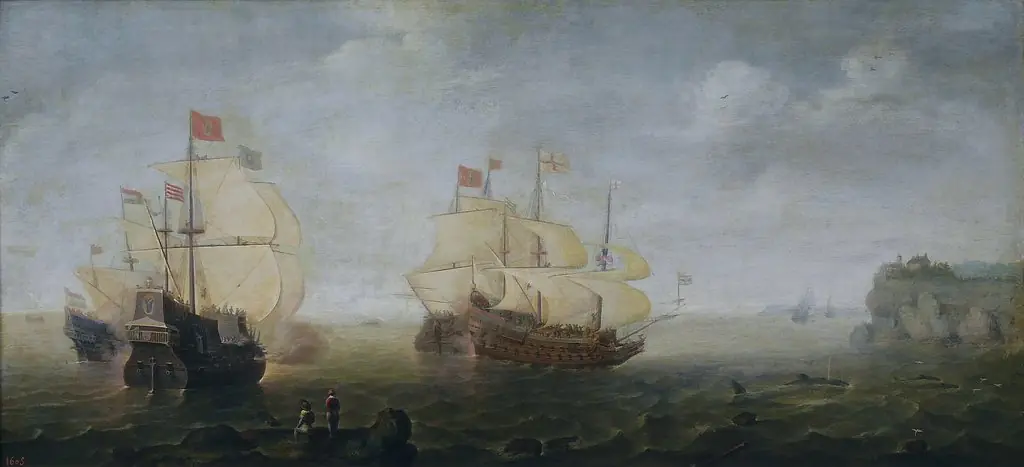
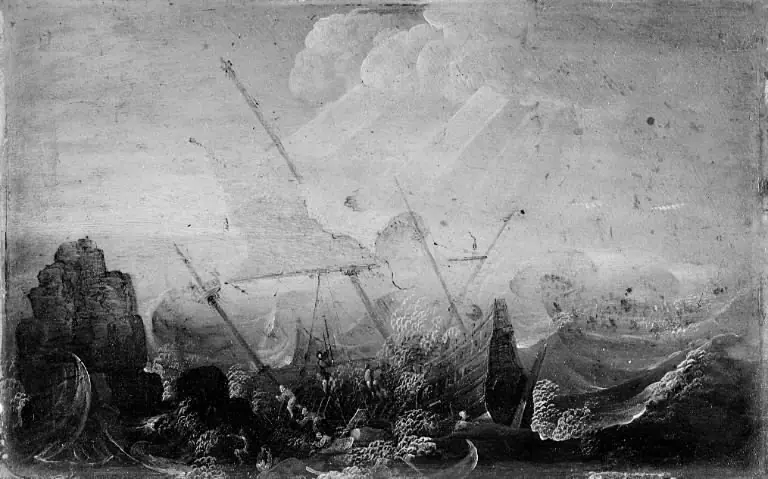
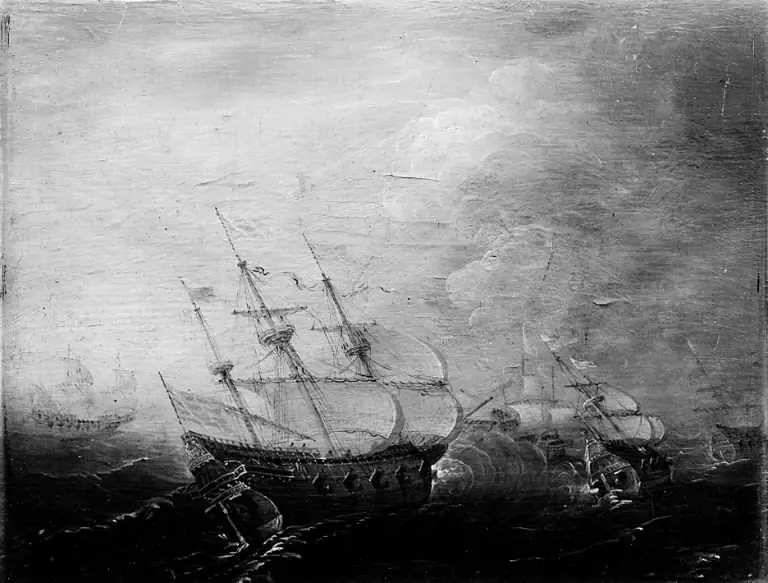
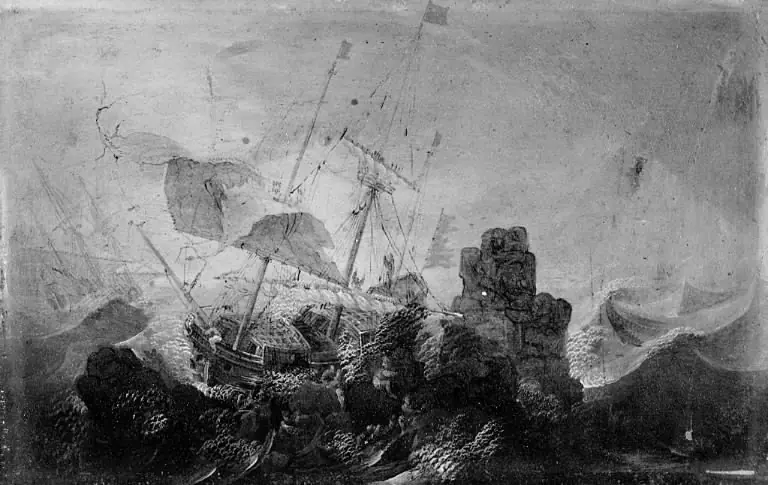
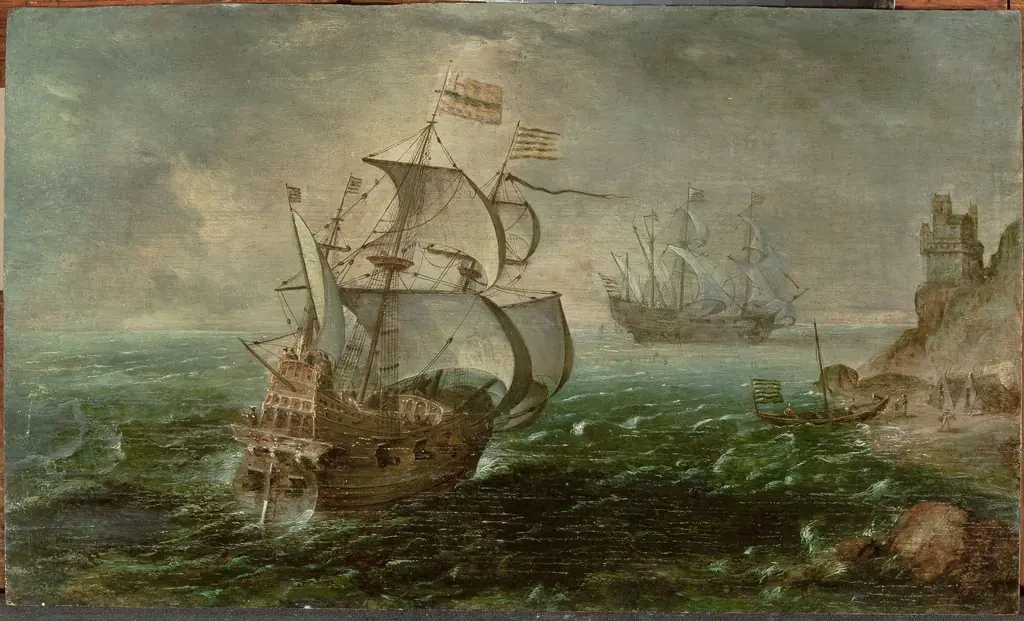
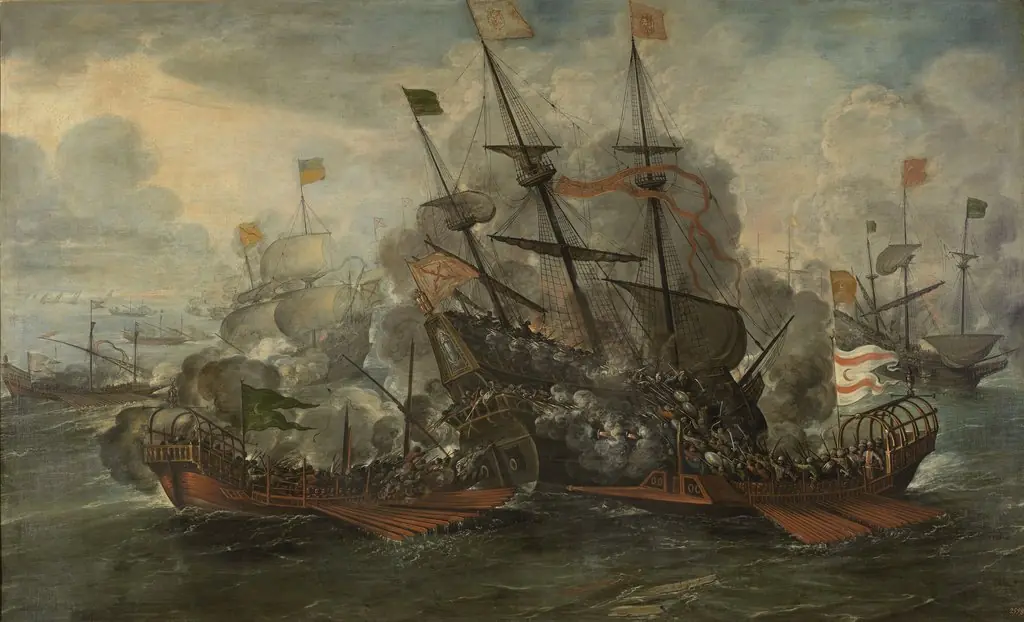 A naval battle scene between the Spaniards and Turks.
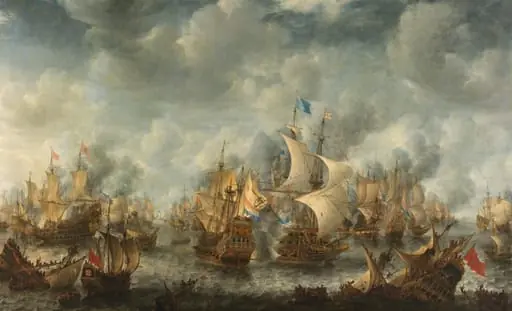 Slag bij Terheide
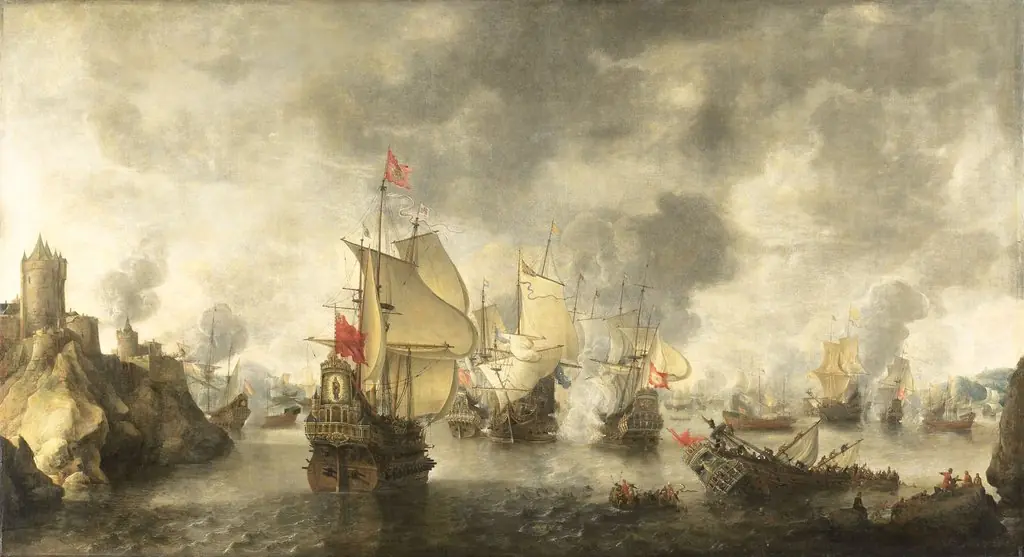 Battle of the combined Venetian and Dutch fleets against the Turks in the Bay of Foya, 1649
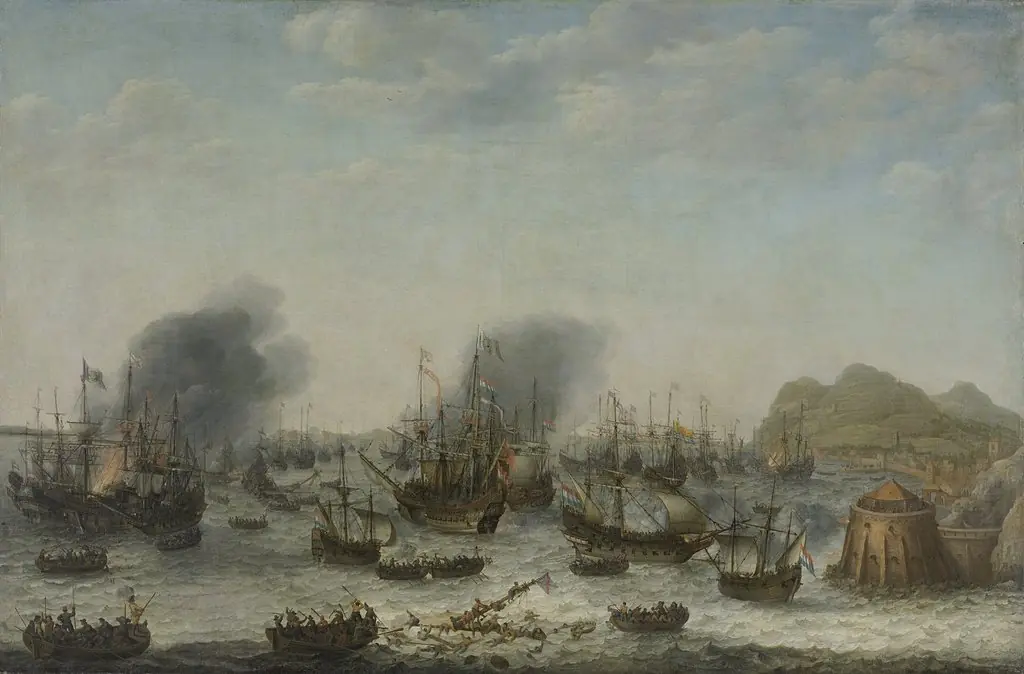 The defeat of the Spanish at Gibraltar by a Dutch fleet under the command of Admiral Jacob van Heemskerck, 25 April 1607
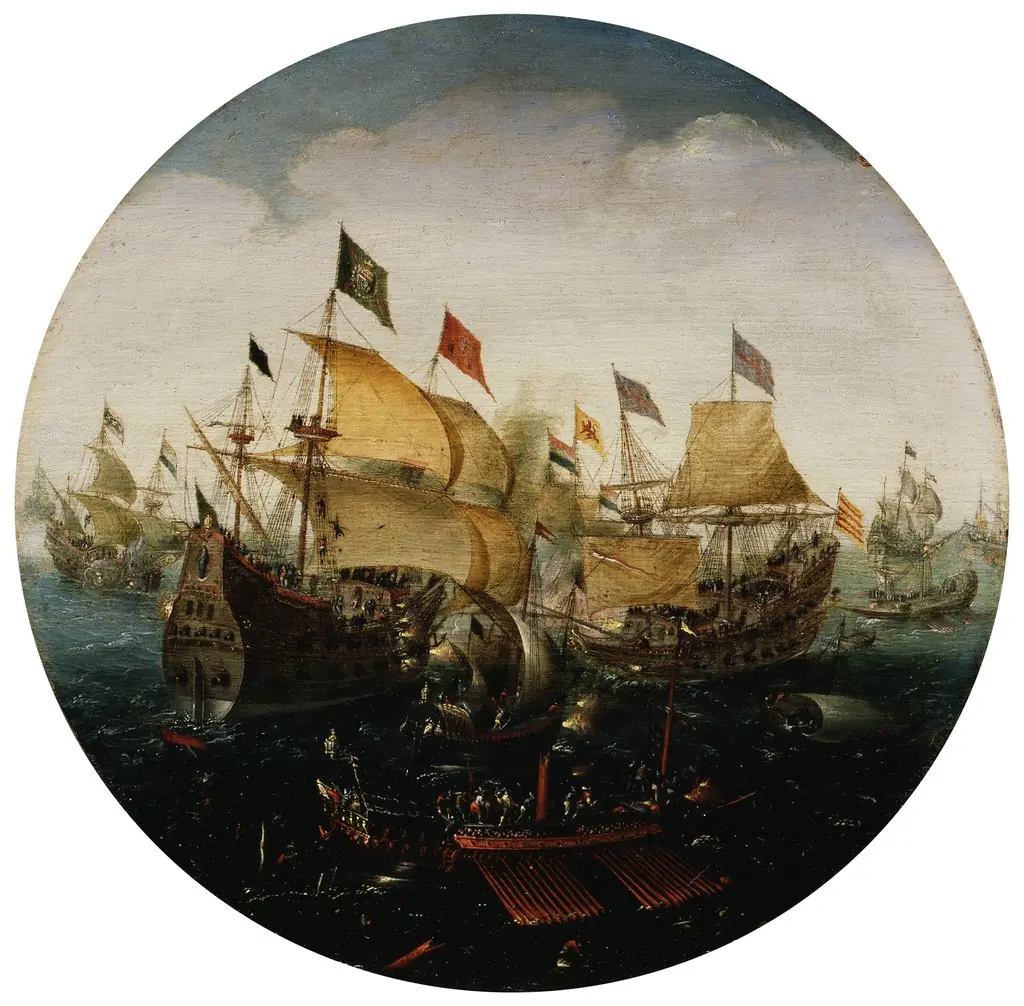 Sea Battle between Dutch and Spanish Ships
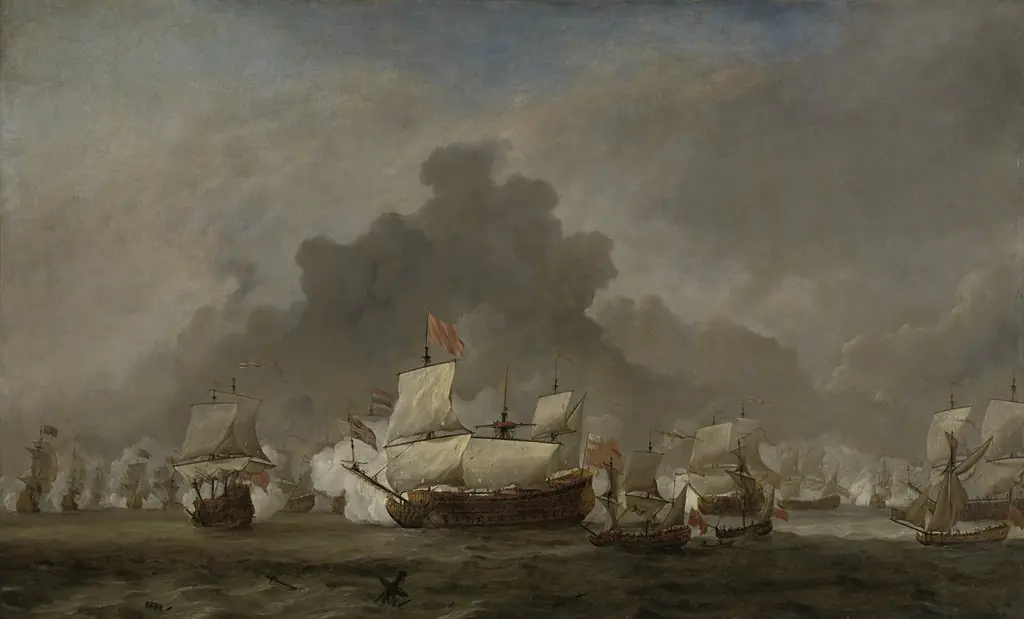 The skirmish of Michiel Adriaensz de Ruyter against the duke of York, commanding the 'Royal Prince'during the Battle of Solebay, 7 June 1672: episode from the Third Anglo-Dutch War (1672-74)
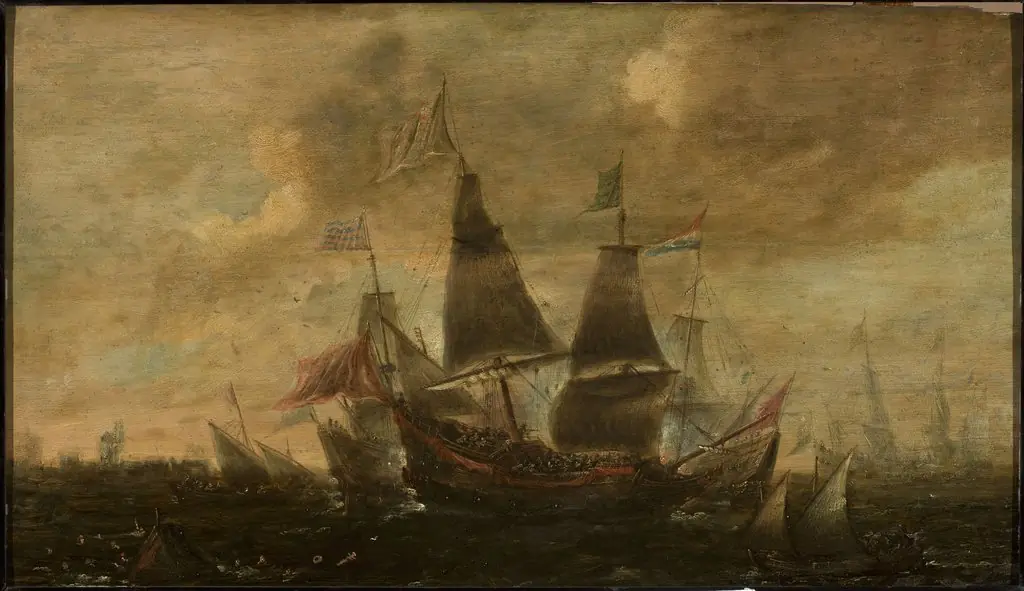 Sea battle
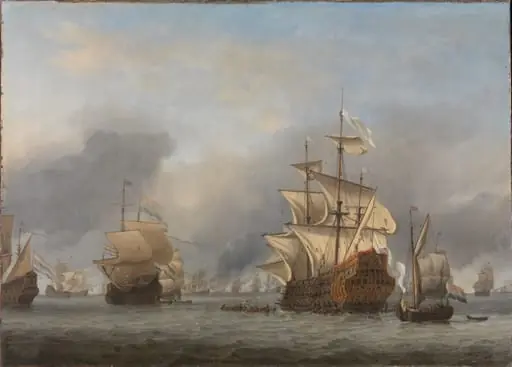 De verovering van de Royal Prince
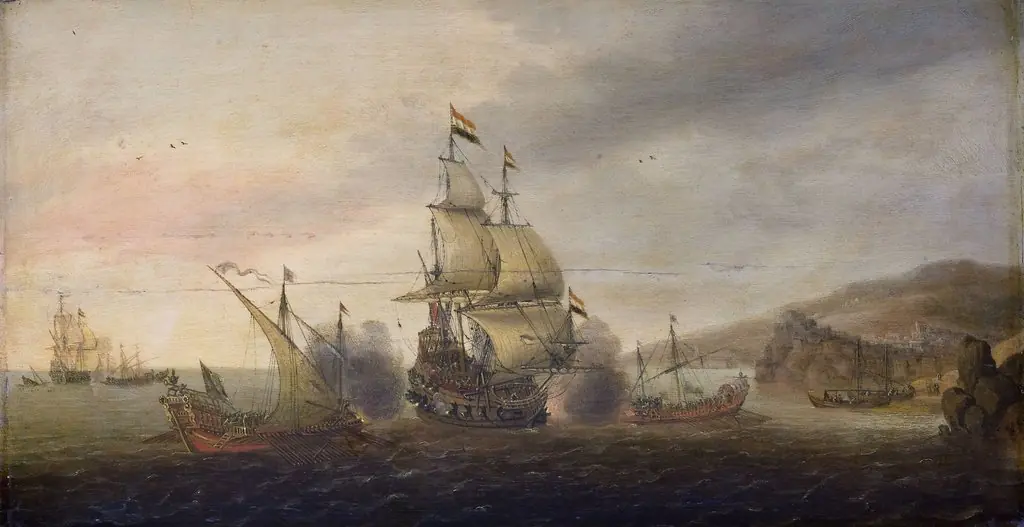 Naval battle between Dutch men-of-war and Spanish galleys