Subject
Fire
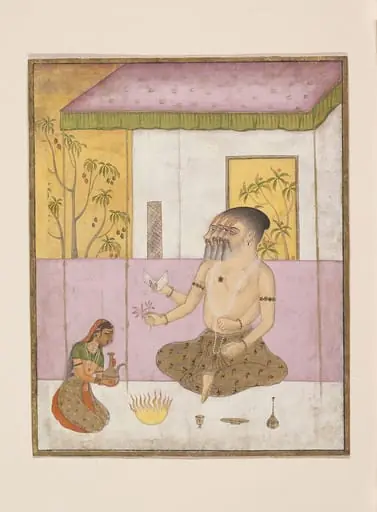
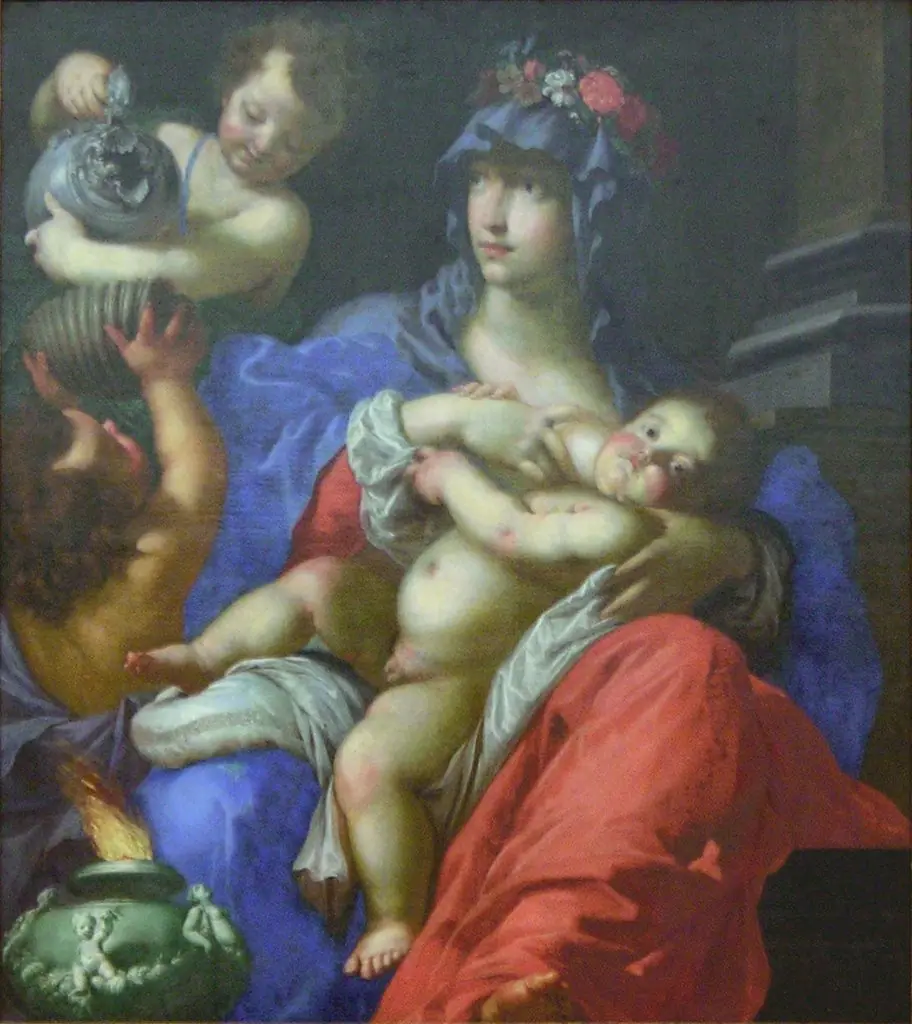
Fire is a subject in art. The gallery holds 51 works in this subject in art, including works by Jean Baptiste Camille Corot, Albert Bierstadt and John Haberle.
Fire is the rapid oxidation of a fuel in the exothermic chemical process of combustion, releasing heat, light, and various reaction products. Flames, the most visible portion of the fire, are produced in the combustion reaction when the fuel reaches its ignition point temperature.
Key artists

Artist
Overview
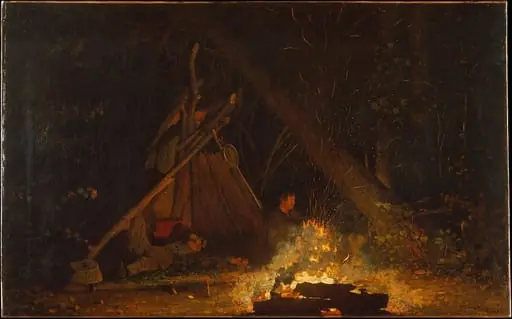
Fire, the rapid oxidation of fuel through exothermic combustion, is one of the most ancient and pervasive subjects in art. Defined scientifically as a chemical process releasing heat, light, and reaction products, fire produces visible flames when fuel reaches its ignition temperature. In the collection under discussion, fire appears in 60 works, ranging from serene landscapes and domestic interiors to catastrophic eruptions and nocturnal camp scenes. Its recurrence across such varied contexts reflects fire's dual nature as both essential tool and destructive force, a phenomenon that has shaped human survival, culture, and imagination since prehistoric times. The earliest controlled use of fire by humans dates to approximately one million years ago in South Africa's Wonderwerk Cave, though regular domestication is more firmly established from around 400,000 years ago at sites across Africa, Europe, and Asia. This mastery transformed nutrition, enabled migration to colder climates, protected against predators, and fostered social gathering around hearths, laying groundwork for storytelling and cultural transmission.
Iconography & meaning
Fire carries multivalent symbolism across cultures and periods. As one of the four classical elements alongside earth, air, and water, it has signified transformation, purification, and divine presence. In Greek mythology, Prometheus's theft of fire from the gods represents the transfer of civilization to humanity, while the eternal flames maintained by Vestal Virgins in Rome and in Greek prytaneia underscored its sacred status. Biblical iconography employs fire to denote God's presence, from the burning bush that addressed Moses to the tongues of flame at Pentecost. Buddhist tradition features the Fire Sermon, where senses and feelings are described as burning with passion, hatred, and illusion. Dutch tradition associates fire with spiritual fervor and passion, the flame itself symbolizing life force. The color and intensity of depicted flames, dependent on fuel type and surrounding gases, have allowed artists to modulate meaning, blue flames suggesting higher temperatures around 2,000°C versus yellow and red at approximately 1,000°C. Fire's capacity for both creation and destruction, its role in cooking and warmth alongside conflagration and warfare, gives it an inherently ambivalent iconographic charge that artists have exploited across millennia.
Across movements & periods
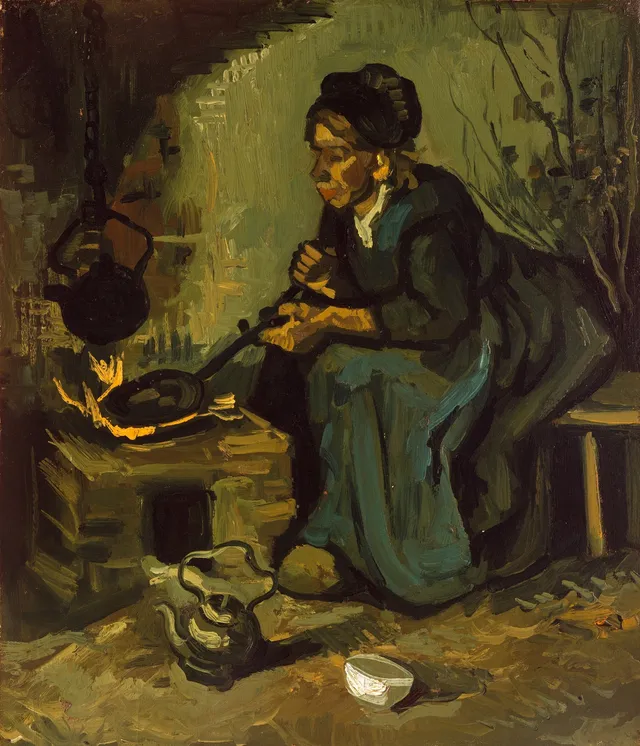
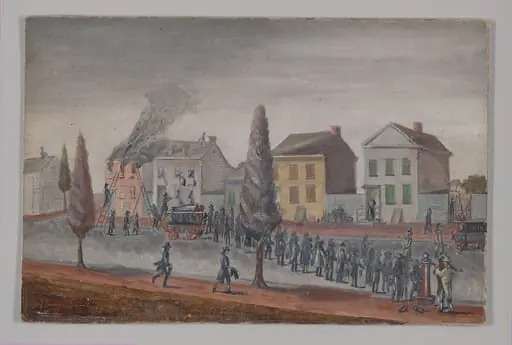
The treatment of fire in art has evolved considerably across movements and cultures, though specific periodization must be inferred from the collection's examples. Prehistoric evidence indicates fire was used to manufacture stone tools by 72,000 years ago in southern Africa, suggesting its appearance in material culture long before formal artistic traditions. Ancient civilizations maintained fire as sacred commodity, with each village or city possessing a fire-house; Greek prytaneia housed eternal flames that became seats of local government, while Roman Vestal Virgins guarded perpetual fires. In European painting, the contrast between fire and snow in works like The Hunters in the Snow connects to the Northern European tradition of depicting seasonal hardship and rural life. Volcanic subjects such as An Eruption of Vesuvius belong to a distinct subgenre of sublime landscape painting that gained particular currency after the 1631 and 1779 eruptions, and again after 1944, when Vesuvius became a touchstone for contemplating nature's destructive power. The domestic fireplace in Peasant Woman Cooking by a Fireplace aligns with genre painting's attention to everyday labor, while Fighting a Fire represents a documentary or civic-minded approach emerging with urbanization and professional firefighting. The collection's untitled works suggest modern and contemporary abstraction's capacity to treat fire as pure visual phenomenon rather than narrative element.
Legacy
Fire's cultural afterlife extends far beyond its visual representation. Anthropologist Polly Wiessner's research among Kalahari San demonstrates how fire fundamentally shaped human sociality, with daytime conversations focusing on economic matters giving way at night to over 80 percent storytelling around the hearth, tales of distant people and spirit worlds. This pattern suggests that fire's appearance in art is never merely visual but encodes deep structures of human community and consciousness. The contemporary period has been dubbed the Pyrocene in recognition of human-caused fire activity's planetary impact, particularly through fossil fuel combustion. This scientific framing gives renewed urgency to artistic depictions of fire, transforming historical images of hearth and volcano into commentary on anthropogenic climate change. The collection's 60 works, spanning domestic, natural, and allegorical registers, thus constitute an archive of human-fire relations at a moment when those relations have become existentially consequential. Technologies of fire prevention and management, from smoke detectors to professional firefighting, appear in works like Fighting a Fire, documenting humanity's attempt to control what remains fundamentally uncontrollable. The eternal flames of ancient civilizations find modern echoes in commemorative fires such as that beneath the Arc de Triomphe, maintaining fire's function as symbol of collective memory and sacrifice across temporal and cultural boundaries.
Works
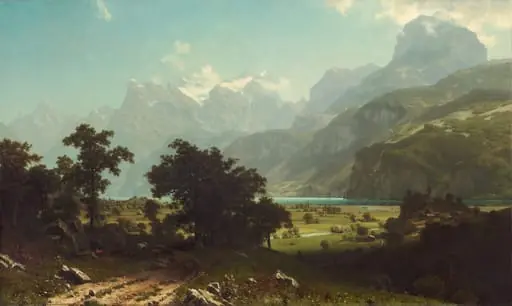 Lake Lucerne
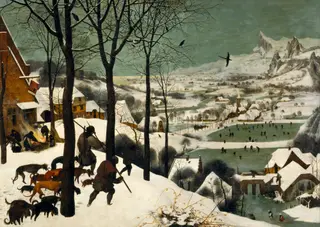 The Hunters in the Snow
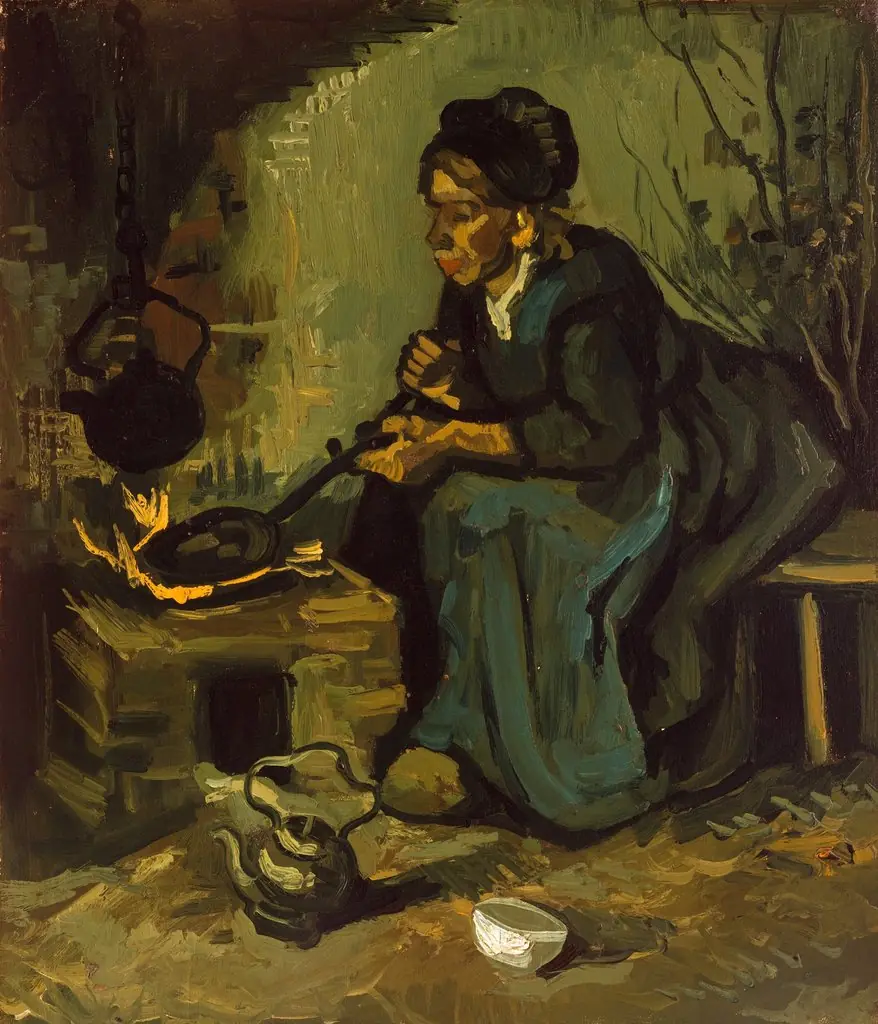 Peasant Woman Cooking by a Fireplace
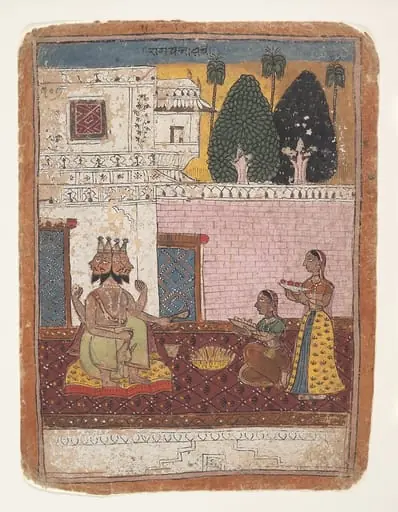 Untitled
 Untitled
 Charity
 Fighting a Fire
 Camp Fire
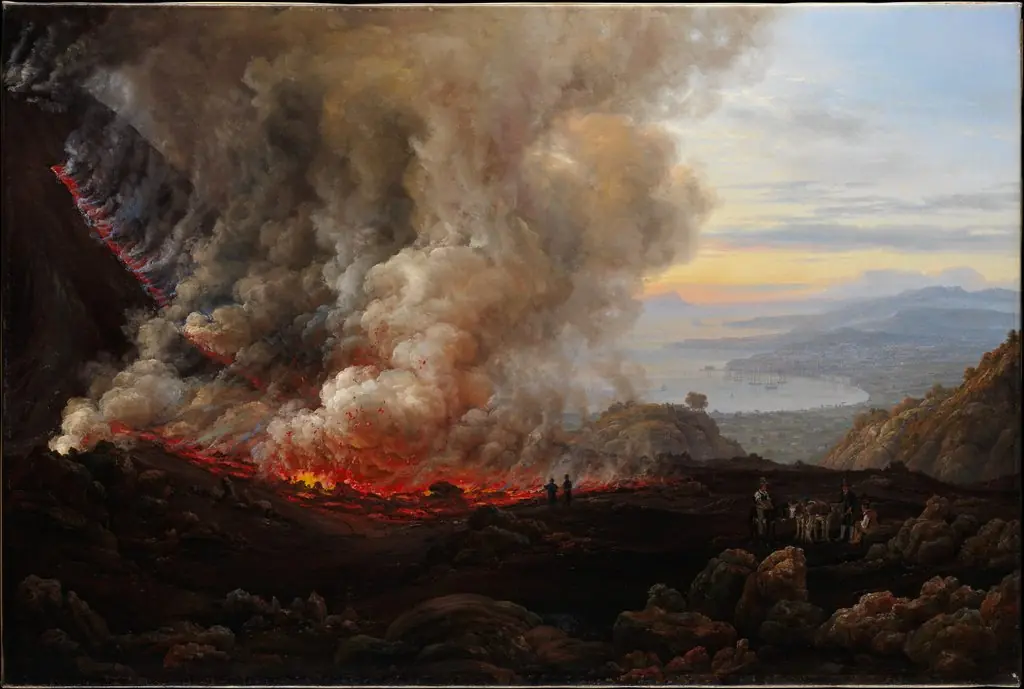 An Eruption of Vesuvius
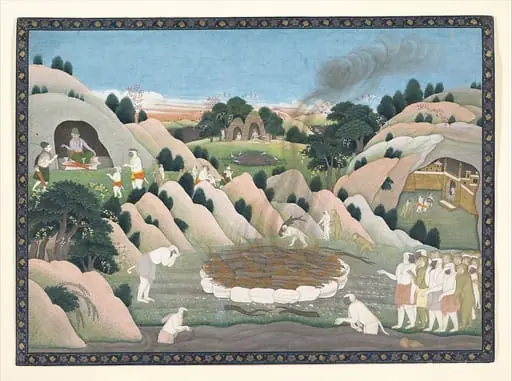 Untitled
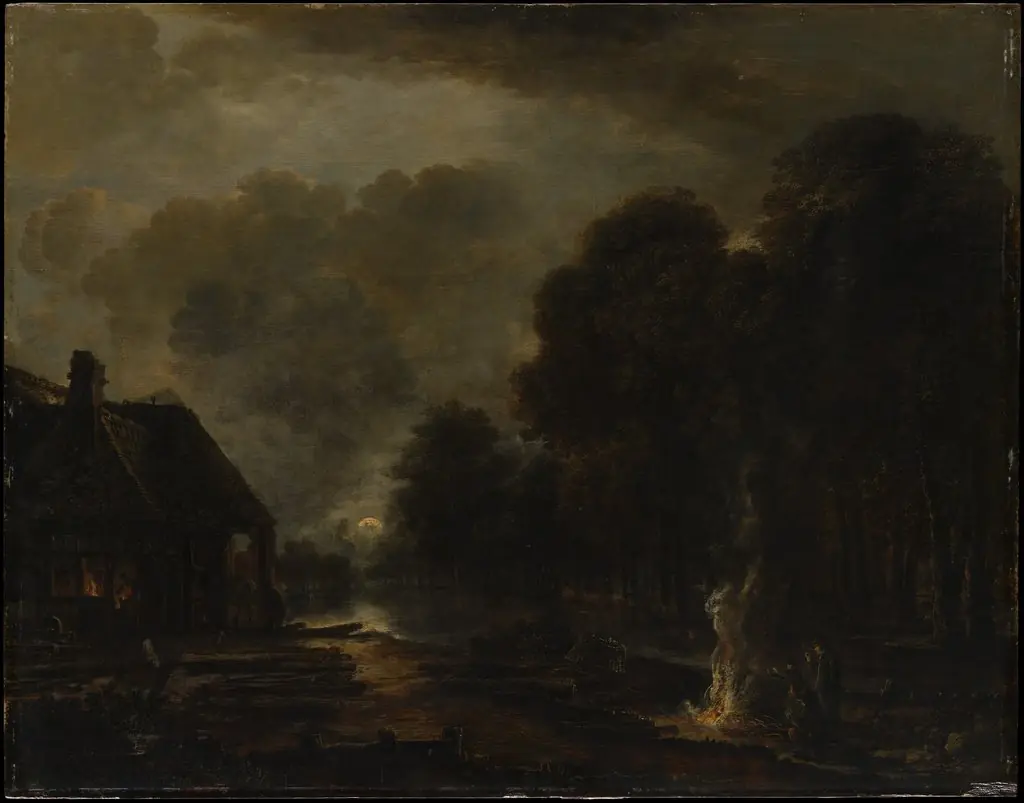 The Farrier
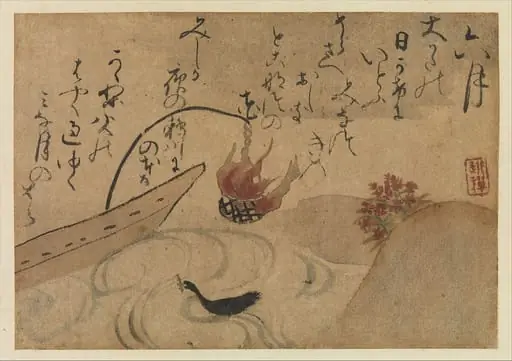 尾形乾山筆 定家詠十二ヶ月和歌 花鳥図 『拾遺愚草』 より六月|“Sixth Month” from Fujiwara no Teika’s “Birds and Flowers of the Twelve Months”
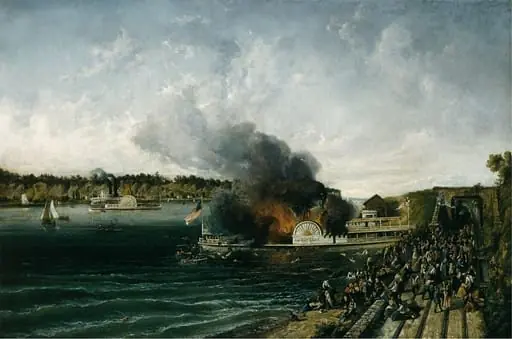 Burning of the Sidewheeler Henry Clay
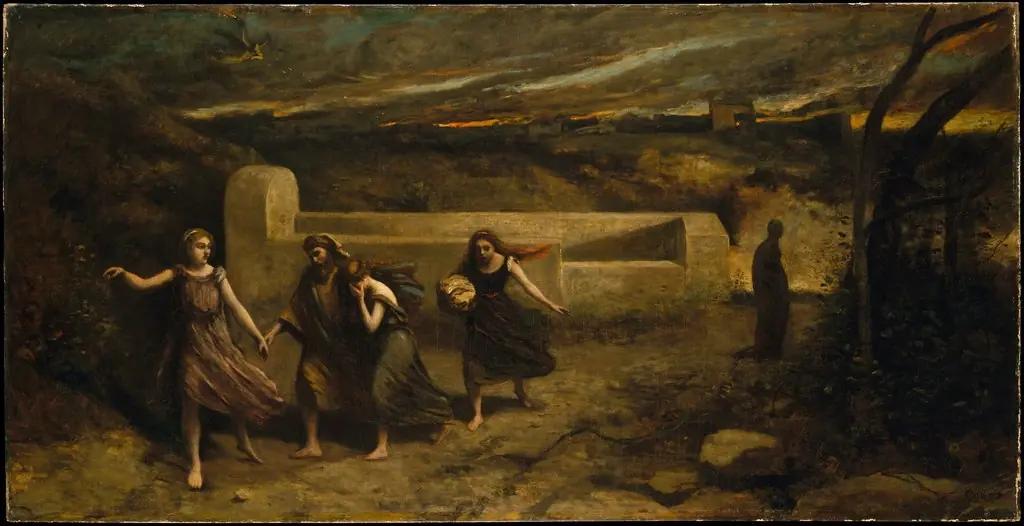 The Burning of Sodom
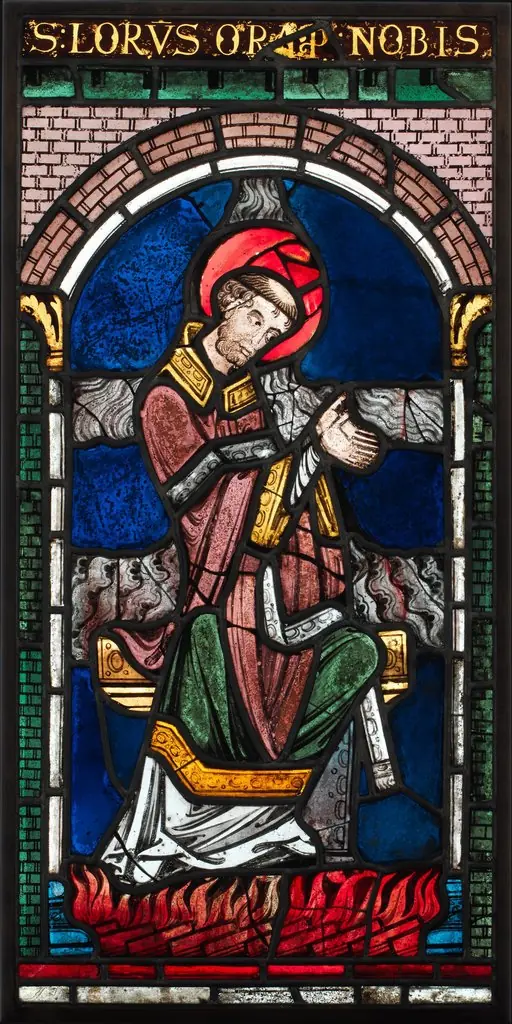 Martyrdom of Saint Lawrence
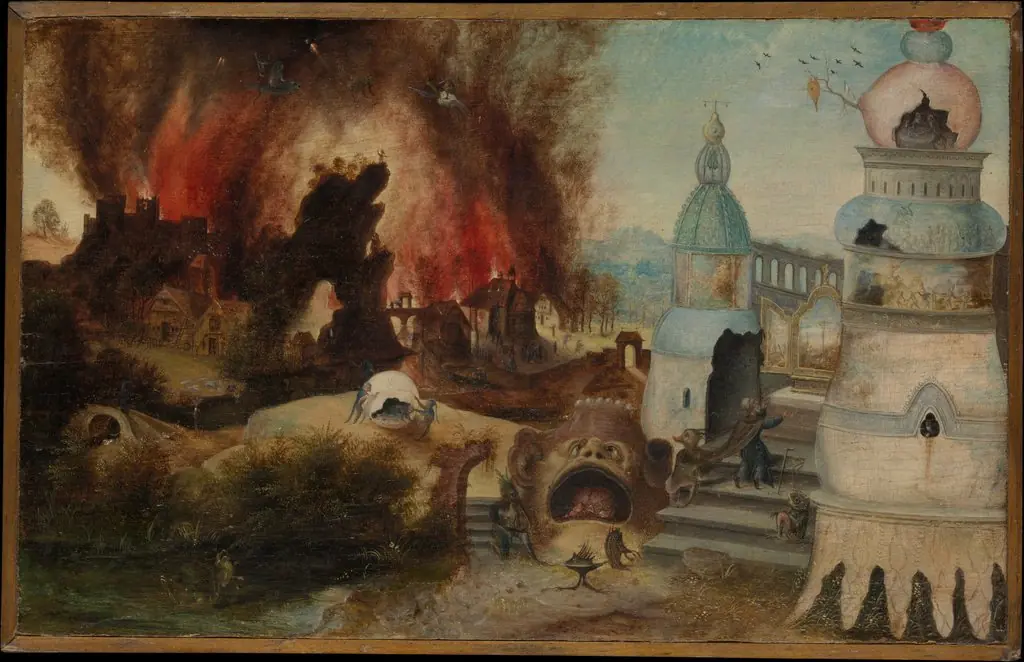 The Temptation of Saint Anthony
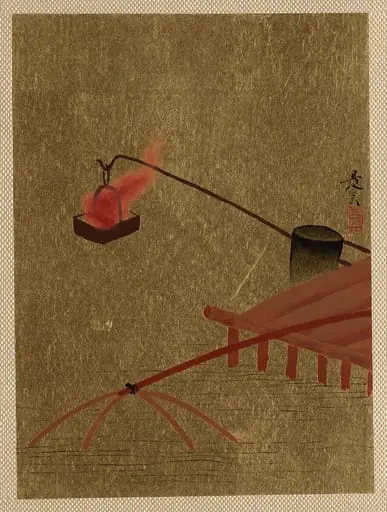 Untitled
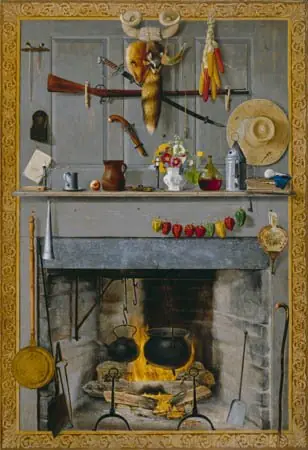 Grandma's Hearthstone
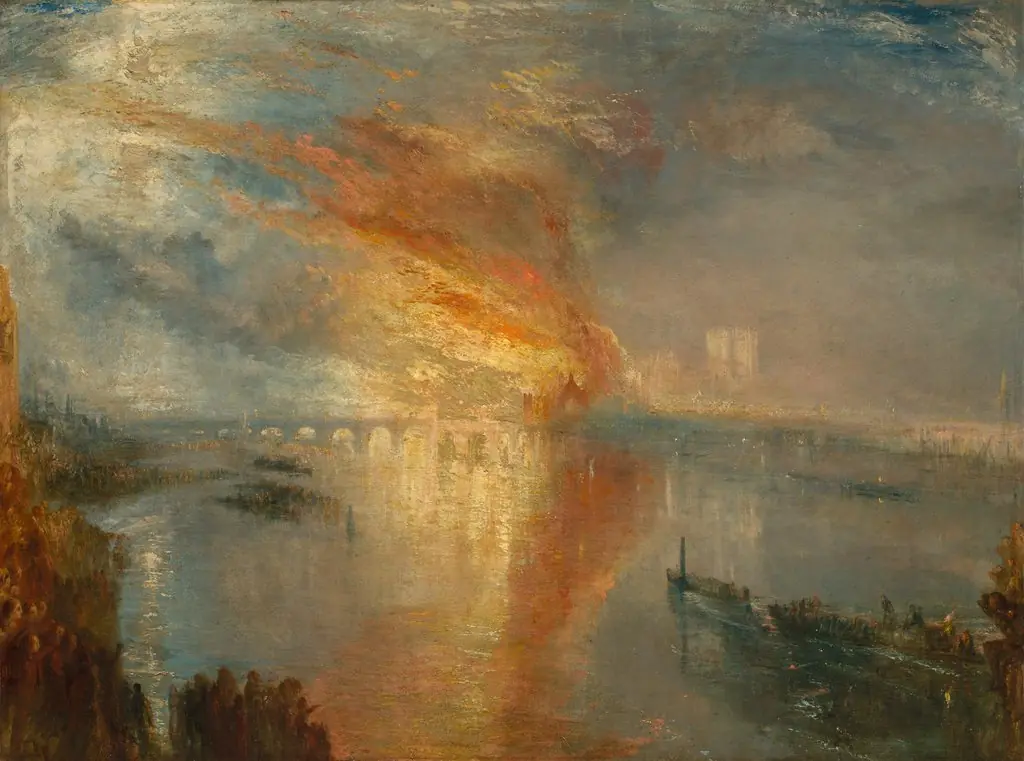 The Burning of the Houses of Lords and Commons, 16 October 1834
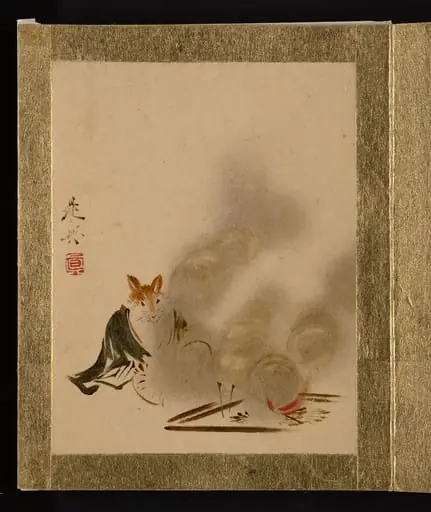 Untitled
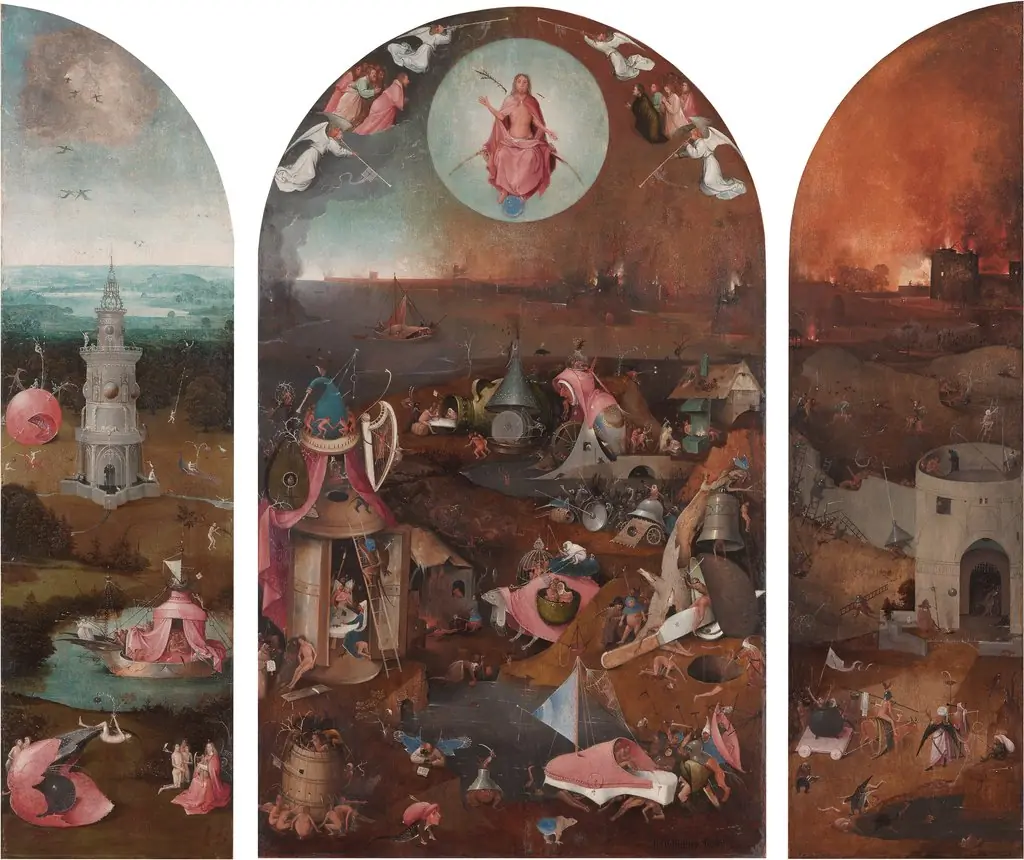 Last Judgement
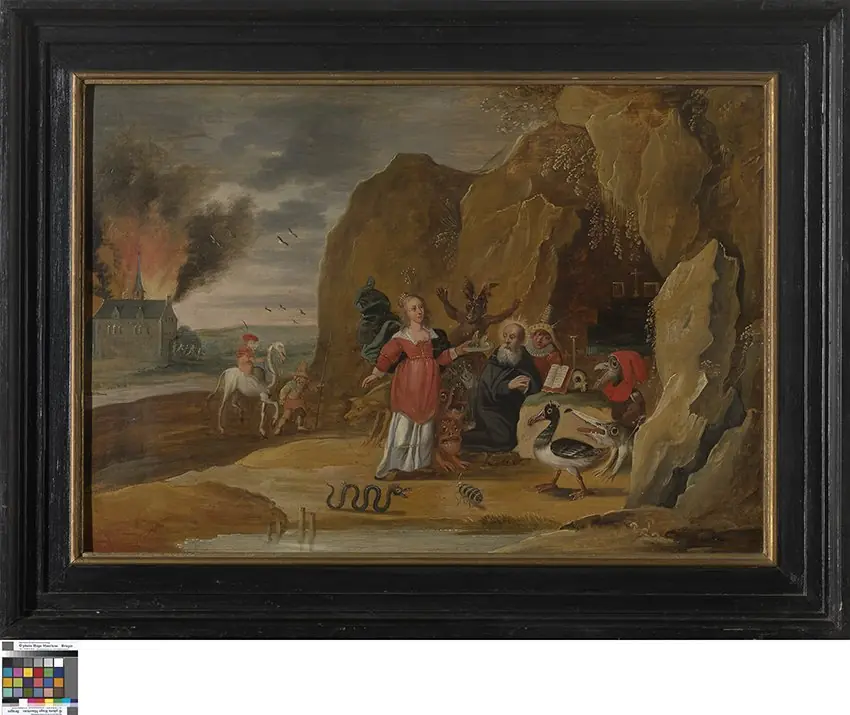 Verzoeking van de heilige Antonius
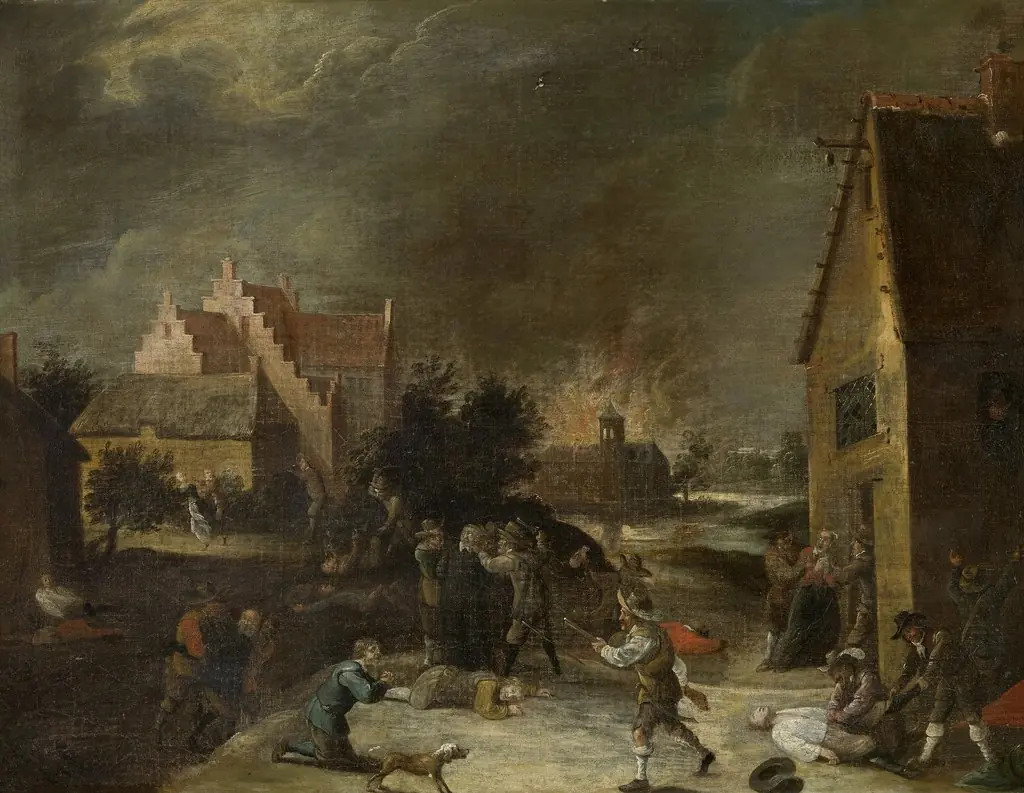 Looting of a village
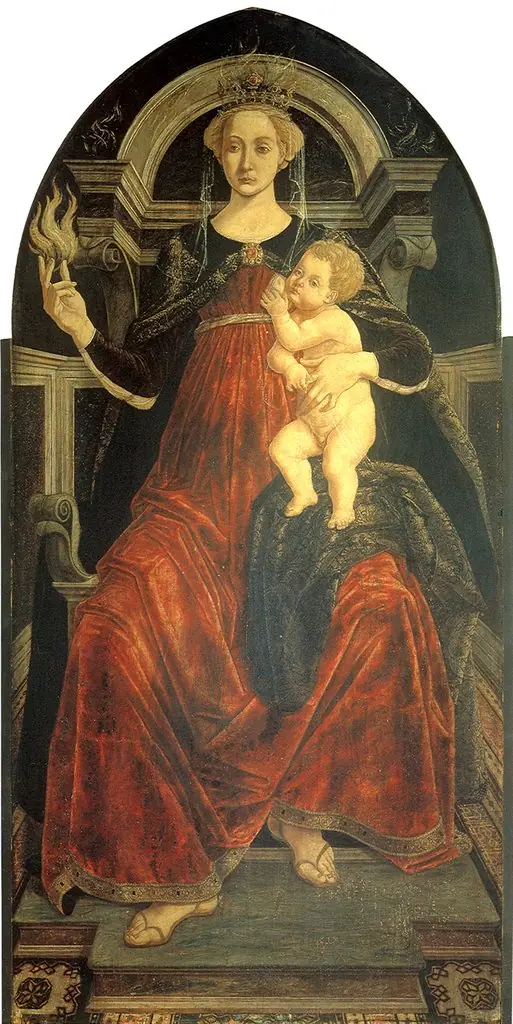 Charity
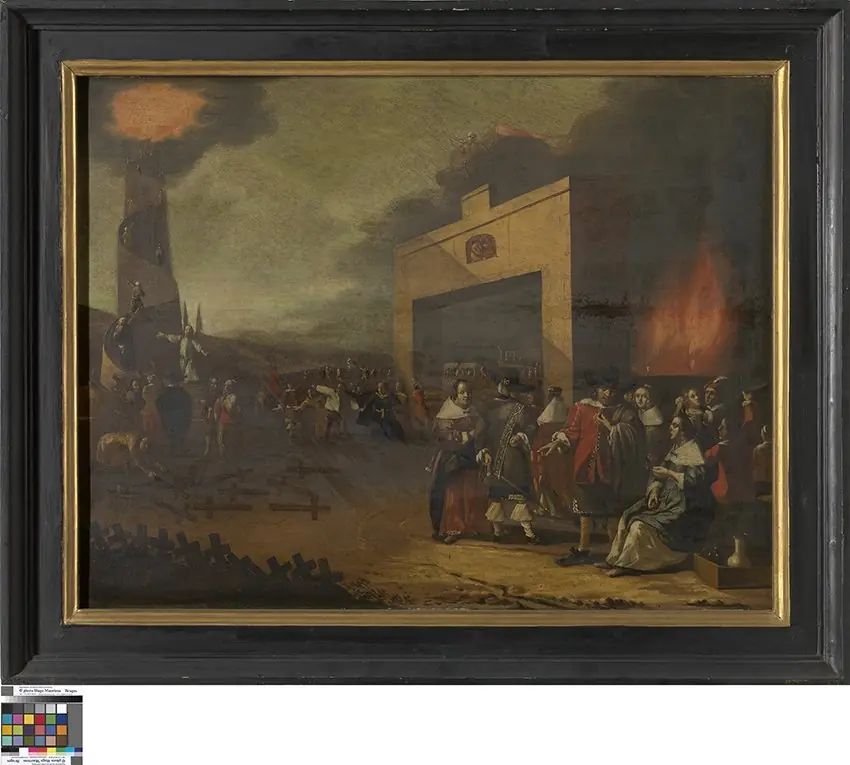 De nauwe en de wijde poort
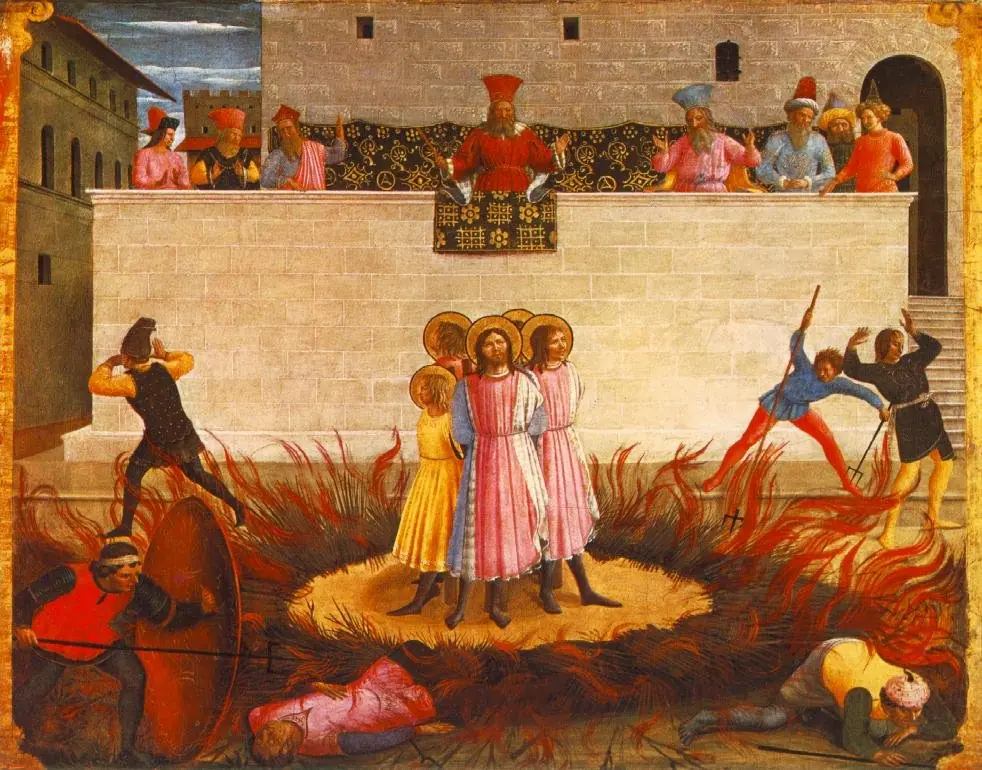 Saints Cosmas and Damian and their Brothers Surviving the Stake
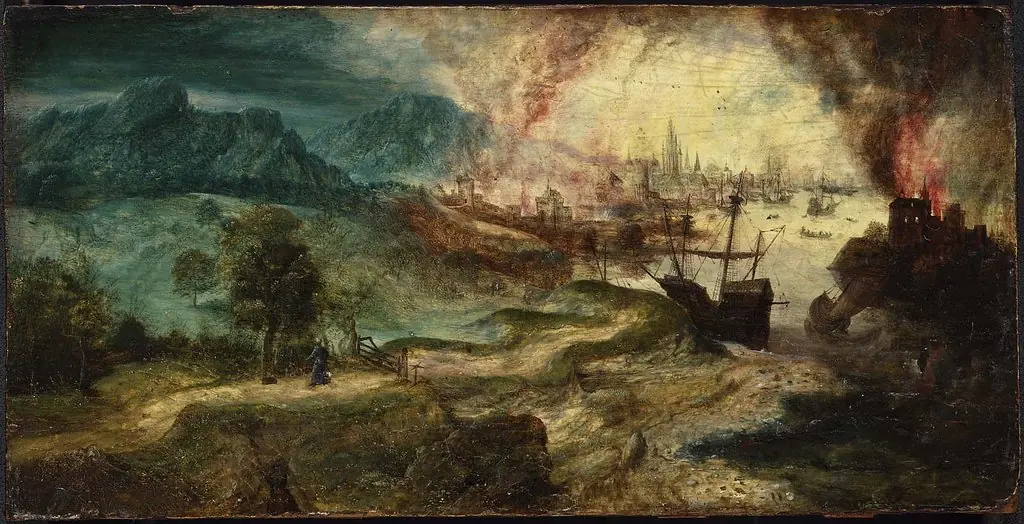 Landscape with Burning City
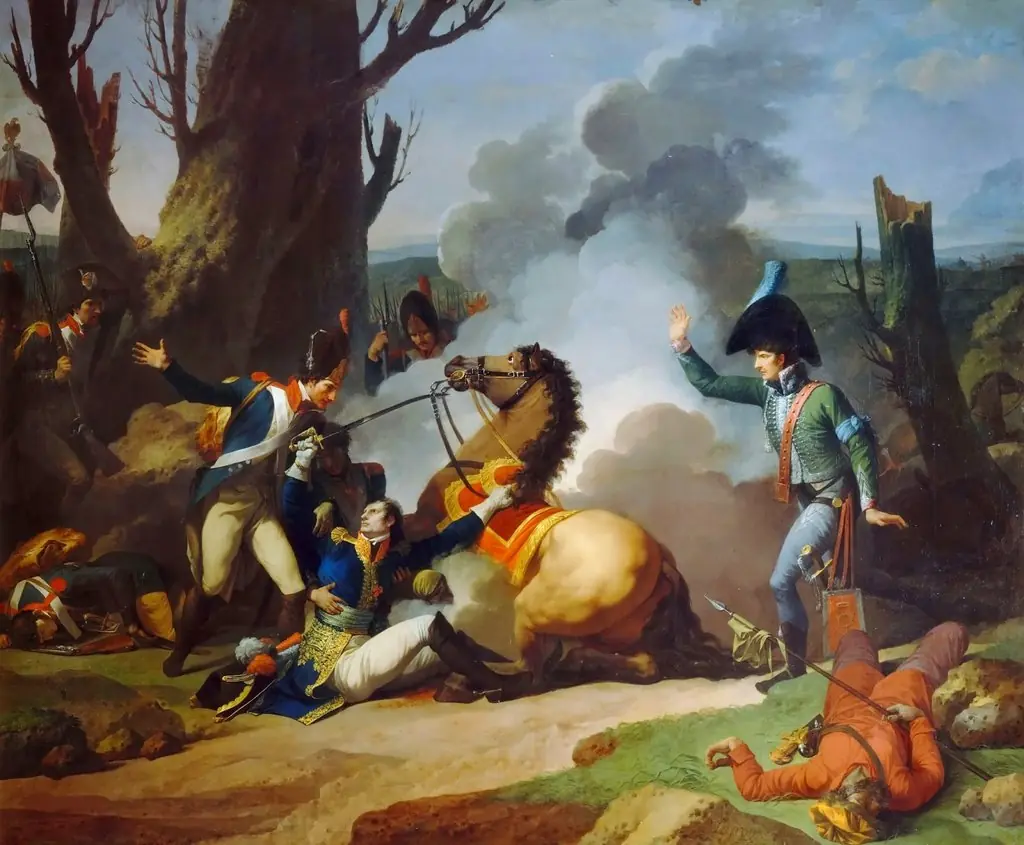 Death of General Valhubert, December 2, 1805
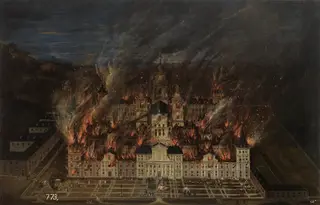 Incendio del Monasterio de El Escorial en 1671
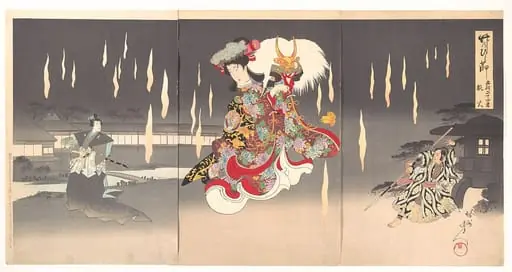 Untitled
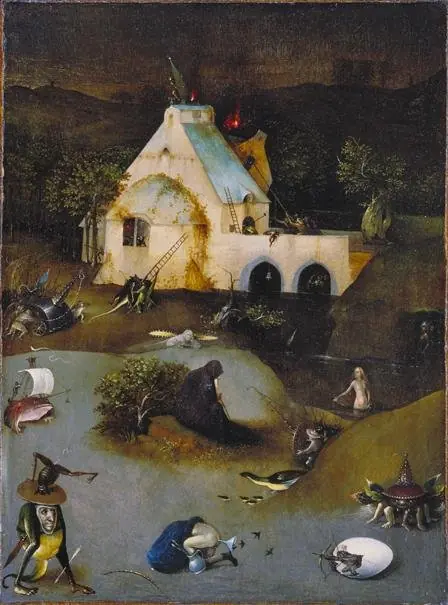 The Temptation of Saint Anthony
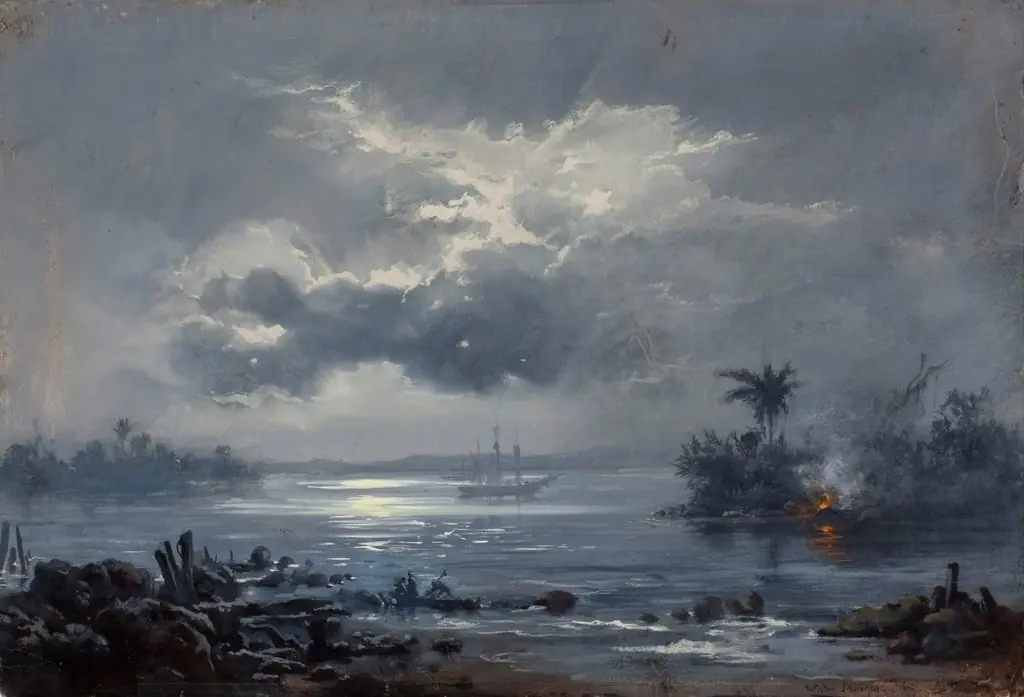 Passagem de Humaitá
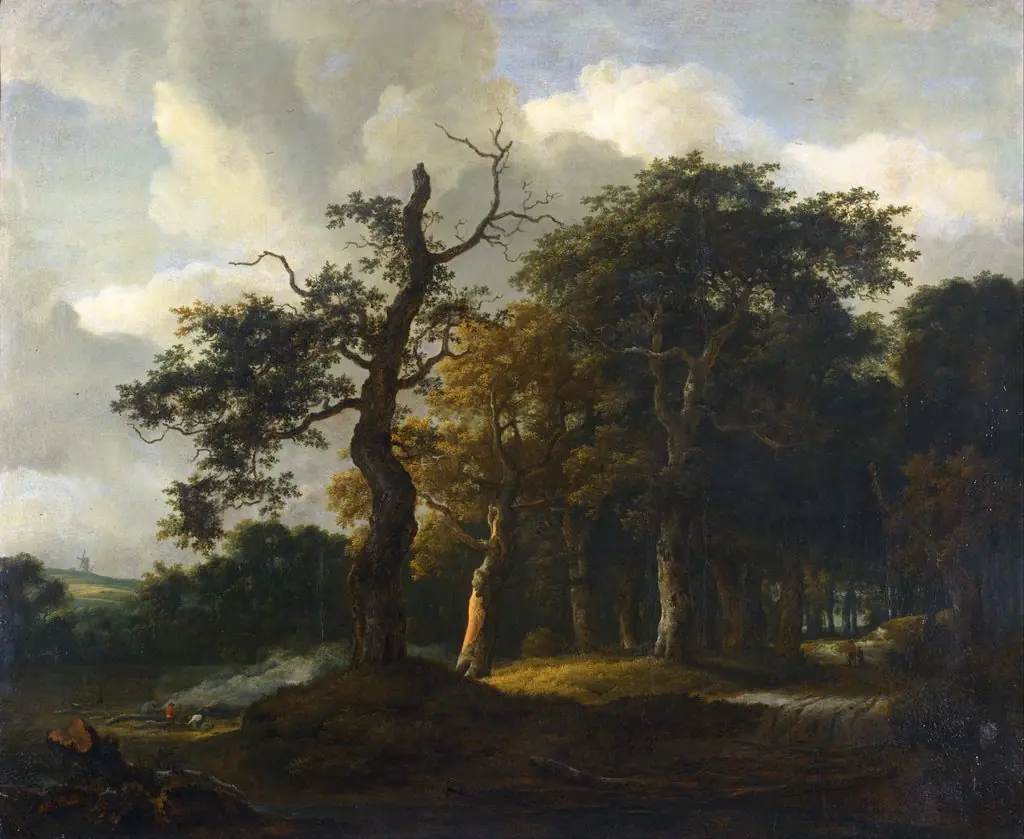 A Road through an Oak Wood
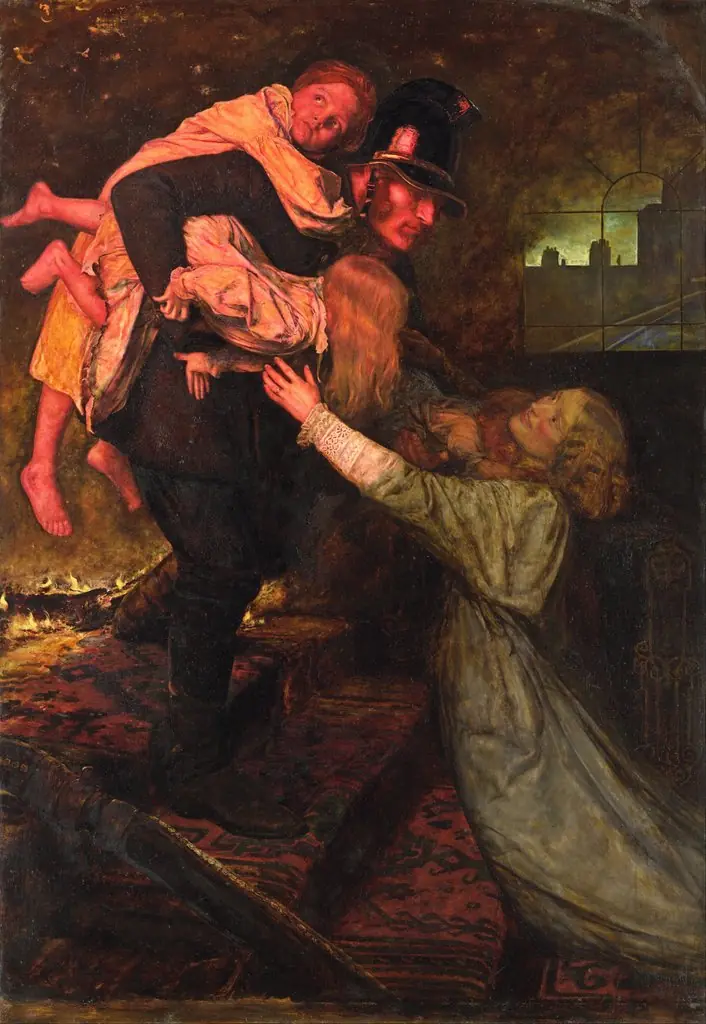 The Rescue
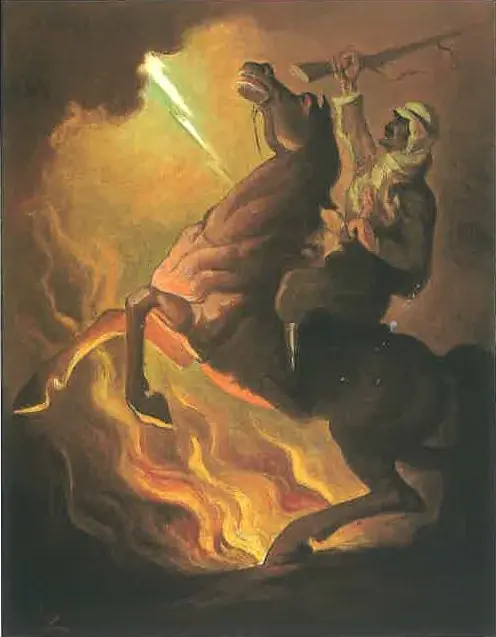 Renaissance
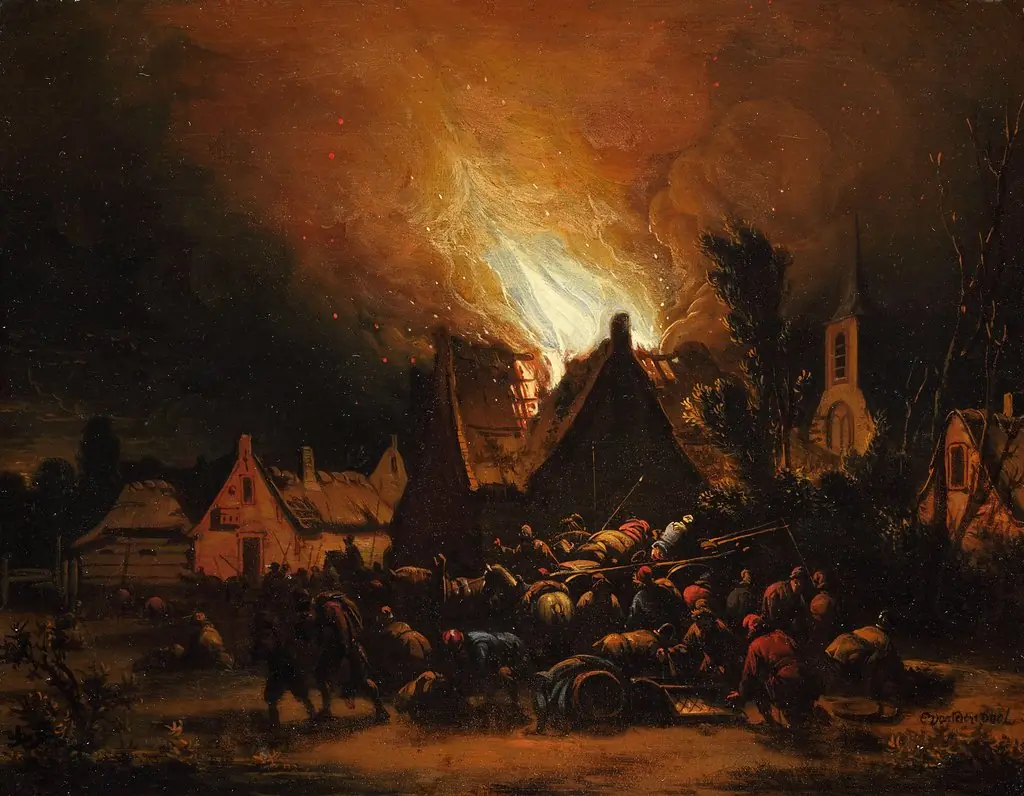 Nocturnal Fire
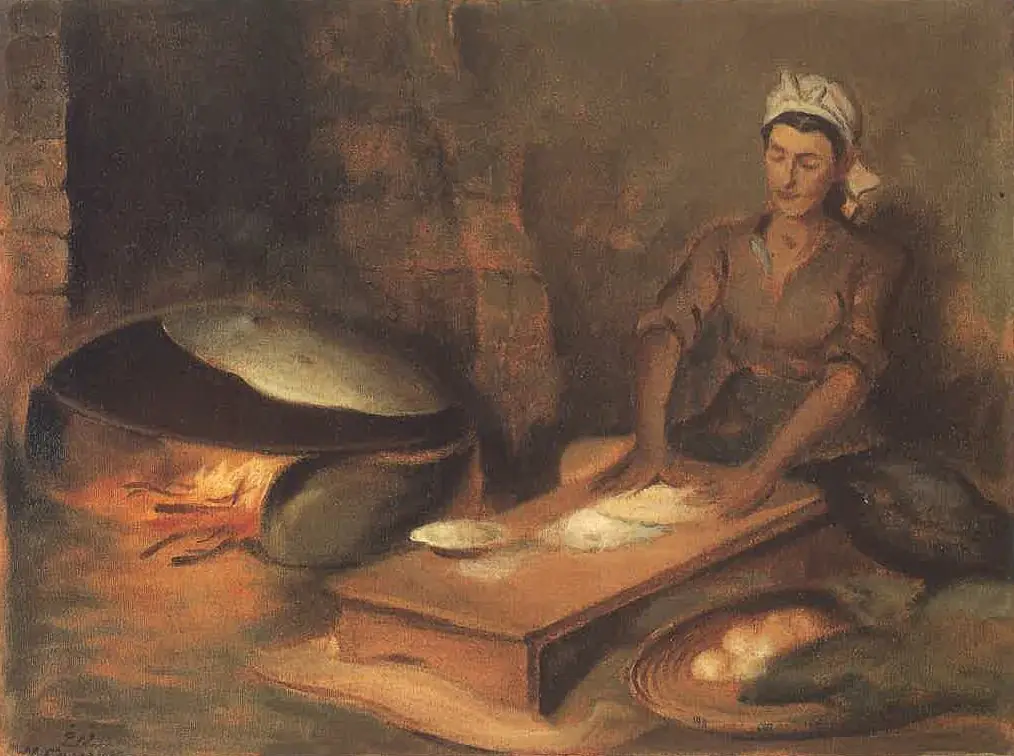 Hanné Baking Markouk
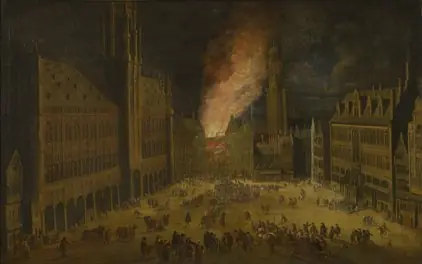 Fire of the house the Wolvin in Brussels in 1690
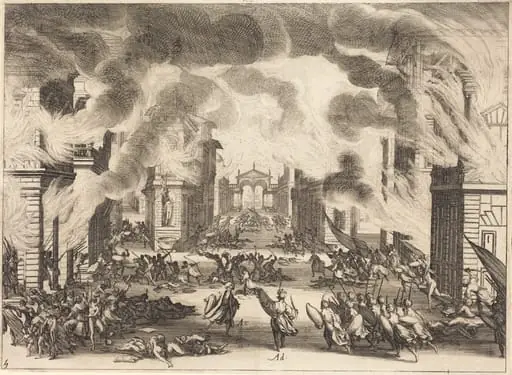 Il Solimano, Act V
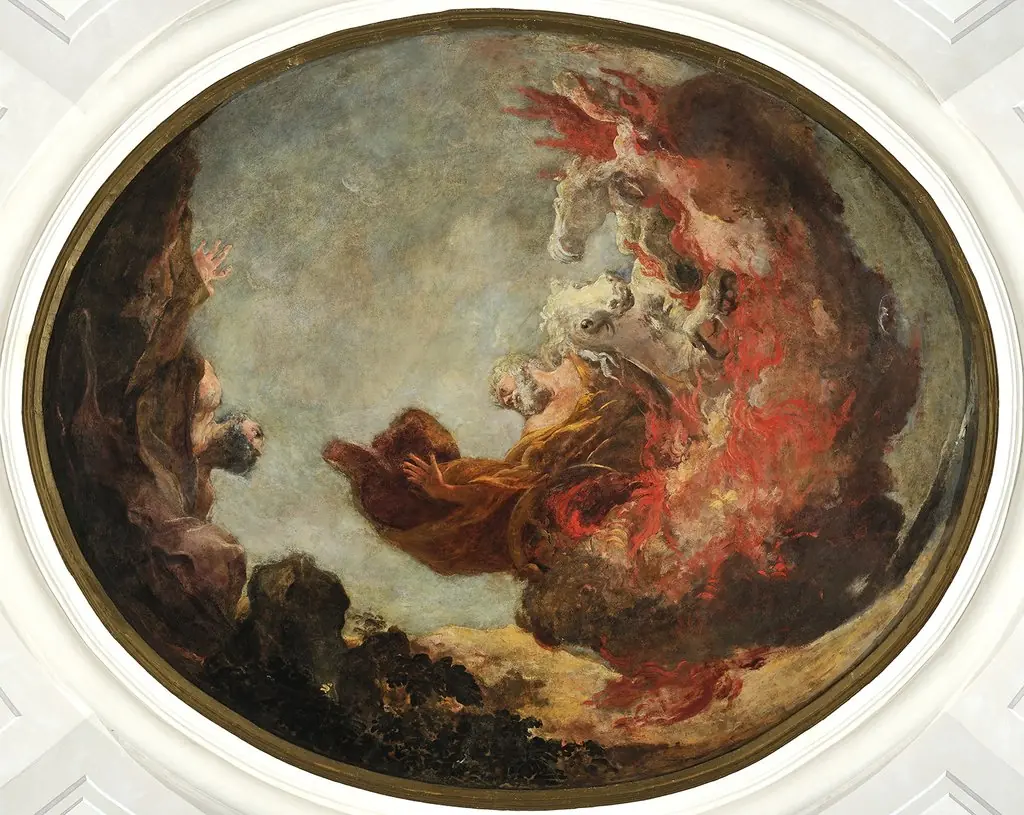 Le Prophète Elie
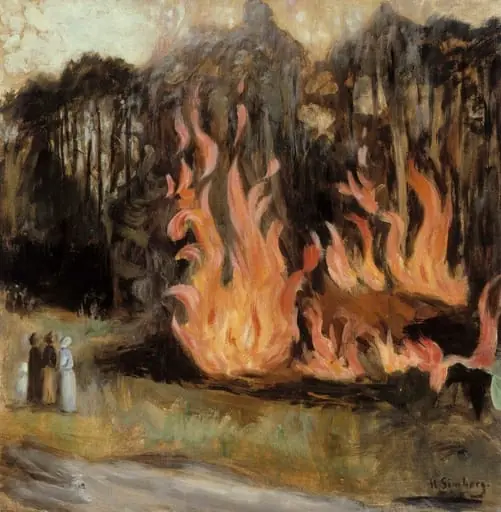 Kokkotulia
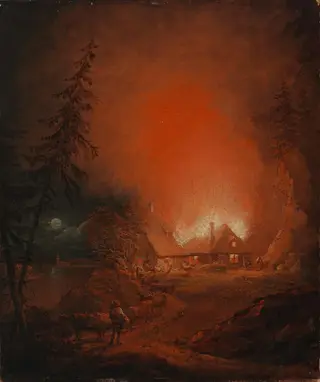 Tulipalo yöllä talonpoikaistalossa
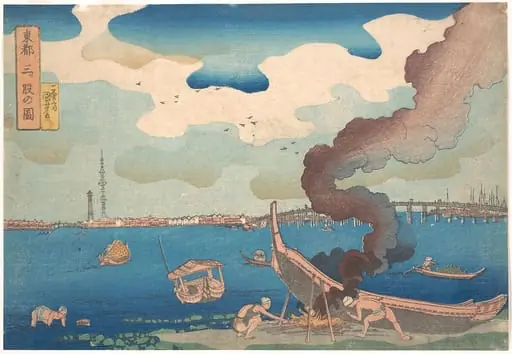 Toto Mitsumata no zu|Picture of Mitsumata
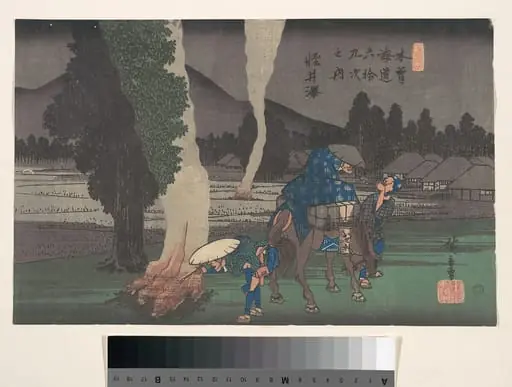 木曽海道六拾九次之内 軽井沢|Karuizawa
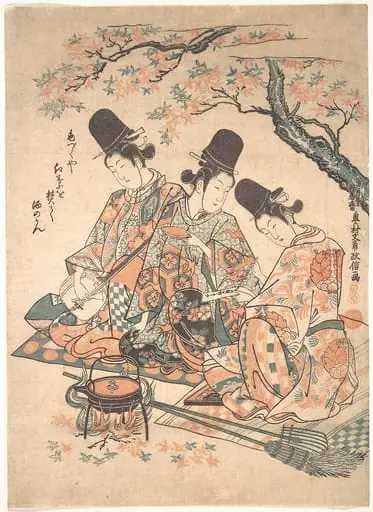 見立『平家物語』 紅葉焚図|Parody of Palace Servants Heating Sake over a Fire of Maple Leaves
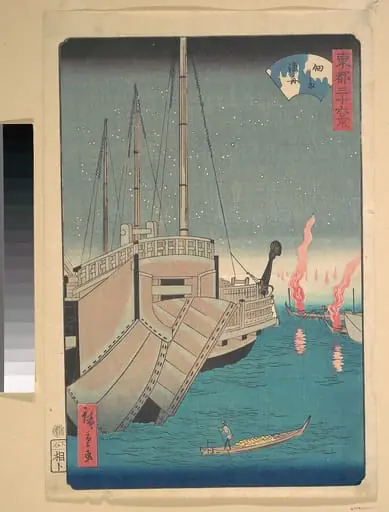 東都三十六景 佃しま漁舟|Tsukudajima Gyoshoi
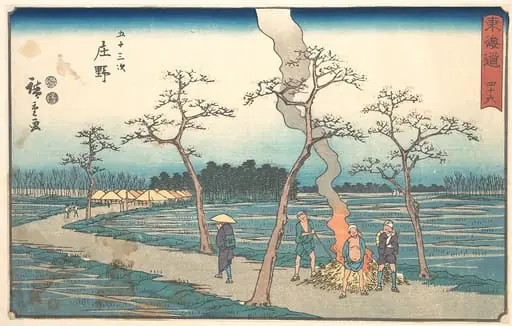 東海道五十三次 庄野|Shono
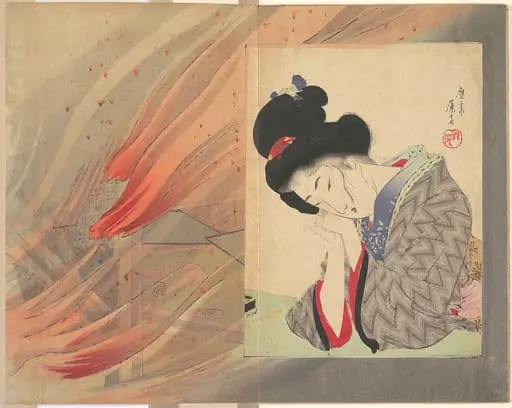 Untitled
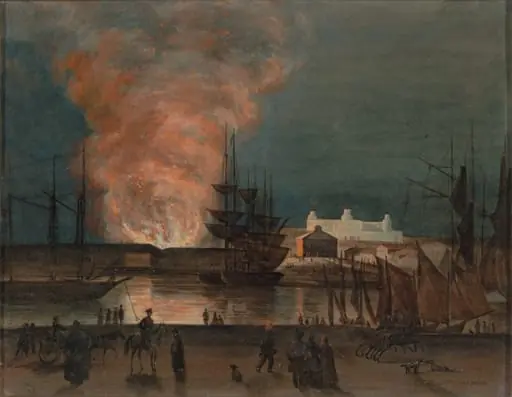 Tulipalo Kaivopuiston suunnalla
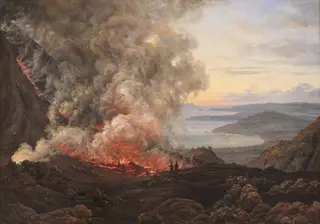 Eruption of the Volcano Vesuvius
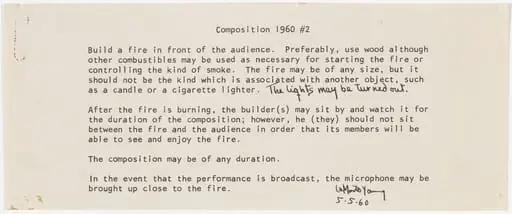 Untitled
Frequently asked questions
What is Fire?
Fire is the rapid oxidation of a fuel in the exothermic chemical process of combustion, releasing heat, light, and various reaction products.
How many Fire works does Artifact World Gallery have?
Artifact World Gallery holds 51 public-domain Fire works, all free to view and download.
Who are the key Fire artists?
Key Fire artists in the collection include Jean Baptiste Camille Corot, Albert Bierstadt and John Haberle.
Where can I see Fire works?
Fire works in the collection are held by Metropolitan Museum of Art, Groeningemuseum and Finnish National Gallery.