Artwork
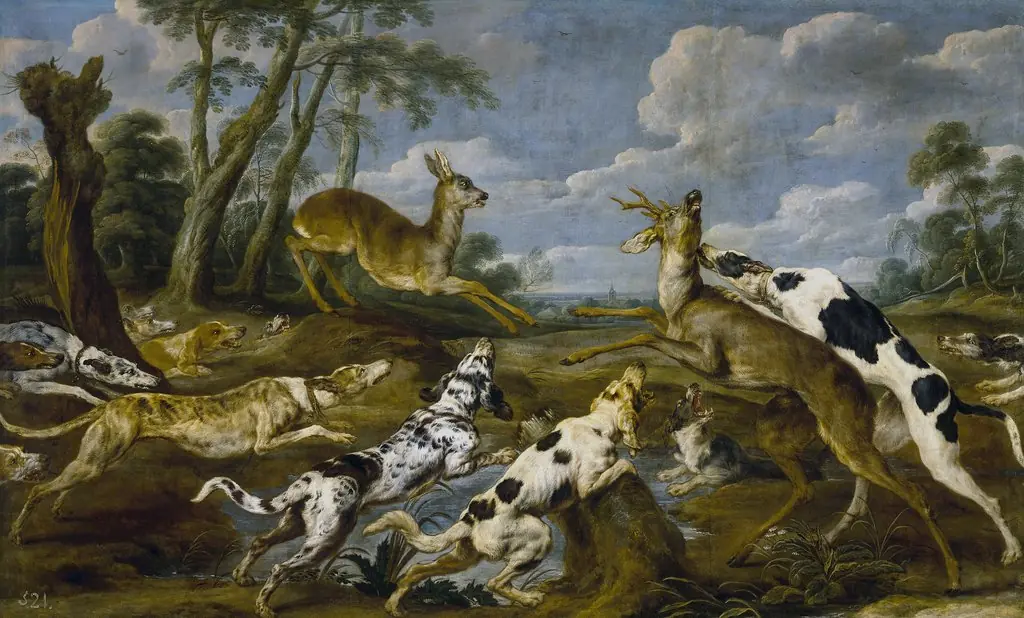
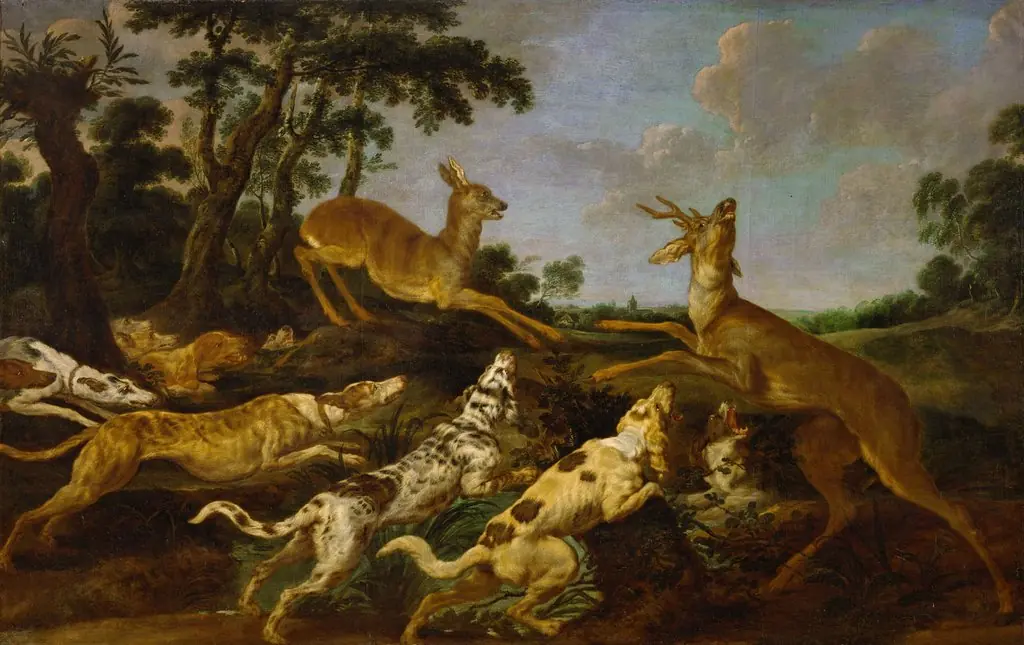
The Stag Hunt
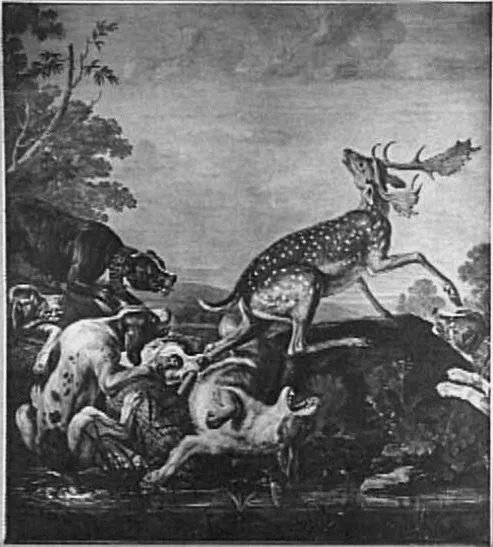
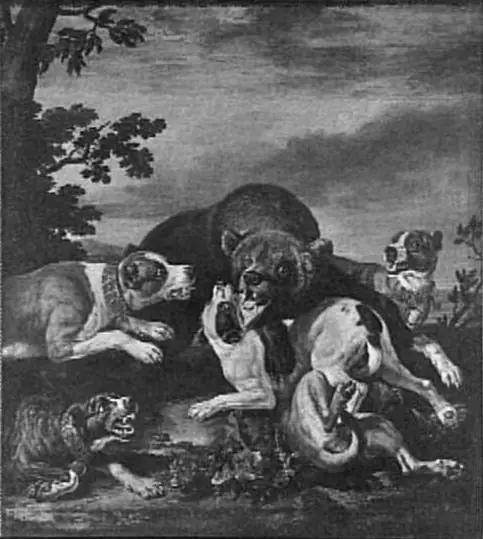
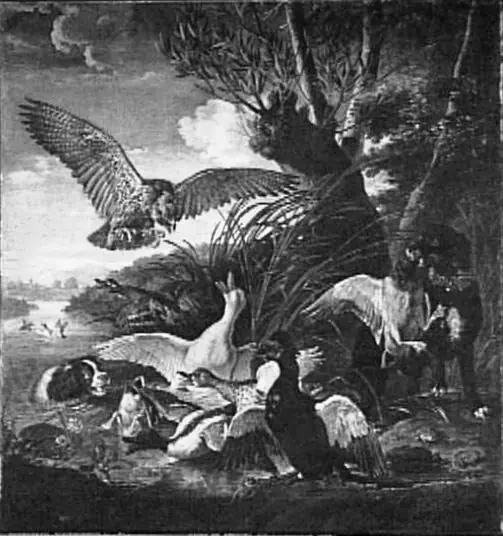
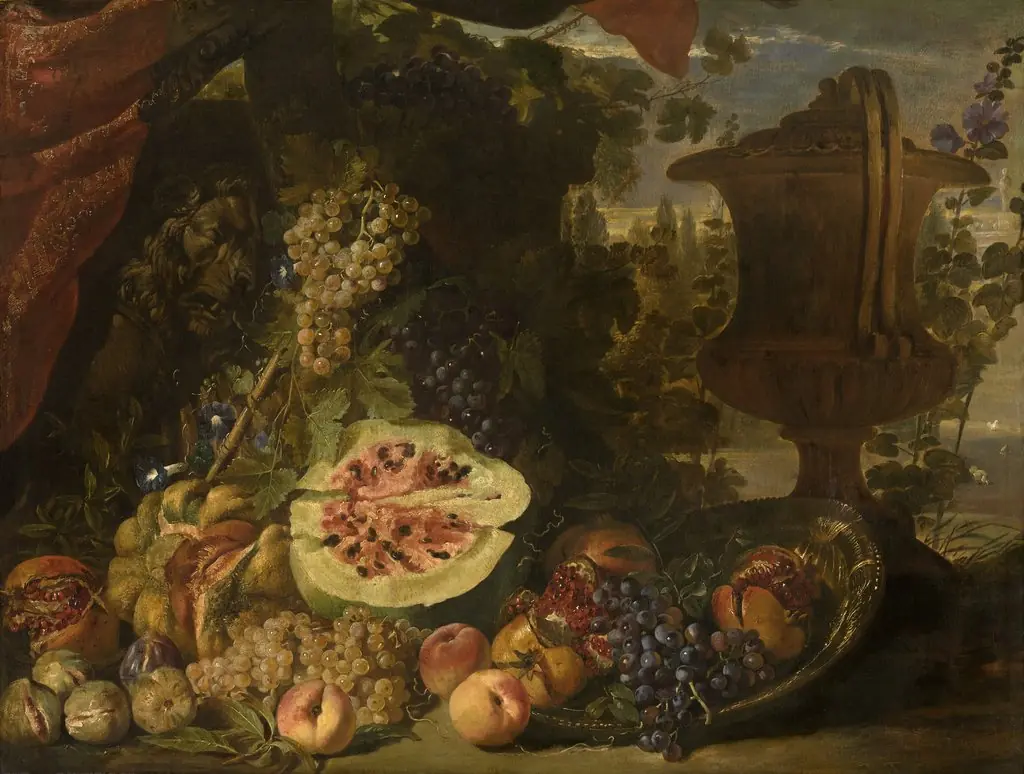
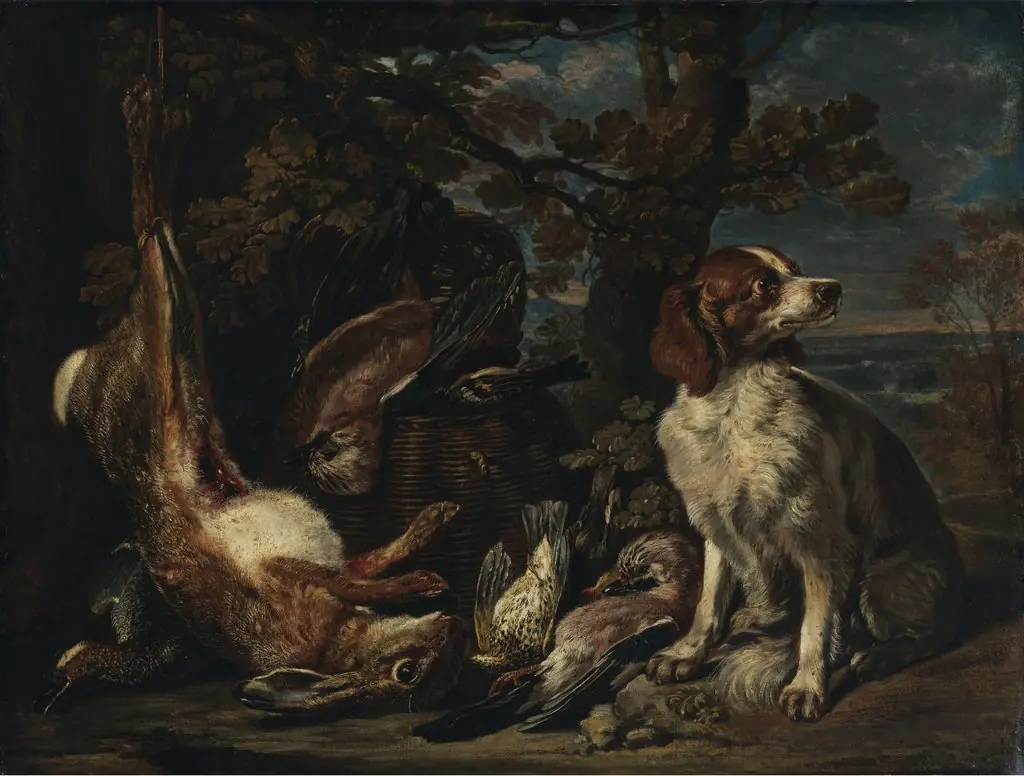
The Stag Hunt is an oil painting by the Flemish Baroque painting artist David de Coninck. It dates from 1675 and is held in the collection of the Rijksmuseum.
About this work
Subject & Meaning
The dynamic movement of the animals and the richly textured foliage underscore the naturalistic detail characteristic of 17th‑century animal painting.
The painting depicts a dramatic hunting scene in which a pack of hounds pursues a stag amidst a dense forest. The composition emphasizes the tension between predator and prey, reflecting the Baroque fascination with the vigor and peril of the chase. Symbolically, the work celebrates the aristocratic sport of hunting, portraying it as a display of skill, power, and the harmonious relationship between humanity and nature.
The dynamic movement of the animals and the richly textured foliage underscore the naturalistic detail characteristic of 17th‑century animal painting.
The subject is drawn directly from the Rijksmuseum's catalog entry, which records the work as an oil on canvas hunting scene created by David de Coninck in 1675. The museum's classification of the piece as animal art reinforces its focus on wildlife and the narrative of the hunt, while the described dimensions of 192 cm by 187 cm provide a sense of the painting's monumental scale.
History & Provenance
David de Coninck's oil painting The Stag Hunt, created in 1675, is held in the collection of the Rijksmuseum. The work is cataloged within the museum's holdings as an example of animal art executed in oil on canvas. Specific inventory or accession numbers are not provided in the available records, though the piece is confirmed to be part of the institution's permanent collection located in Amsterdam. No exhibition history is documented in the provided sources.
Overview
Painted in 1675 by Flemish artist David de Coninck, this oil on canvas captures a moment of intense pursuit in a forest setting. De Coninck, known for his focus on wildlife and hunting themes, rendered the scene with careful attention to animal anatomy and movement. The work resides today in the Rijksmuseum, reflecting its significance within 17th-century Northern European painting traditions.
Technique & Style
De Coninck employed chiaroscuro to heighten drama, contrasting the stag’s pale dappled coat against shadowed foliage and dark-skinned animals. Brushwork is precise in rendering fur and muscle, while loose strokes suggest motion in the dogs and foliage. The composition directs the eye through diagonal lines of pursuit, anchoring the stag as the visual climax amid a tangle of figures and animals.
Context
In late 17th-century Flanders, hunting scenes were popular among elite collectors who valued displays of power, control over nature, and technical virtuosity. De Coninck’s work aligned with this trend while distinguishing itself through naturalistic detail and emotional immediacy. Unlike mythological hunts, his scenes avoided allegory, focusing instead on the physical reality of the chase.
Legacy
De Coninck’s influence extended through his detailed depictions of animals, which inspired later genre painters in the Low Countries. While not widely celebrated today, his work remains a key reference for understanding how Flemish artists translated the natural world into compelling, dynamic compositions. The Stag Hunt exemplifies a quiet but persistent strand of Baroque art focused on observation over ornament.
Artist & collection
Artist
David de Coninck or David de Koninck, also known as Rammelaer (ca. 1644, Antwerp – after 1701, probably Brussels) was a Flemish painter who specialised in still lifes and landscapes with animals and hunting scenes.…