Artwork
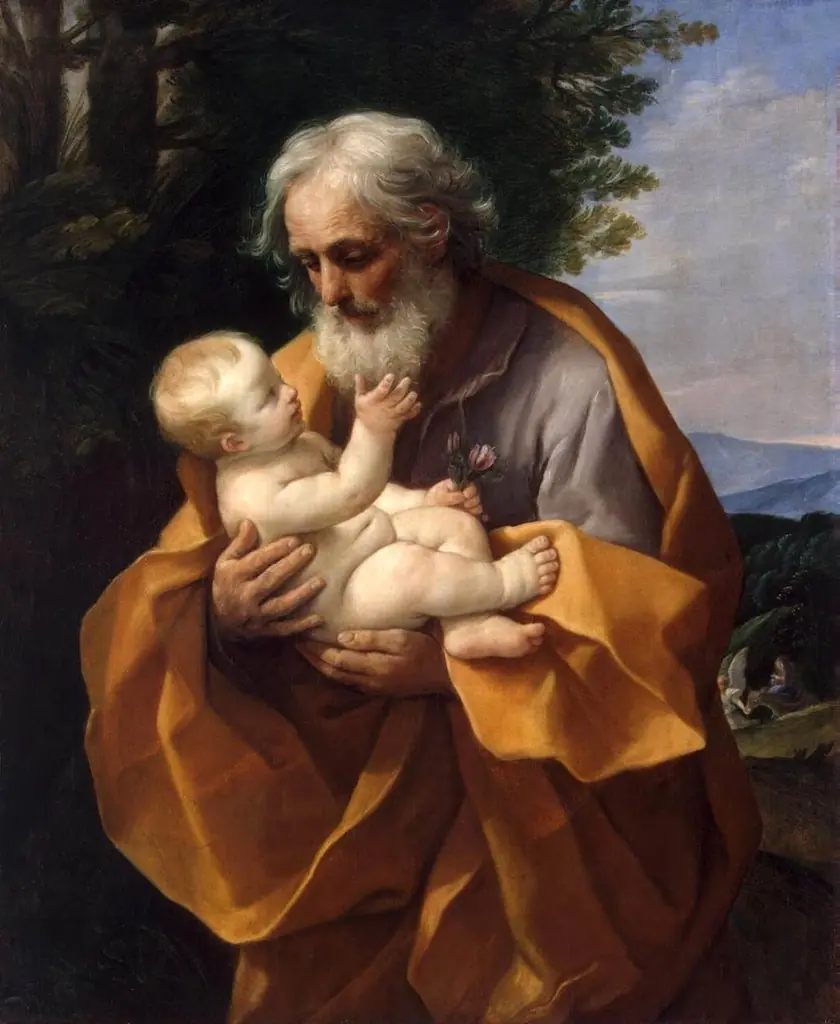
Joseph and Child
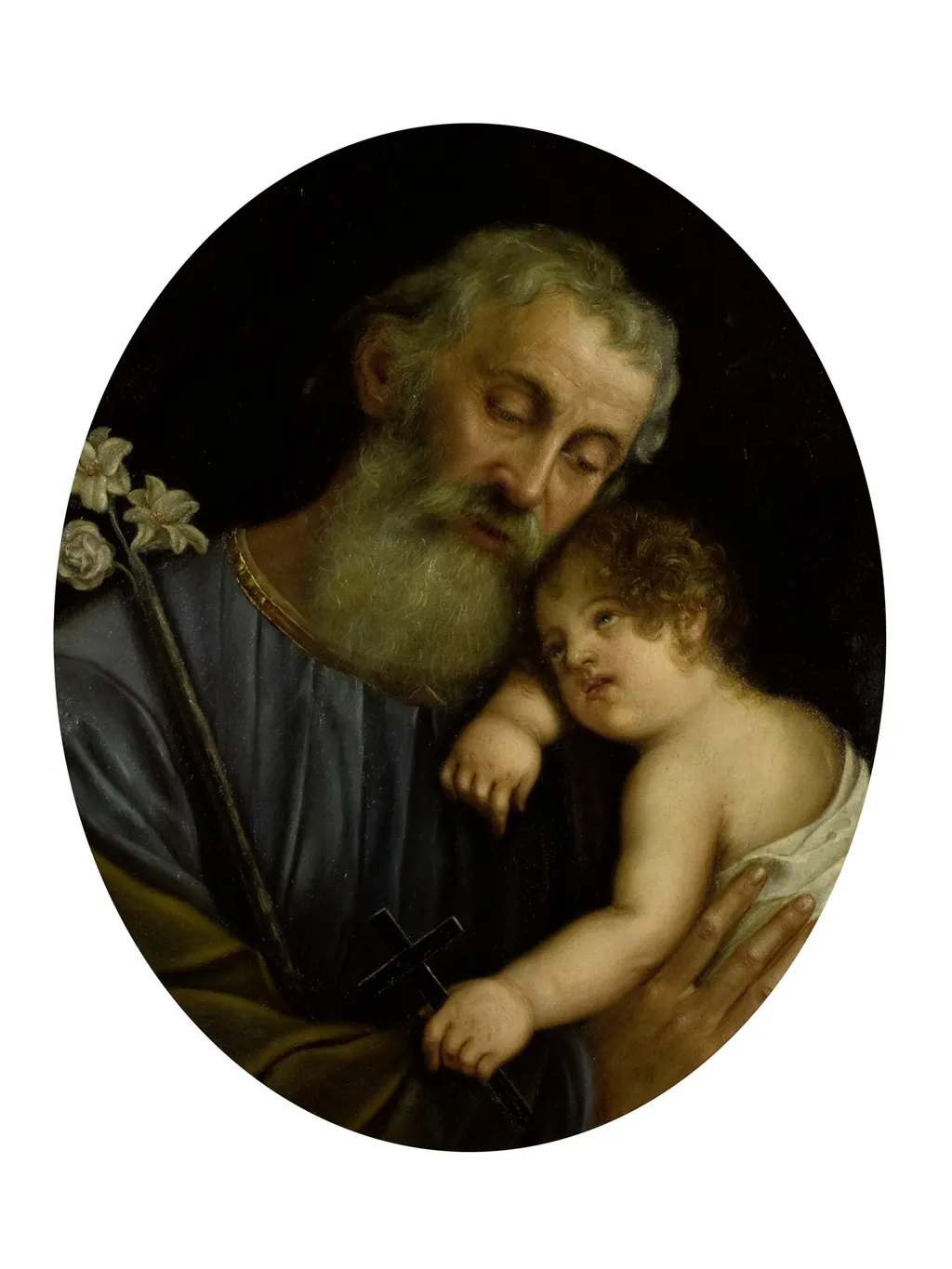
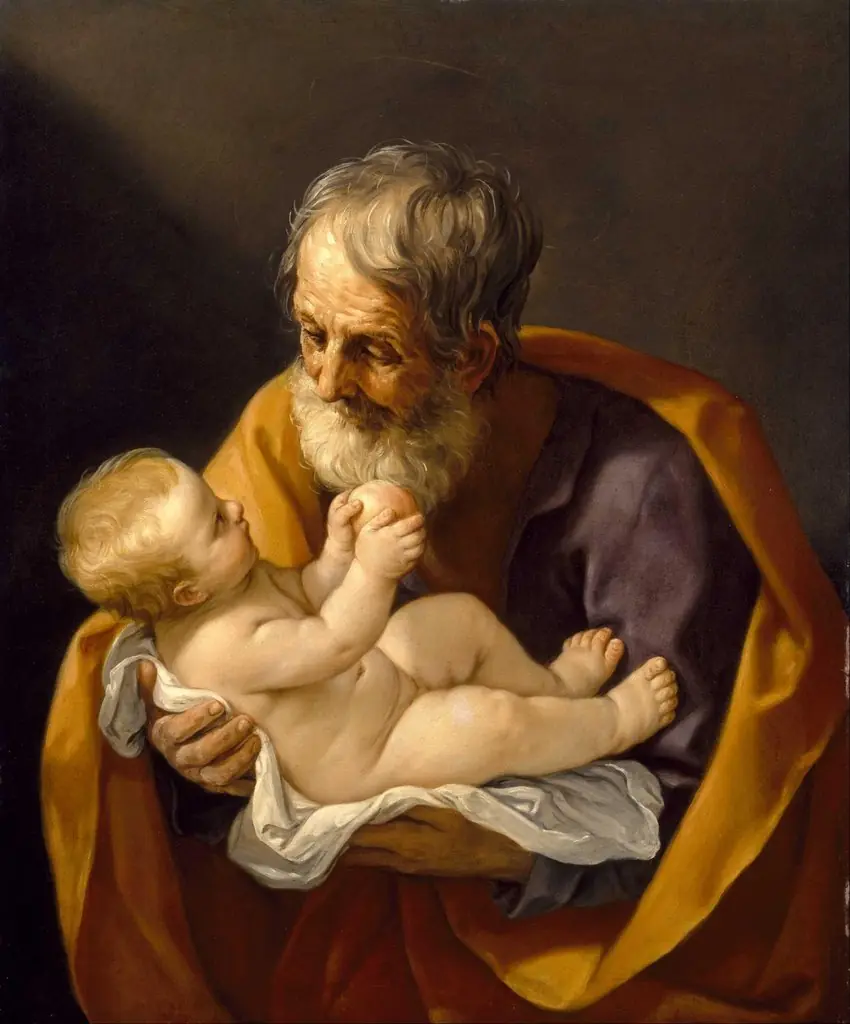
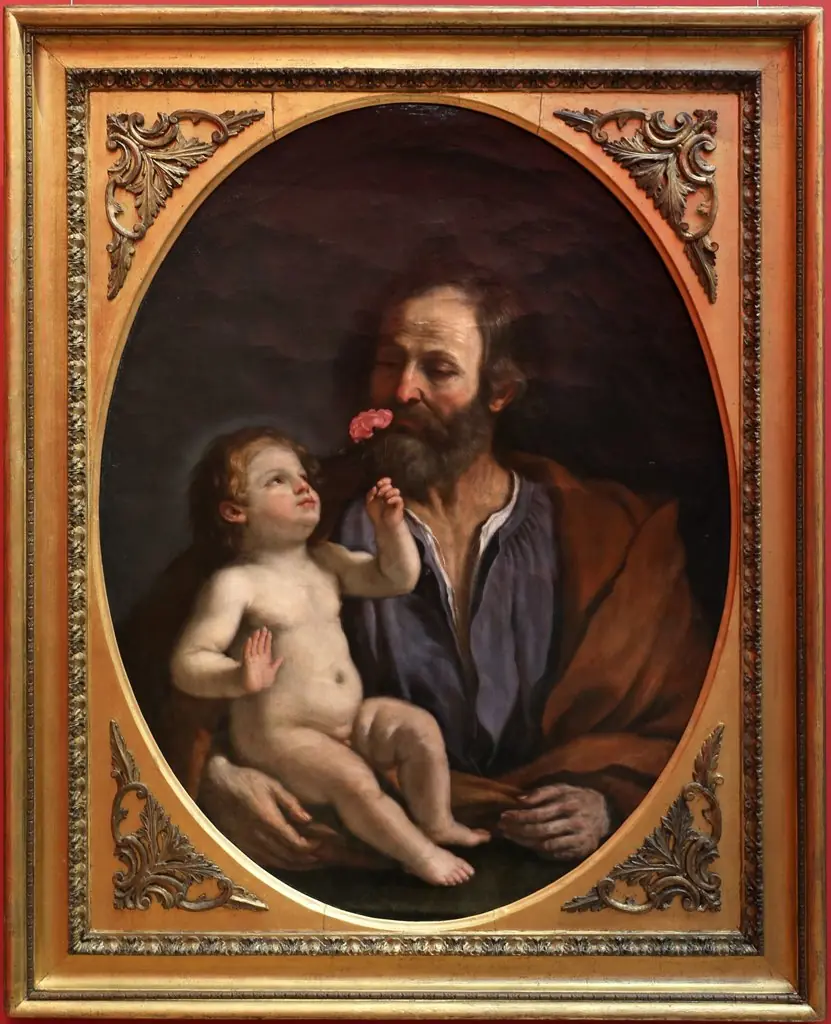
Joseph and Child is an oil painting by the Post-Impressionist artist Diodato Massimo. It dates from 1894 and is held in the collection of the Belvedere.
About this work
Subject & Meaning
The composition focuses on the intimate relationship between the foster father and the infant Jesus, central to Christian iconography regarding the Holy Family.
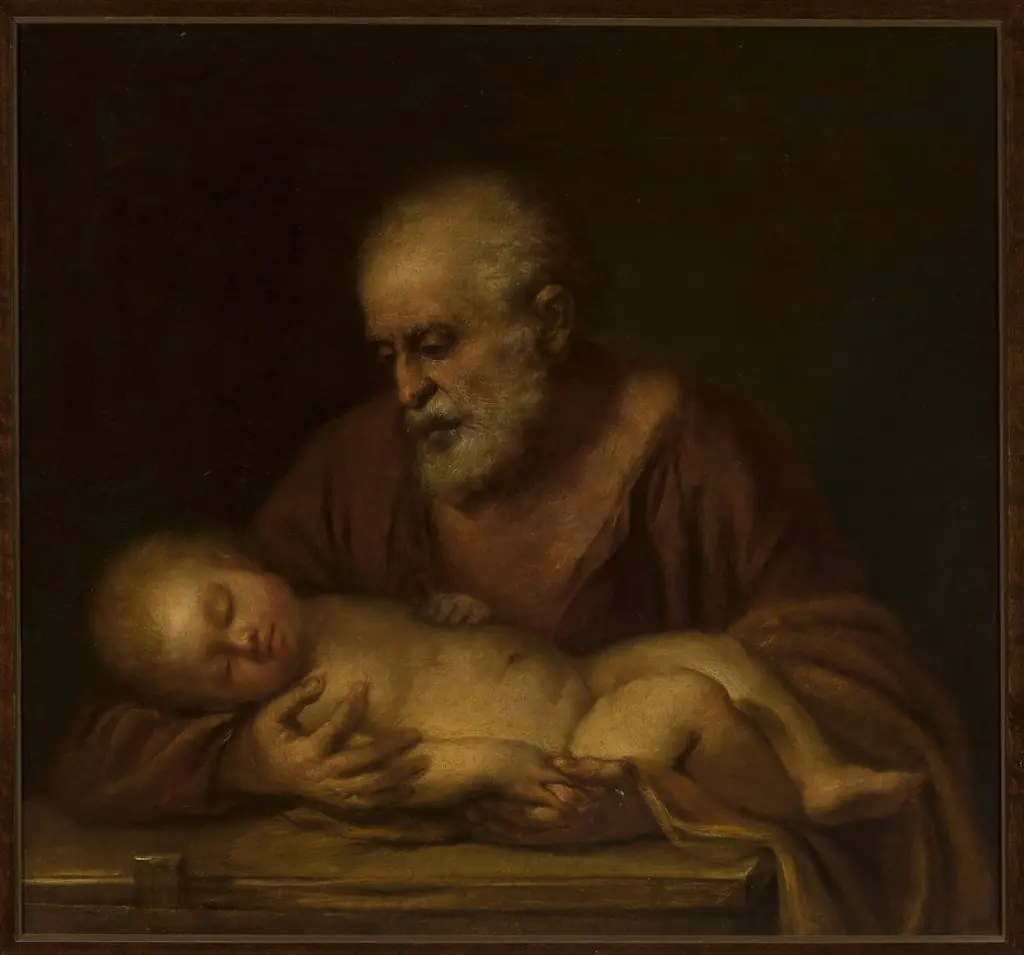
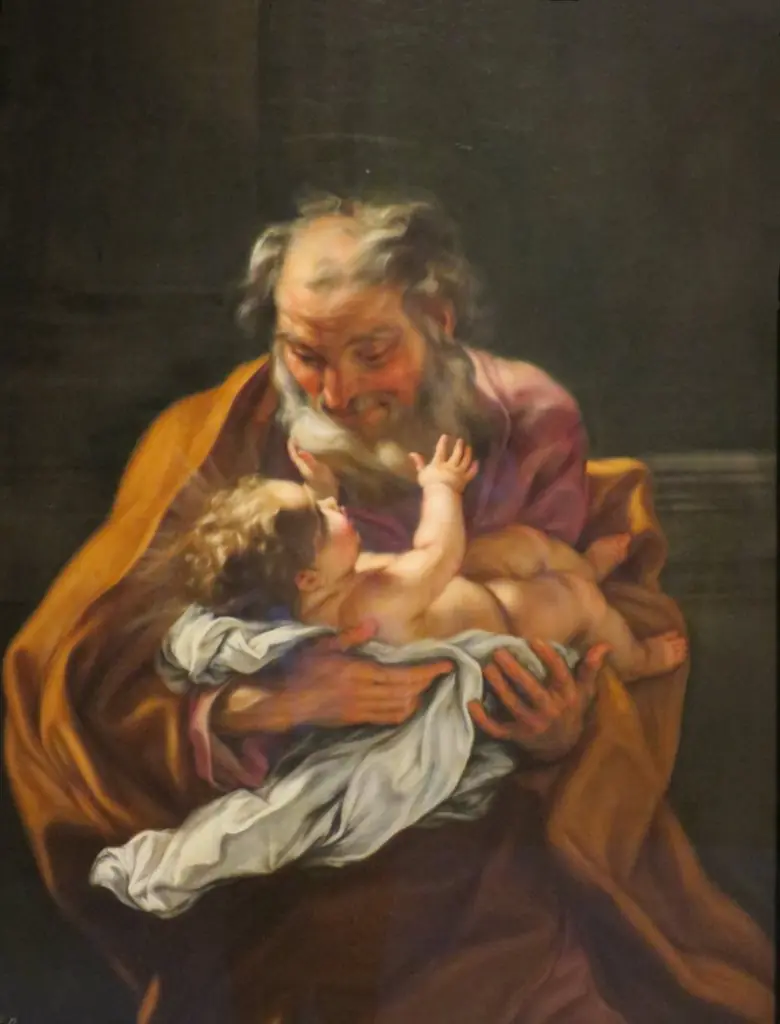
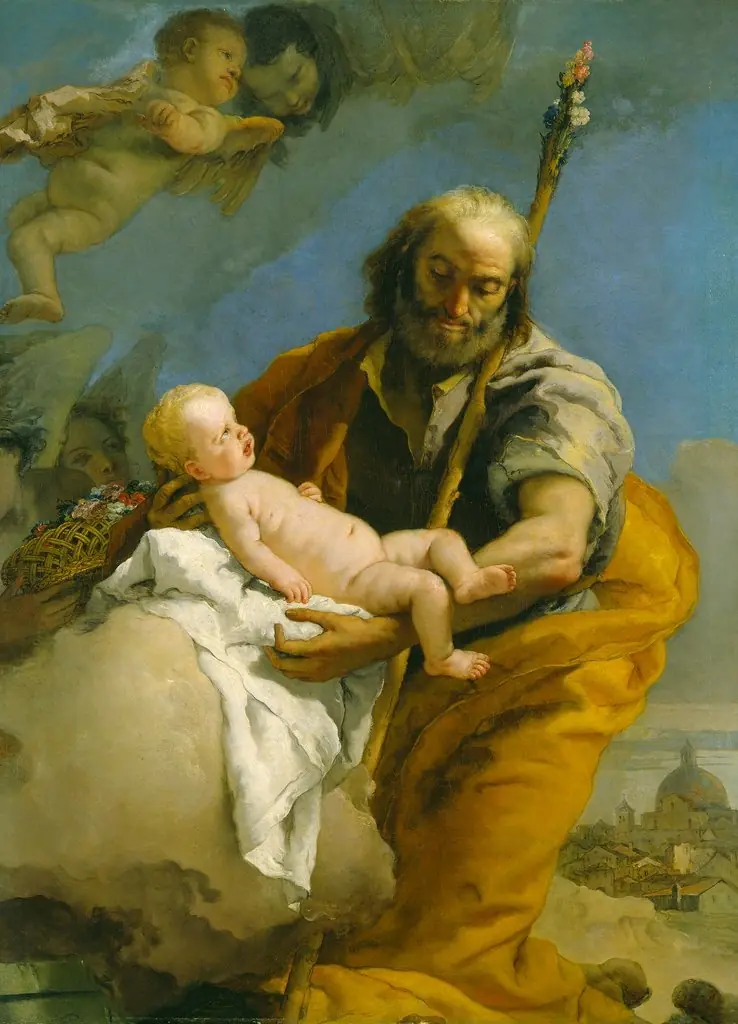
Diodato Massimo's 1886 oil painting, titled Joseph and Child, is a work of religious art depicting the biblical figures of Joseph and the Christ Child. The composition focuses on the intimate relationship between the foster father and the infant Jesus, central to Christian iconography regarding the Holy Family. As a religious genre piece, the work represents the sacred nature of their bond and the protective role of Joseph within the narrative of Christ's early life.
Technique & Style
The painting employs oil on canvas, a medium typical of late nineteenth-century religious works, allowing for smooth blending and subtle gradations of light and shadow.
Compositionally, the image centers on the seated Joseph holding the Christ Child, with the figures rendered in a naturalistic style consistent with academic training. Soft, luminous modeling of faces and drapery gives the scene a gentle, devotional character. The handling avoids visible brushwork, favoring a polished, finished surface that emphasizes clarity and emotional restraint.
History & Provenance
The painting Joseph and Child by Diodato Massimo is dated to 1886, as indicated by both internal documentation and its Wikidata entry.
Its provenance traces to the Belvedere in Vienna, where it is currently housed as part of the collections of the Kunsthistorisches Museum. The work entered the Belvedere’s holdings at an unspecified date, but its presence there is confirmed by the museum’s collection record.
Context
Diodato Massimo's 1886 oil painting Joseph and Child, depicting Christ Child with Joseph, resides in the Belvedere collection of Kunsthistorisches Museum and is classified as religious art. The work entered public awareness through its inclusion in early 20th-century European religious art surveys that highlighted Massimo's role in reviving devotional imagery within academic realism, situating his practice alongside contemporaries who reinterpreted sacred narratives through naturalistic composition and restrained symbolism.
Scholarship on Massimo remains sparse, with only fragmented references in Italian art historical journals from the 1930s noting his technical restraint and thematic focus on intimate biblical moments; no monograph exists, and the painting is rarely cited beyond archival exhibition catalogues from Milan and Vienna.
Within the broader trajectory of 19th-century European religious painting, Joseph and Child exemplifies a transitional moment where traditional iconography met emerging naturalist aesthetics, a shift mirrored in the works of Arnold Böcklin and early Symbolists who similarly rendered sacred subjects with psychological depth rather than doctrinal rigidity.
Overview
Created in 1894, this oil painting titled Joseph and Child is attributed to the Italian artist Diodato Massimo. The work portrays a solemn older figure with a white beard, clasping a small child whose gaze meets his protector’s. Executed on canvas, the composition is part of the collection of Vienna’s Kunsthistorisches Museum.
Own this work as a print
Artist & collection
Artist
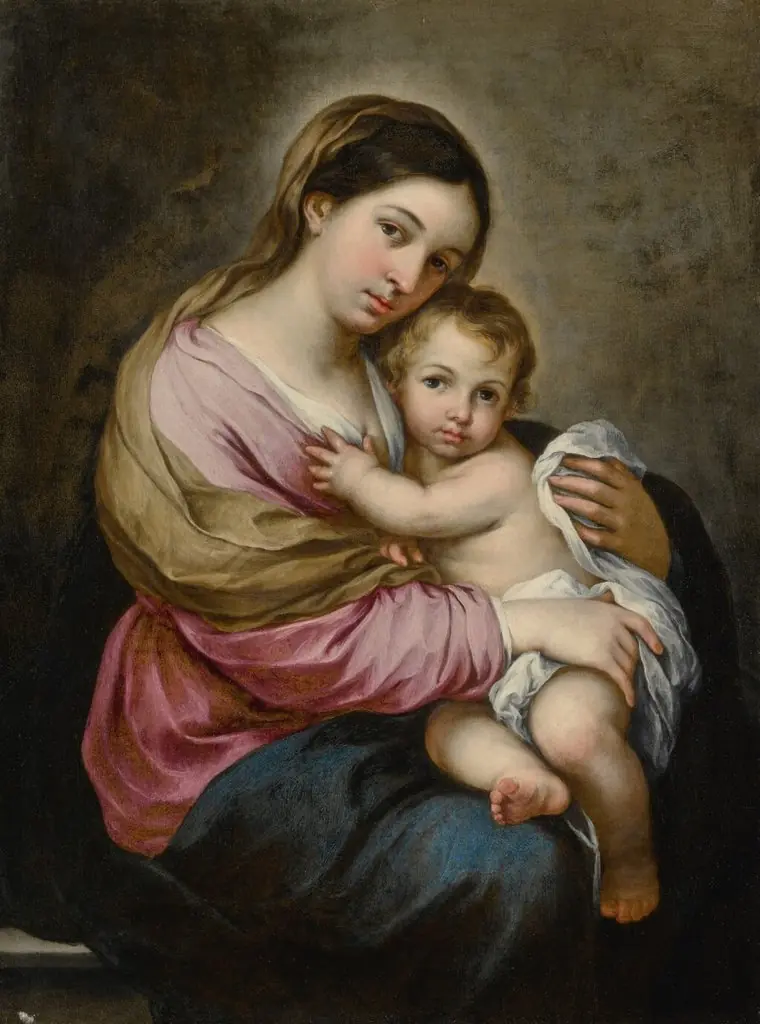
Diodato Massimo painted quiet, devotional scenes in oil. His Madonna and Child (1885) shows the Virgin in soft light, holding a calm baby Jesus. Next to it hangs Joseph and Child (1886), where Joseph cradles the same…