Artwork
Cleopatra
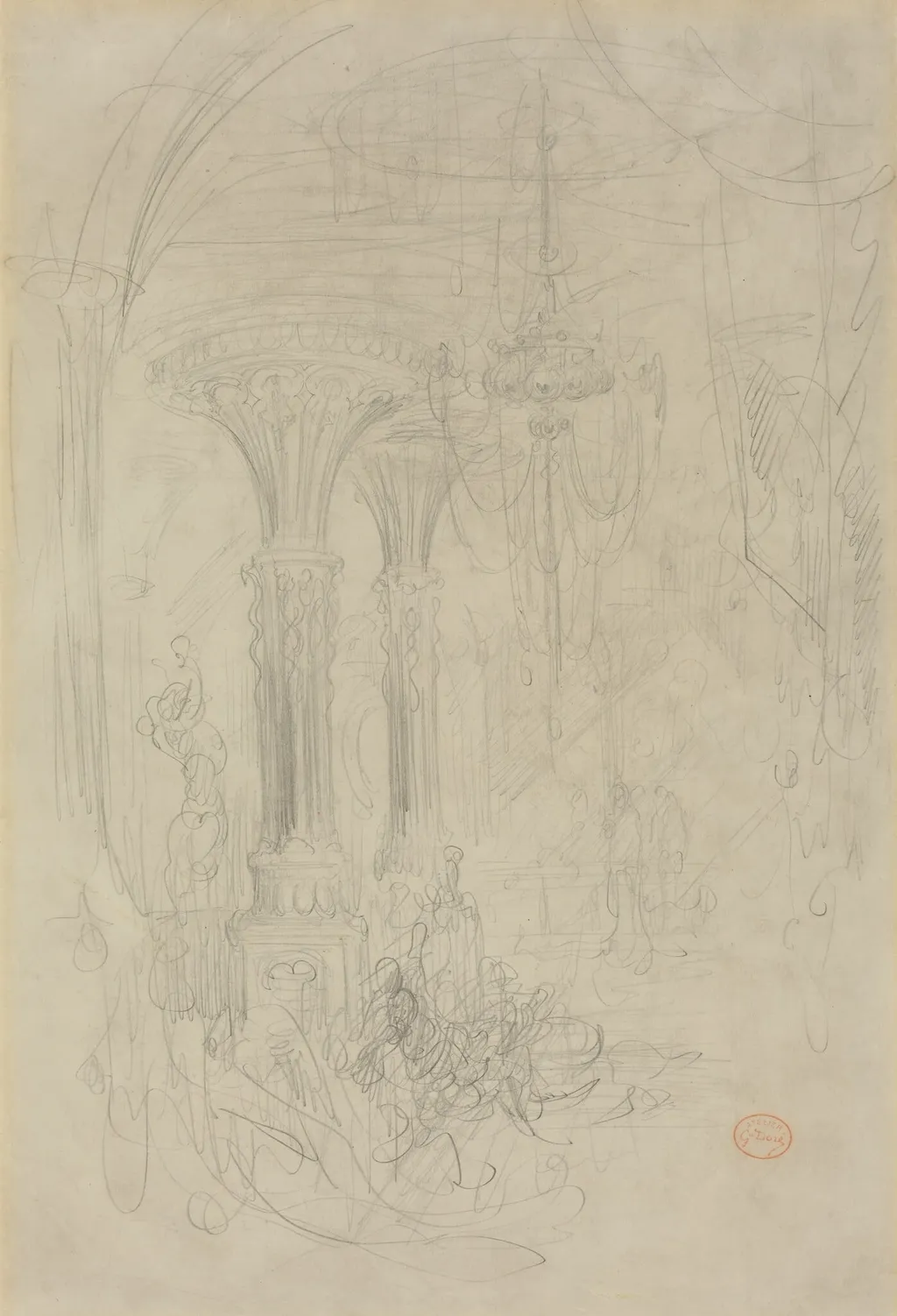
Cleopatra is a graphite drawing by the Romanticist artist Gustave Doré. It dates from 1858 and is held in the collection of the National Gallery of Art.
- Inscription
- Inscribed:lower right in graphite: "Cleopatra"
About this work
Overview
Gustave Doré’s 1858 graphite drawing titled “Cleopatra” presents a richly detailed interior scene rendered on wove paper. Executed in fine pencil, the work measures the artist’s characteristic precision in line and shading, capturing a luxurious setting that evokes the legendary Egyptian queen’s court.
Subject & Meaning
At the center of the composition a solitary figure occupies a throne‑like chair, surrounded by sumptuous drapery and an array of decorative elements. Though unnamed in the image, the title suggests the sitter represents Cleopatra, inviting contemplation of her famed opulence and political intrigue within a stylized, imagined palace space.
Technique & Style
Doré employs dense cross‑hatching and subtle gradations of tone to model the architecture, columns, and ornamental carvings, creating a convincing sense of depth and atmospheric light. The graphite medium allows for delicate rendering of textures, from the sheen of the chandelier to the softness of fabrics, demonstrating the artist’s mastery of line work typical of mid‑19th‑century illustration.
History & Provenance
Created in 1858, the drawing belongs to Doré’s early period, preceding his extensive work as an illustrator for literary classics. The piece has remained in private collections before entering a museum holding of 19th‑century graphic art, where it is displayed as part of a broader survey of his draftsmanship.
Context
The drawing reflects the Romantic fascination with exotic historical figures and grand architectural settings that permeated European art in the 1800s. Doré’s interest in dramatic narrative scenes aligns with his later illustrations for works such as “The Divine Comedy” and “Don Quixote,” where similar chiaroscuro effects enhance storytelling.
Legacy
While not as widely reproduced as Doré’s printed illustrations, this graphite study illustrates his capacity to translate literary and historical imagination into a singular, atmospheric image. It contributes to scholarly understanding of his preparatory processes and the visual culture surrounding Cleopatra in 19th‑century Europe.
![Sheet of Studies [recto and verso]](https://artifactworldgallery.com/img/john-flaxman--sheet-of-studies-recto-and-verso--624ac0ec758f08e5-w320.webp)
Own this work as a print
Artist & collection
Artist
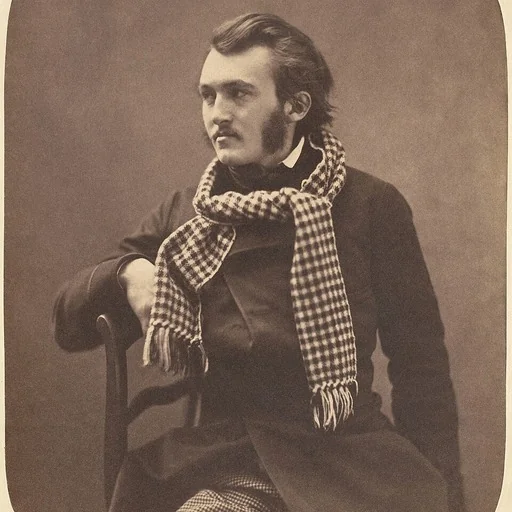
Paul Gustave Louis Christophe Doré was a French printmaker, illustrator, painter, comics artist, caricaturist, and sculptor.

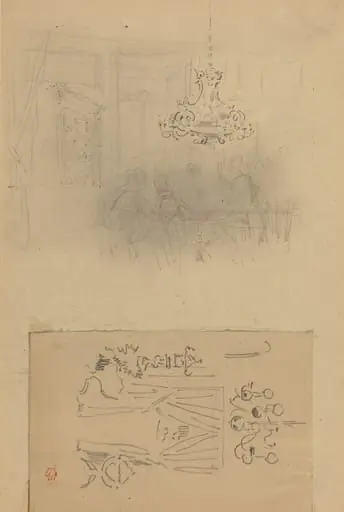 A Gathering in an Interior; A Curtained Doorway
 Studies by Alfred Stevens
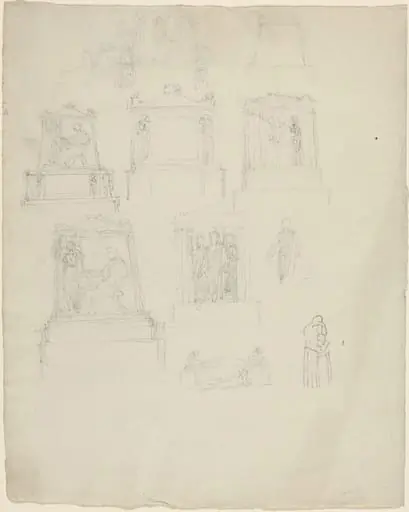 Designs for Monuments
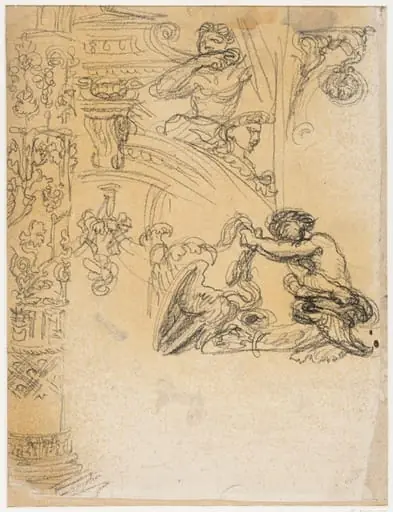
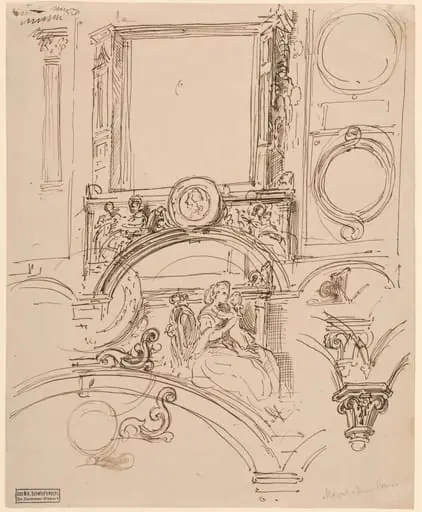 Architectural Details for a Wall Decoration with Empress Maria Theresia Embracing the Young Wolfgang Amadeus Mozart
 Sheet of Studies
![Sheet of Studies [recto and verso], by John Flaxman](https://artifactworldgallery.com/img/john-flaxman--sheet-of-studies-recto-and-verso--37ffe1e79b52e688-w320.webp) Sheet of Studies [recto and verso]
Sheet of Studies [recto and verso]![Designs for Monuments [recto and verso], by John Flaxman](https://artifactworldgallery.com/img/john-flaxman--designs-for-monuments-recto-and-verso--d8870bd37cddf1cb-w320.webp) Designs for Monuments [recto and verso]
Designs for Monuments [recto and verso]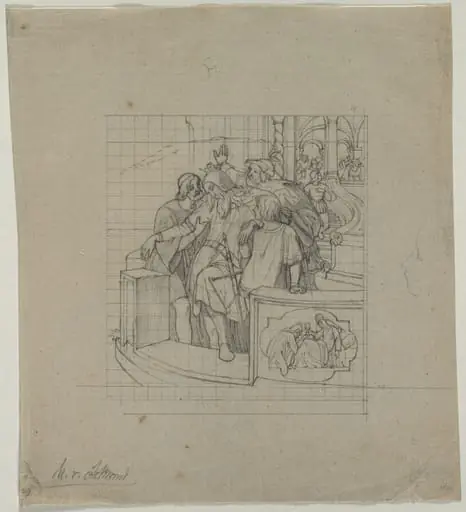 The King of Thule