Artwork
A Dramatic Scene with a Fainting Woman
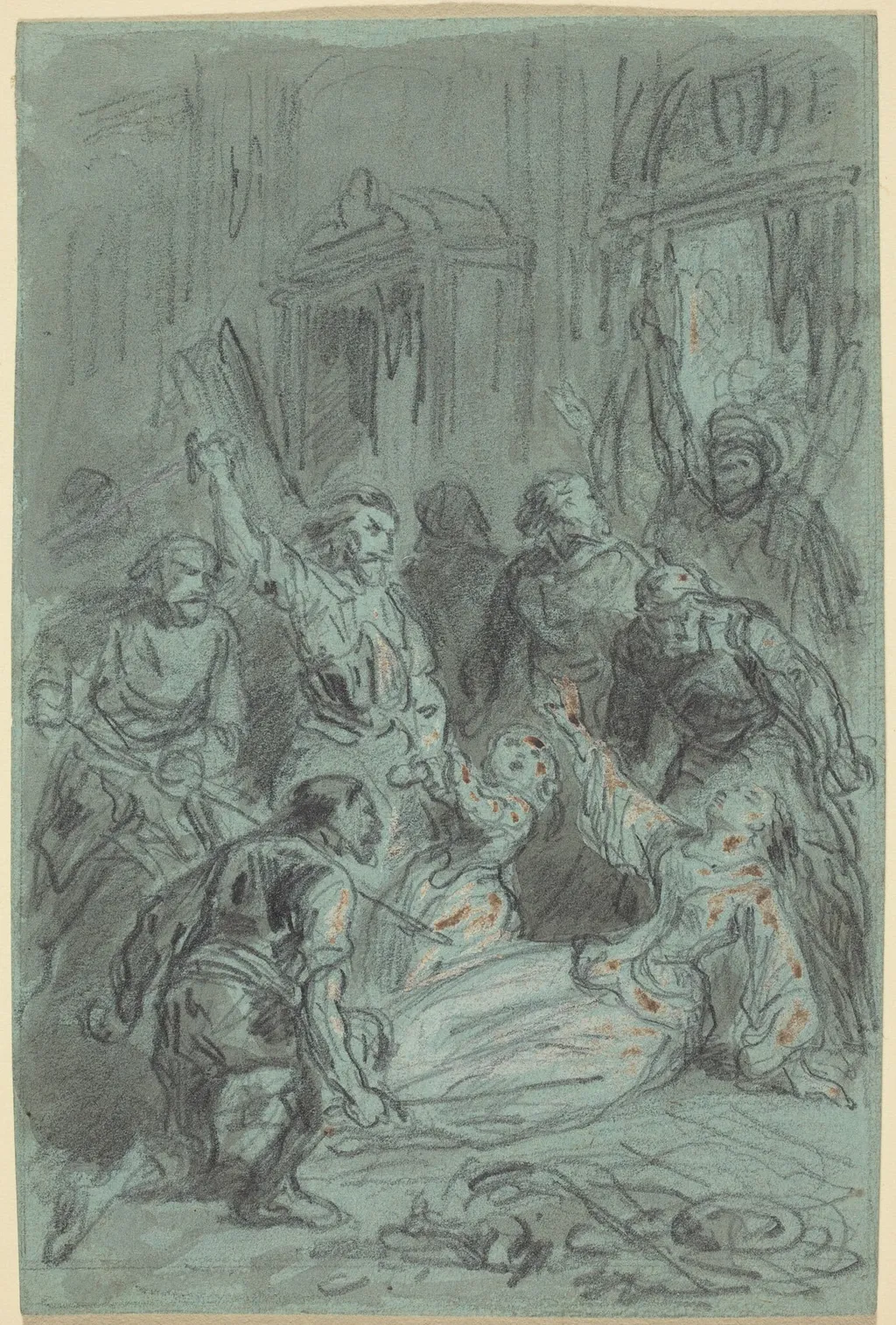
A Dramatic Scene with a Fainting Woman is a graphite drawing by the Romanticist artist Gustave Doré. It dates from 1858 and is held in the collection of the National Gallery of Art.
About this work
Overview
One figure prominently holds a scroll, while the others display expressions of concern or curiosity, creating a tableau of immediate emotional tension.
Created in 1858, A Dramatic Scene with a Fainting Woman is a drawing by Gustave Doré executed in graphite with gray wash and heightened with white gouache on blue wove paper. The composition centers on a female figure collapsing to the floor, surrounded by a cluster of men dressed in historical or archaic attire. One figure prominently holds a scroll, while the others display expressions of concern or curiosity, creating a tableau of immediate emotional tension.
Doré utilizes the contrast between the dark gray wash and the bright white highlights to model the forms and intensify the drama of the moment, a technique characteristic of his early graphic work. The blue paper serves as a mid-tone base, allowing the white gouache to define the light on the figures' faces and clothing. This piece exemplifies Doré's mastery of narrative illustration during the 1850s, a period when he was establishing his reputation for vivid, theatrical scenes before his extensive career in book illustration.
The medium demonstrates his ability to convey complex storytelling and psychological states through precise line work and tonal modulation.
Subject & Meaning
The central figure is a woman who has fainted, her body already on the floor. Encircling her are several men dressed in period attire; one clutches a scroll, while the others display a mixture of concern and curiosity. The scene suggests a narrative moment, perhaps a domestic or public incident, emphasizing human reaction to unexpected distress.
Technique & Style
Doré employs a limited palette, using graphite for line work, a gray wash to model form, and white gouache for highlights. The gouache, originally bright, has oxidized over time, lending the image an aged, muted quality. The stark contrast between the dark washes and the luminous white accents heightens the drama and directs the viewer’s focus to the central collapse.
History & Provenance
Created in the mid‑nineteenth century, the drawing is part of Doré’s extensive output of illustrative works. It is currently held in the collection of the National Gallery of Art in Washington, where it is displayed alongside other examples of the artist’s graphic practice.
Own this work as a print
Artist & collection
Artist
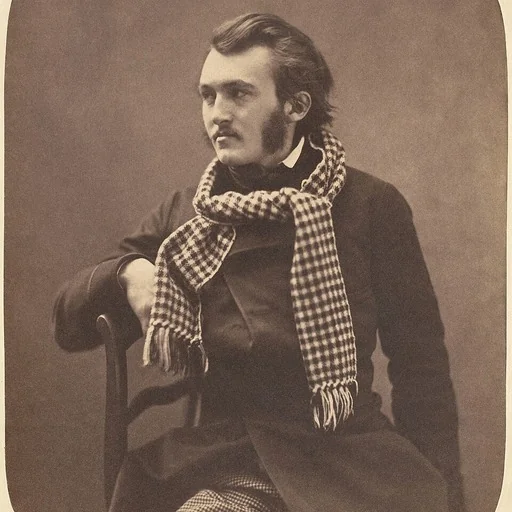
Paul Gustave Louis Christophe Doré was a French printmaker, illustrator, painter, comics artist, caricaturist, and sculptor.

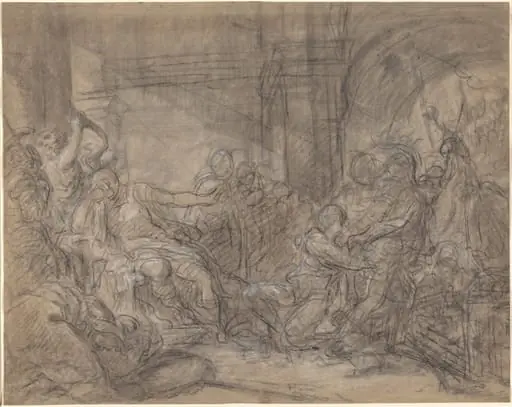
- Brutus Condemning His Sons to Death
 The Raising of Tabitha
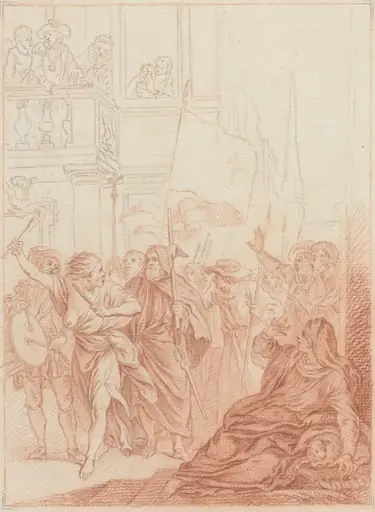 Mayenne qui de loin voit leur folle Entreprise...
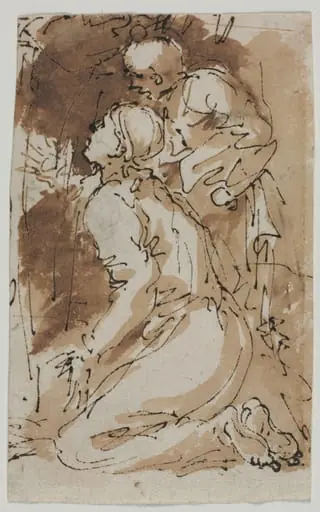 Figure Studies (recto)
![The Challenge [right], by Gabriel de Saint-Aubin](https://artifactworldgallery.com/img/gabriel-de-saint-aubin--the-challenge-right--75162e00e6876b27-w320.webp) The Challenge [right]
The Challenge [right] Figure Studies
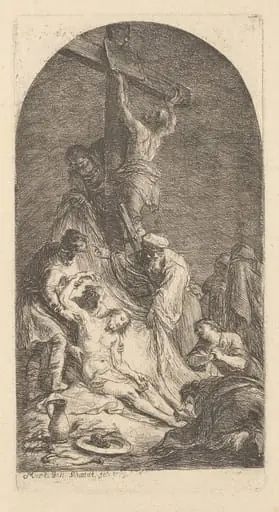 Descent from the Cross
 The Deposition (recto)
 A seated figure receiving an offering
 Susanna and the Elders
 The Miracle of Saint Mark (left side)
 Saint John Preaching