Artwork
Head of an Aged Woman
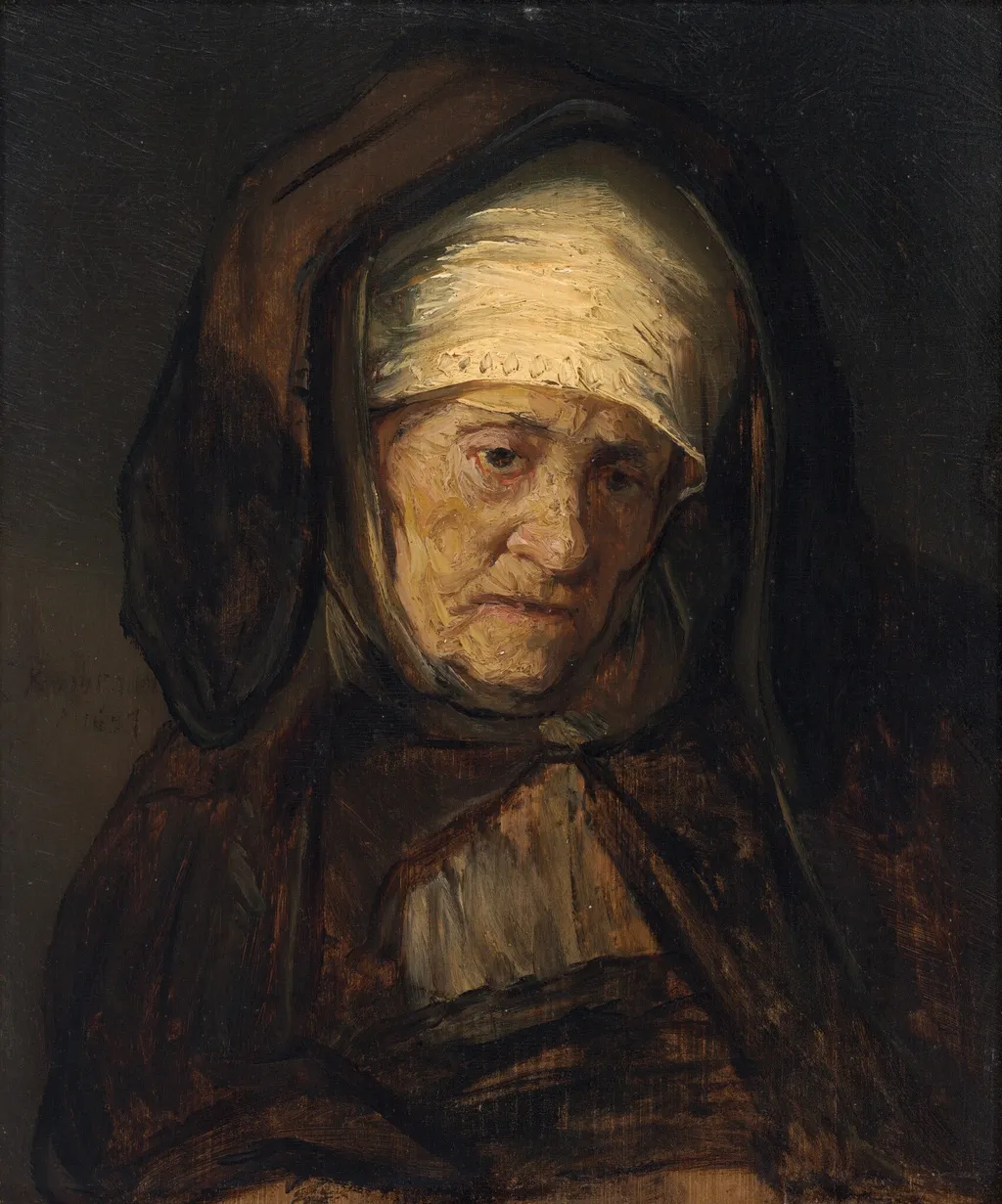
Head of an Aged Woman is an oil painting. It is held in the collection of the National Gallery of Art.
- Inscription
- Inscribed:center left by a later hand: Rembrandt / f.1657
About this work
Subject & Meaning
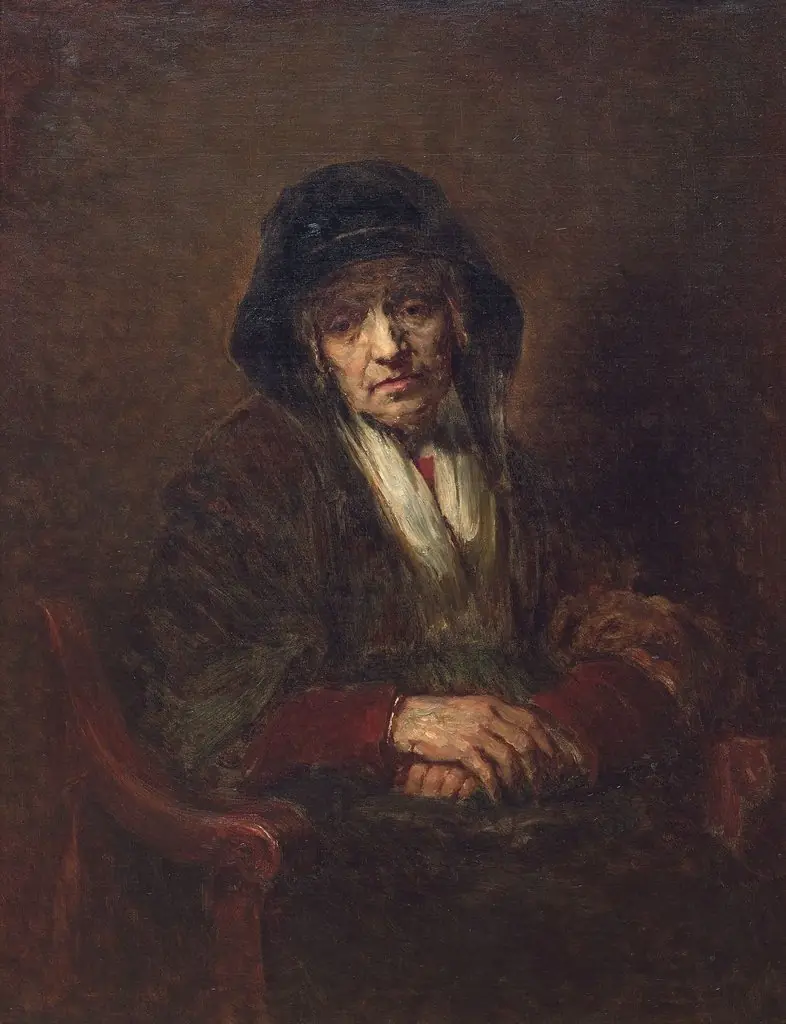
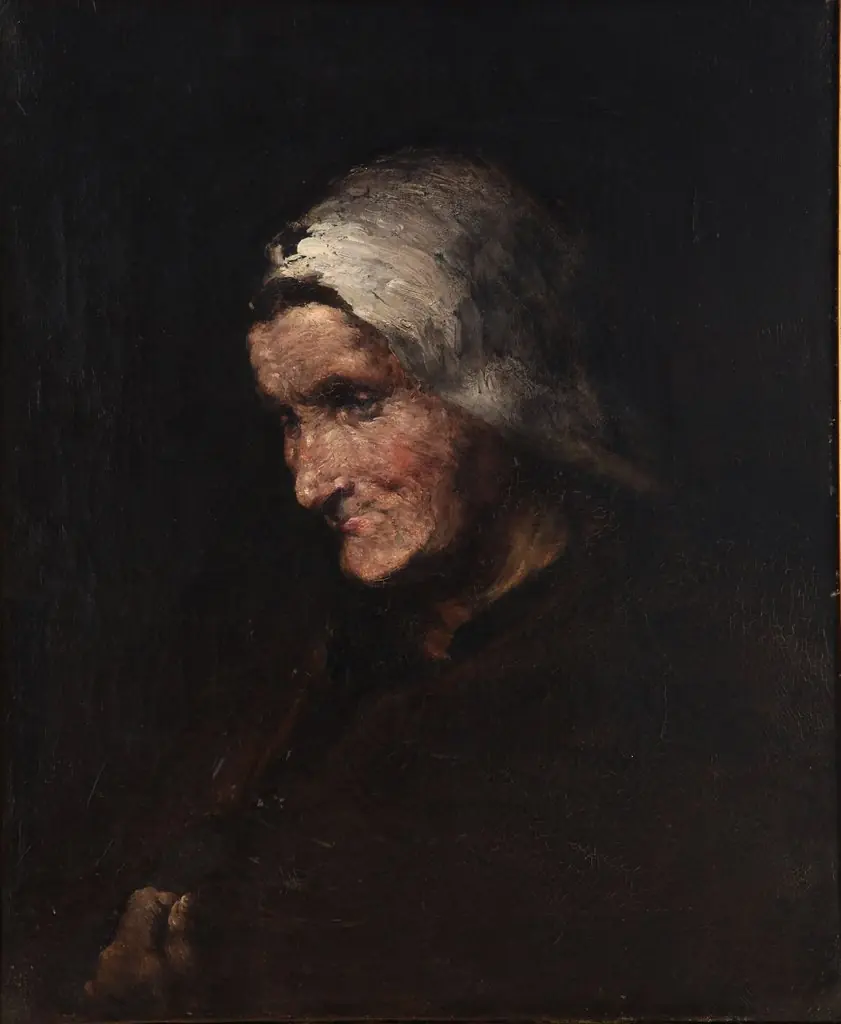
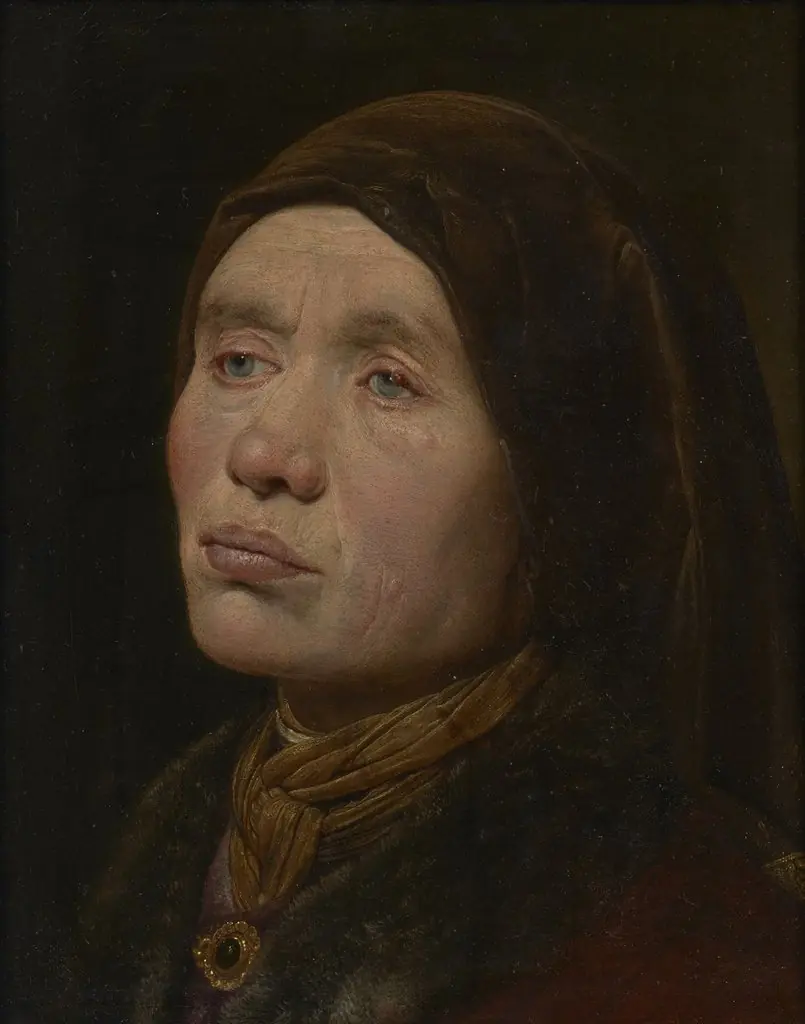
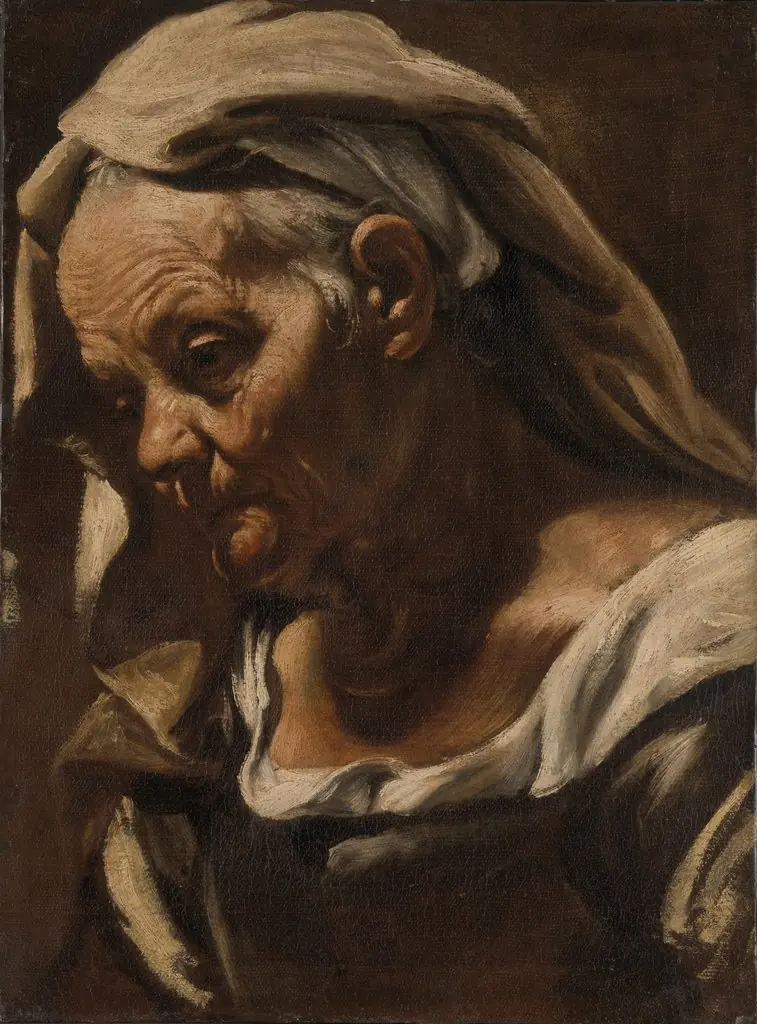
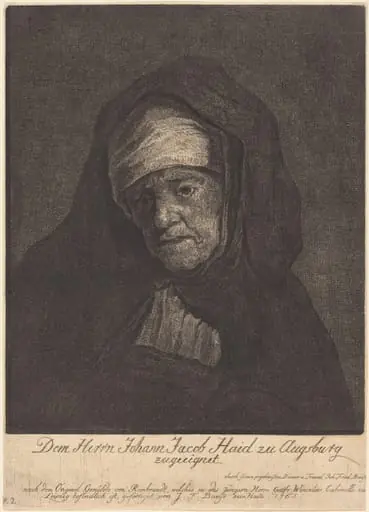
Head of an Aged Woman is a small-scale portrait study that focuses on the weathered features of an elderly female sitter, rendered in oil on panel in 1657.
Head of an Aged Woman is a small-scale portrait study that focuses on the weathered features of an elderly female sitter, rendered in oil on panel in 1657. The painting belongs to a tradition of intimate character studies of aged faces that flourished in seventeenth-century Dutch art, where artists isolated the head to concentrate on physiognomic detail and the textures of age. According to the early provenance recorded by Gerard Hoet in 1752, the work was catalogued in Hendrick Verschuring's collection as "Een Oud Vrouwtje," meaning "a little old woman," and was paired with a pendant depicting the head of an old man, suggesting the two works were conceived as complementary studies of old age.
The pendant's description notes a man with a swollen nose, short hair, and beard, reinforcing the paired theme of aged humanity. Such head studies functioned both as autonomous portraits and as exercises in capturing the dignified character and lived experience inscribed in the faces of the elderly.
Technique & Style
Executed in 1657, Head of an Aged Woman is an oil painting on a wooden panel. The artwork is a portrait genre piece with dimensions of 21.1 cm in height and 17.5 cm in width. Historically, the painting was paired with a pendant portrait of an old man, described as having a thick, swollen nose, short hair, and a beard.
The composition focuses closely on the elderly female subject, reflecting the 17th-century Dutch tradition of character studies. The painting's early history is partially documented through an engraving made by J.H. Bause in 1765, which reproduced the image in reverse.
History & Provenance
Head of an Aged Woman, an oil on panel dated 1657, was probably first recorded in the collection of H. Verschuring in The Hague by 1751, where it was listed as a pendant portrait of an old woman attributed to Rembrandt. The work subsequently entered the collection of Gottfried Winkler in Leipzig by 1765, having been engraved in reverse that year by J.H. Bause. It may later have passed through the Paris dealers Bourgeois Frères around 1893/1894 before being acquired by Rodolphe Kann in Paris by 1898.
In 1907 the entire Kann collection was purchased by Duveen Brothers, who sold the painting to F. Kleinberger & Co. in Paris. It was then exchanged to Leo Nardus in Suresnes and New York, who in early 1909 exchanged it to Peter A.B. Widener at Lynnewood Hall in Elkins Park, Pennsylvania. The painting passed by inheritance to Joseph E. Widener and was gifted to the National Gallery of Art in 1942.
Head of an Aged Woman is held by the National Gallery of Art in Washington, D.C., which acquired the painting in 1942 as a gift from the estate of Peter A. B. Widener through the power of appointment of Joseph E. Widener. The artwork entered the Widener collection following an exchange early in 1909. Prior to this, the painting passed through several notable hands, including the collections of H. Verschuring in The Hague by 1751 and Gottfried Winkler in Leipzig by 1765.
It was subsequently owned by Stéphane Bourgeois around 1893/1894 and Rodolphe Kann in Paris by 1898. After the Kann collection was purchased in its entirety by Duveen Brothers, Inc. in 1907, the work was sold to F. Kleinberger & Co. before reaching the Nardus and Widener families. The provided sources do not detail an exhibition history for the painting.
Context
The portrait of an elderly woman, dated 1657, exemplifies Rembrandt’s late interest in psychological depth and physiognomic study, a theme that recurs in his contemporary portraiture. Its early ownership in the collections of H. Verschuring and Gottfried Winkler, and later inclusion in the Kann and Widener holdings, reflect its esteemed status among 18th‑ and 19th‑century connoisseurs (1). The work’s attribution to the Dutch school was solidified by the 1768 Winkler catalogue and the 1765 engraving by J.H. Bause, underscoring its circulation in scholarly circles (1).
Documentation in Wikidata records its dimensions, oil on panel technique, and continuous provenance to the National Gallery of Art, where it remains a reference point for studies of Rembrandt’s portrait legacy (2).
Legacy
The painting’s early 18th‑century appearance in the Winkler catalogue and its 1768 engraving by J.H. Bause signaled contemporary recognition of the work, while its passage through notable collectors such as Rodolphe Kann and its acquisition by the National Gallery of Art have sustained scholarly interest. The documented exchanges and inheritance path, including its display at Lynnewood Hall and eventual donation to the NGA in 1942, have positioned the portrait as a reference point for studies of Rembrandt’s late portraiture and 17th‑century depictions of aged sitters, reinforcing its lasting reputation in art‑historical discourse.
Overview
This oil painting on panel, titled Head of an Aged Woman, presents an intimate and detailed portrait of an elderly woman. The artist's focus on her face captures a profound sense of individual character and the subtle marks of time, inviting viewers to engage with her presence.
Artist & collection