Artwork
Philosopher
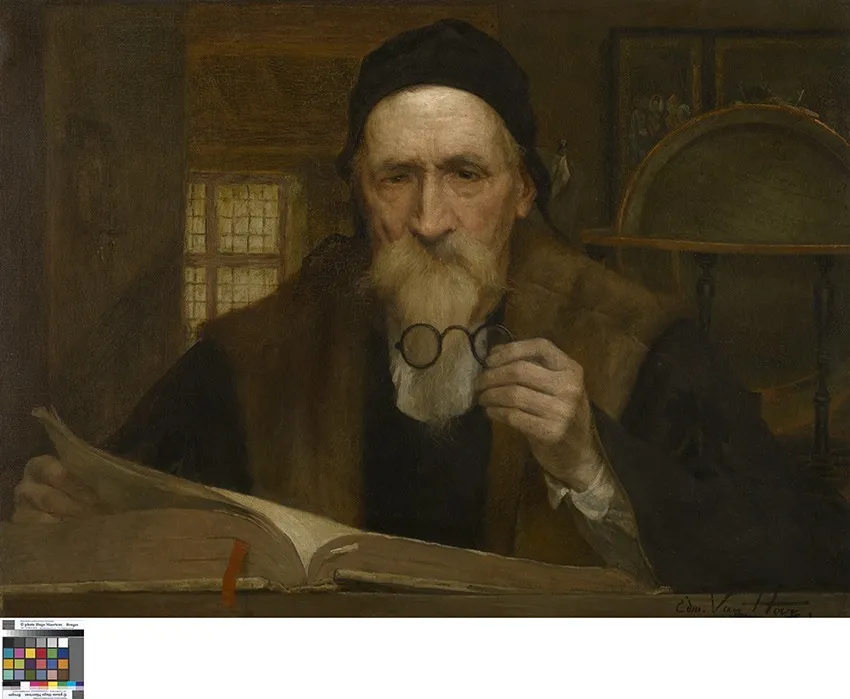
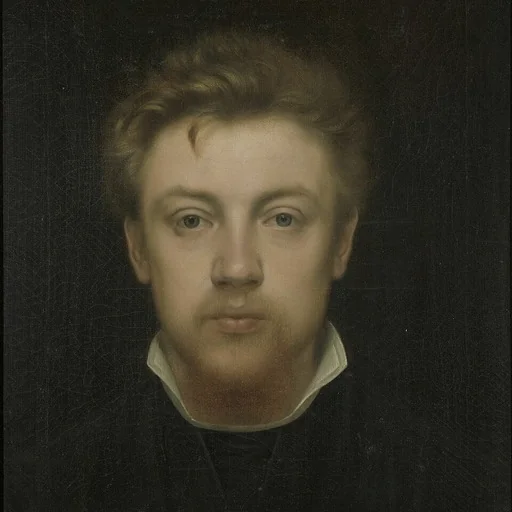
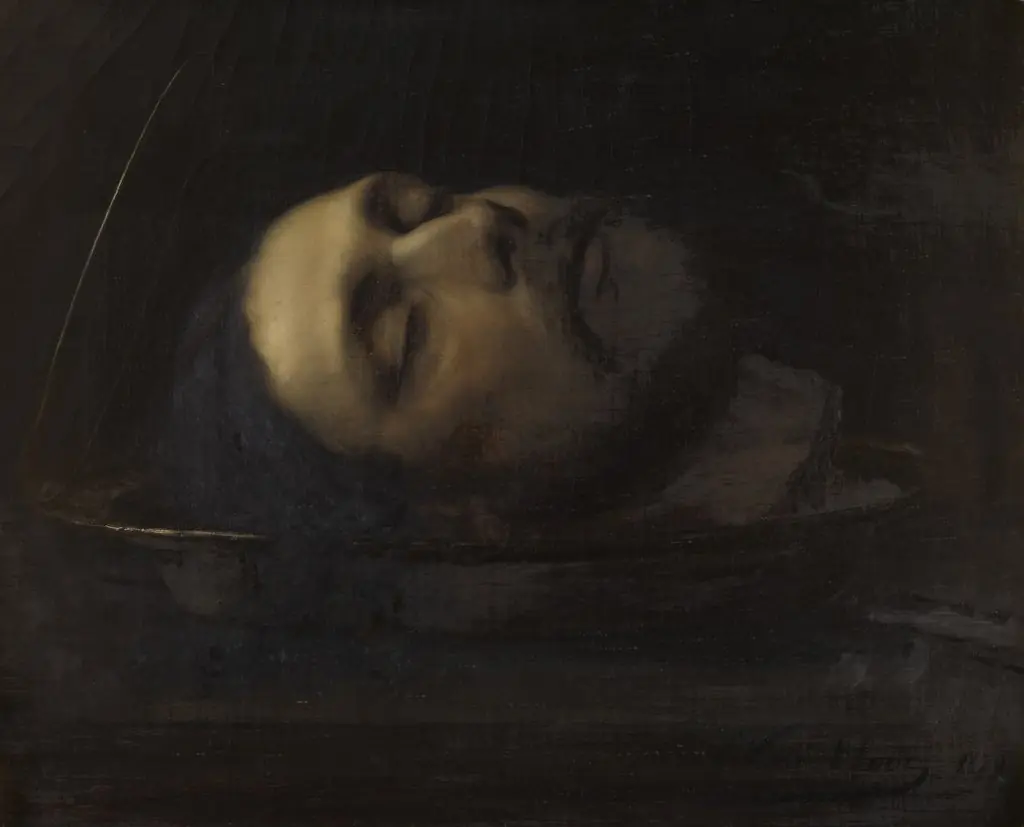
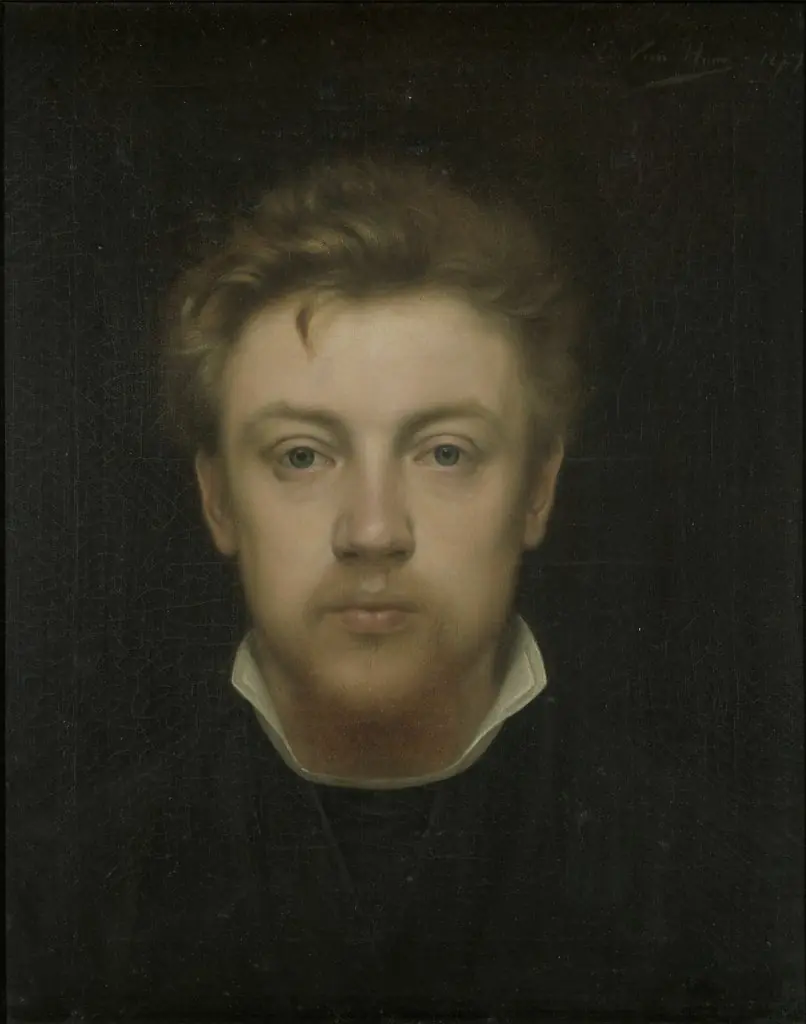
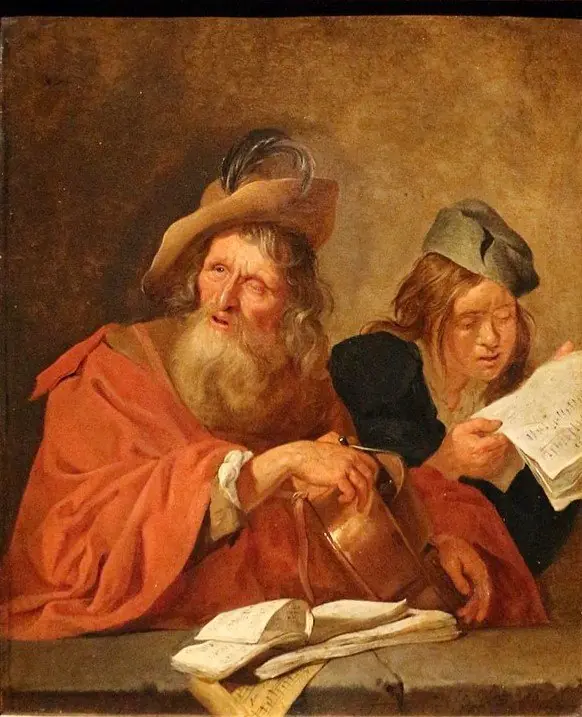
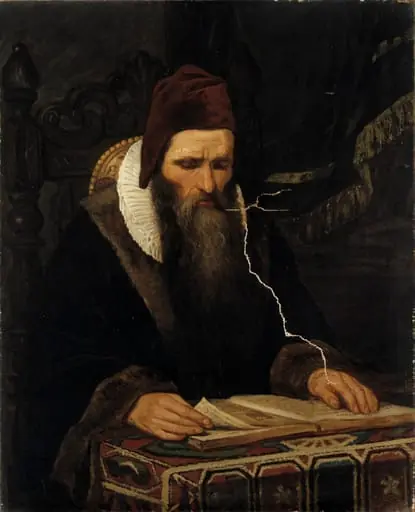
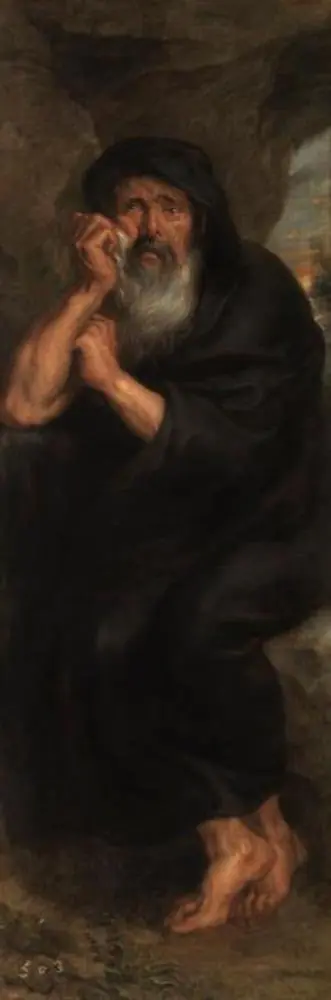
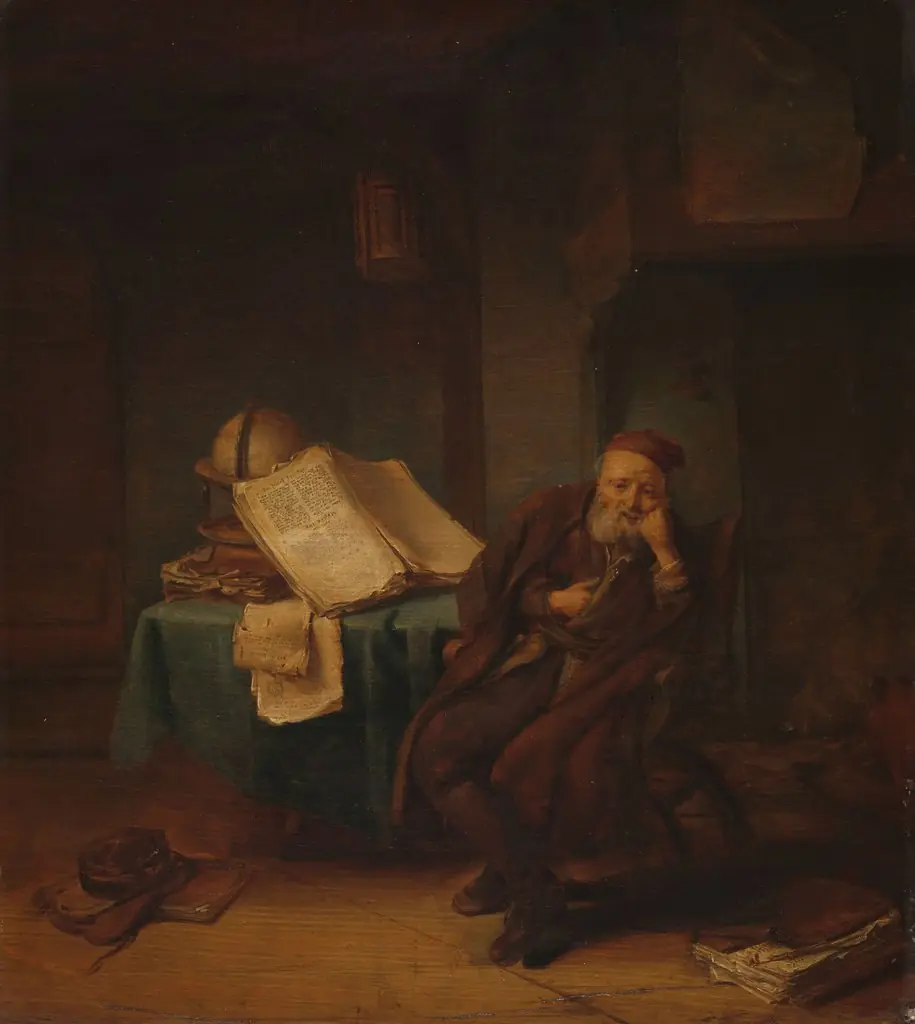
Philosopher is an oil painting by the Realist artist Edmond Van Hove. It dates from 1853 and is held in the collection of the Groeningemuseum.
About this work
Subject & Meaning
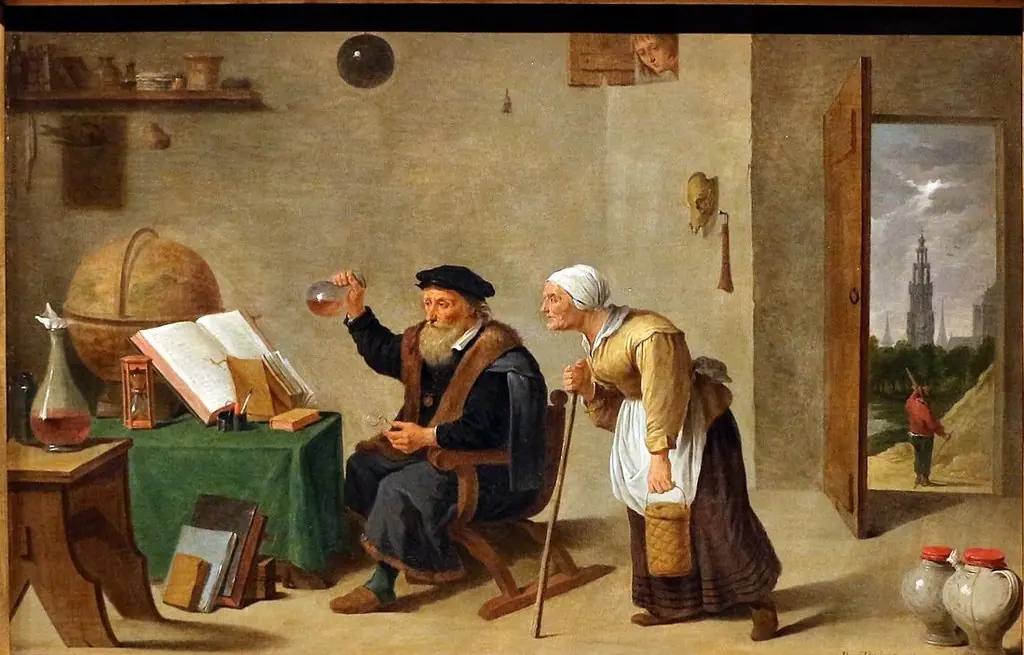
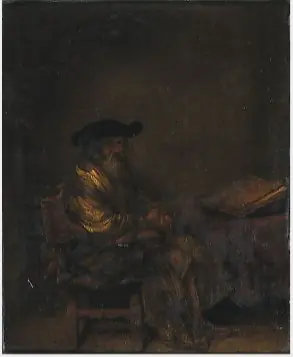
The painting Philosopher by Edmond Van Hove, completed in 1853, portrays a contemplative figure surrounded by symbols of intellectual pursuit.
The painting Philosopher by Edmond Van Hove, completed in 1853, portrays a contemplative figure surrounded by symbols of intellectual pursuit. The subject is depicted wearing glasses and a beard, seated before a window that reveals a distant landscape, while a book rests on the table beside him and a globe stands nearby. These elements, glasses, book, window, globe, beard, function as iconographic markers of philosophical inquiry and scholarly authority, suggesting the figure embodies the learned philosopher engaged in reflection and reason.
The work is housed in the Groeningemuseum, where its composition reinforces themes of Enlightenment thought through careful arrangement of objects that denote knowledge and moral contemplation.
Technique & Style
Philosopher is executed in oil paint on canvas, a standard support for mid-nineteenth-century portraiture. The composition measures 58 cm in height by 79 cm in width, yielding a horizontal format suited to a seated or half-length figure arrangement.
Stylistically, the work belongs to the portrait genre and incorporates a tightly defined iconographic program. The sitter is depicted with a beard and spectacles, and is shown alongside a book, a window, and a globe, attributes conventionally associated with scholarly and philosophical subjects. The juxtaposition of the book and globe suggests an emphasis on learning and worldly knowledge, while the window introduces a source of natural light that models the figure.
No specific handling notes, surface condition, or stylistic descriptors beyond the portrait genre are documented in the available sources.
History & Provenance
Edmond Van Hove painted Philosopher in 1853 as an oil on canvas portrait. The work entered the Groeningemuseum collection shortly after its creation and remains on display there.
The painting portrays a seated philosopher with glasses, a book, a window, a globe, a beard, and is categorized as a portrait.
Context
Edmond Van Hove painted Philosopher in 1853, an oil on canvas portrait measuring 58 by 79 centimeters. The work depicts a bearded philosopher surrounded by scholarly symbols including glasses, a book, a window, and a globe. It is housed in the Groeningemuseum collection and has been recognized as a representative example of 19th-century academic portraiture.
Scholars have examined its symbolic program in relation to contemporary philosophical discourse, though specific critical commentary from the period is not documented. The painting's stylistic approach reflects the academic traditions of the time, emphasizing clarity of line and naturalistic detail.
Overview
Philosopher is an oil painting created by Edmond Van Hove in 1853. It is now held at the Groeningemuseum.
Artist & collection