Artwork
The Virgin inspires the Arts
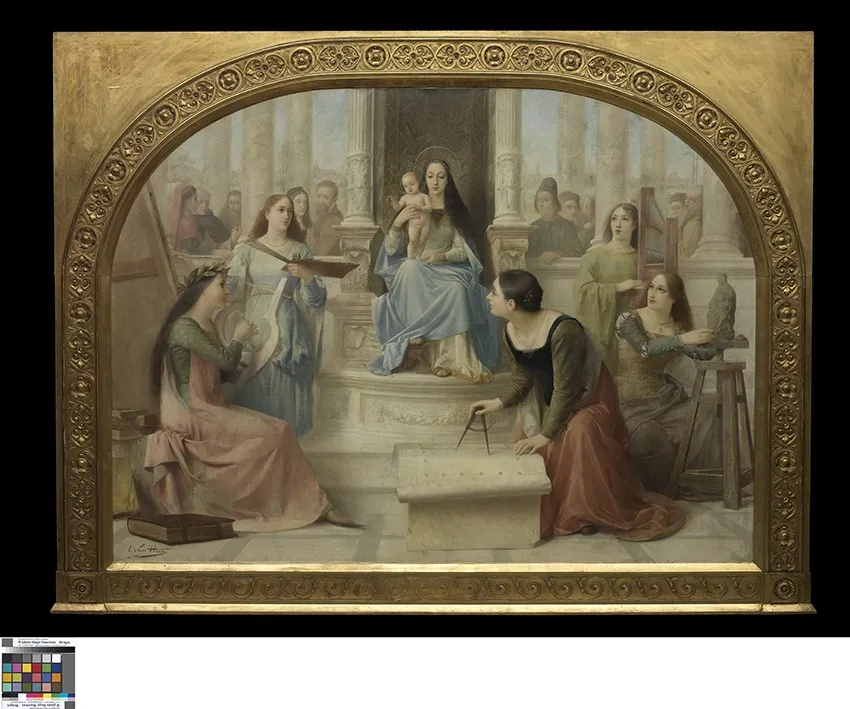
The Virgin inspires the Arts is an oil painting by the Symbolist artist Edmond Van Hove. It dates from 1897 and is held in the collection of the Groeningemuseum.
About this work
Subject & Meaning
These specific iconographic elements symbolize the inspiration the Holy Mother provides to the fields of music, architecture, literature, and sculpture.
Edmond Van Hove's 1893 religious painting, The Virgin inspires the Arts, depicts the Virgin Mary holding the Christ Child while surrounded by attributes representing various artistic disciplines. The composition includes a lyre, a compass, a book, and the art of sculpture, illustrating how the Virgin serves as the divine patron and muse for human creativity. These specific iconographic elements symbolize the inspiration the Holy Mother provides to the fields of music, architecture, literature, and sculpture.
By integrating these tools and arts into a sacred scene, the work represents the theological concept that all artistic endeavor is guided by the Virgin. The arrangement suggests that the pursuit of beauty and skill in the arts is an extension of spiritual devotion, with Mary acting as the central figure who unifies these creative pursuits under her influence.
Technique & Style
Edmond Van Hove executed this religious composition in 1893 using oil paint. The work measures 174.8 cm in height and 236 cm in width. Stylistically, the painting depicts the Virgin Mary alongside the Christ Child, surrounded by symbolic objects representing various disciplines, including a lyre, a compass, a book, and tools associated with the art of sculpture. These elements are arranged to illustrate the inspiration of the arts by the divine figure.
Overview
Created in 1897, Edmond Van Hove’s oil painting The Virgin inspires the Arts is part of the collection at the Groeningemuseum. The composition centers on a seated woman in a blue robe cradling an infant, surrounded by three other women who offer objects such as a book and a small box. The setting is an elegant interior with columns and distant figures, rendered in soft, muted tones.
History & Provenance
The painting was executed in 1897 and entered the Groeningemuseum’s holdings sometime after its completion, where it remains on display. Its provenance traces directly to the artist’s studio, with no recorded changes of ownership prior to acquisition by the museum, indicating a relatively straightforward institutional history.
Context
Produced at the close of the 19th century, the work reflects a period when Belgian artists often revisited traditional religious iconography while integrating contemporary concerns about art’s moral purpose. Van Hove’s inclusion of sculptural tools and scholarly objects aligns with a broader cultural dialogue that linked spiritual devotion to artistic practice.
Artist & collection

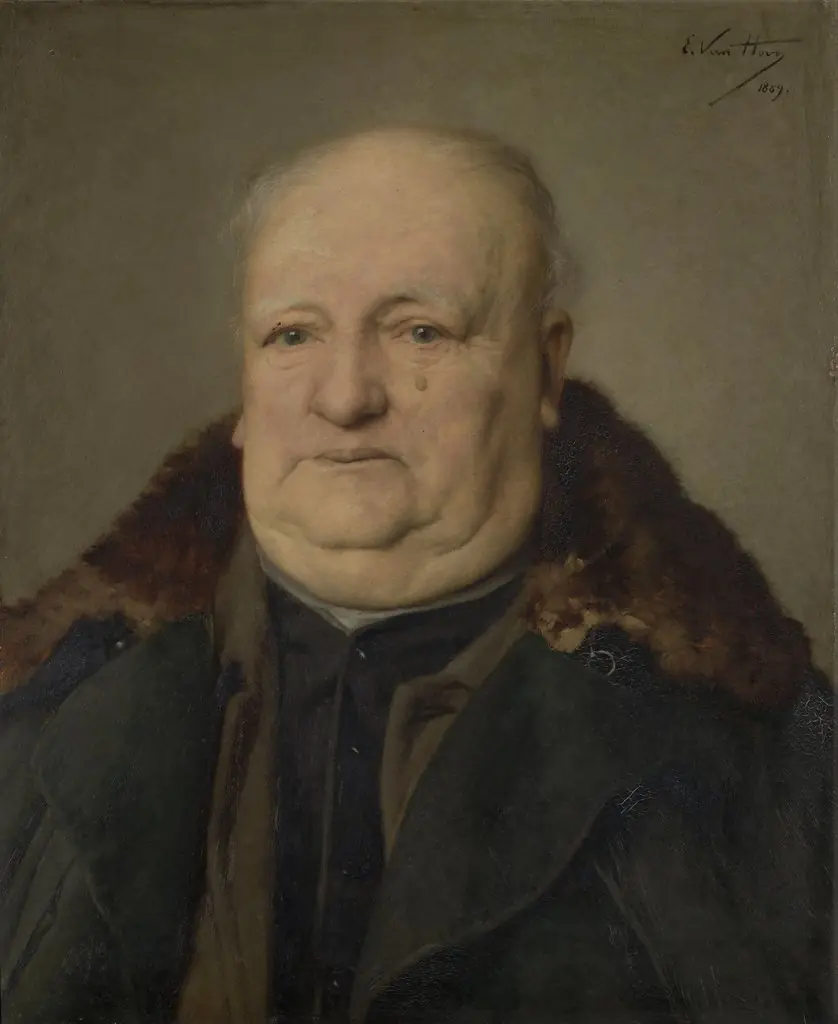
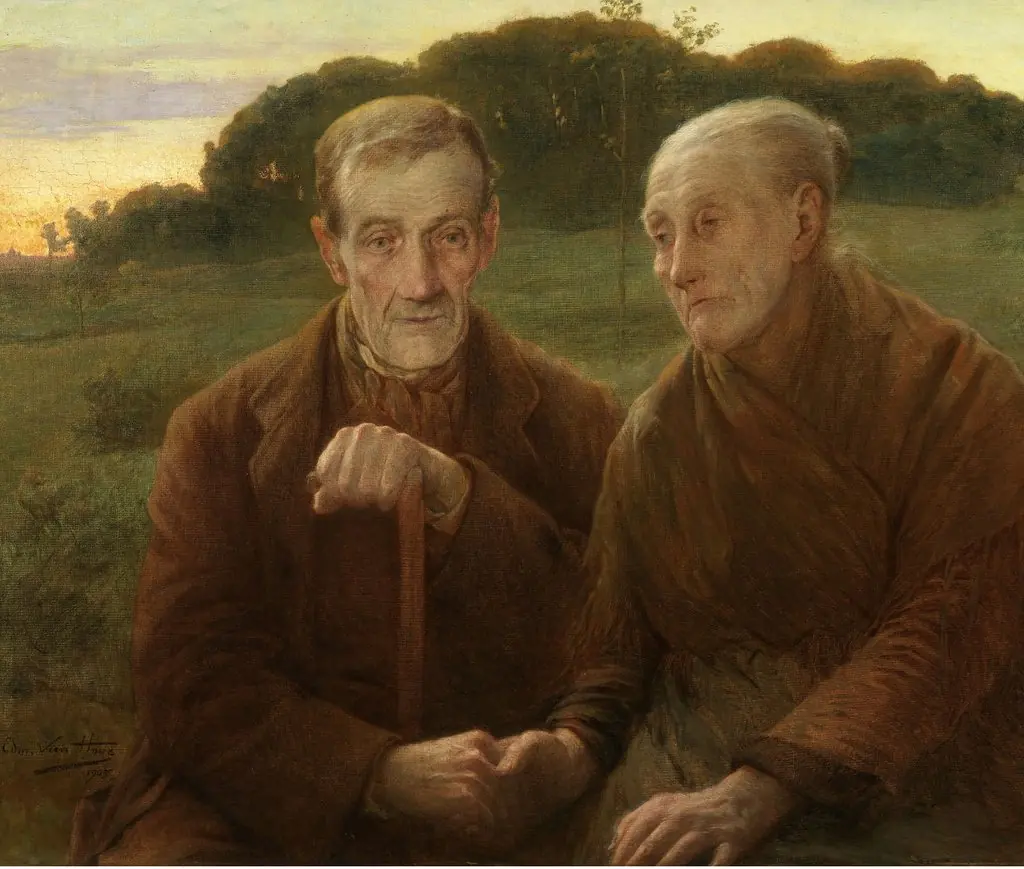
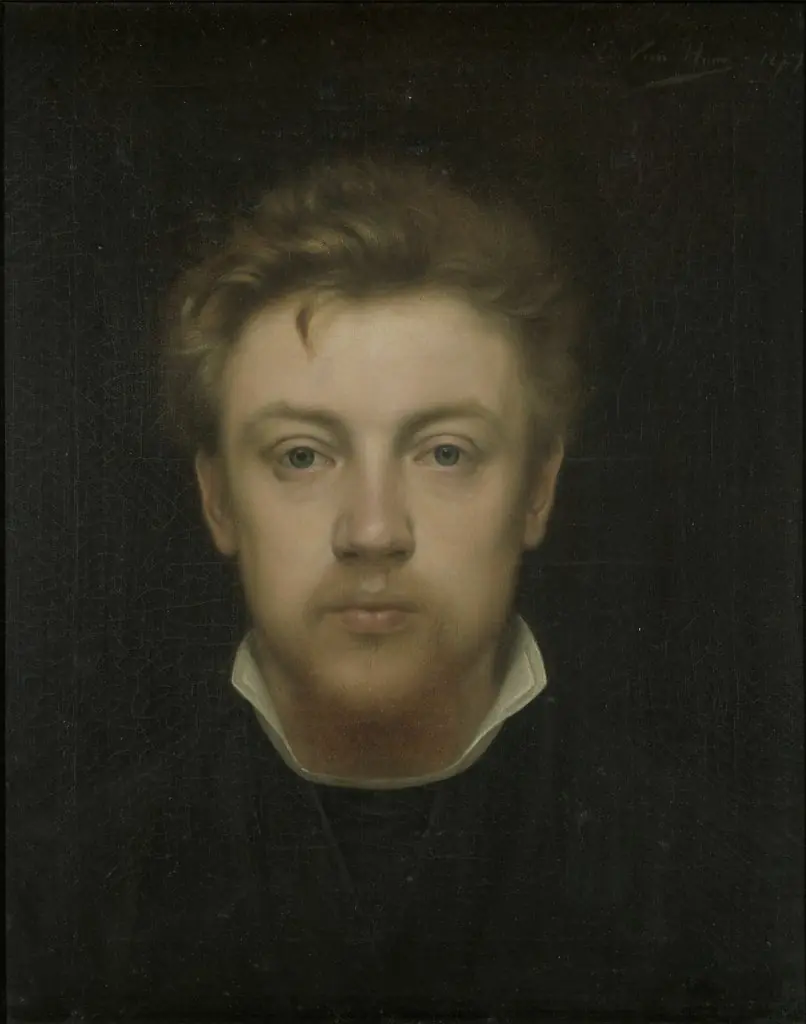
- La reina Isabel la Católica presidiendo la educación de sus hijos
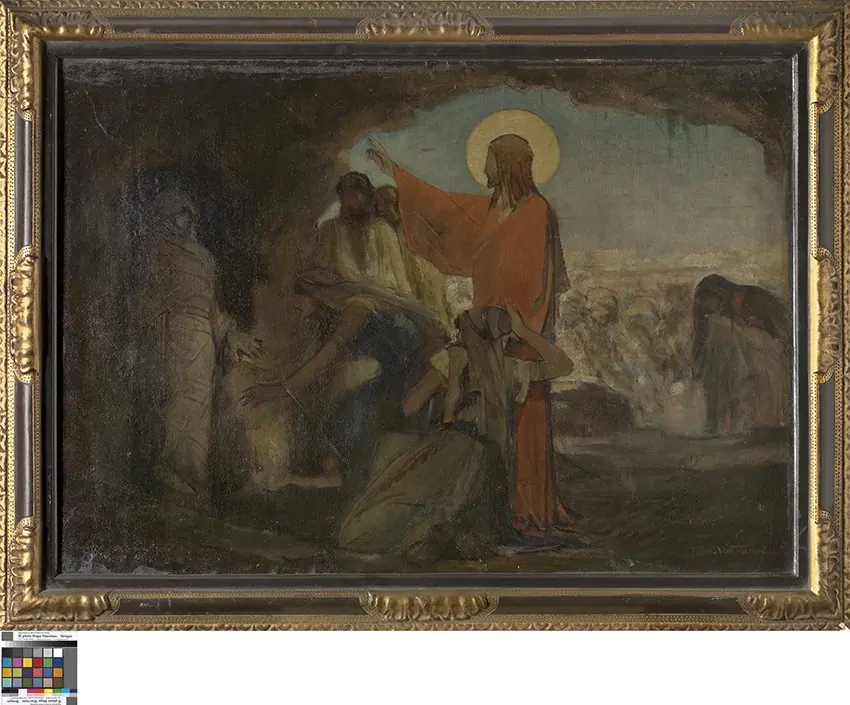 Opwekking van Lazarus
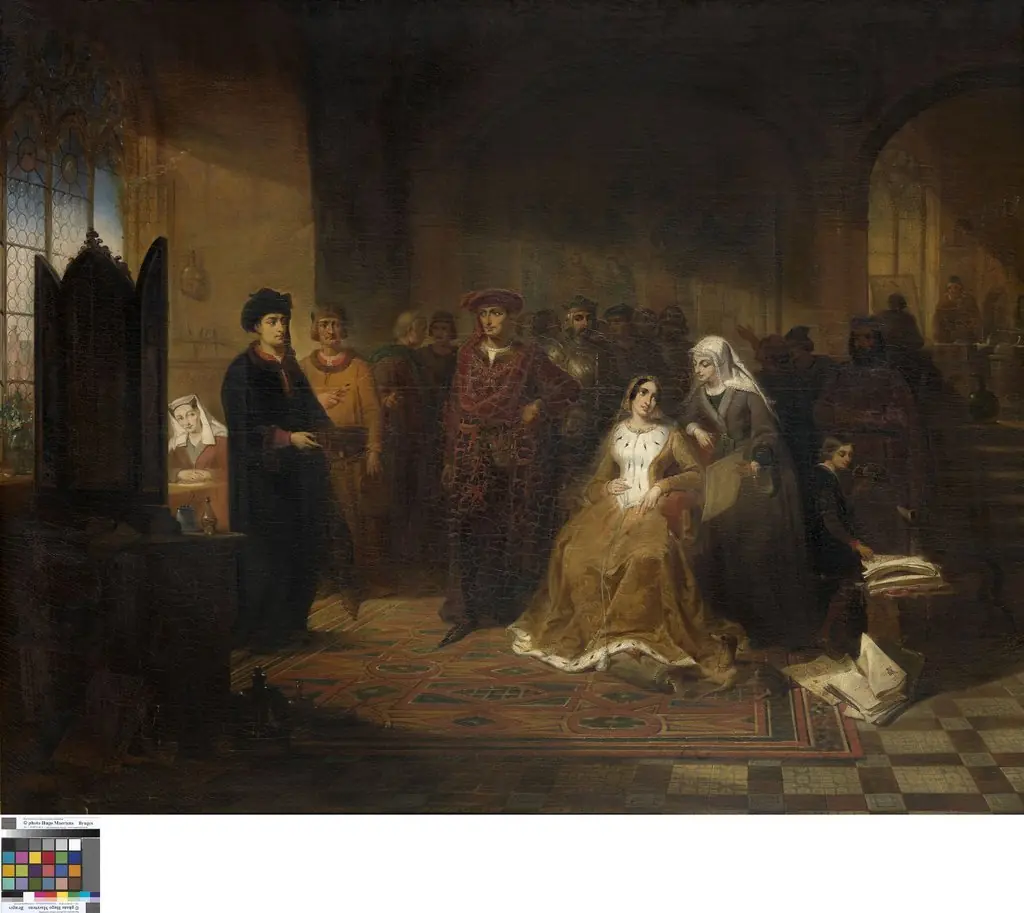 Filips de Goede bezoekt het atelier van Jan van Eyck
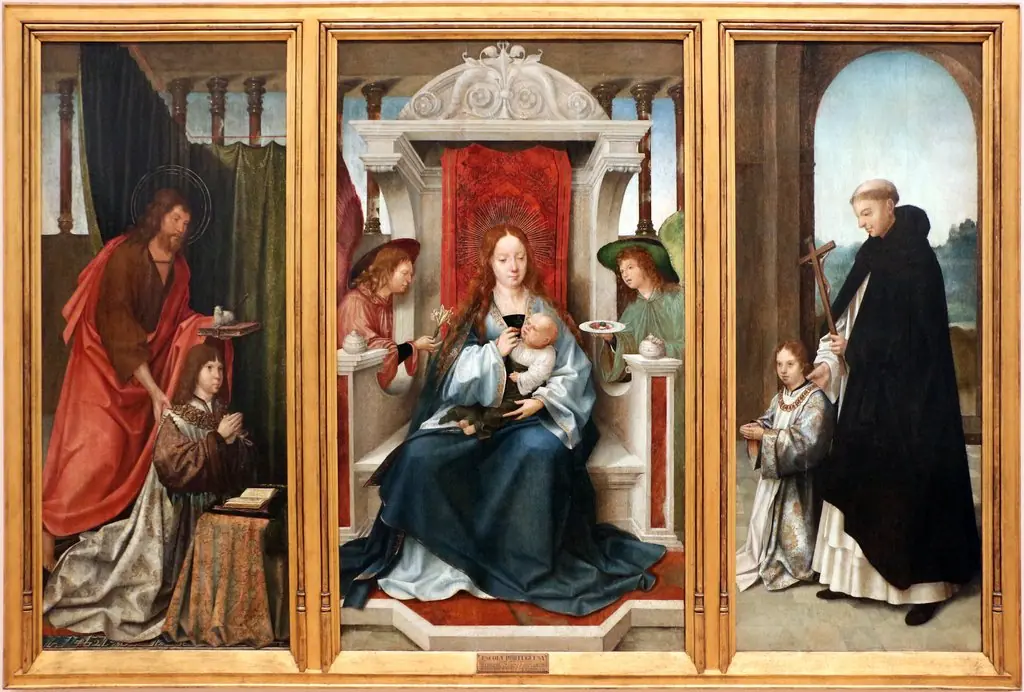 Triptych of the Princes
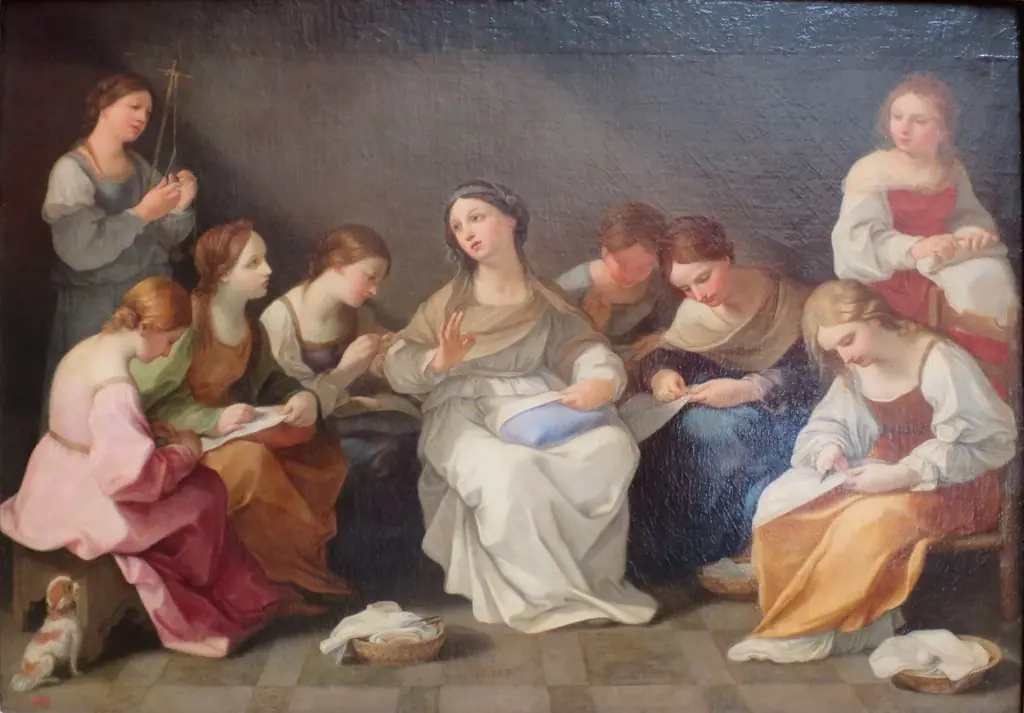 Education of the Virgin Mary
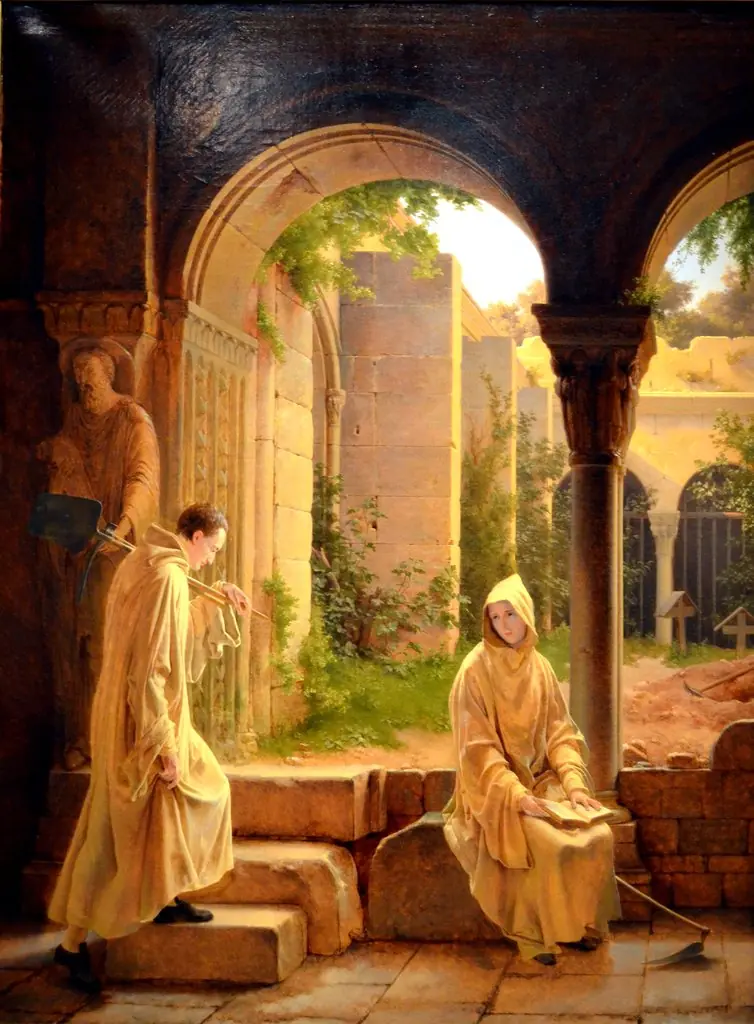 Comminges and Adelaide in the Trappist Monastery
 Romeo și Julieta
 Galant gezelschap
 Allegorie
 The Invocation of Saint Apollonia
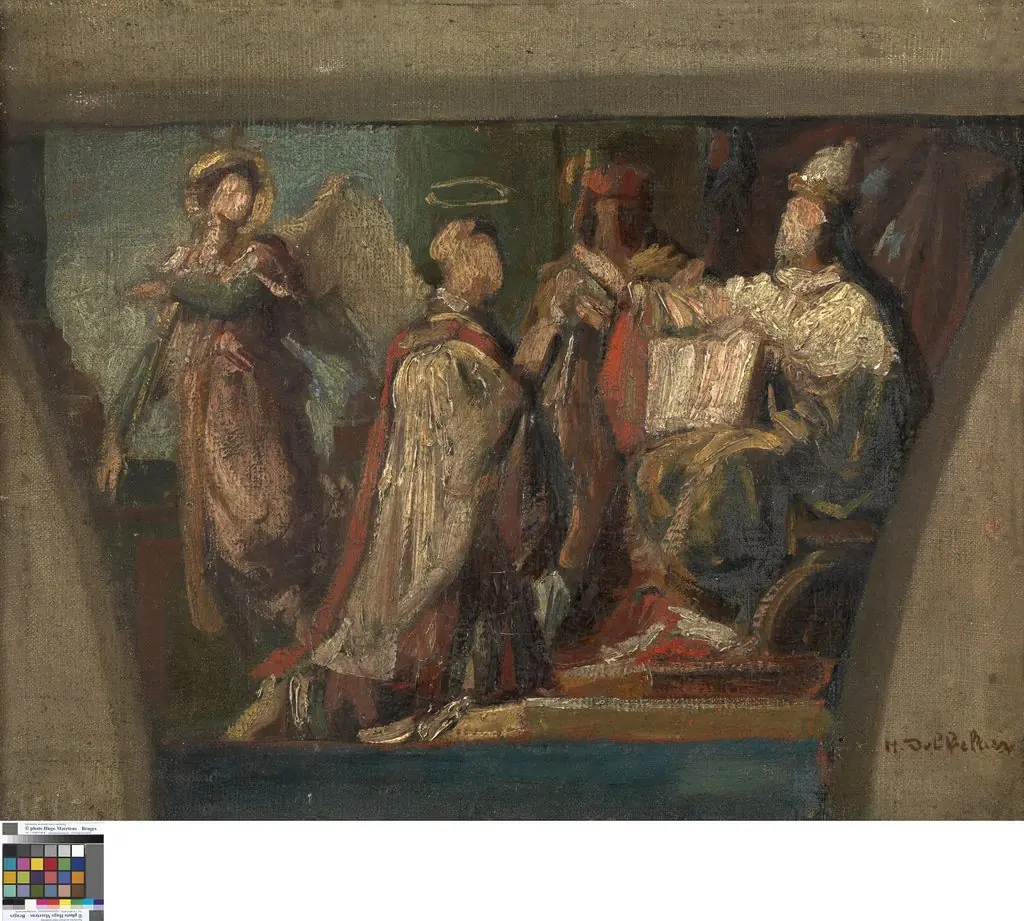 Heilige geknield voor een paus
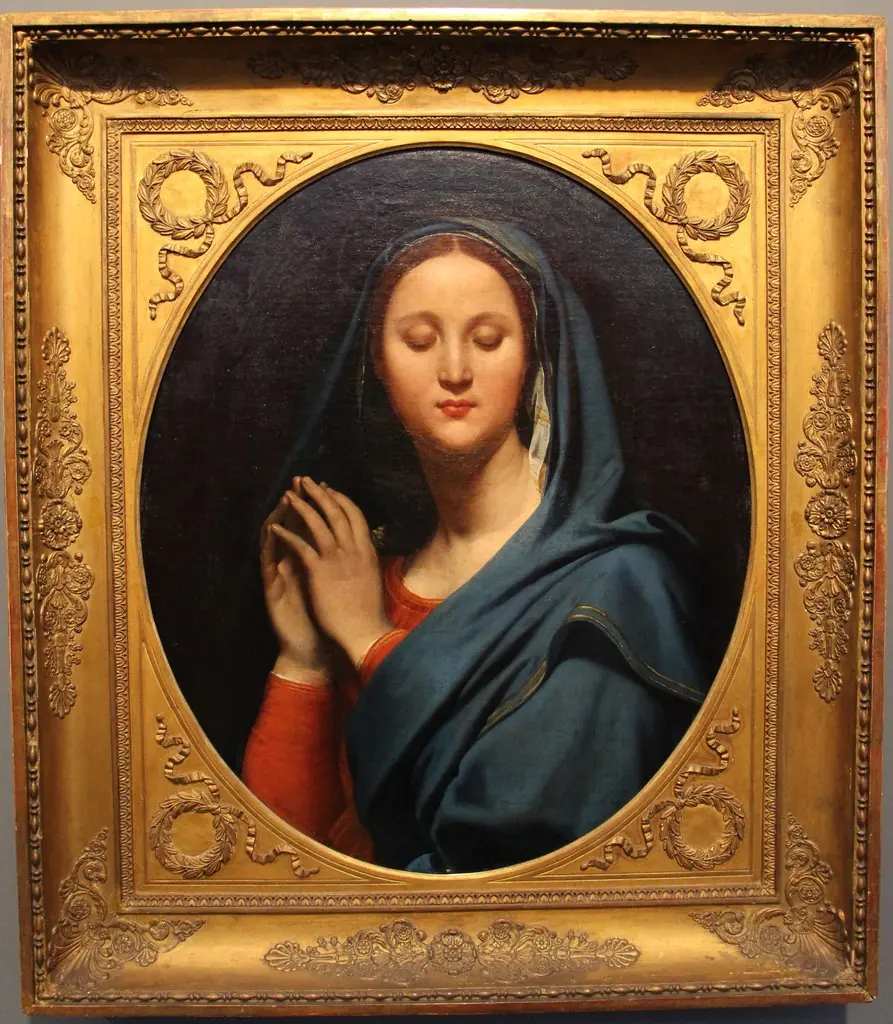 The Virgin of the Blue Veil