Artwork
Stilleven met honden
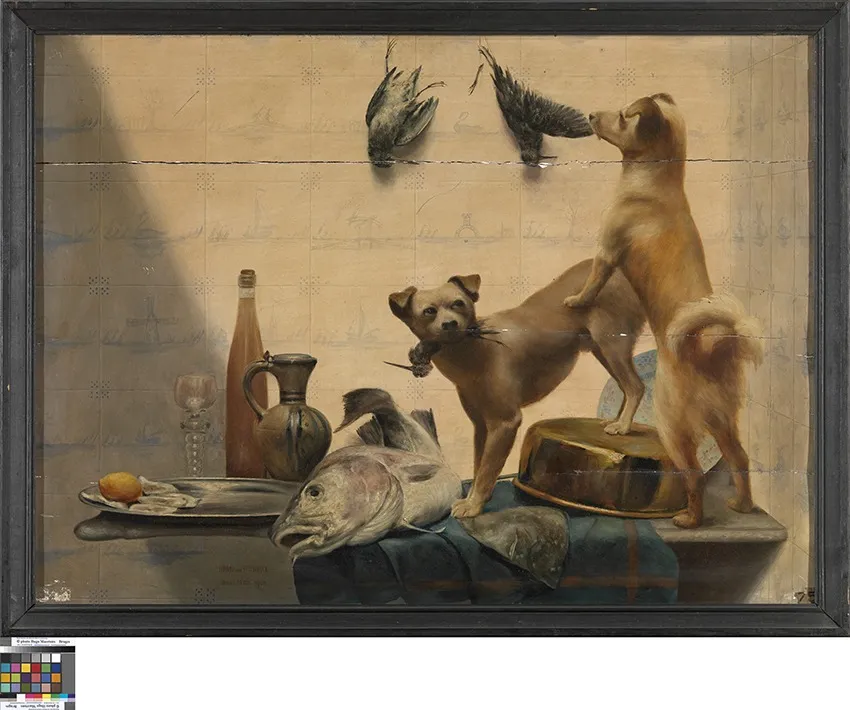
Stilleven met honden is an oil painting by the Post-Impressionist artist Edouard van Speybrouck. It dates from 1905 and is held in the collection of the Groeningemuseum.
About this work
Subject & Meaning
The work functions as a representation of abundance tempered by the inevitability of death, a common thematic concern in the still life genre.
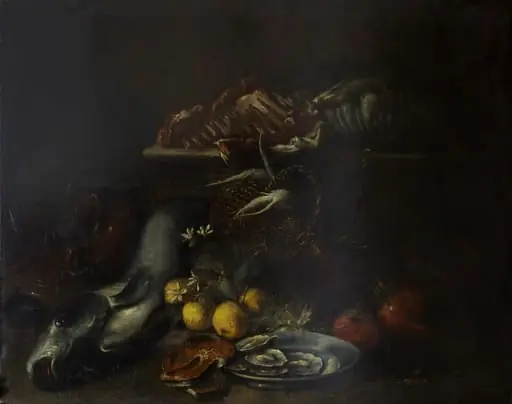
Painted in 1905, this still life by Edouard van Speybrouck presents a dense arrangement of domestic and culinary items on a table. The composition features multiple dogs as central figures, surrounded by dead game birds and fish prepared as food. These organic elements are juxtaposed with various forms of tableware, including a bottle, a carafe, glassware, and a lemon.
The inclusion of deceased animals alongside fruit and drinkware aligns with traditional vanitas iconography, where such objects serve as reminders of mortality and the fleeting nature of earthly pleasures. The work functions as a representation of abundance tempered by the inevitability of death, a common thematic concern in the still life genre.
Technique & Style
Executed in 1905, this still life by Edouard van Speybrouck is an oil painting on a support measuring 61.2 by 82 units. The work depicts a dense arrangement of tableware, including a bottle, carafe, and glassware, alongside organic subjects such as a lemon, fish, and a bird. A dog is also featured within the composition, anchoring the scene.
The handling of the oil medium allows for the detailed rendering of varied textures, from the reflective surfaces of the glass and liquid containers to the fur of the animal and the skin of the fruit. The composition balances these disparate elements on a tabletop, characteristic of the genre's focus on domestic abundance and material presence.
History & Provenance
Edouard van Speybrouck created the oil painting Stilleven met honden in 1905. The specific date of inception is recorded as December 23, 1905. The work is currently held in the collection of the Groeningemuseum.
No further details regarding the original commission, specific owner prior to the museum, or the detailed circumstances of its creation are provided in the available sources.
Context
Edouard van Speybrouck's 1905 oil painting Stilleven met honden (61.2 cm × 82 cm) occupies a distinctive niche within early twentieth-century Belgian still life. The work features dogs alongside culinary elements such as fish, lemon, and glassware, reflecting contemporary explorations of domesticity and material abundance. Its presence in the Groeningemuseum collection situates it within a broader institutional context that documented regional artistic developments, while its precise date of 1905 aligns with van Speybrouck's documented activity in the early 1900s.
Scholarship on the artist remains limited, though the painting's composition engages with period interests in domestic symbolism and still life innovation.
Legacy
Edouard van Speybrouck's 1905 still life Stilleven met honden entered the Groeningemuseum's collection shortly after its creation, establishing a quiet but enduring presence in early 20th-century Belgian art. The work's meticulous rendering of humble household objects and animals influenced subsequent generations of realist painters exploring domestic symbolism. Its inclusion in the museum's permanent displays since inception cemented its role as a reference point for scholarly study of Flemish still life traditions.
Overview
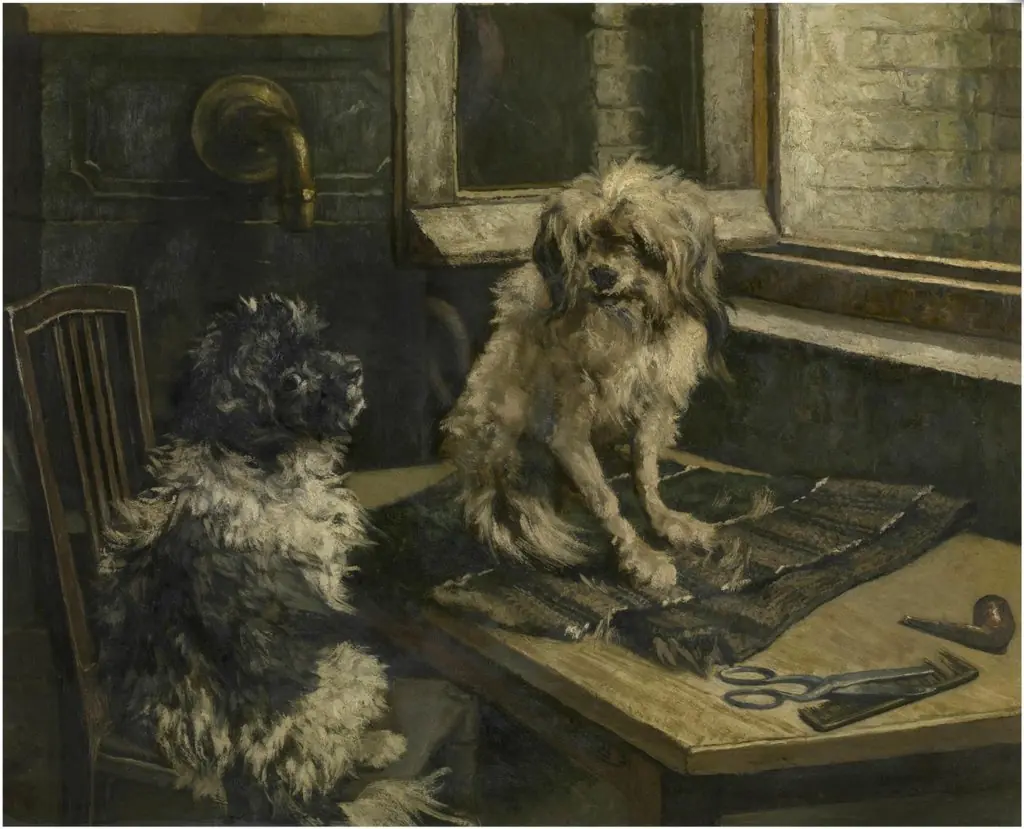
Edouard van Speybrouck’s oil painting, executed in 1905, presents a domestic interior populated by three dogs. The composition combines still‑life elements, fish, lemon, carafe, and a plate, with the animated presence of the animals, creating a scene that balances everyday objects and animal behavior.
Artist & collection
Artist
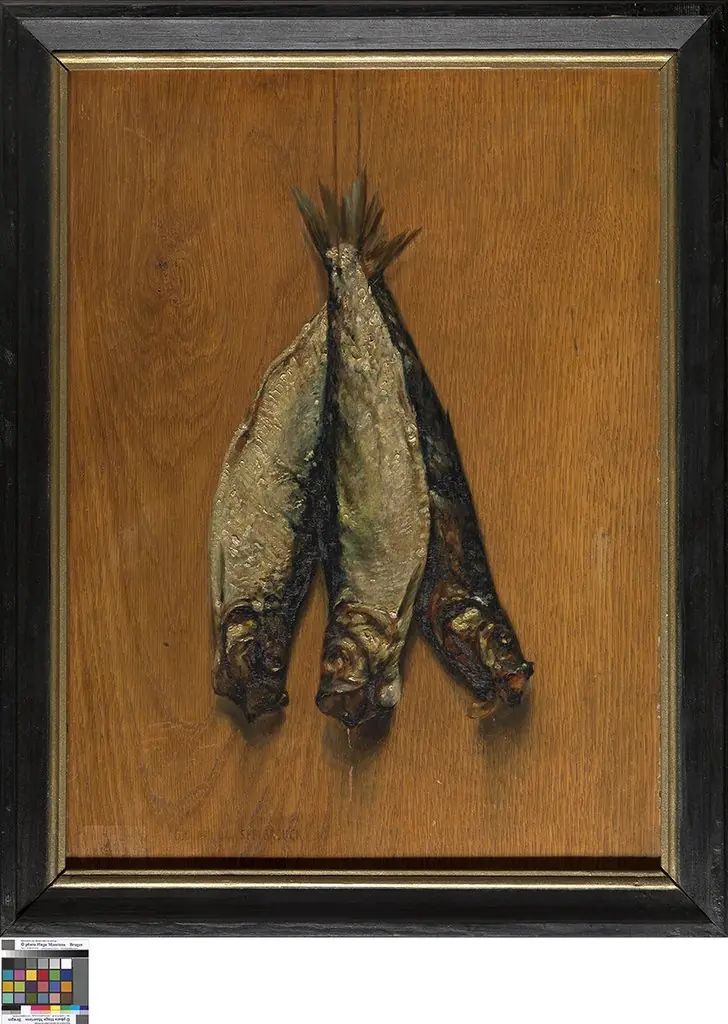
A painter active in Brussels between 1880 and 1912, Édouard van Speybrouck made small, finely brushed oil panels of city corners and riverbanks.

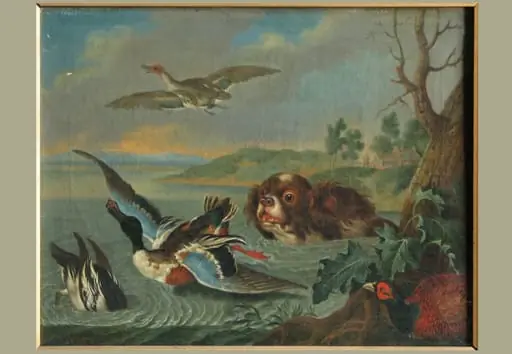 Rațe sălbatice gonite de un câine flocos. Pandant: Rațe sălbatice gonite de un câine
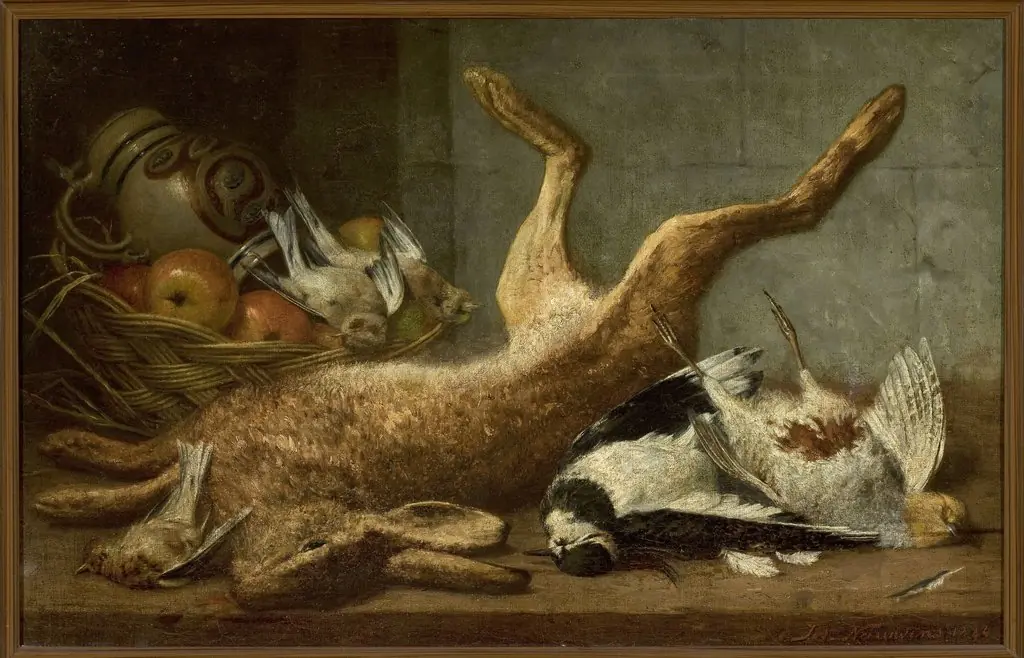 Hunting trophies: dead hare
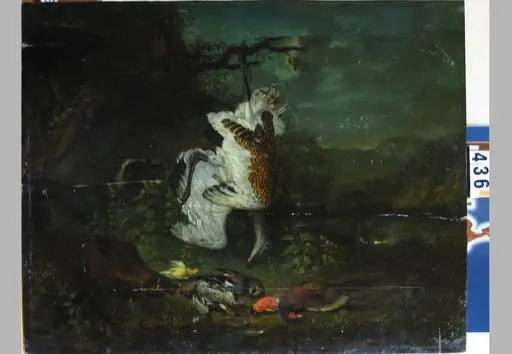 Vânat la malul apei (în Reg. Inv.: Vânat la apă). Pandant: Vânat cu corn de vânătoare
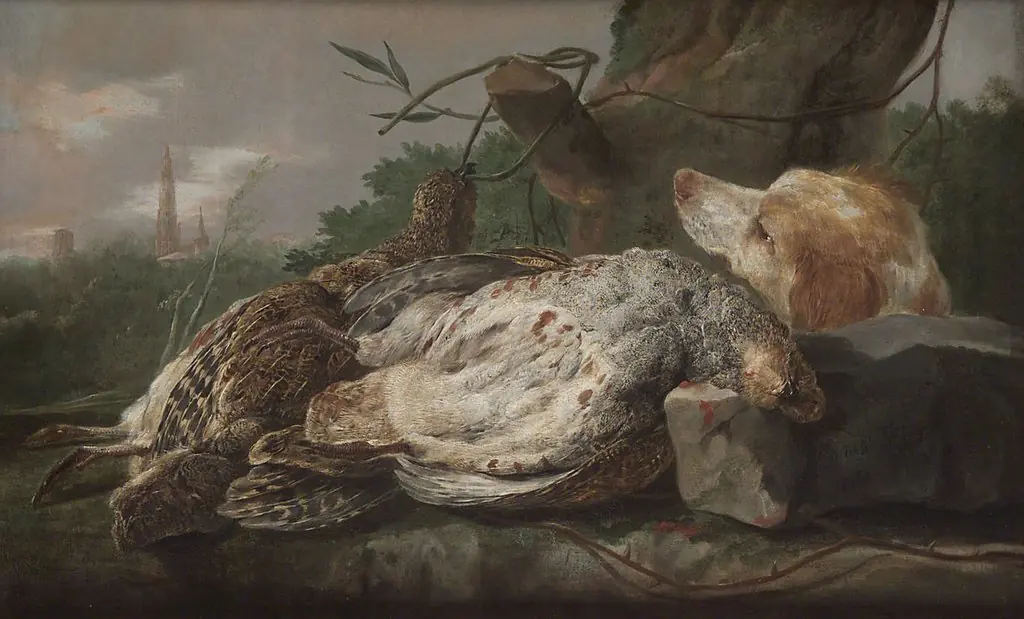 Dead partridges with hound
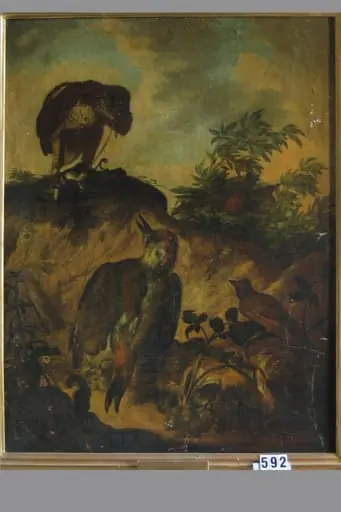 Șorecar și pițigoi albastru. Pandant: Ghionoaie și rață sălbatică (în Registrul inventar: Gheonoaie și rață sălbatică).
 Natură statică
 Dogs
Dogs Hare, Fruit and Parrot
 Fruits of the Hunt with a Dog
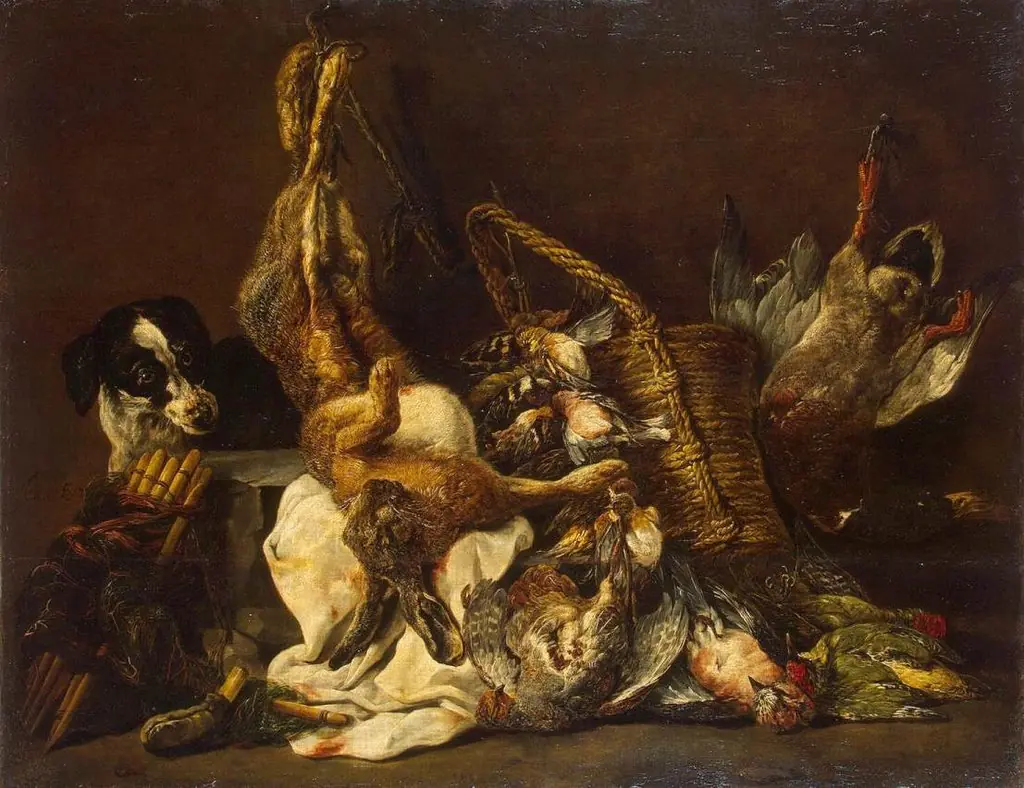 Dead Game and a Gun Dog
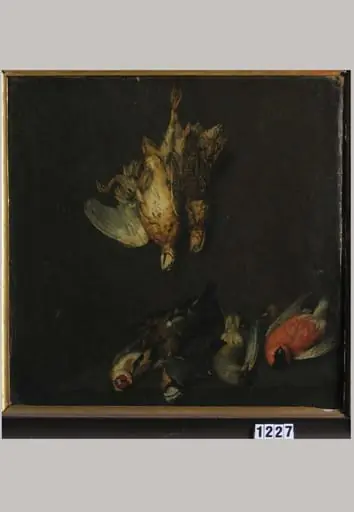 Păsări moarte