Artwork
Saint Teresa of Ávila
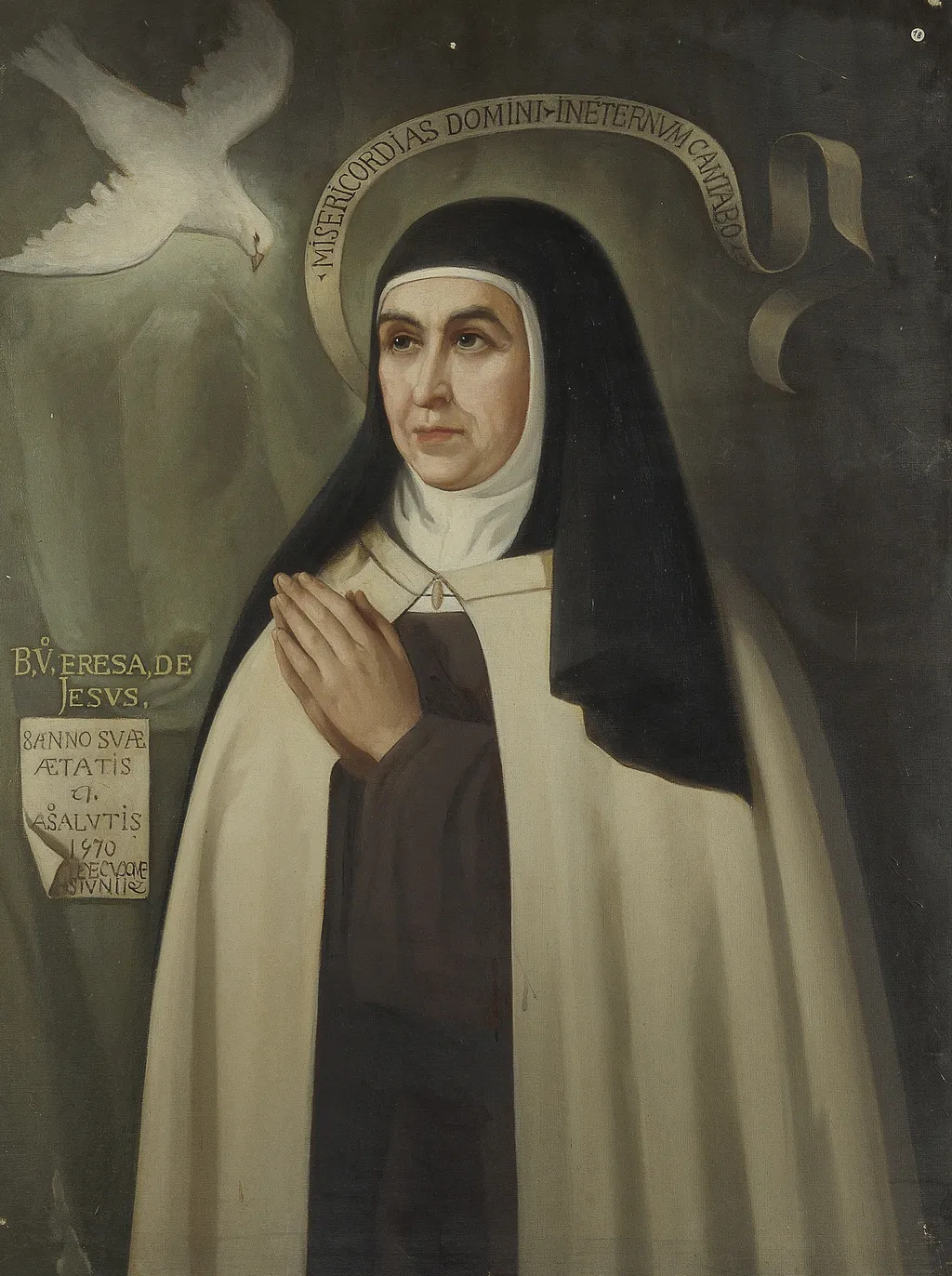
Saint Teresa of Ávila is an oil painting by the Spanish Baroque Tenebrist artist Eduardo Balaca. It dates from 1889 and is held in the collection of the Museo del Prado.
About this work
She’s holding a small object in her hands, like a book or letter, and her face is calm but serious.
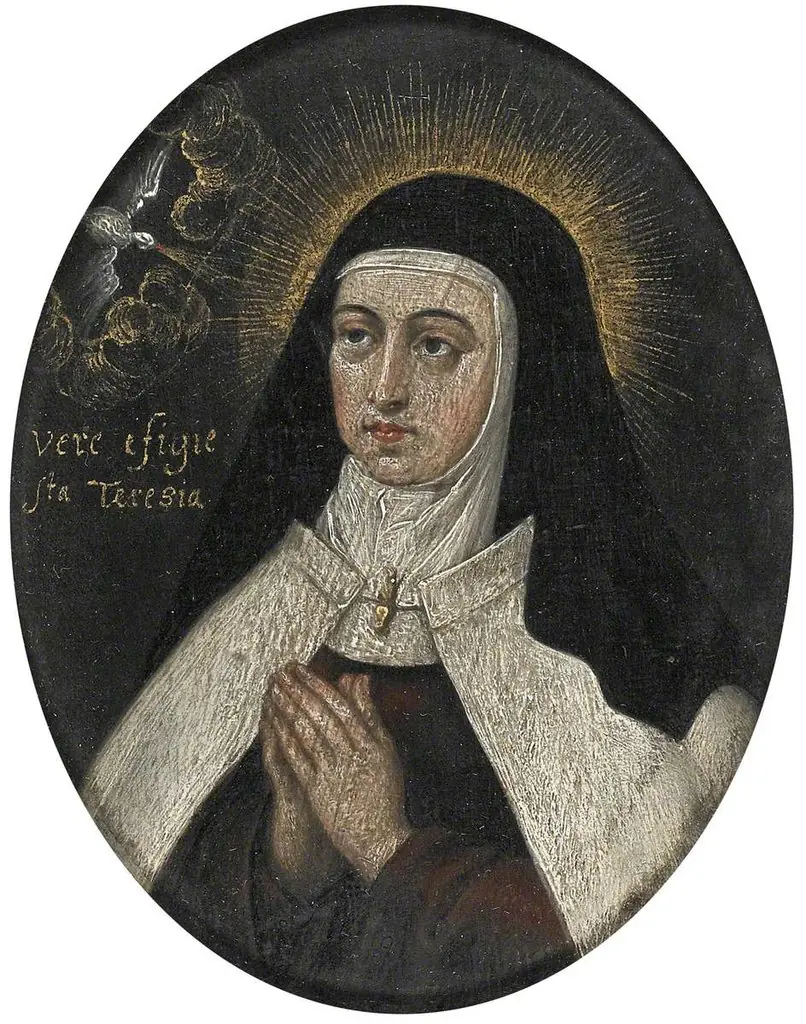
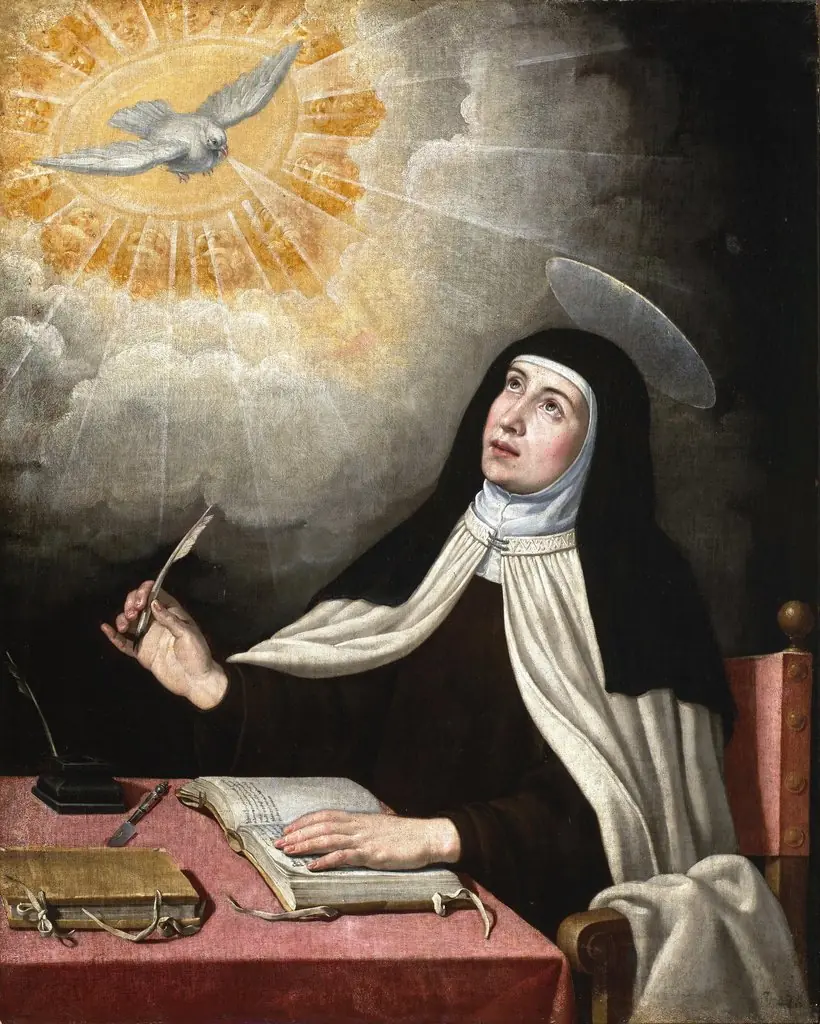
This painting shows a woman in a dark brown nun’s habit with a white veil. She’s holding a small object in her hands, like a book or letter, and her face is calm but serious. Above her head, a banner with Latin words curves around, and a dove floats nearby.
The text on the left side says "B.V. Teresa de Jesús" and includes the year 1970, but that’s likely a later addition. The painting uses soft shadows and light to make her face stand out.
Next, look up Teresa of Ávila to learn more about who she was.
Technique & Style
The painting is executed in oil on canvas, a standard support for Spanish portraiture of the late nineteenth century. The handling is smooth and controlled, typical of academic portrait practice, with careful modeling of the face and hands to convey the sitter’s physiognomy and spiritual presence. The palette is subdued, favoring earth tones and muted flesh hues to emphasize the subject’s interiority.
Compositionally, the figure is posed frontally, with a restrained gesture and direct gaze that align with conventional hagiographic portraiture. The condition is not described in the cited sources, and no later interventions or structural issues are documented here.
History & Provenance
Eduardo Balaca y Orejas Canseco created the oil-on-canvas portrait of Saint Teresa of Ávila in 1877. The work measures 101 cm in height and 76 cm in width. It is currently held in the collection of the Museo del Prado in Madrid, where it is cataloged under the inventory number P003437. The painting is classified as a portrait and depicts Teresa of Ávila as its main subject.
The painting is held in the collection of the Museo del Prado in Madrid, where it is registered under the inventory number P003437. Created in 1877 by Eduardo Balaca, the oil on canvas portrait depicts Teresa of Ávila and measures 101 cm in height by 76 cm in width. The provided sources confirm its current location and classification within the museum's holdings but do not contain specific records regarding its past exhibition history or detailed provenance prior to its inclusion in the Prado.
Overview
Eduardo Balaca, a Spanish painter active in the late 1800s, completed an oil portrait of Saint Teresa of Ávila in 1889. The canvas is part of the Prado Museum’s holdings in Madrid and exemplifies the tenebrist strand of Spanish Baroque, employing pronounced contrasts of light and shadow to model the figure.
Subject & Meaning
The work presents the 16th‑century Carmelite mystic in a dark brown habit topped by a white veil. She holds a small object, likely a book or letter, and gazes with a composed yet solemn expression. A Latin inscription and a hovering dove accompany her, alluding to her spiritual authority and the Holy Spirit.
Context
Balaca worked in a period when Spanish art was revisiting Baroque aesthetics, and his brother Ricardo Balaca was known for battle scenes. Eduardo’s reputation rested on portraiture, and this religious portrait demonstrates his ability to apply secular techniques to devotional subjects.
Own this work as a print
Artist & collection
Artist
Eduardo Balaca y Orejas-Canseco (c. 1840–1914) was a Spanish portrait painter, decorative artist, and art teacher. His brother was the battle painter, Ricardo Balaca.