Artwork
The crucified Christ appears to Saint Teresa of Avila
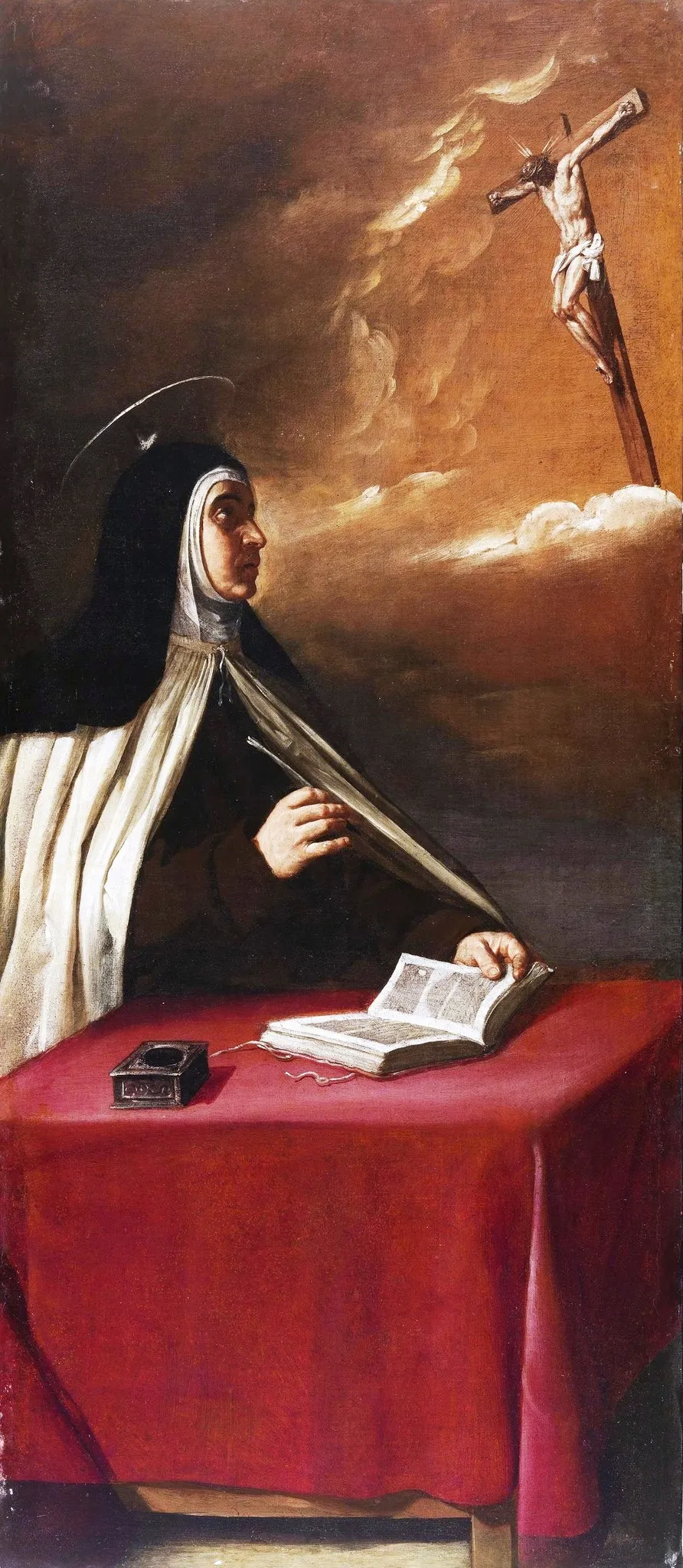
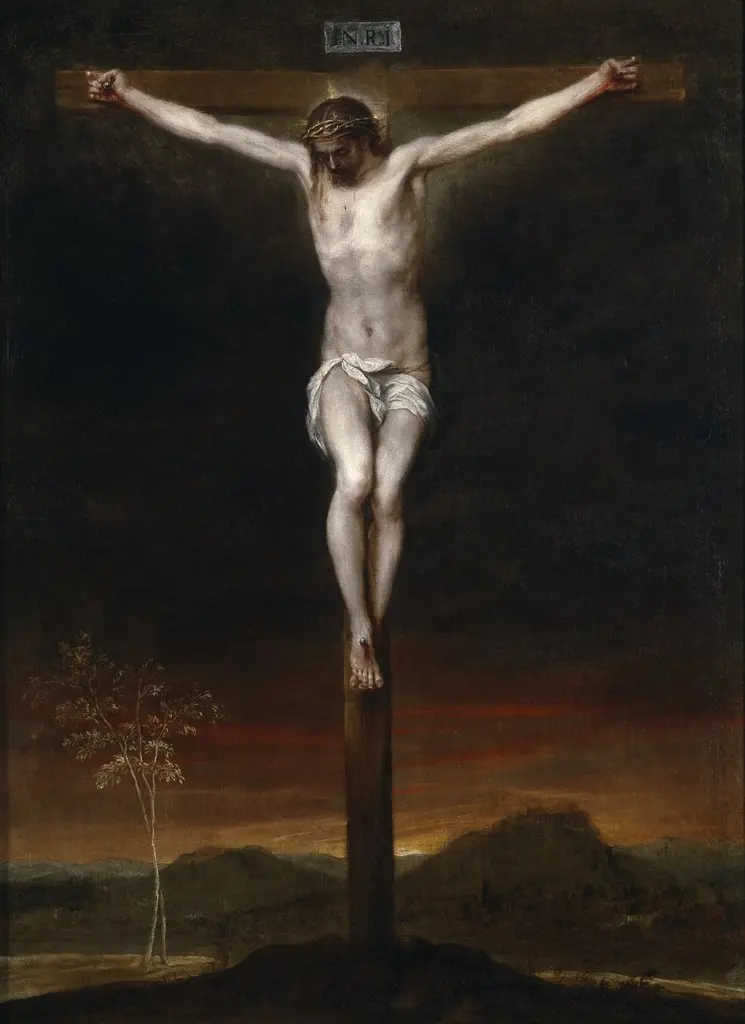
The crucified Christ appears to Saint Teresa of Avila is an oil painting by the Early Baroque Italian artist Alonso Cano. It dates from 1629 and is held in the collection of the Museo del Prado.
About this work
Technique & Style
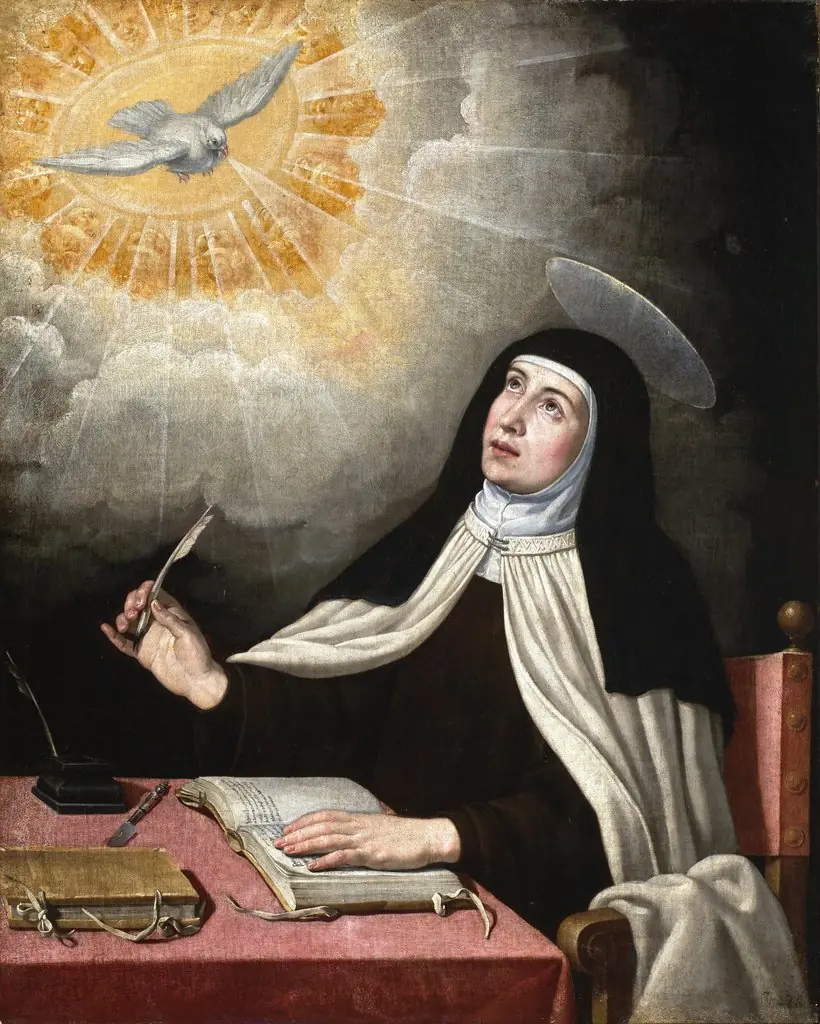
As a religious composition, the piece depicts specific narrative elements including a book, table, pen, inkwell, and a crucifix.
Created in 1629, The crucified Christ appears to Saint Teresa of Avila is an oil painting executed on a canvas support. The work measures 99 cm in height and 43.5 cm in width. As a religious composition, the piece depicts specific narrative elements including a book, table, pen, inkwell, and a crucifix. The medium of oil paint allows for the detailed rendering of these objects within the devotional scene.
History & Provenance
Painted in 1629 by Alonso Cano, the work entered the collection of the Museo del Prado in Madrid, where it remains today.
Its early provenance is undocumented; the first secure record places it in the Prado’s holdings by the nineteenth century.
Overview
The oil painting "The crucified Christ appears to Saint Teresa of Avila" was created by Alonso Cano in 1629. This religious work depicts a pivotal moment in the life of the Spanish mystic, Saint Teresa of Avila, as she experiences a divine vision. The artwork is currently housed in the collection of the Museo del Prado, offering a glimpse into Baroque spiritual art.
Subject & Meaning
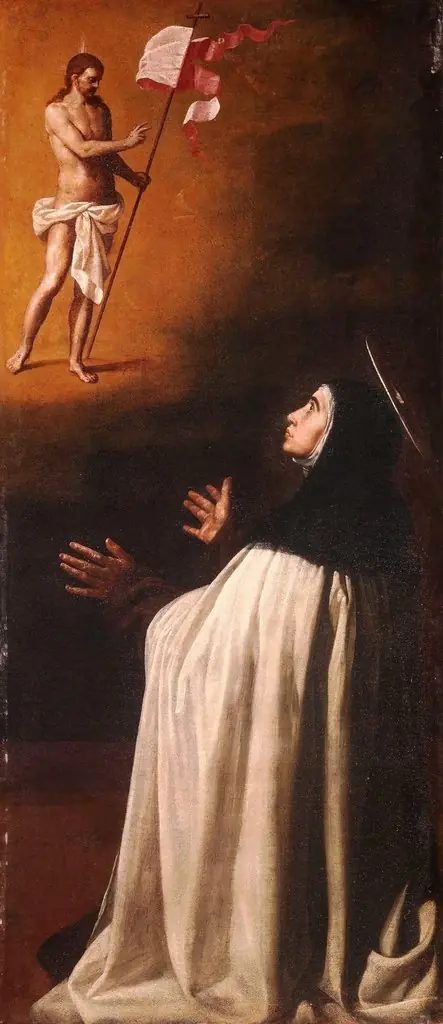
The painting centers on Saint Teresa of Avila, depicted kneeling at a red table, clad in a white robe and black veil. Her gaze is directed upward, conveying a sense of serene concentration as she encounters a vision of the crucified Christ, who appears luminous against a turbulent, darkened sky. Her fingers rest on an open book, accompanied by an inkwell and a scroll, alluding to her prolific writings on mystical theology.
Artist & collection