Artwork
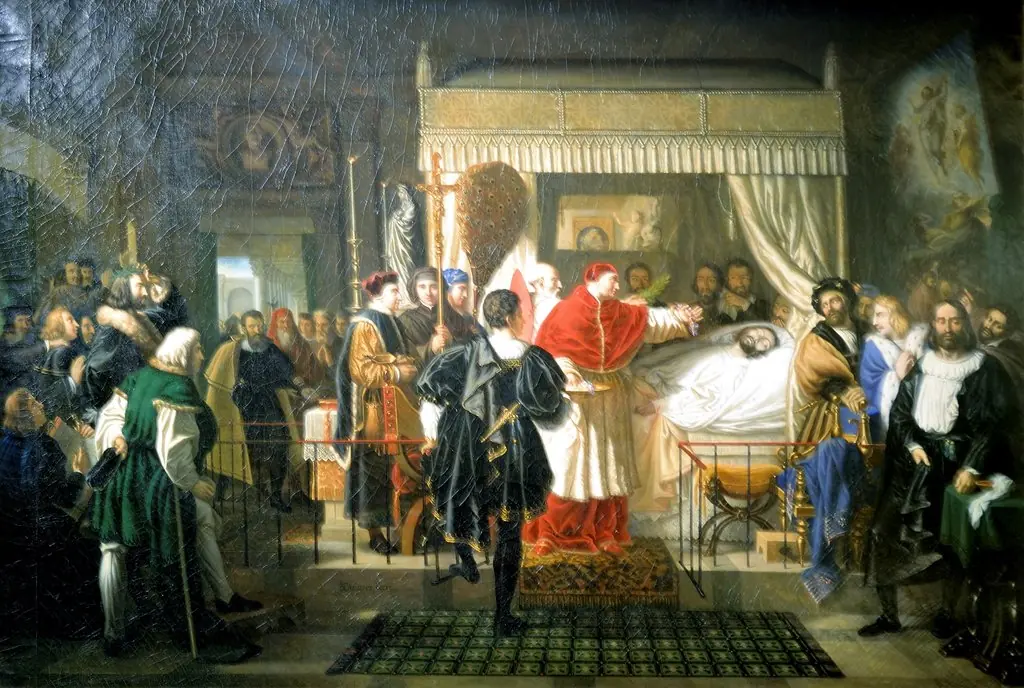
Queen Isabel la Católica dictating her last will and testament
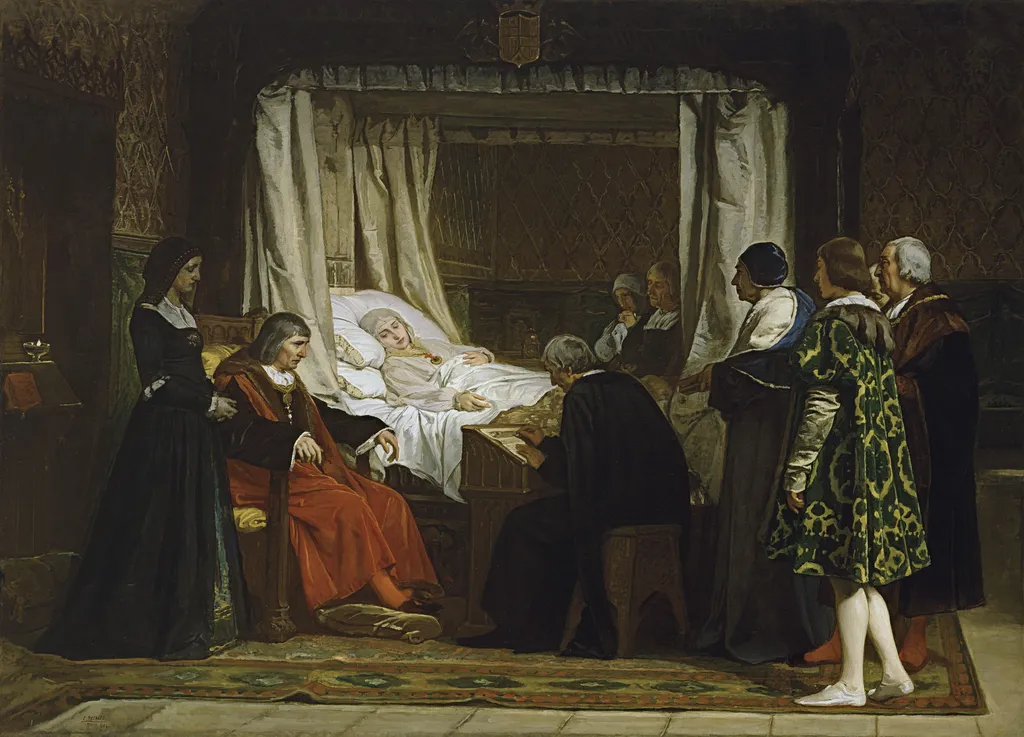
Queen Isabel la Católica dictating her last will and testament is an oil painting by Eduardo Rosales. It dates from 1864 and is held in the collection of the Museo del Prado.
About this work
Subject & Meaning
The painting depicts the final scene of Queen Isabel la Católica's life, when she dictates her last will and testament in Medina del Campo on 12 October 1504.
The painting depicts the final scene of Queen Isabel la Católica's life, when she dictates her last will and testament in Medina del Campo on 12 October 1504. Rosales situates the queen at the center of a small chamber in the Castle of La Mota, surrounded by key figures: her husband, Ferdinand II of Aragon, seated beside her; her daughter Juana I of Castile standing nearby; and the cardinal Francisco Jiménez de Cisneros, who attests to the document's solemnity. The composition emphasizes Isabel's quiet resolve amid the gravity of the moment, contrasting with the varied, more expressive reactions of those around her.
Rosales frames the scene within the conventions of academic history painting while adopting a more realist approach than in his earlier works. By choosing this pivotal historical episode, the artist underscores the political significance of Isabel's testament, which consolidated the union of the Iberian kingdoms under a single crown and shaped the future of Spain.
Technique & Style
Eduardo Rosales executed Queen Isabel la Católica dictating her last will and testament in 1864 using oil paint on canvas. The work measures 290 centimetres in height and 400 centimetres in width. Although categorized within academic history painting of the Romantic period, the piece exhibits a more realistic style compared to the artist's earlier productions.
Rosales spent approximately a year and a half creating the canvas, which depicts the dying queen with a calm expression, surrounded by figures displaying varied emotions. The painting was presented at the 1864 National Exhibition of Fine Arts in Madrid and later at the 1867 Paris Universal Exposition, where it earned a first-class medal for foreign artists.
History & Provenance
Eduardo Rosales created this history painting in 1864, dedicating approximately eighteen months to its execution while working in Paris. The artist submitted the finished work to the National Exhibition of Fine Arts in Madrid that same year, where it secured a first-class medal. It was subsequently displayed at the 1867 Universal Exhibition in Paris, earning Rosales a gold medal for foreign artists and the Legion of Honour.
The Spanish State purchased the canvas in 1865, initially assigning it to the Museo de la Trinidad. Following that institution's dissolution in 1872, the painting transferred to the Museo del Prado. It was later moved to the Museum of Modern Art before returning permanently to the Prado's collection in 1971 upon the modern museum's closure.
An engraving of the composition by Bartolomé Maura was produced in 1877. The painting is held by the Museo del Prado, Madrid (inventory P-2746), and is currently displayed in gallery 61B.
Context
Eduardo Rosales's Queen Isabel la Católica dictating her last will and testament (1864) stands as his most renowned work and a defining piece of Spanish academic history painting. While situated within the Romantic period's academic tradition, the canvas is distinguished by a stylistic shift toward realism compared to the artist's earlier productions. Its critical acclaim was immediate upon exhibition at the 1864 National Fine Arts Exhibition in Madrid, where it secured the first-class medal, followed by a gold medal for foreign artists and the Legion of Honor at the 1867 Paris Universal Exposition.
The painting's historical significance was further cemented in 2007 when it was selected as the inaugural work for the Prado Museum's Moneo wing expansion, symbolizing its central role in the institution's nineteenth-century collection.
Legacy
The painting came to symbolize the apex of 19th-century Spanish historicism. After winning a first-class medal at the 1864 Madrid Exposition and a gold medal at the 1867 Paris Universal Exhibition, it earned Rosales the Legion of Honour and cemented his international reputation. Its acquisition by the Spanish state in 1865 and inclusion in the Museo del Prado's 19th-century collection, highlighted during the 2007 expansion of the museum, have kept it continuously visible to the public.
The work is regularly cited as Rosales's most celebrated canvas and as a visual representation of the Catholic monarch's political legacy.
Overview
Eduardo Rosales's 1864 oil painting, "Queen Isabel la Católica dictating her last will and testament," captures a pivotal moment in Spanish history. This large-scale work, characteristic of the Purismo movement, depicts the dying monarch surrounded by her family and key advisors as she formalizes her succession. The painting is a significant example of Rosales's historical genre and is housed in the Museo del Prado.
Own this work as a print
Artist & collection
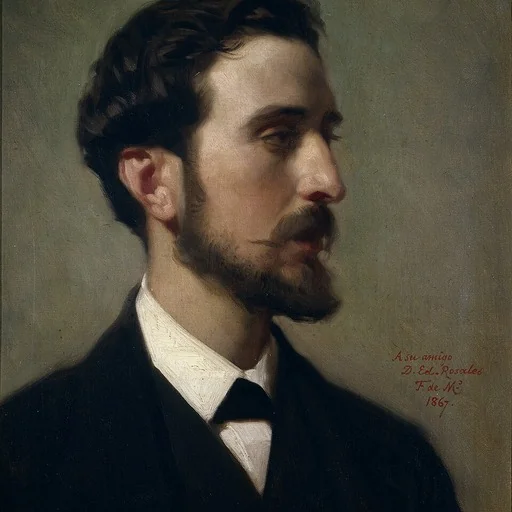
Artist
Eduardo Rosales Gallinas (4 November 1836 – 13 September 1873) was a Spanish painter. He was an adherent of the Italian-based art movement known as "Purismo" and specialized in historical scenes.

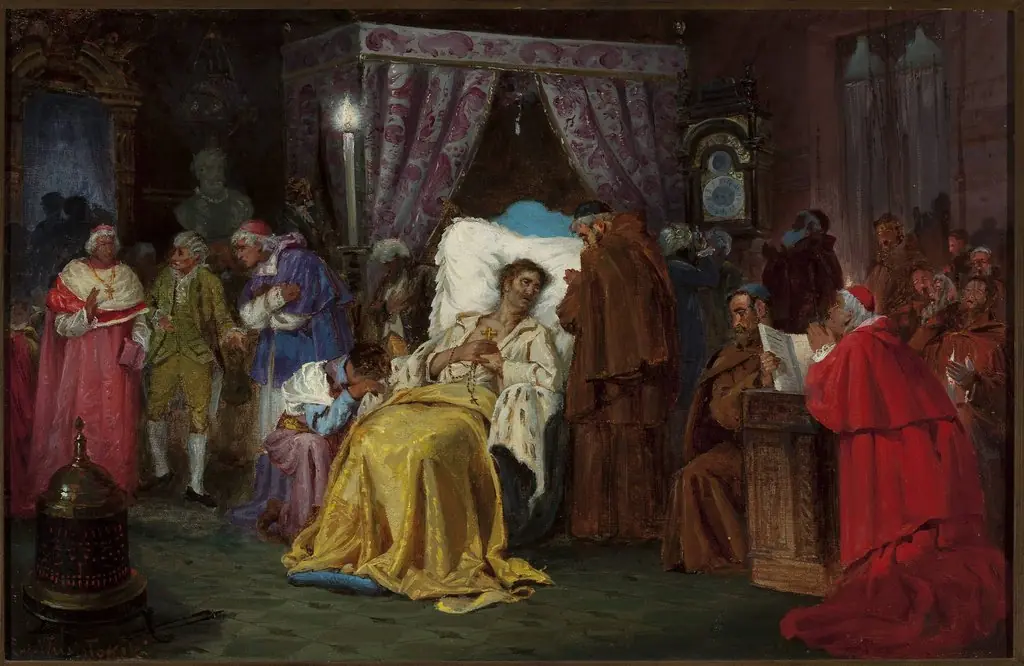
- Aleksander Sobieski on his deathbed in Rome in 1714
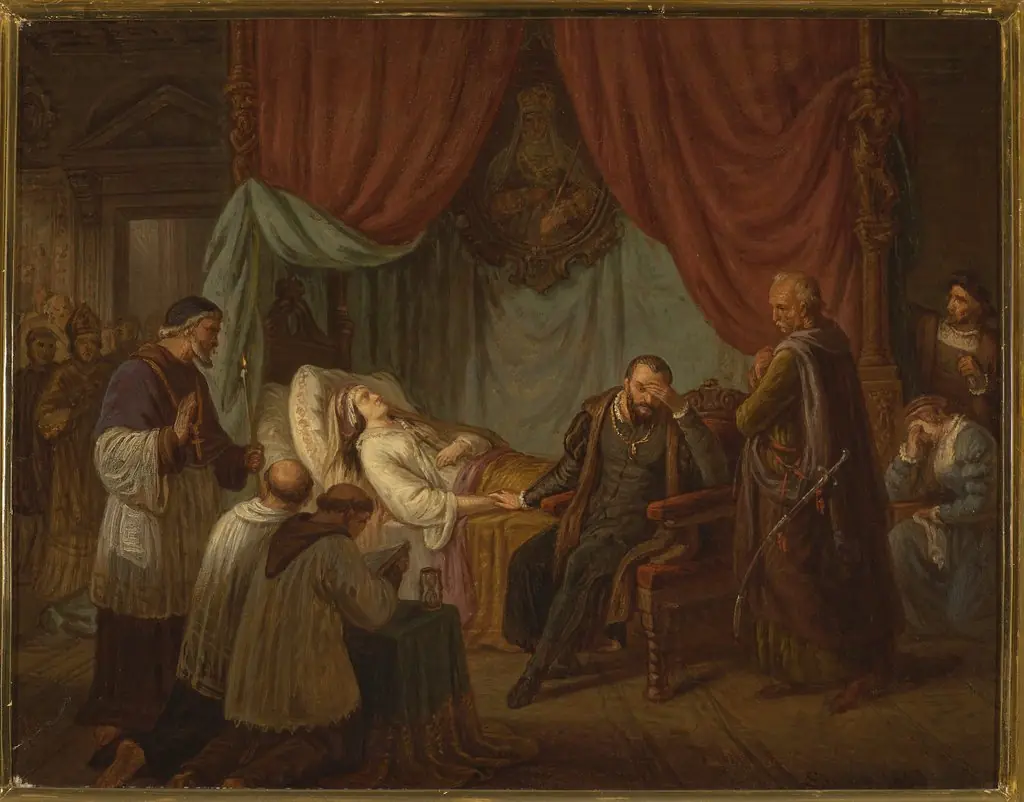 Death of Barbara Radziwiłł
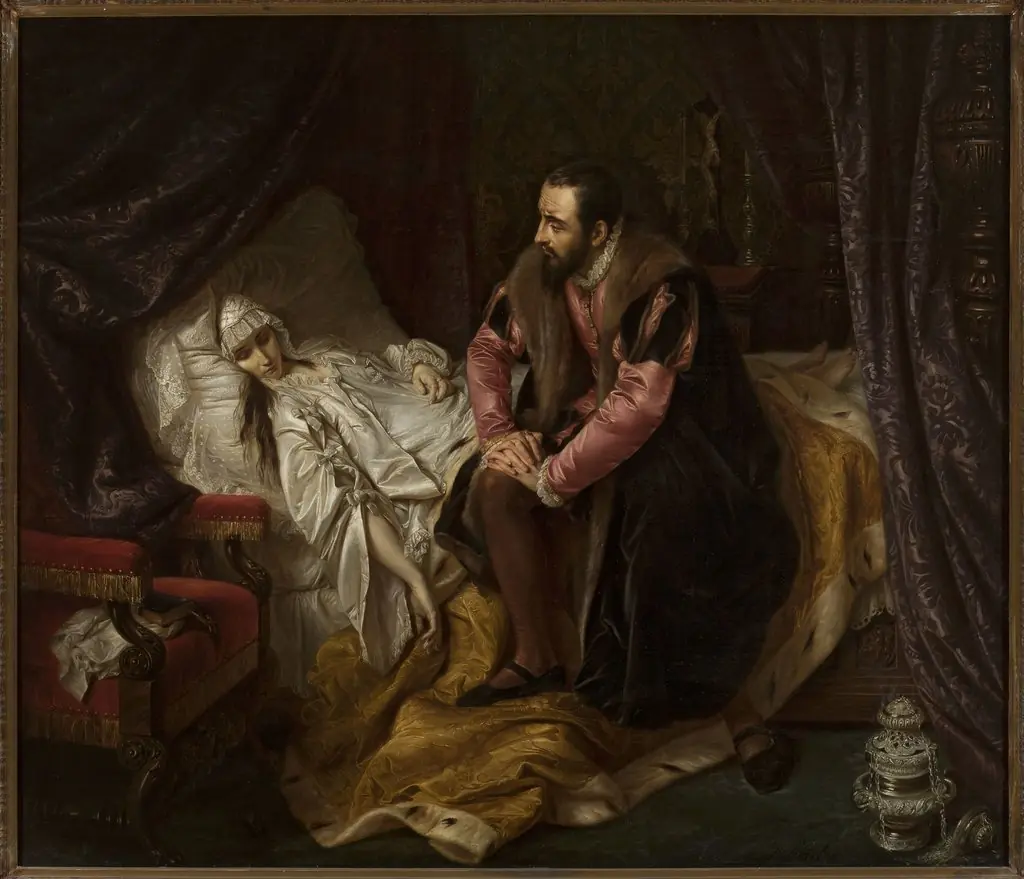 Death of Barbara Radziwiłł
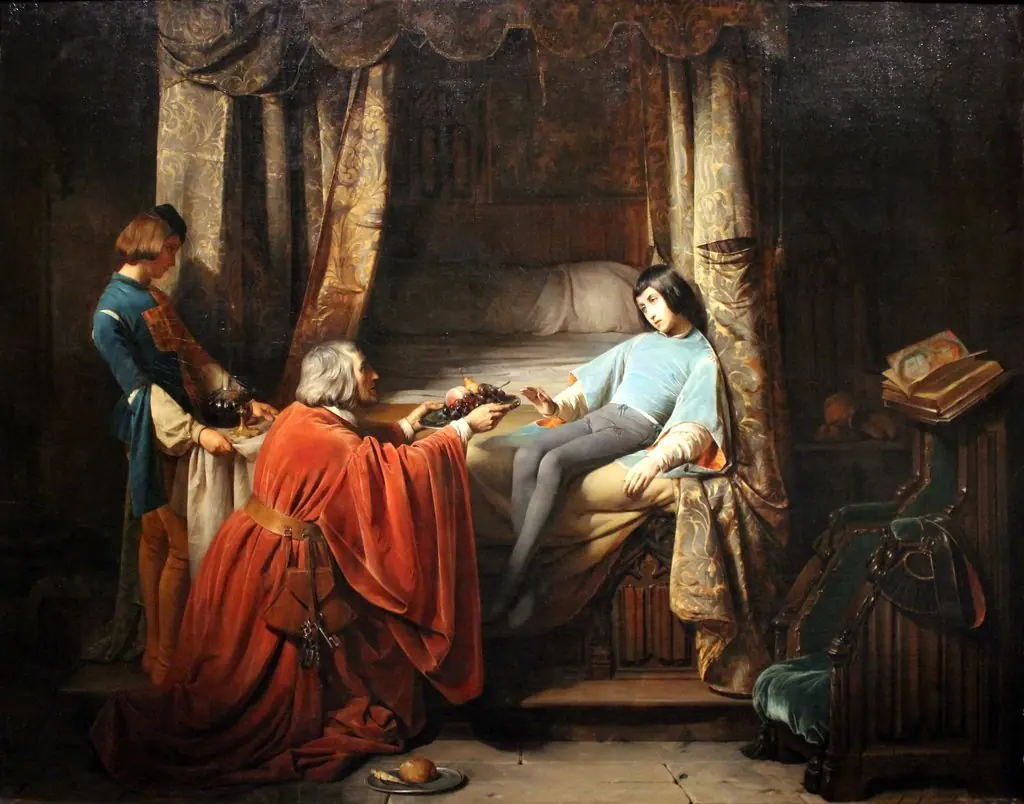 Le Jeune Gaston, dit l'ange de Foix
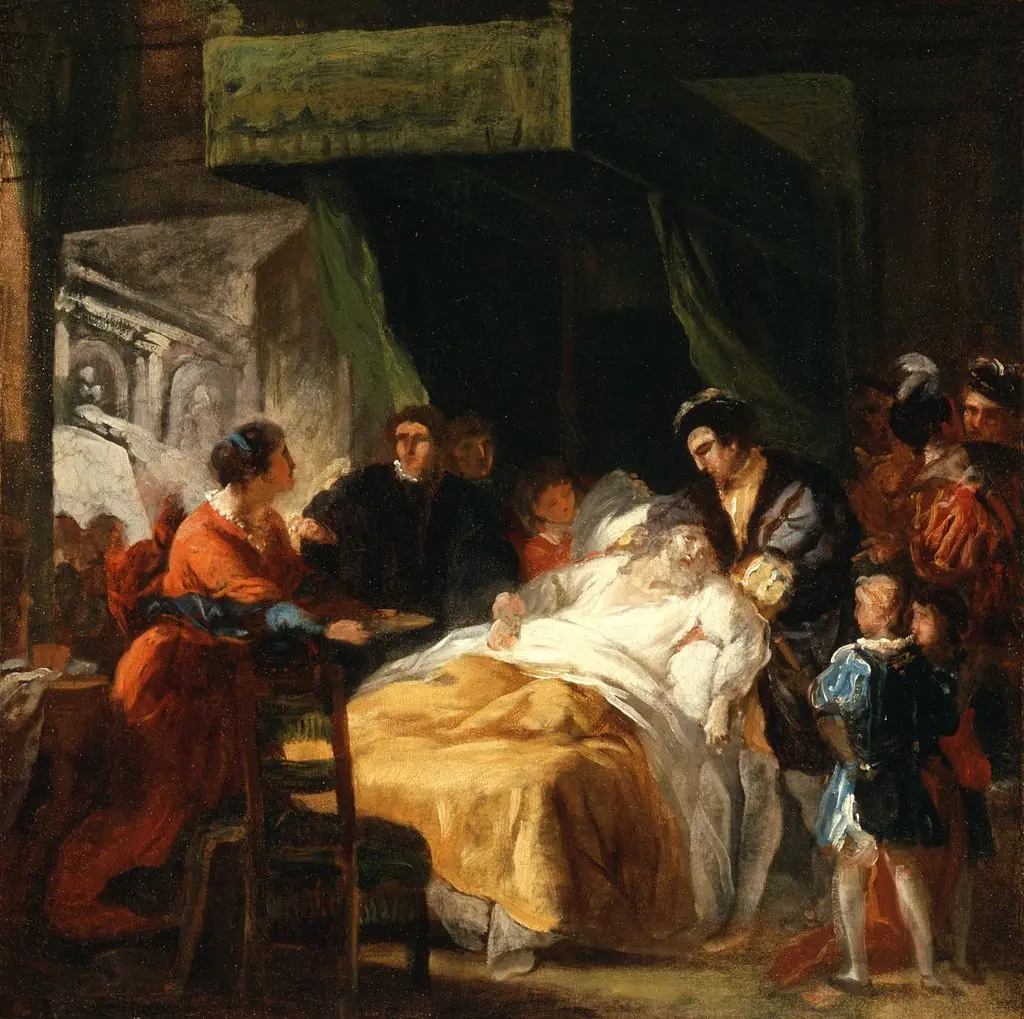 The Death of Leonardo da Vinci in the Arms of François I
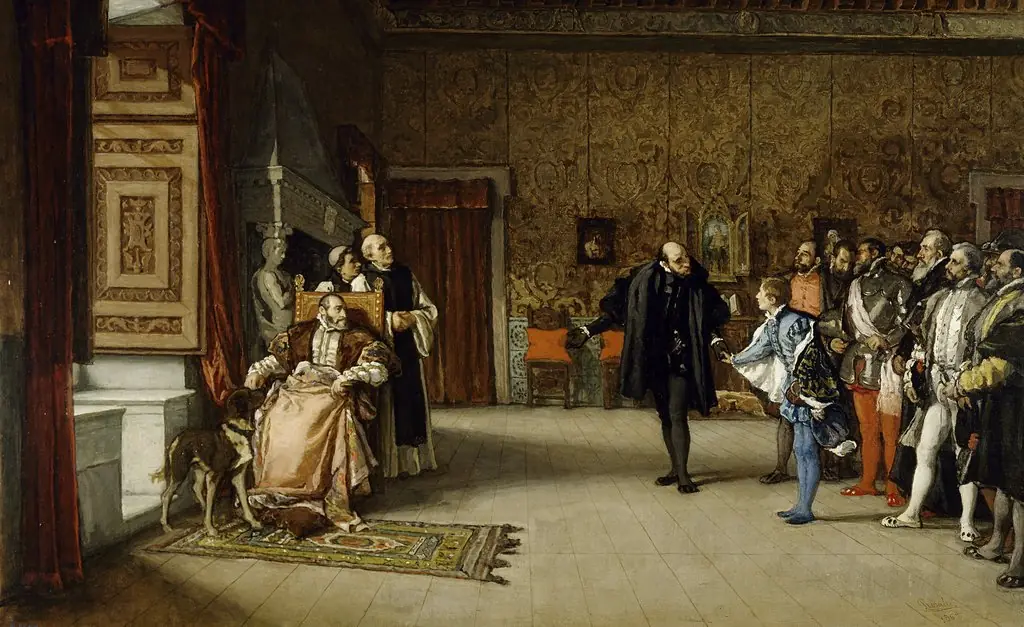
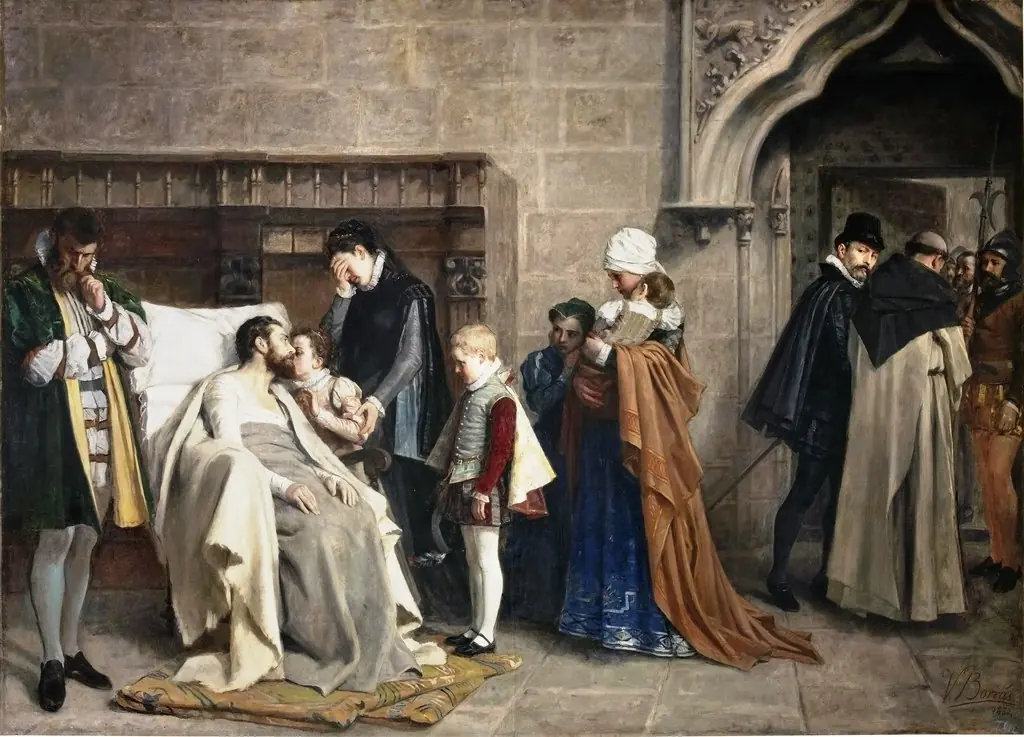 Antonio Pérez recibiendo a su familia después del tormento
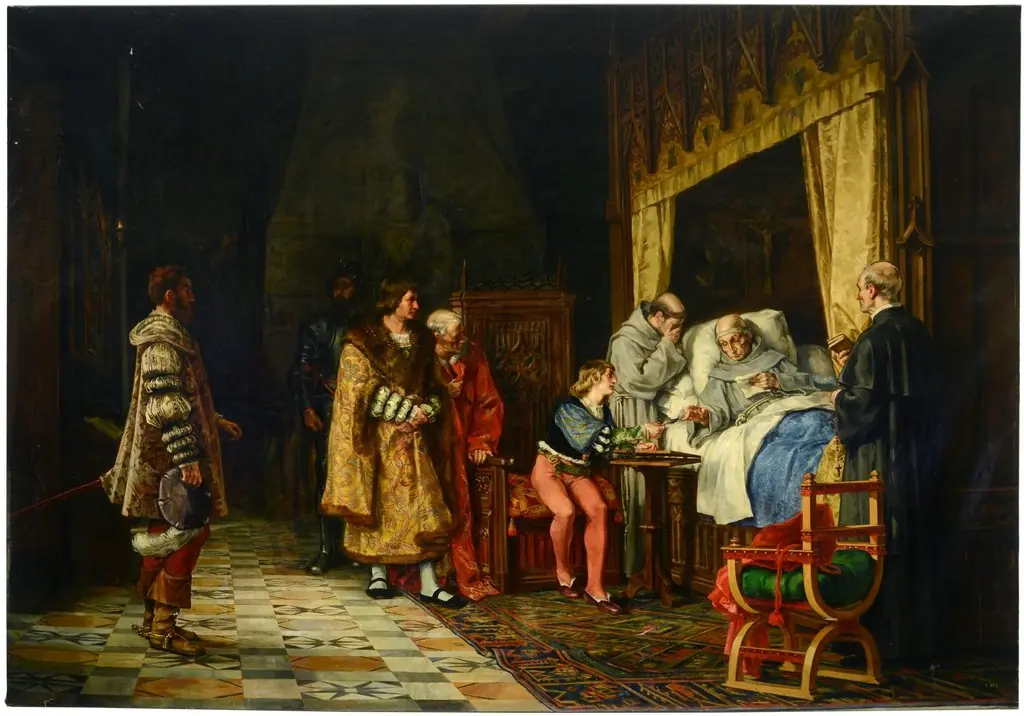 Mensaje de Carlos I al cardenal Cisneros (1517)
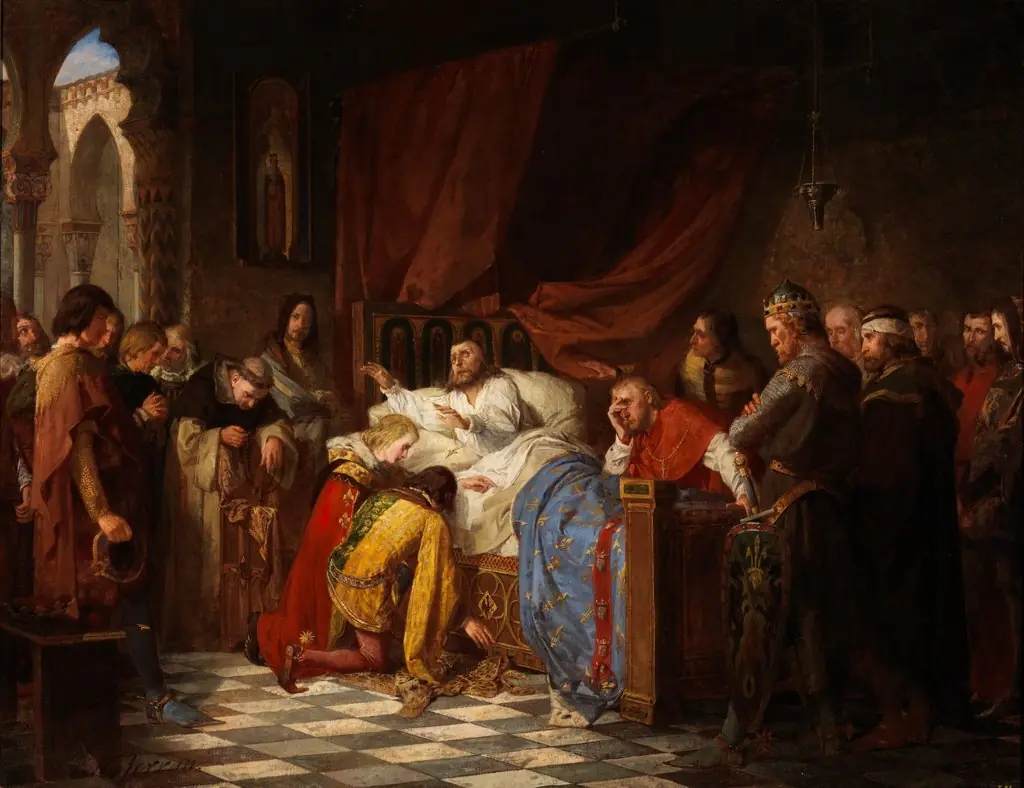 Felipe III de Francia moribundo bendiciendo a sus hijos
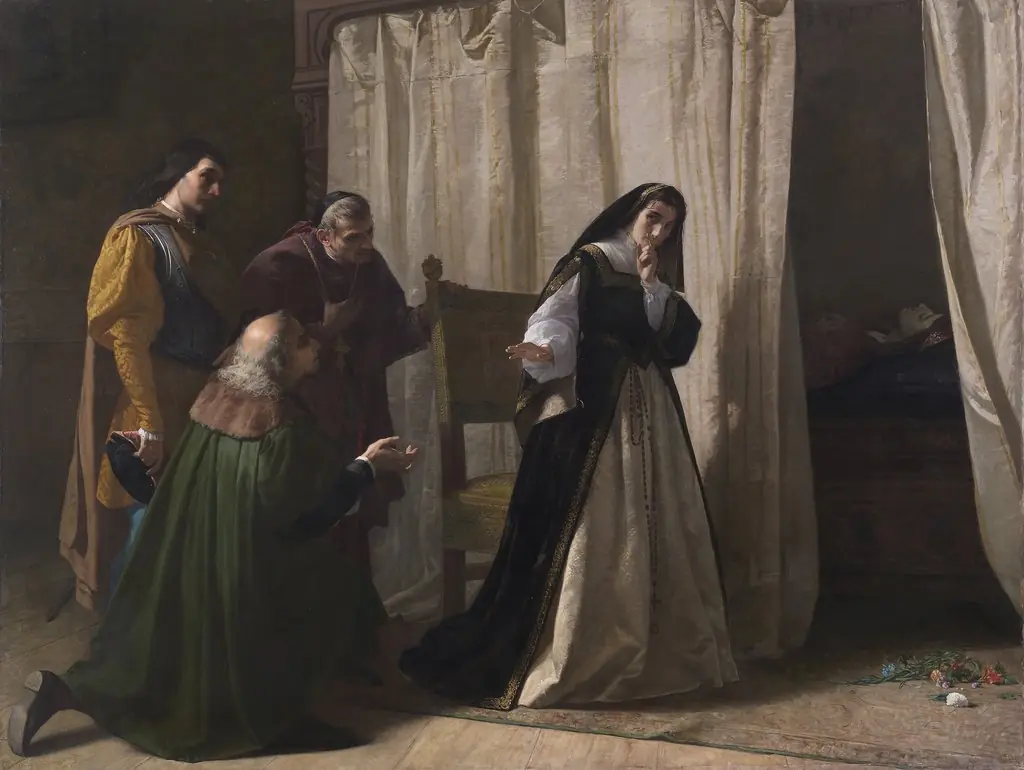 The madness of Joanna of Castile
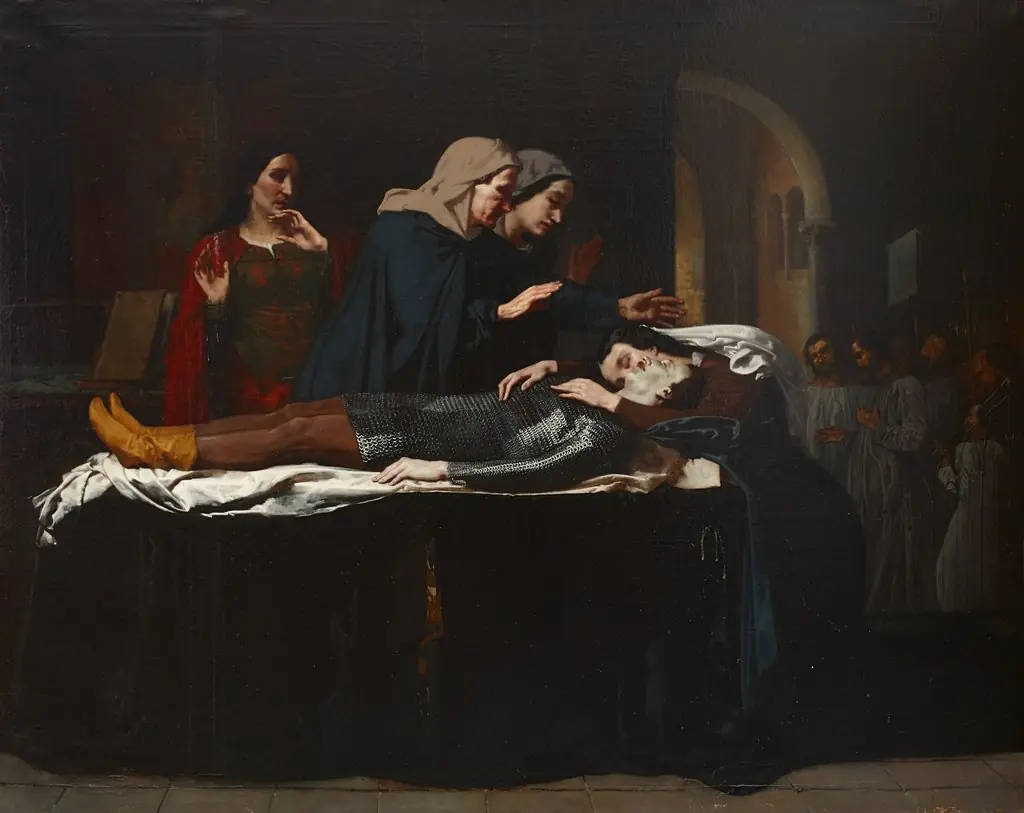 Los amantes de Teruel
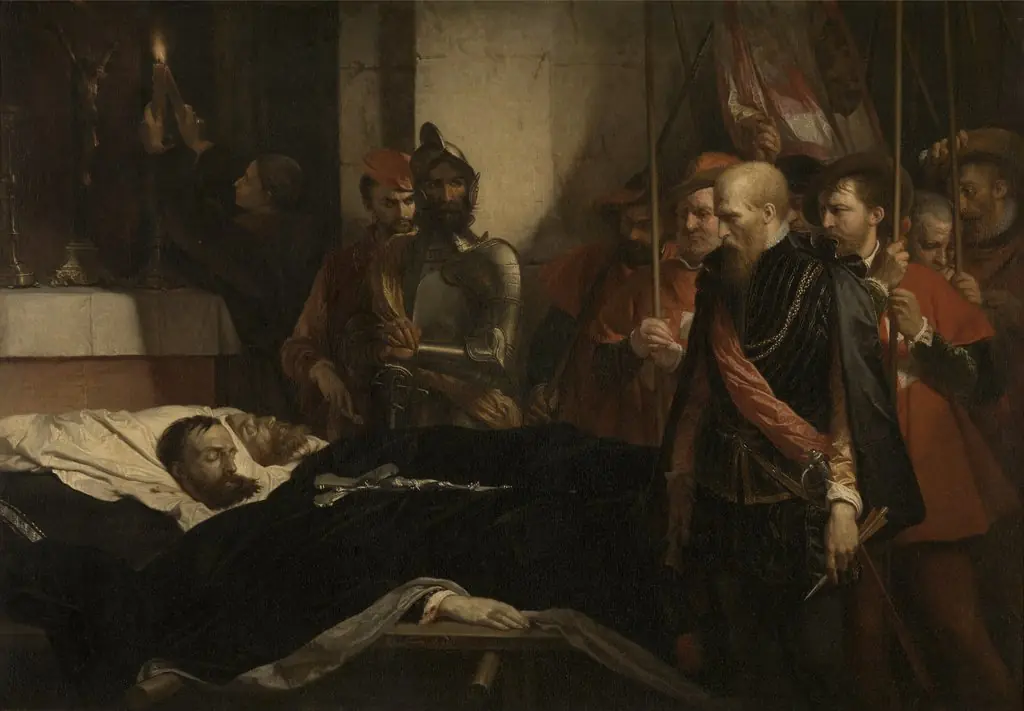 Last Tribute to the Counts of Egmont and of Horn
 Honors Rendered to Raphael on His Deathbed