Artwork
Juan de Austria's presentation to Emperor Carlos V in Yuste
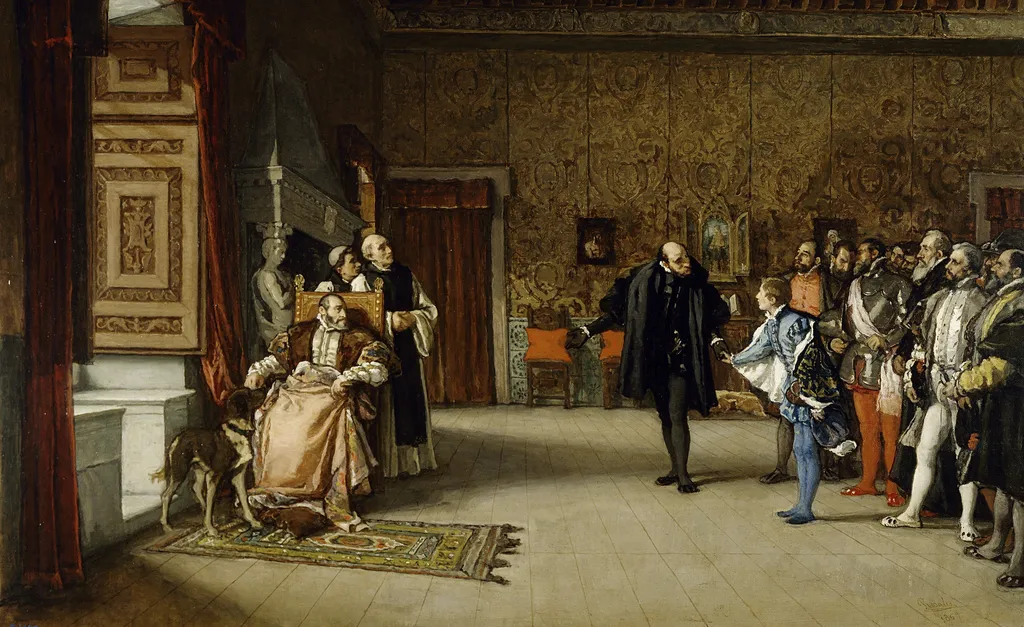
Juan de Austria's presentation to Emperor Carlos V in Yuste is an oil painting by the Realist artist Eduardo Rosales. It dates from 1869 and is held in the collection of the Museo del Prado.
About this work
Subject & Meaning
The painting depicts Emperor Charles V receiving his illegitimate son, John of Austria, in the monastery of Yuste where the emperor lived in retirement.
The painting depicts Emperor Charles V receiving his illegitimate son, John of Austria, in the monastery of Yuste where the emperor lived in retirement. John is shown presenting himself to his father, a moment that underscores their complex familial relationship and the imperial lineage. The scene symbolizes both personal reconciliation and the broader themes of power, succession, and legitimacy within the Habsburg dynasty.
Executed in 1869 by Eduardo Rosales, the work is classified as a history painting and was created as an oil on canvas measuring 76.5 cm by 123.5 cm. It is housed in the Museo del Prado in Madrid and was part of the 2014 exhibition L'invention du passé. Histoires de cœur et d'épée 1802-1850 at the Musée des beaux-arts de Lyon.
Technique & Style
The work is an oil on canvas measuring 76.5 cm in height by 123.5 cm in width, classified as a history painting. Executed by Eduardo Rosales in 1869, the relatively modest dimensions and horizontal format suit its intimate narrative subject, depicting the moment when the illegitimate Don Juan de Austria is brought before his father, Emperor Charles V, at the Monastery of Yuste. The use of oil paint on canvas is consistent with Rosales's mid-century Spanish historical style, allowing for detailed rendering of figures, textiles, and the monastic interior setting. The painting is held in the collection of the Museo del Prado in Madrid.
History & Provenance
Eduardo Rosales painted Juan de Austria's presentation to Emperor Carlos V in Yuste in 1869 as an oil on canvas work measuring 76.5 cm by 123.5 cm. The painting entered the collection of the Museo del Prado in Madrid shortly after its creation and has remained there since. It was displayed in the 2014 exhibition L'invention du passé. Histoires de cœur et d'épée en Europe, 1802-1850 at the Musée des beaux-arts de Lyon, where it was loaned from the Prado.
The painting is held in the Museo del Prado in Madrid. Its inventory number is P00968. It was exhibited in the 2014 exhibition L'invention du passé. Histoires de cœur et d'épée en Europe, 1802-1850 at the Musée des beaux-arts de Lyon.
Context
Eduardo Rosales painted Juan de Austria's presentation to Emperor Carlos V in Yuste in 1869, an oil on canvas history painting measuring 76.5 cm by 123.5 cm. The work depicts John of Austria, the natural son of Emperor Charles V, receiving instruction from his father in his retreat at the Monastery of Yuste. It is part of the Museo del Prado's collection in Madrid and was exhibited in L'invention du passé. Histoires de cœur et d'épée en Europe, 1802-1850.
The painting was loaned to the Musée des beaux-arts de Lyon for this exhibition in 2014. Rosales' focus on Spanish Habsburg lineage reflects 19th-century academic interest in historical legitimacy and national identity. His broader oeuvre, characterized by rigorous draftsmanship and dramatic chiaroscuro, helped define Spanish academic painting in the post-Thyssen era.
Contemporary scholarship situates this work within the genre of history painting that reinforced monarchical narratives through meticulously researched scenes. Art historians note its technical precision and thematic alignment with 19th-century European royal iconography. The painting's composition draws on classical models while emphasizing emotional restraint characteristic of Spanish court portraiture.
Its provenance at the Museo del Prado since acquisition underscores institutional commitment to preserving Spain's Habsburg-era visual heritage.
Overview
Created in 1869 by Spanish painter Eduardo Rosales, this oil on canvas presents a historical tableau of the meeting between Emperor Charles V and his son, John of Austria, at the Monastery of Yuste. The composition belongs to the genre of history painting and is part of the Prado Museum’s collection.
Own this work as a print
Artist & collection
Artist
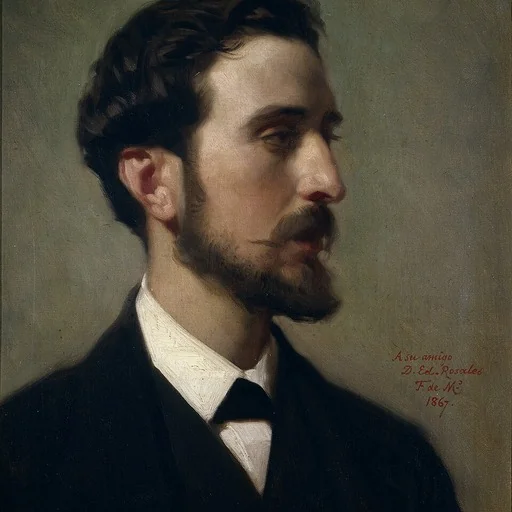
Eduardo Rosales Gallinas (4 November 1836 – 13 September 1873) was a Spanish painter. He was an adherent of the Italian-based art movement known as "Purismo" and specialized in historical scenes.

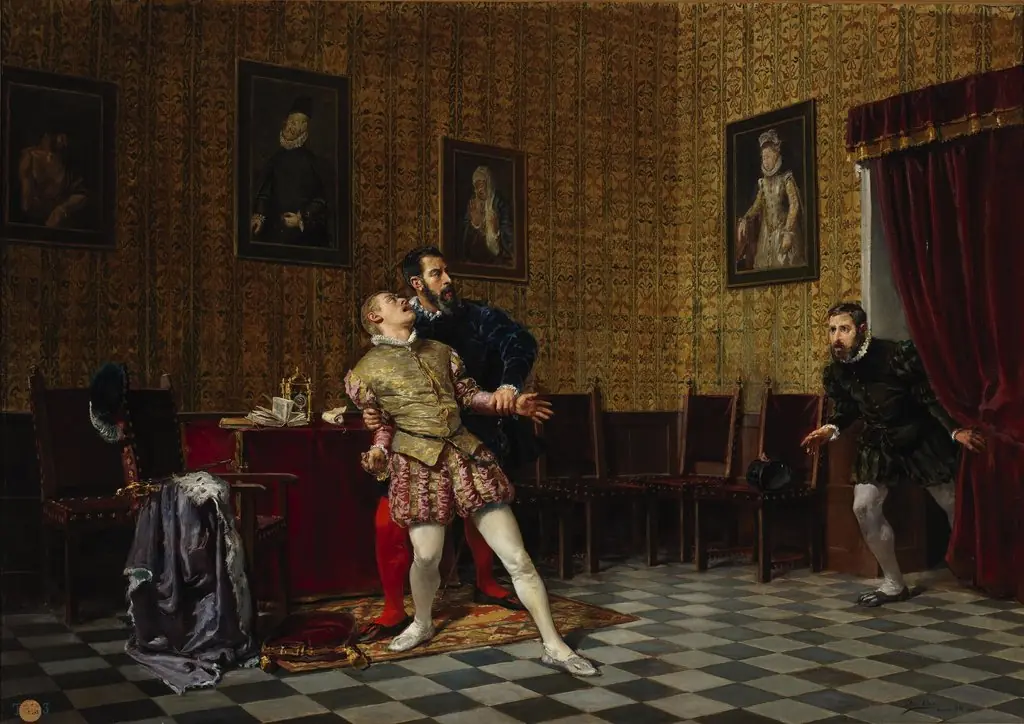 Prince Don Carlos and the Duke of Alba
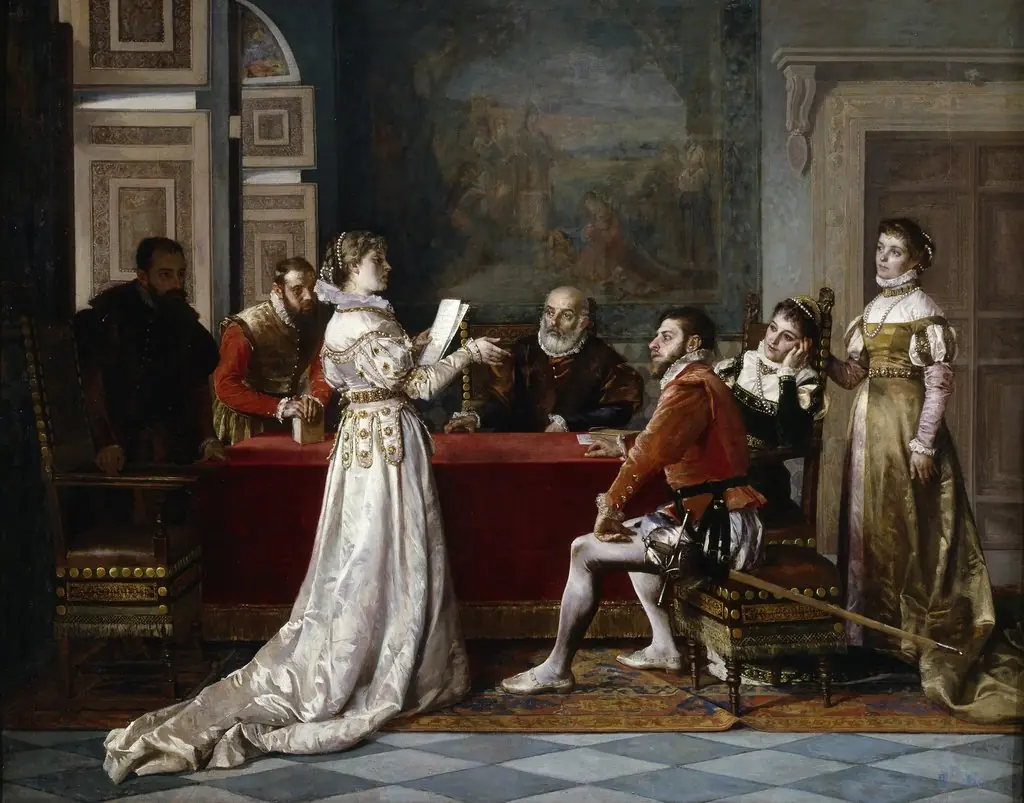 La poetisa
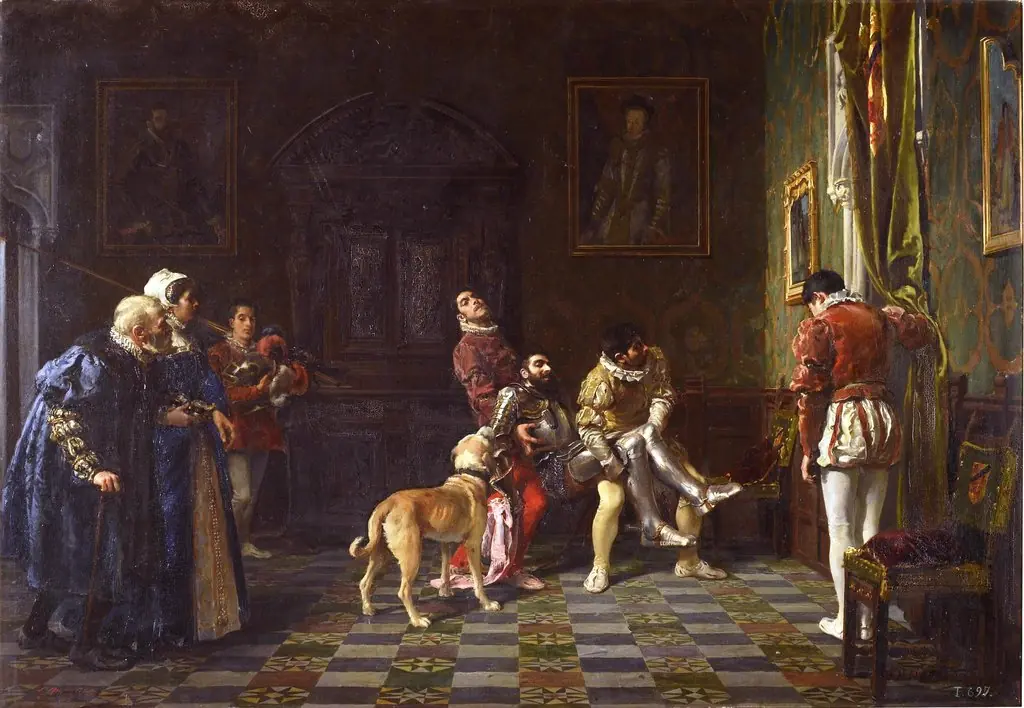 La vuelta del torneo
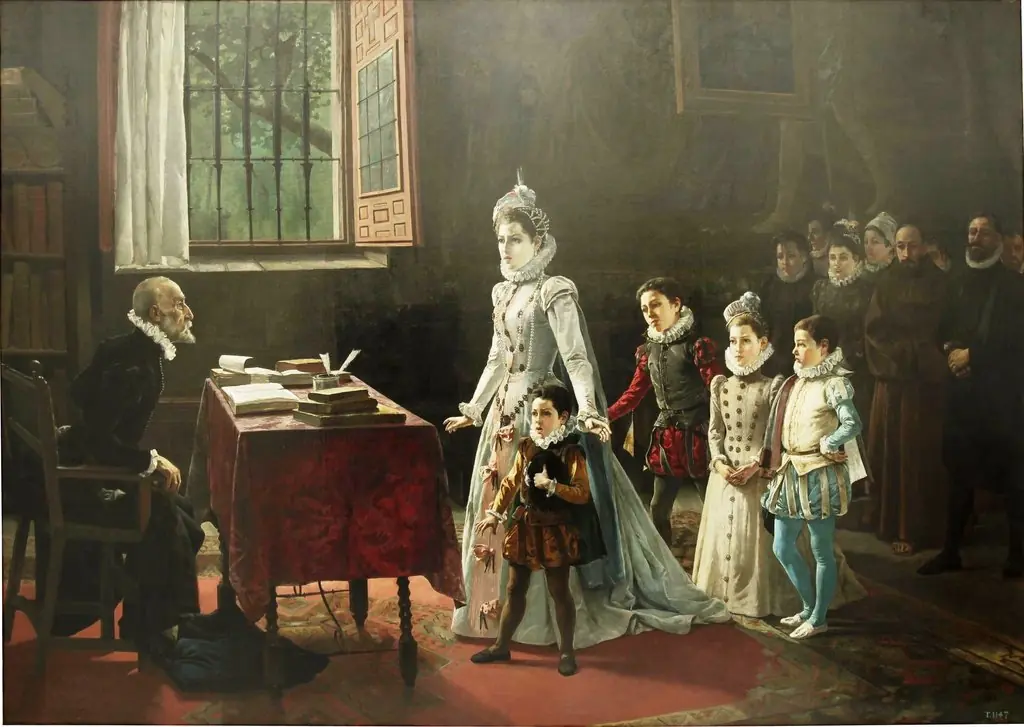 Los hijos de Antonio Pérez ante Rodrigo Vázquez
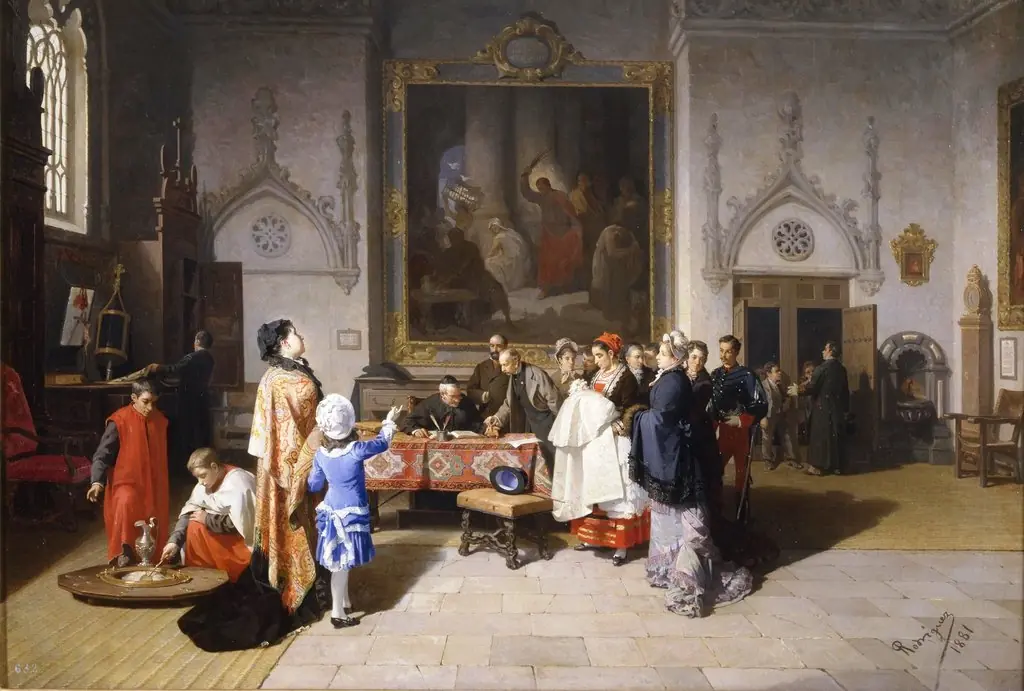 En la sacristía. ¿Mamá por qué pega Jesús a ese hombre?
 Columbus Before the Queen
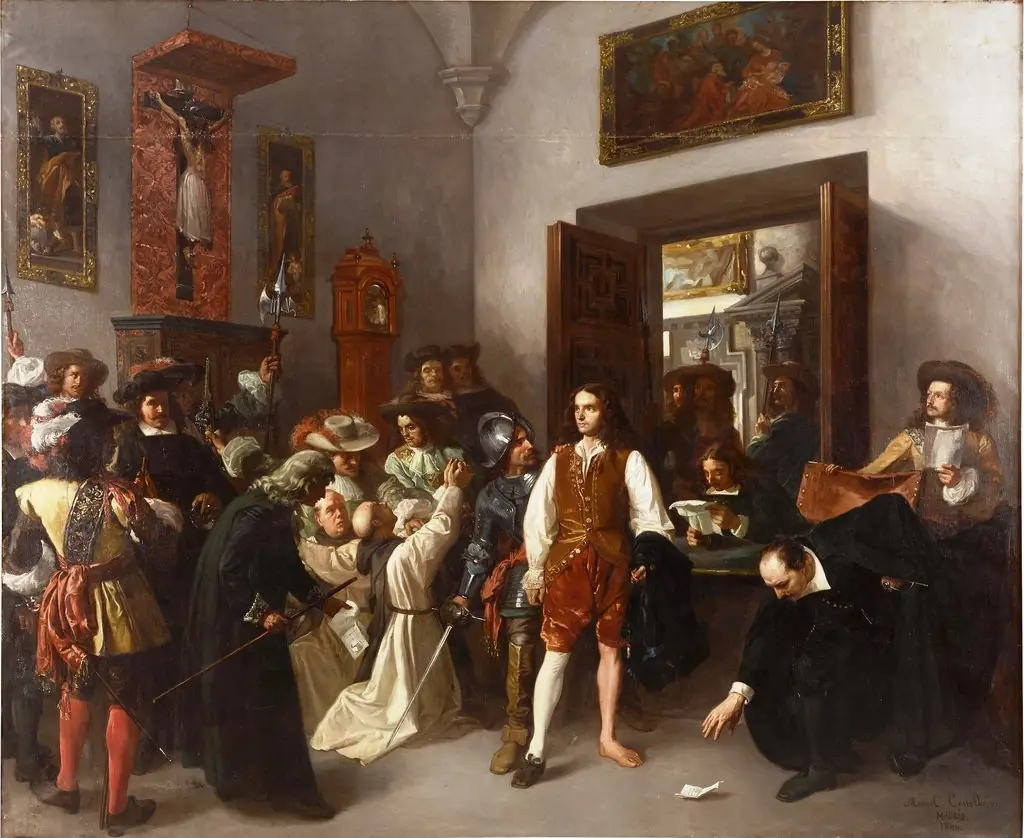 Prisión de don Fernando de Valenzuela
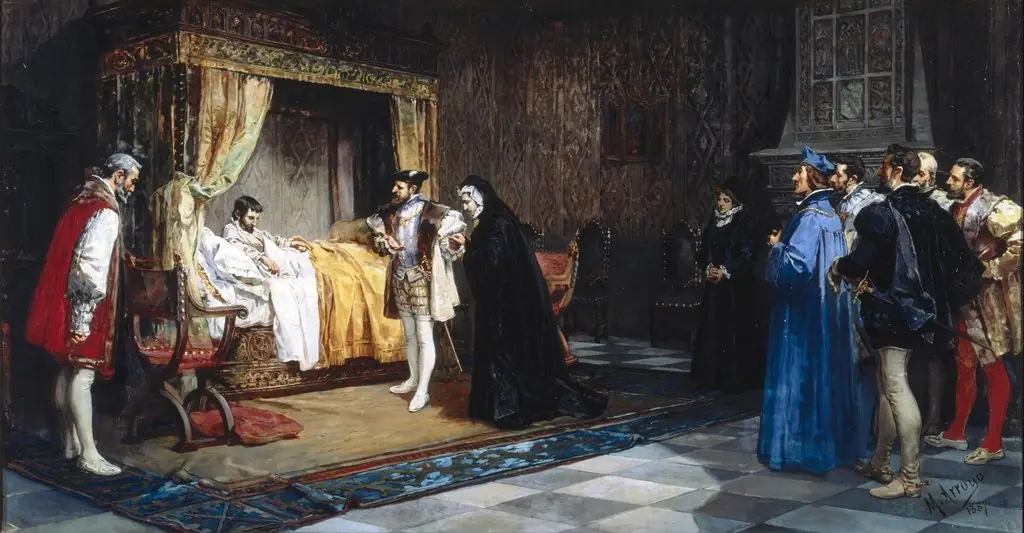 La duquesa de Alençon presentada a su hermano el rey de Francia Francisco I por el emperador Carlos V
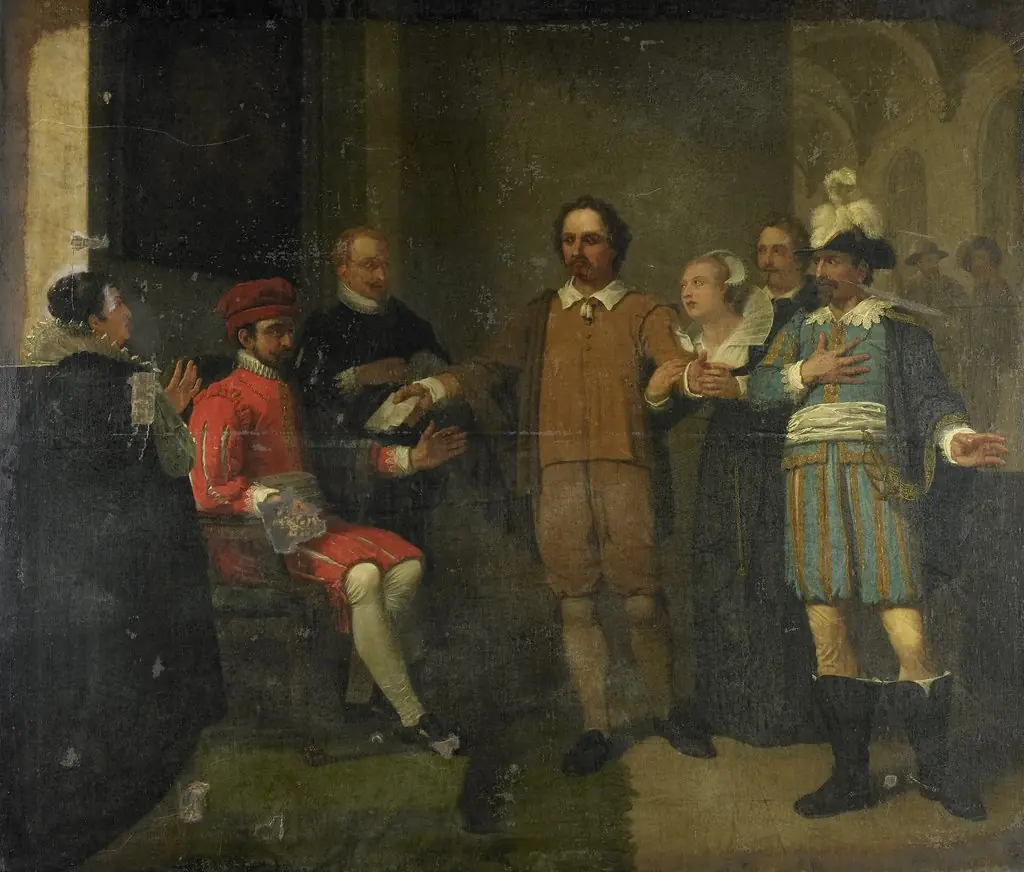 Jacob Simonsz de Rijk Secures from Spanish Governor-General Requesens the Release of Marnix van Sint Aldegonde
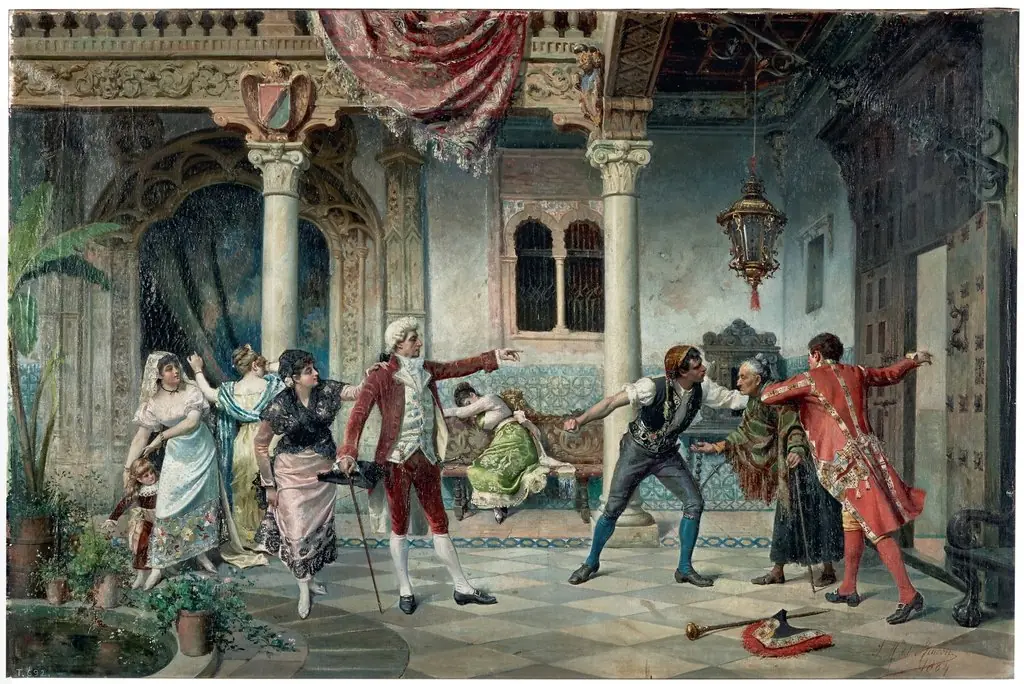 ¡Pobre bruja!
 Sale of jewels
- Charles V at Yuste