Artwork
Square in front of the Palace in an Italian Town
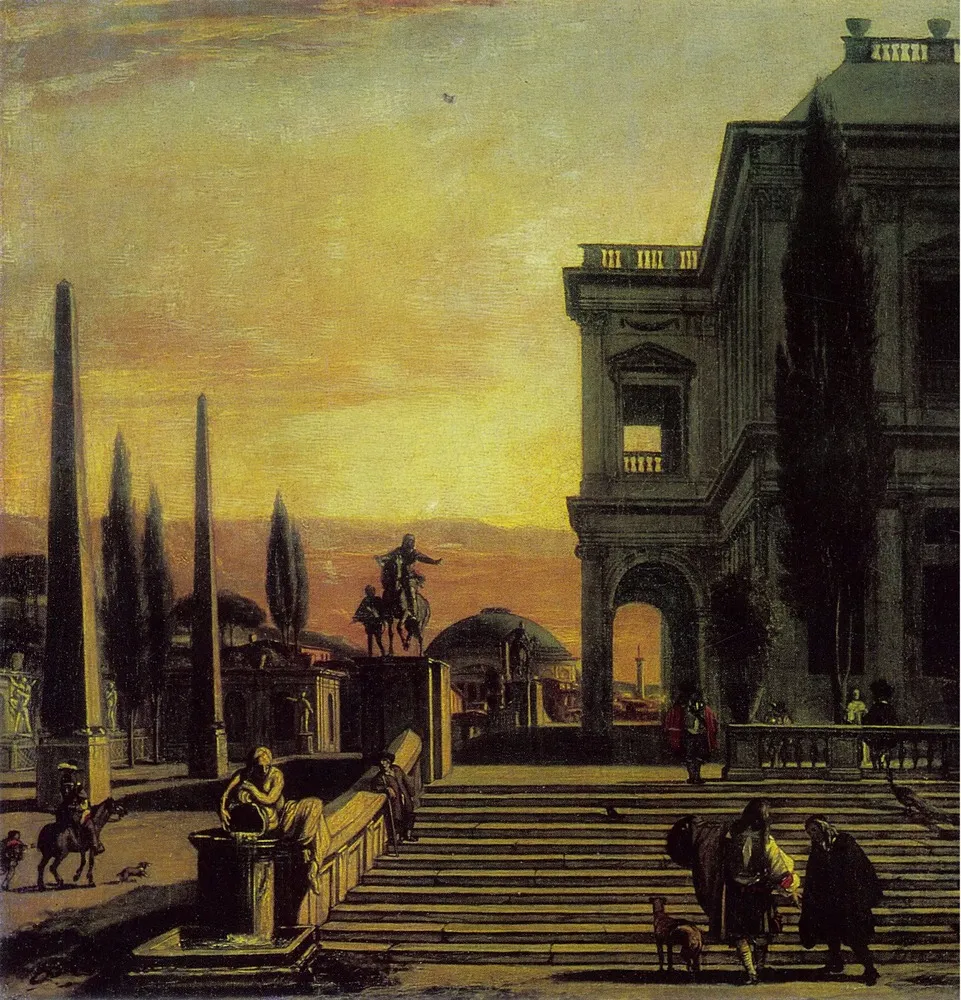
Square in front of the Palace in an Italian Town is an oil painting by the Dutch Golden Age artist Emanuel de Witte. It dates from 1664 and is held in the collection of the Hermitage Museum.
About this work
Subject & Meaning
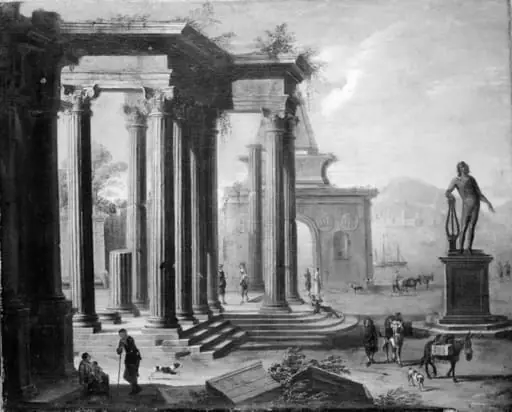
The painting shows a public square with a prominent palace façade and a set of grand staircase steps leading up to it.
The painting shows a public square with a prominent palace façade and a set of grand staircase steps leading up to it. This urban setting functions as a civic stage where everyday activity unfolds before an imposing governmental building, symbolizing the relationship between municipal authority and public life in 17th‑century Italian urban planning. The composition emphasizes architectural order and the presence of authority through its formal perspective and the inclusion of figures engaged in routine transactions, suggesting themes of commerce, social interaction, and the state’s role in governing public space.
Technique & Style
The work is executed in oil paint on canvas, a standard support for Dutch cityscapes of the period. Its square format, with both height and width measuring 66.5 cm, gives the composition a balanced, frontal orientation suited to the depiction of a palace square with stairs.
Stylistically, the painting belongs to the cityscape genre, presenting an architectural view of a palatial setting. The medium and handling are consistent with Emanuel de Witte's known practice as a painter of interiors and urban spaces, though the specific brushwork and palette are not detailed in the available records.
History & Provenance
Painted by Emanuel de Witte in 1664, Square in front of the Palace in an Italian Town is an oil-on-canvas cityscape produced in the Netherlands. The work entered the Hermitage Museum as part of the Pyotr Semyonov‑Tyan‑Shansky collection, indicating that it was owned by the Russian geographer and collector before joining the museum’s holdings. No specific commission or earlier provenance is documented in the available sources. The painting measures 66.5 cm by 66.5 cm.
Overview
Emanuel de Witte’s 1664 oil painting, titled Square in front of the Palace in an Italian Town, presents a broad, sparsely populated plaza dominated by a tall edifice with a flight of steps. The composition includes two slender obelisks, a rider‑on‑horse statue on a pedestal, and a few figures moving about, all set beneath a warm, yellow‑tinged sky.
Context
Although de Witte is best known for Dutch interior scenes, this work demonstrates his capacity to render open urban spaces. The imagined Italian setting aligns with the 17th‑century fascination among Northern artists with Mediterranean architecture, serving both as a study of perspective and as an exotic visual itinerary for his patrons.
Artist & collection
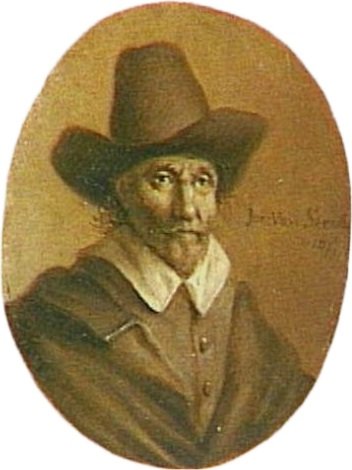
Artist
Emanuel de Witte (1617–1692) was a Dutch perspective painter. In contrast to Pieter Jansz Saenredam, who emphasized architectural accuracy, De Witte was more concerned with the atmosphere of his interiors. Though few in…

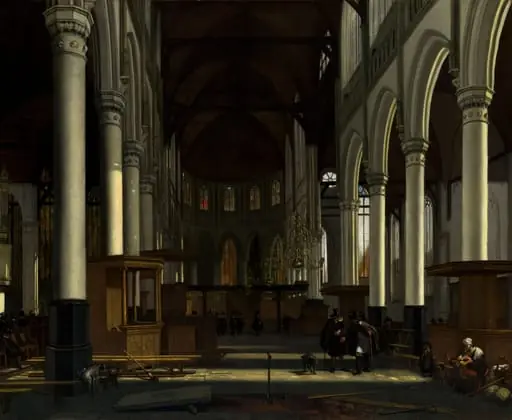 The Interior of the Oude Kerk, Amsterdam
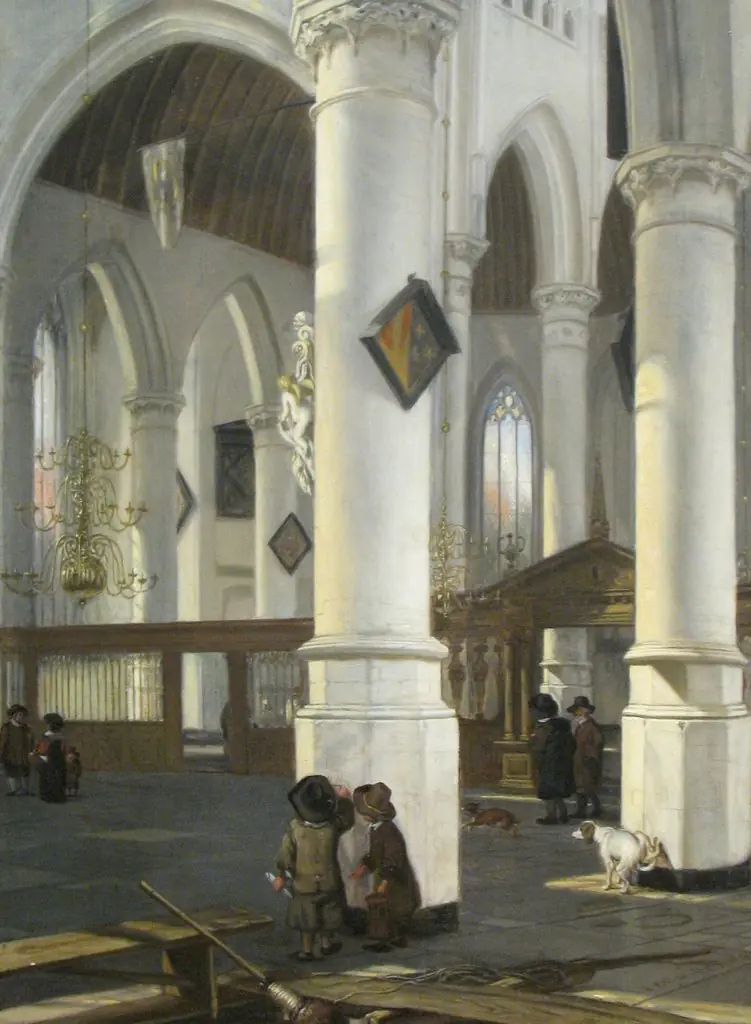 Interior of the Oude Kerk, Delft
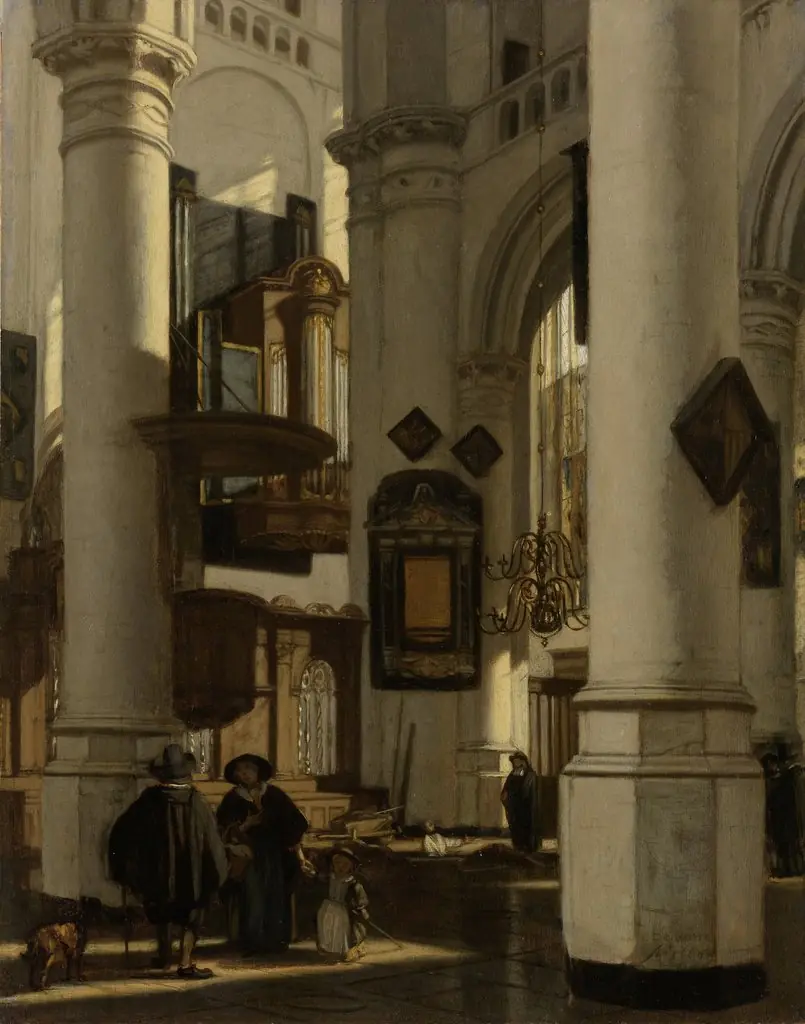 Interior of a Protestant, Gothic Church, with a Gravedigger in the Choir
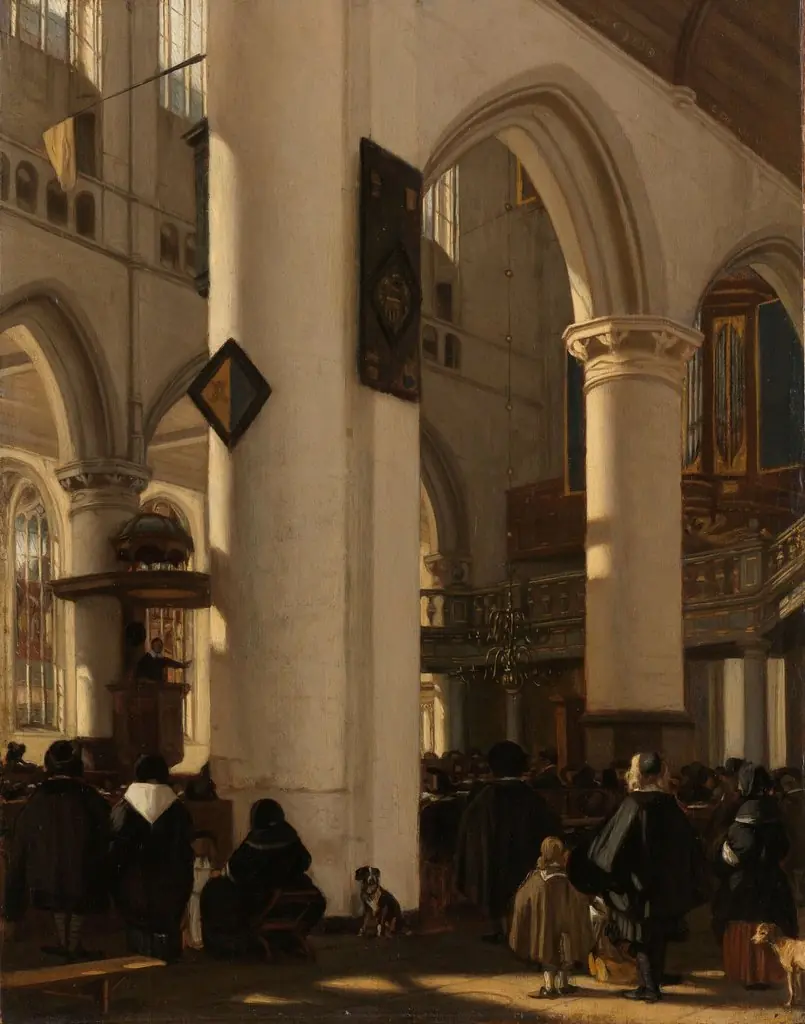 Interior of a Protestant, Gothic Church during a Service
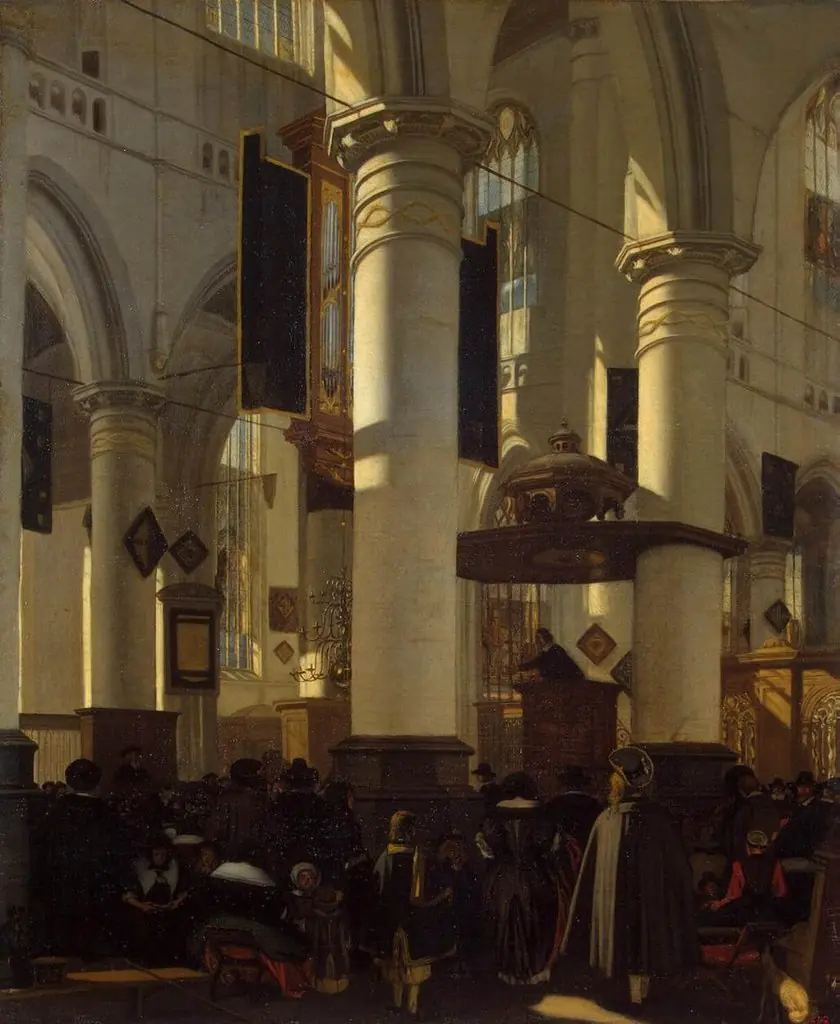 Interior of a Church
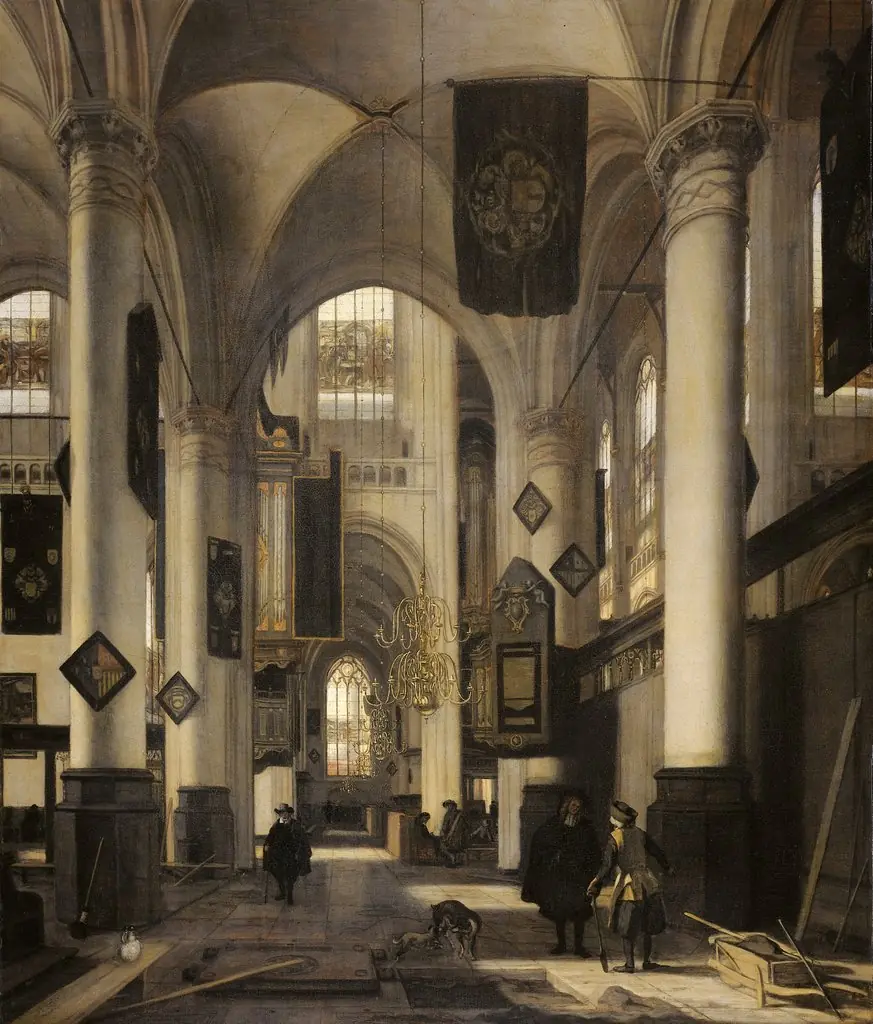 Interior of a Protestant Gothic Church
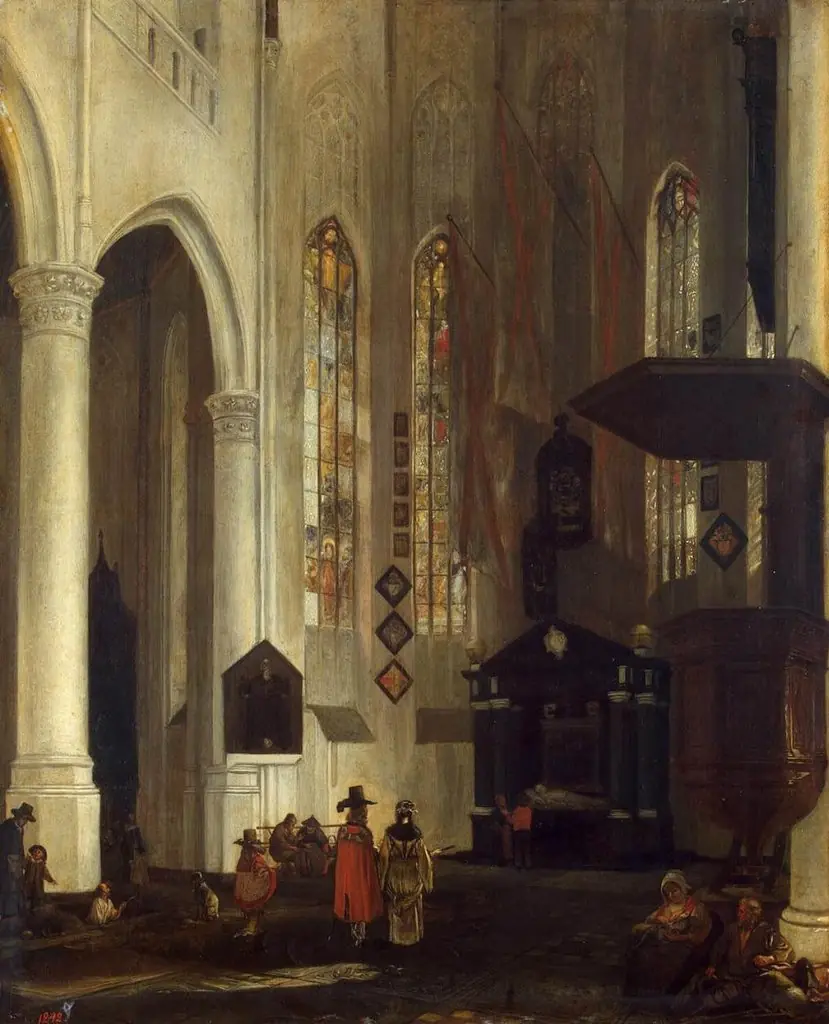 Old Church (Oudekerk) in Delft with the Tomb of Admiral Pieter Pieterszoon Hein (Heyn)
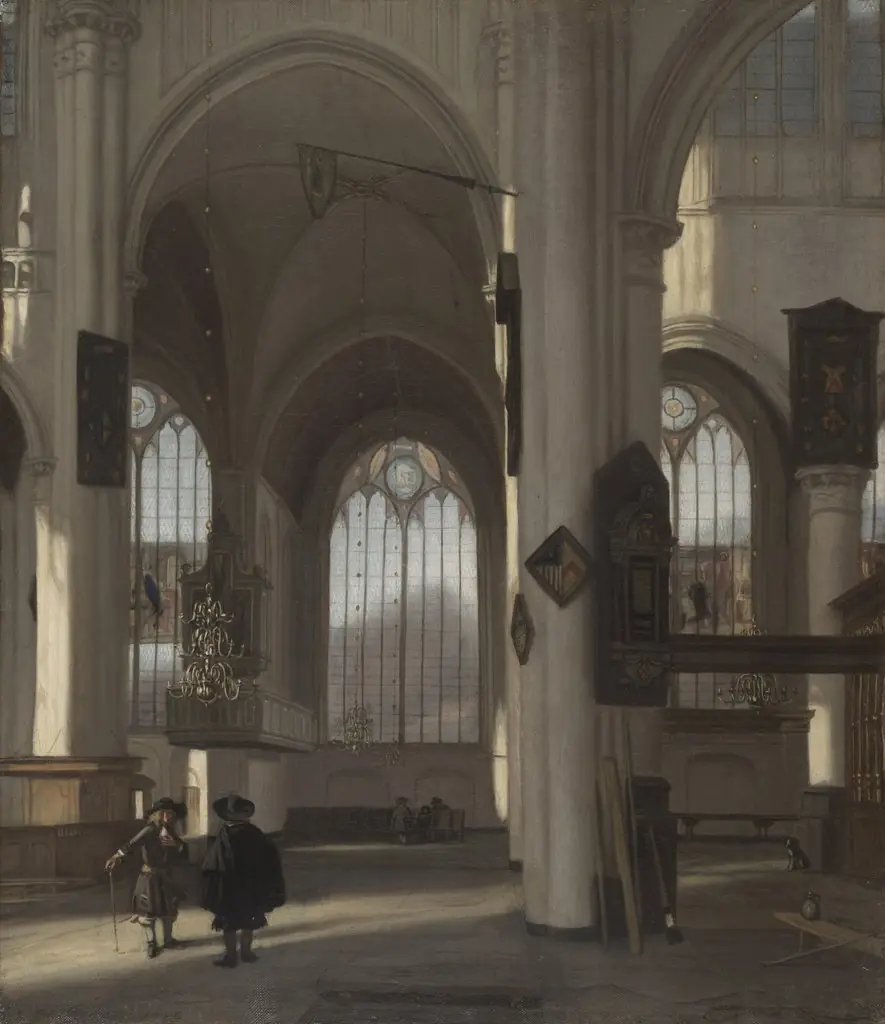 Interior of a Church