Artwork
Waterloo Bridge, sun and rain
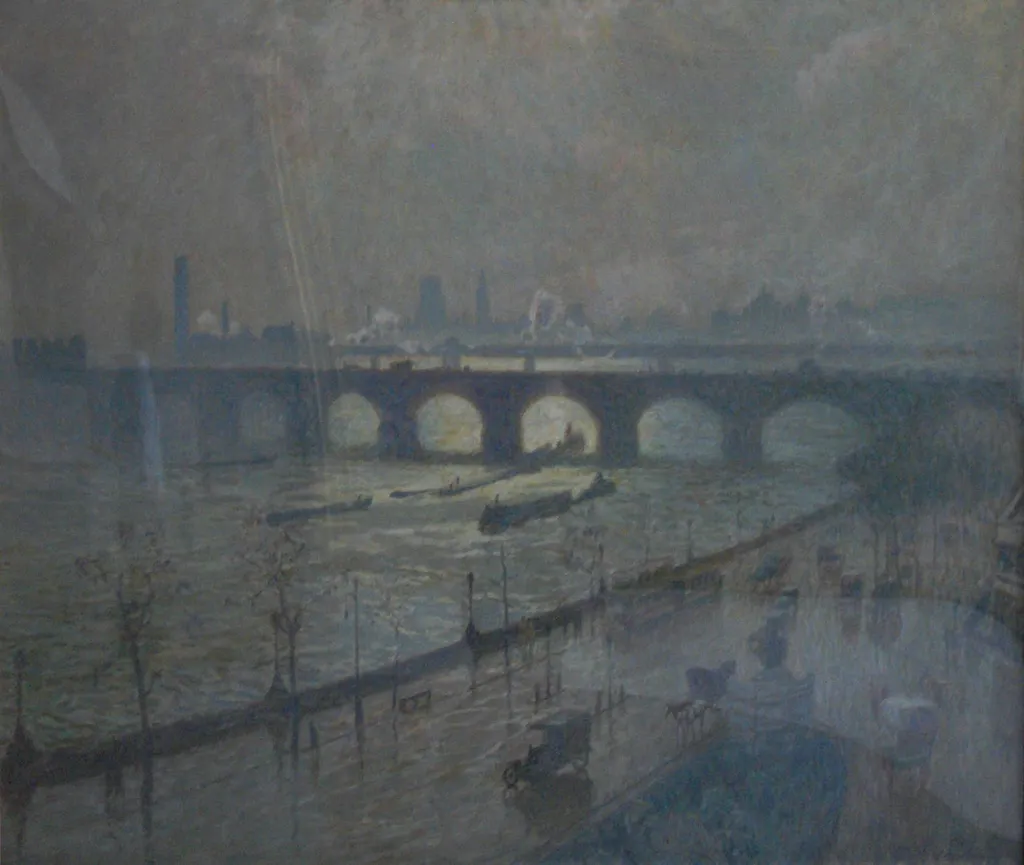
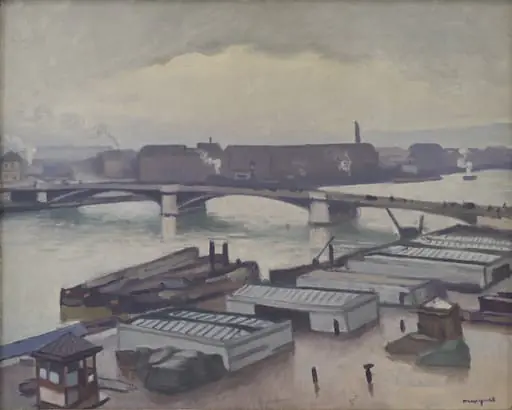
Waterloo Bridge, sun and rain is an oil painting by the Impressionist artist Emile Claus. It dates from 1916 and is held in the collection of the Royal Museums of Fine Arts of Belgium.
About this work
Subject & Meaning
The painting depicts Waterloo Bridge spanning the River Thames in London, rendered during a moment of simultaneous sun and rain.
The painting depicts Waterloo Bridge spanning the River Thames in London, rendered during a moment of simultaneous sun and rain. The composition captures the bridge as a setting for modern urban traffic, with cars, horse-drawn wagons, and trams crossing its span, while tugs and lighters navigate the river below.
The juxtaposition of sunlight and rainfall is central to the work's meaning, embodying the atmospheric conditions that gave Belgian luminist Emile Claus his signature subject. By framing a familiar London landmark through this fleeting meteorological effect, Claus transforms an ordinary scene of commerce and transport into a study of light, weather, and the poetry of the modern city.
Technique & Style
Executed in 1916, this work is an oil painting on canvas measuring 102 by 127 centimeters. The composition captures a dynamic urban scene featuring Waterloo Bridge and the River Thames, populated by diverse modes of transport including cars, horse-drawn wagons, trams, tugs, and lighters. The artist employs the fluidity of oil paint to render the atmospheric interplay of sun and rain over the waterway and bridge structure.
History & Provenance
Emile Claus painted Waterloo Bridge, sun and rain in 1916, creating an oil on canvas work measuring 102 cm by 127 cm. The painting entered the collection of the Royal Museums of Fine Arts of Belgium, where it remains on display.
Waterloo Bridge, sun and rain is held in the collection of the Royal Museums of Fine Arts of Belgium in Brussels. The work, created in 1916, is an oil painting on canvas measuring 102 cm in height and 127 cm in width. While the piece is part of the museum's permanent holdings, the available records do not list specific inventory numbers or detail its exhibition history.
Context
Painted by Emile Claus in 1916, Waterloo Bridge, sun and rain exemplifies Impressionist-inflected landscapes capturing fleeting atmospheric effects on the Thames near London. Claus, a key figure in Belgian Tonalism, often depicted industrial river scenes with a focus on light and weather, situating this work within his exploration of modernity and national identity. The painting entered the collection of the Royal Museums of Fine Arts of Belgium, reflecting its recognized significance in early 20th-century European art.
Scholarship highlights the work's nuanced portrayal of urban infrastructure intertwined with natural light, where elements like steamboats and horse-drawn wagons underscore themes of progress and transience. Its inclusion in major exhibitions of Belgian Impressionism has cemented its role in reassessing Claus's contribution to the movement beyond national borders.
The painting's placement in art history underscores its dialogue with contemporary French Impressionism while asserting a distinct Belgian perspective on industrial landscapes, influencing later artists who engaged with urbanization and environmental change.
Overview
Emile Claus’s 1916 oil painting, titled Waterloo Bridge, sun and rain, captures a rainy scene over London’s Thames. The canvas presents the iconic five‑arched bridge, its stonework glistening with moisture, while a lone automobile crosses the span. The composition is held by the Royal Museums of Fine Arts of Belgium, where it forms part of their early‑20th‑century European collection.
Own this work as a print
Artist & collection

Museum
Royal Museums of Fine Arts of Belgium
Continue through works from the same source collection.