
Movement
Tonalism
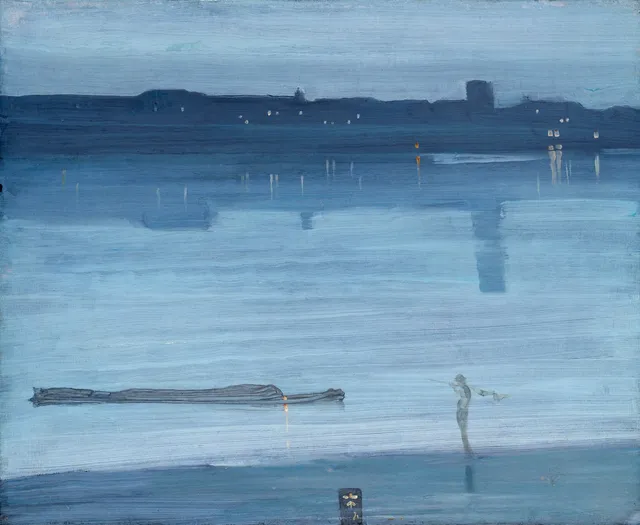
Tonalism is an art movement of the 1880–1915 period. The gallery holds 2 works in this movement, including works by William Keith, James McNeill Whistler and Dwight William Tryon. Browse Tonalism paintings, portraits, pictures and artworks from the world's public-domain museum collections.
Tonalism was a style of American landscape painting that flourished from roughly 1880 to 1920, defined by evocative atmospheric effects, an intimate scale, and a deliberately narrow palette of soft, often dark colors. It emerged in the 1870s as several currents converged: the example of the French Barbizon school, the spiritual landscapes of George Inness, the Aesthetic Movement and Japanese woodblock prints absorbed by James McNeill Whistler, and a broader Symbolist taste for mood over fact. The label itself is retrospective—the art historian Wanda Corn established it in her 1972 exhibition and catalogue "The Color of Mood: American Tonalism, 1880–1910," held at the M. H. de Young Memorial Museum in San Francisco.
Visually, Tonalist works favor suggestion over description. Soft, diffused light dissolves contours into a single enveloping key—gray, brown, blue, or golden dusk—so that nature reads as serene or mysterious rather than dramatic. Painters built these effects through layered glazes of pigment suspended in varnish and oil, scumbling, and the deliberate "vibration" of warm undertones beneath cool overtones, a method Birge Harrison codified in his book "Landscape Painting" (1909). Twilight, moonlight, and mist were favorite conditions.
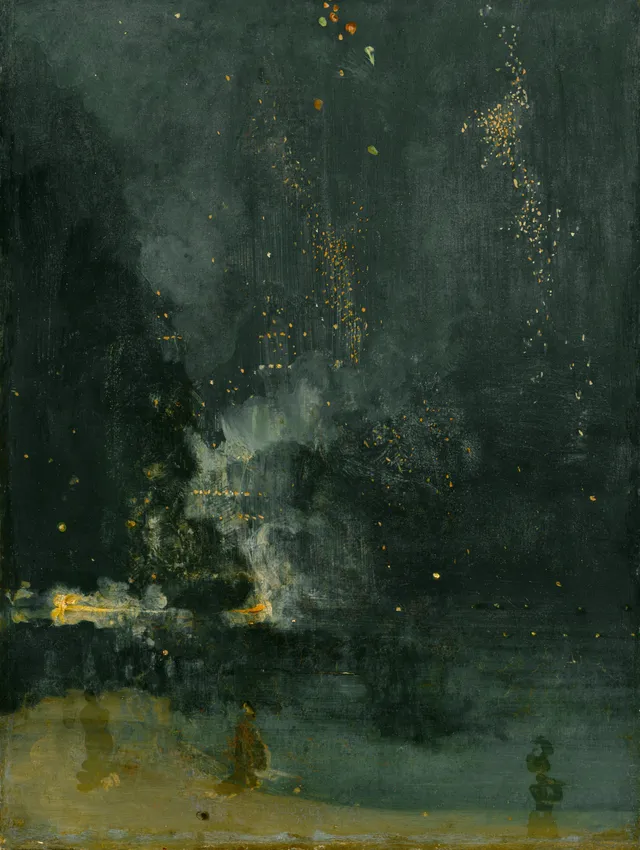
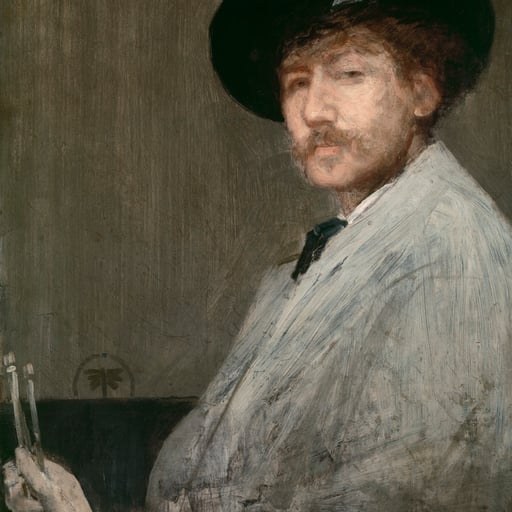
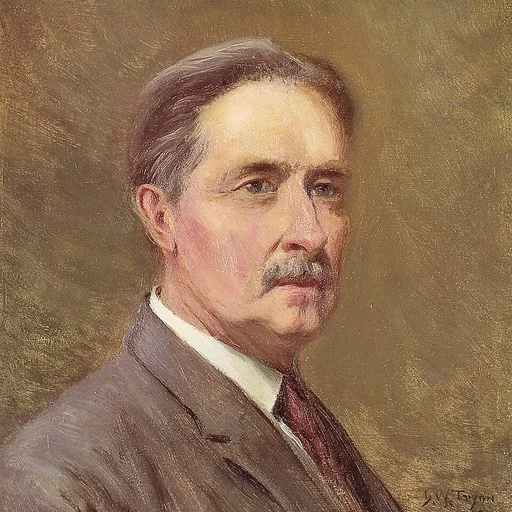
George Inness (1825–1894) and James McNeill Whistler (1834–1903) are regarded as the movement's forefathers. Inness sought to paint "the reality of the unseen"; Whistler's "Nocturnes"—including "Nocturne in Black and Gold – The Falling Rocket" (c. 1875) and "Nocturne: Blue and Silver – Chelsea" (1871)—pushed atmosphere toward near-abstraction. The first prompted John Ruskin's charge that Whistler had flung "a pot of paint in the public's face," and the painter's 1878 libel suit, won for a token farthing, became a landmark defense of art as arrangement rather than illustration. Dwight William Tryon refined glazed twilights into musical, near-geometric harmonies, while the Scottish-born Californian William Keith carried the manner west into Sierra and woodland scenes.
Tonalism overlapped with American Impressionism—painters such as J. Alden Weir and John Twachtman worked across both—but where Impressionism chased bright, fractured daylight, Tonalism pursued unified, inward mood. Eclipsed for decades by modernism, it was reappraised after Corn's 1972 study and is now seen as a distinctly American bridge between the Hudson River School's grandeur and the subjective abstraction to come.
Key artists
Artist
Works
Learn this movement
Frequently asked questions
What is Tonalism?
Tonalism is an art movement. An American painting tendency (roughly 1880–1920) that bathed landscapes in atmospheric mists of gray, gold, or silvery blue, creating mood over detail.
Who are the key Tonalism artists?
Key Tonalism artists in the collection include William Keith, James McNeill Whistler and Dwight William Tryon.
When did Tonalism take place?
Tonalism dates from 1880–1915.
Where can I see Tonalism works?
Tonalism works in the collection are held by Tate and Detroit Institute of Arts.