Artwork
Self portrait at the easel
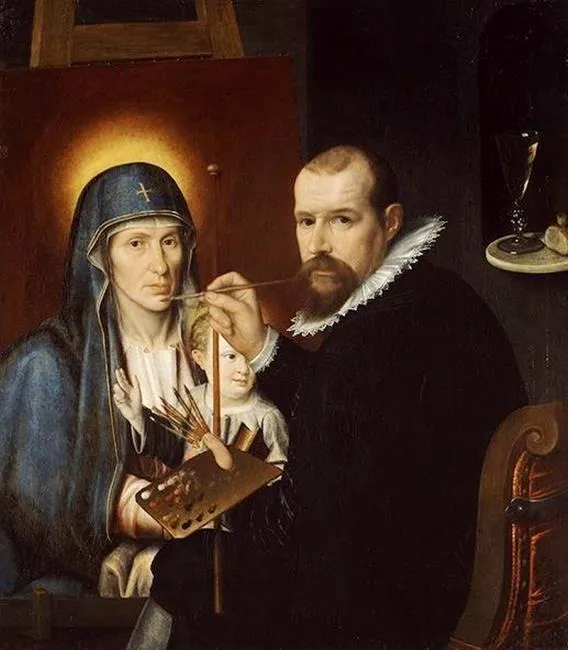
Self portrait at the easel is an oil painting by the Dutch Golden Age artist Engelhard de Pee. It dates from 1601 and is held in the collection of the Bavarian State Painting Collections.
About this work
Subject & Meaning
The painting depicts the artist Engelhard de Pee standing before an easel while holding a palette, presenting a direct self-portrait.
The painting depicts the artist Engelhard de Pee standing before an easel while holding a palette, presenting a direct self-portrait. Beyond the literal representation of the creator, the work incorporates specific iconography by referencing the tradition of Saint Luke painting the Virgin Mary. This symbolic layer elevates the artist's self-image, aligning de Pee with the patron saint of painters and suggesting a sacred or elevated status for the artistic profession.
The composition integrates the artist's physical likeness with this hagiographic motif to define the meaning of the work.
Technique & Style
Executed in 1601, this self-portrait by Engelhard de Pee is an oil painting on canvas. The work measures 105 cm in height and 92.5 cm in width. Stylistically, the composition functions as a dual representation, depicting the artist himself alongside the traditional iconography of Saint Luke painting the Virgin.
The visual narrative centers on the figure at an easel, holding a palette, which emphasizes the act of painting and the artist's professional identity within the genre of portraiture.
History & Provenance
Self portrait at the easel is an oil painting created in 1601 by Engelhard de Pee. It measures 105 cm in height and 92.5 cm in width. The work is classified as a self-portrait and falls within the portrait genre.
It depicts the artist at an easel, engaged in painting Saint Luke and the Virgin. The painting is part of the Bavarian State Painting Collections and is housed in the Alte Pinakothek.
The artwork's creation history is documented through its depiction of Saint Luke painting the Virgin, a subject associated with de Pee's known output. Its dating is confirmed by an inception date of 1601-01-01 recorded in the source metadata.
Overview
Engelhard de Pee’s Self‑portrait at the Easel (1601) is an oil painting that places the artist within his own studio. The composition shows a bearded man in a ruff, brush in hand, working on a tiny figure that mirrors his own face. A woman in dark attire stands nearby, cradling an infant, while a mirror reflects another figure, adding depth to the scene.
Artist & collection
Artist
Engelhard de Pee (1560s – 1605) was a German court painter to William V, Duke of Bavaria.

- Self-portrait
 Untitled
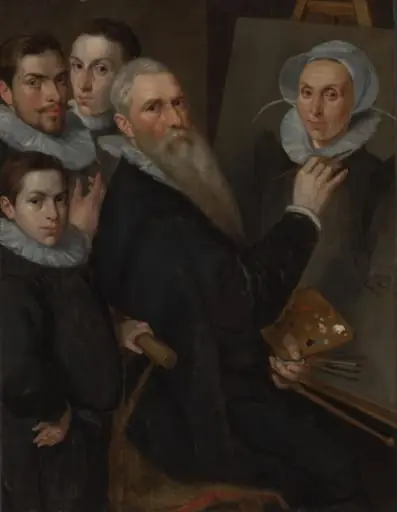 Self-portrait of the Painter with his Family, Jacob Willemsz Delff i (ca. 1540/45-1601)
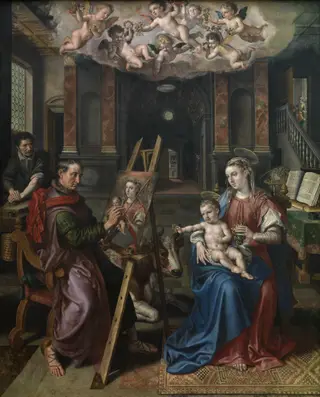 Saint Luke painting the Madonna
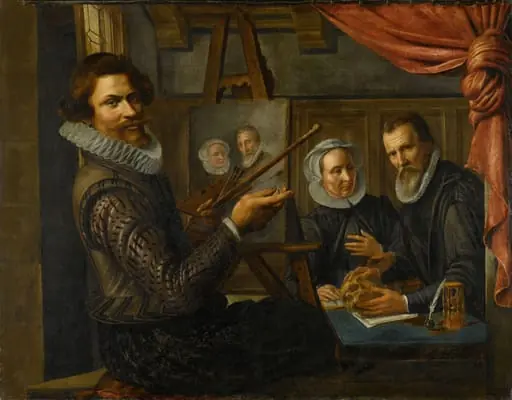
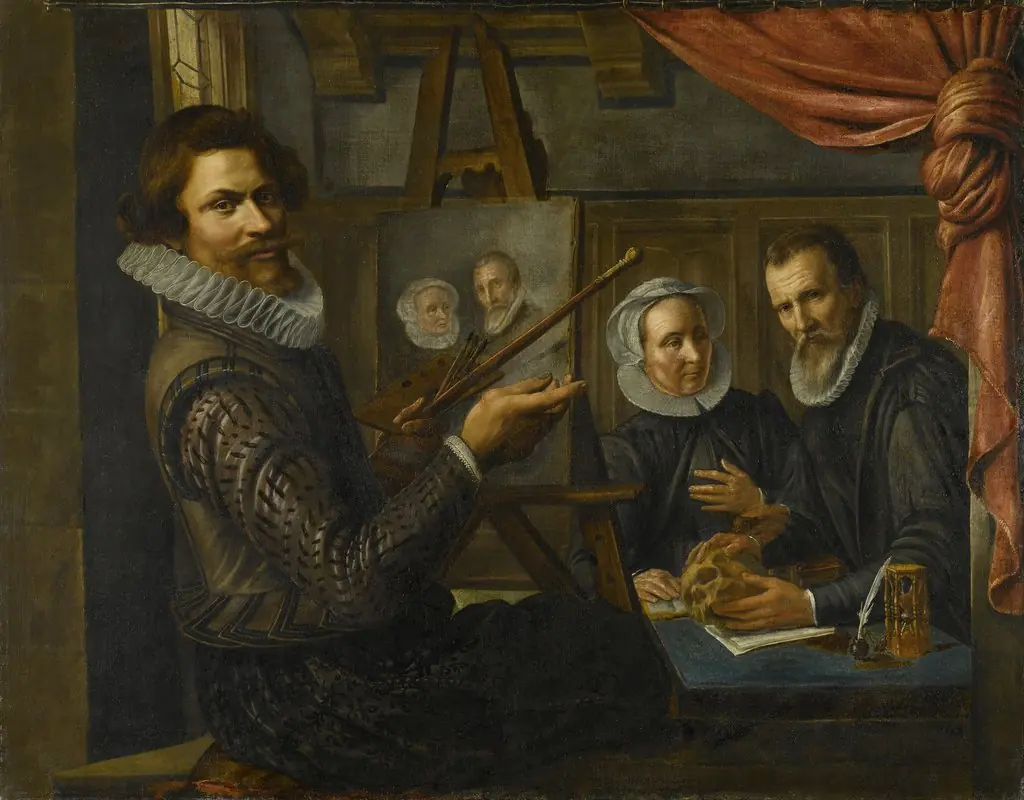 The painter in his studio painting the portrait of a couple
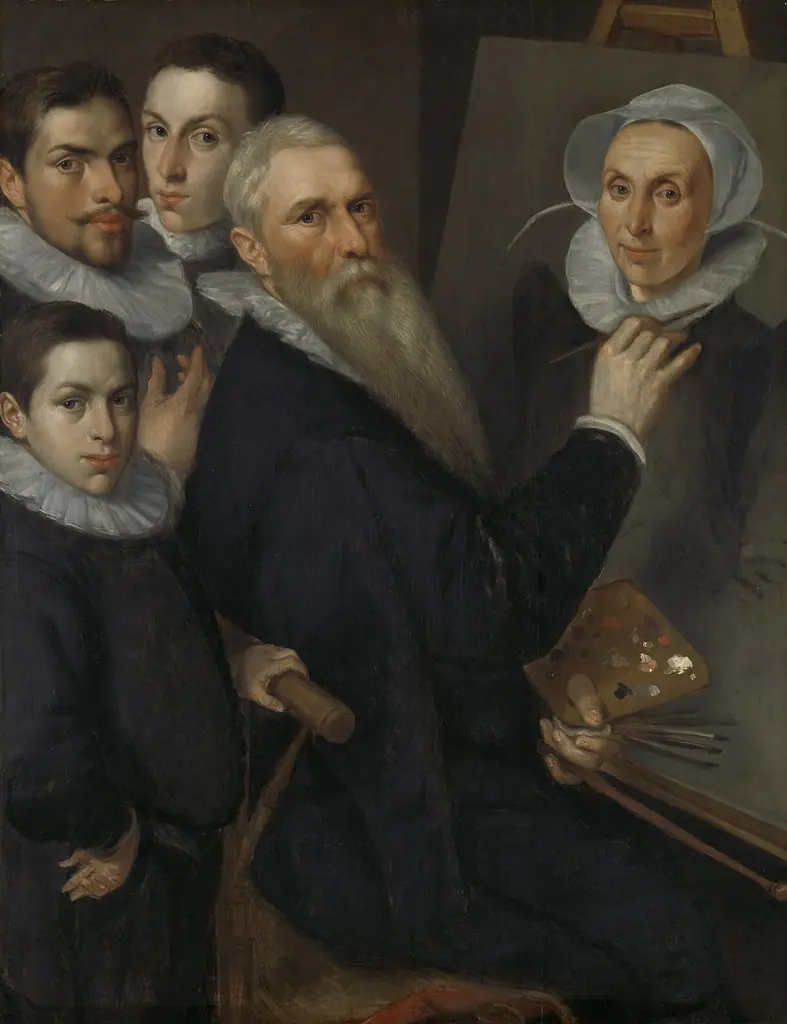 Self Portrait of the Painter with his Family
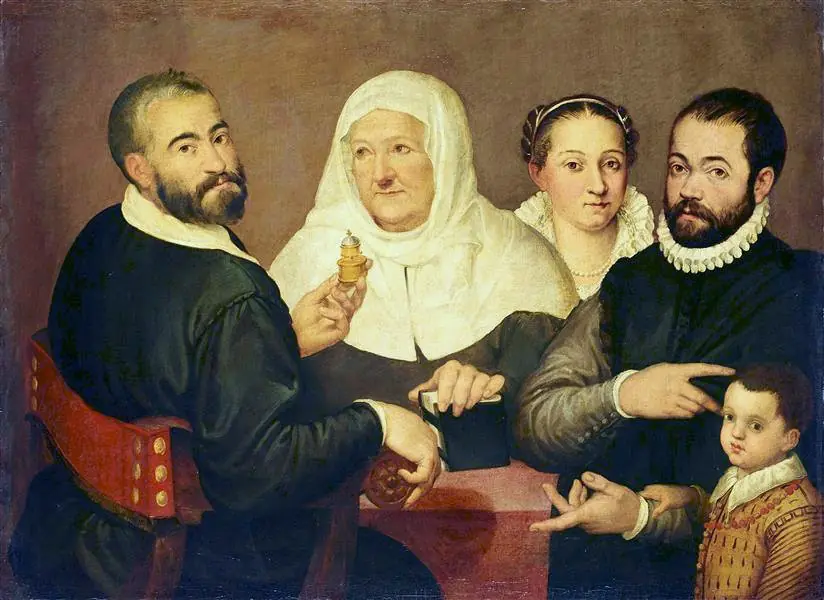 Family portrait
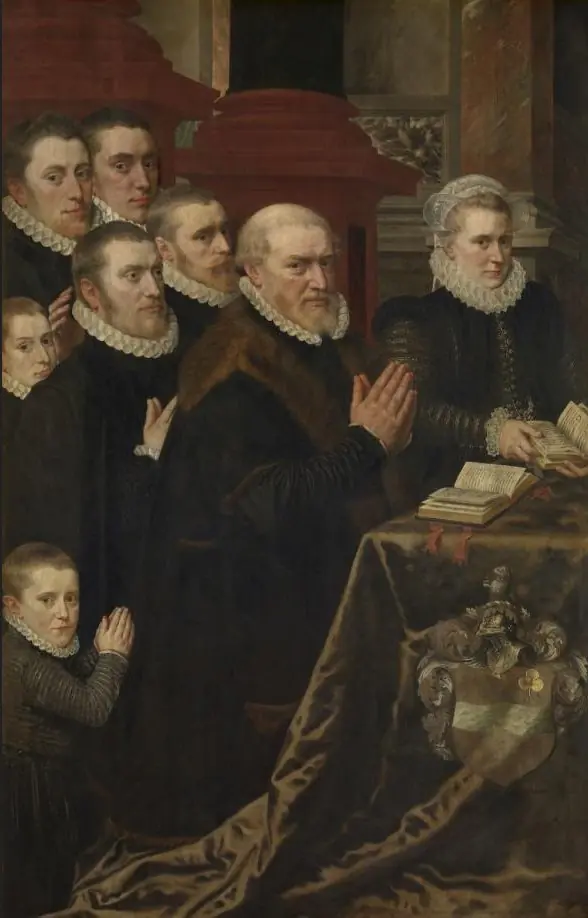 Gillis de Smidt with seven children
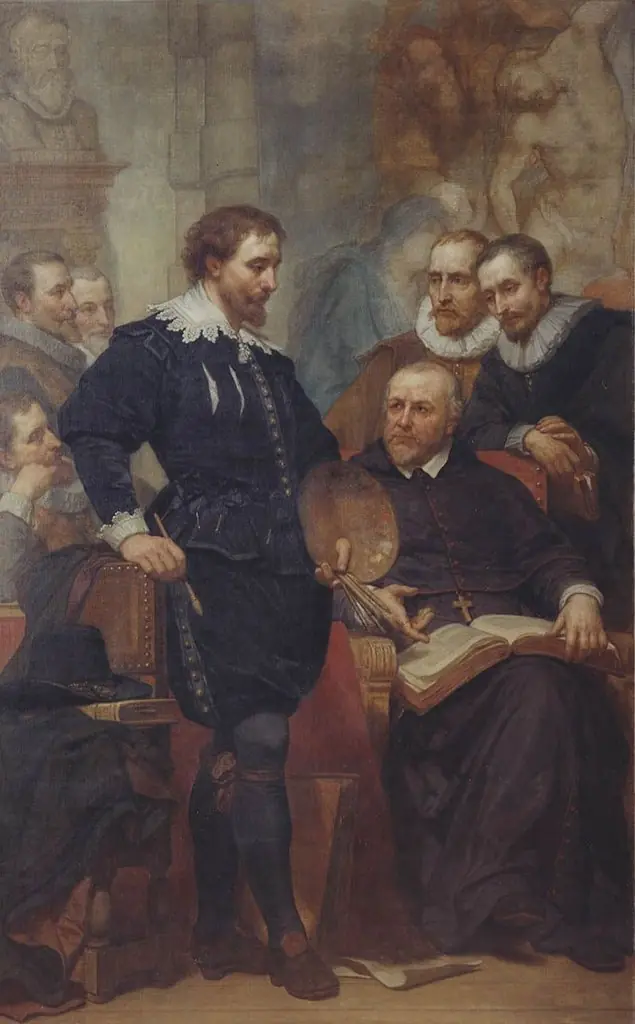 Peter Paul Rubens in his Studio
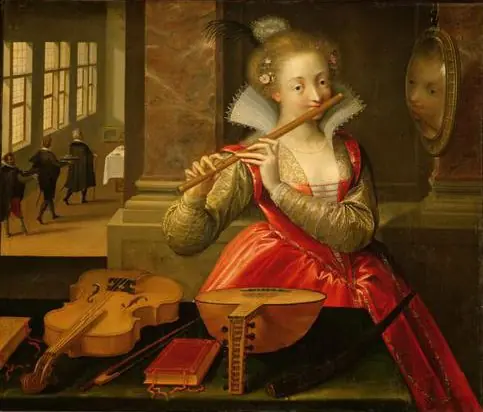 Flötenspielerin (Allegorie der Musik?)
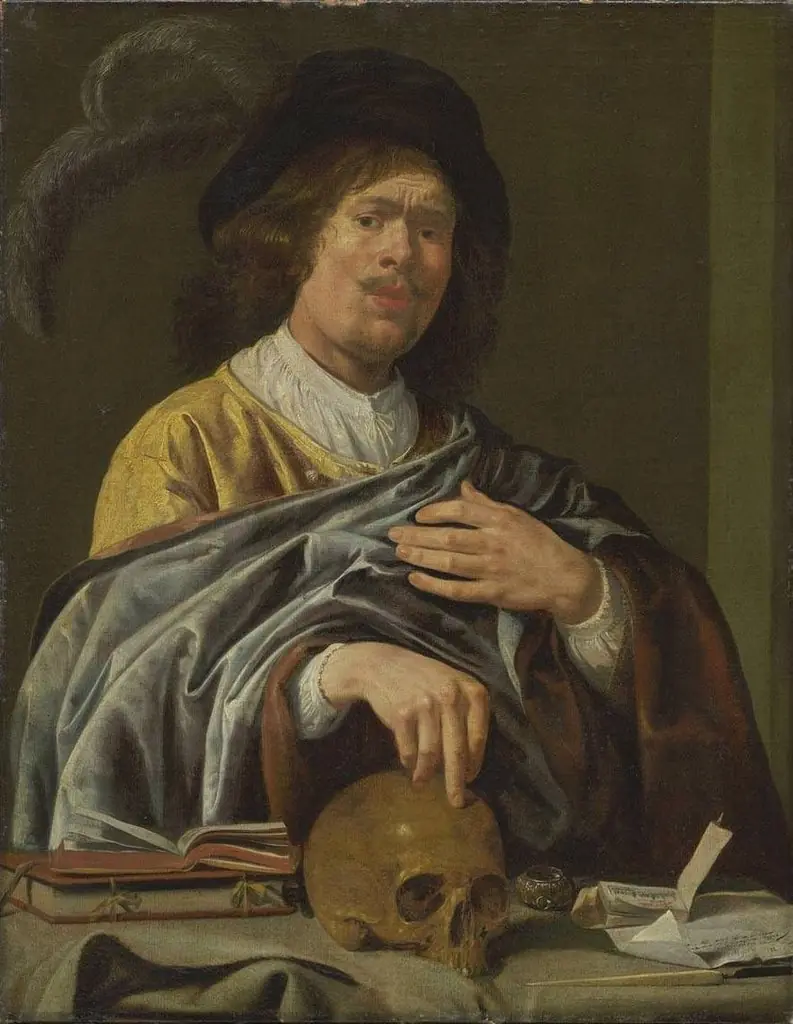 Self-portrait with a Skull
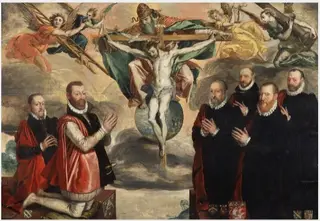 The Provost and the Aldermen of Paris in Prayer before the Holy Trinity