Artwork
Mandrill and Mangabeys
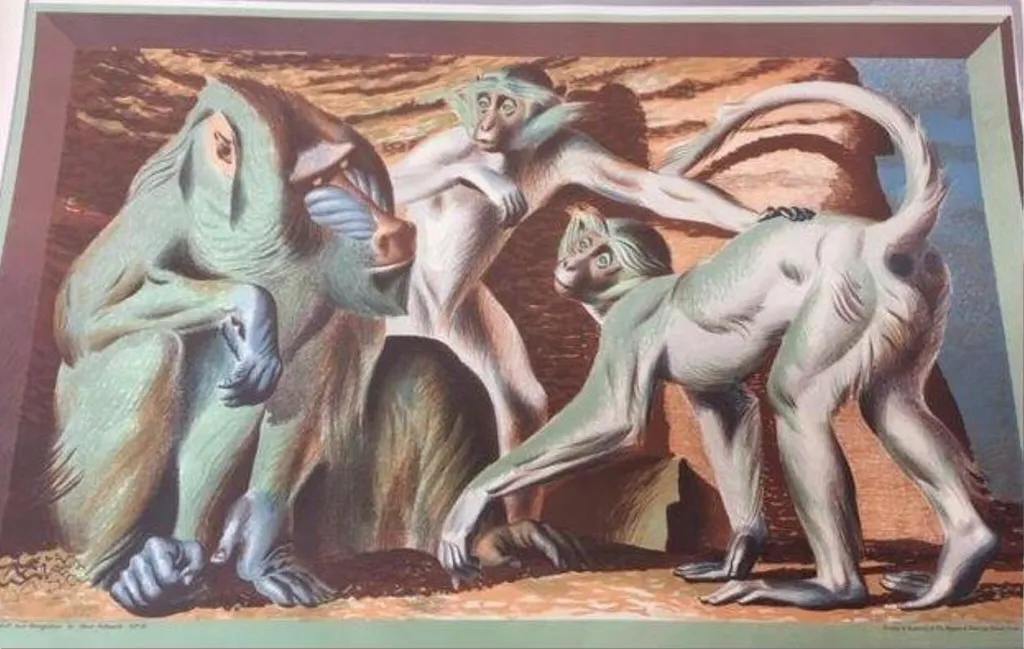
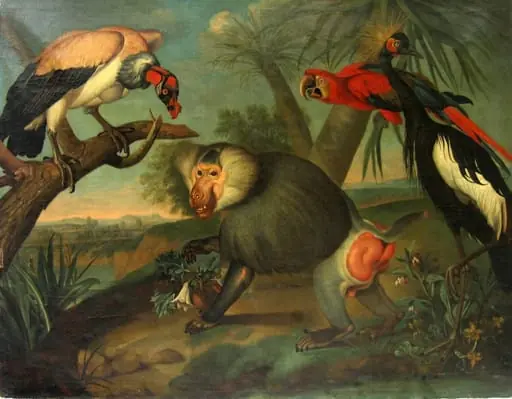
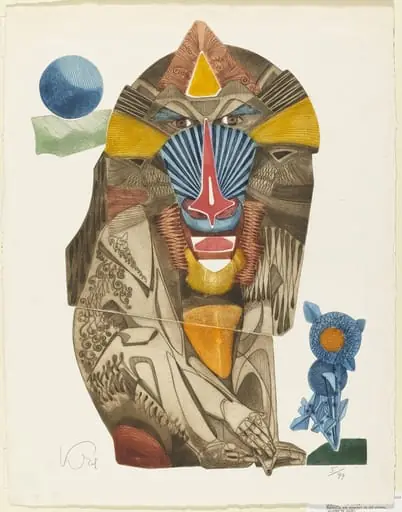
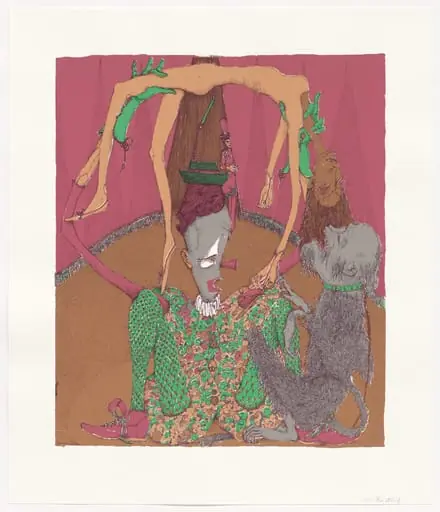
Mandrill and Mangabeys is a print by Hans Feibusch. It dates from 1946 and is held in the collection of the Victoria and Albert Museum. The work is a 1946 lithograph depicting a mandrill alongside two mangabeys, both native African primates.
About this work
This print shows a mandrill and two mangabeys, two kinds of African monkeys. Hans Feibusch made it in 1946 using bright color blocks. The School Prints scheme sold cheap copies to schools so kids could see art every day.
Feibusch fled Nazi Germany in 1933. He later painted murals, but here he used bold orange and pink to give the scene extra punch.
Look up the Victoria and Albert Museum next.
Overview
The work is a 1946 lithograph depicting a mandrill alongside two mangabeys, both native African primates. Rendered in vivid blocks of orange and pink, the image presents the animals in a stylised, graphic manner. Produced for the School Prints programme, the print was intended for wide distribution to classrooms, offering children regular visual contact with contemporary art.
Subject & Meaning
The composition focuses on the striking facial features and coloration of the mandrill, contrasted with the smaller, more subdued mangabeys. By choosing these exotic creatures, the artist highlights the diversity of the natural world, inviting viewers to consider the richness of wildlife beyond familiar European settings.
Technique & Style
Created as a lithograph, the piece relies on flat colour fields and bold outlines, emphasizing graphic clarity over detailed modeling. The artist’s preference for juxtaposing bright orange against soft pink intensifies visual impact, a hallmark of his broader practice of using colour to heighten drama.
History & Provenance
The lithograph was commissioned under the School Prints scheme, a post‑war initiative launched in 1945 by Brenda Rawnsley. The programme enlisted established artists to produce affordable prints for schools, each supplied with a decorative frame for wall mounting. Financial constraints led to the scheme’s cessation in 1949, after which existing copies entered museum and private collections.
Context
Produced in the immediate aftermath of World War II, the print reflects the era’s optimism and the desire to democratise access to art. The artist, a German émigré who had escaped Nazi persecution, contributed to the programme while developing his reputation as a muralist, drawing on mythological and natural themes throughout his career.
Artist & collection
Artist
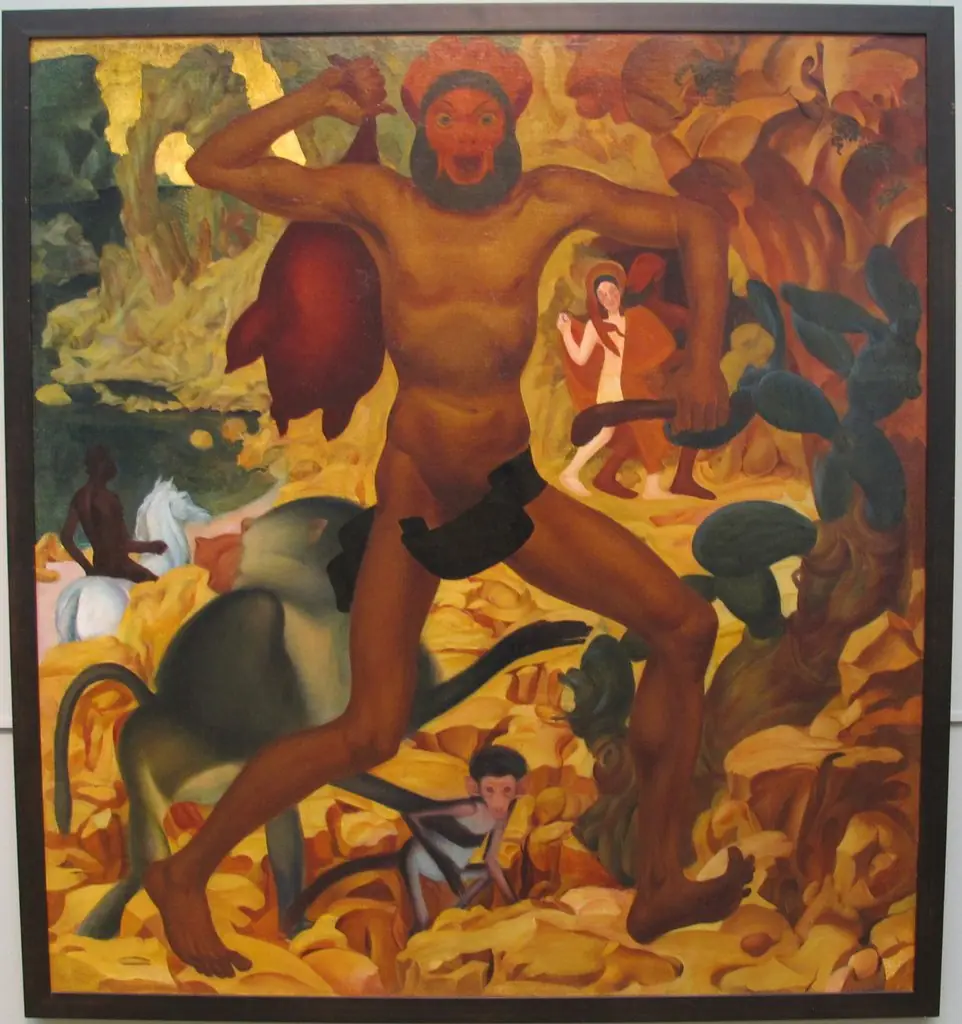
Hans Nathan Feibusch (15 August 1898 – 18 July 1998) was a German painter and sculptor of Jewish heritage who lived and worked in Britain from 1933 until his death.