Artwork
Chinnamasta
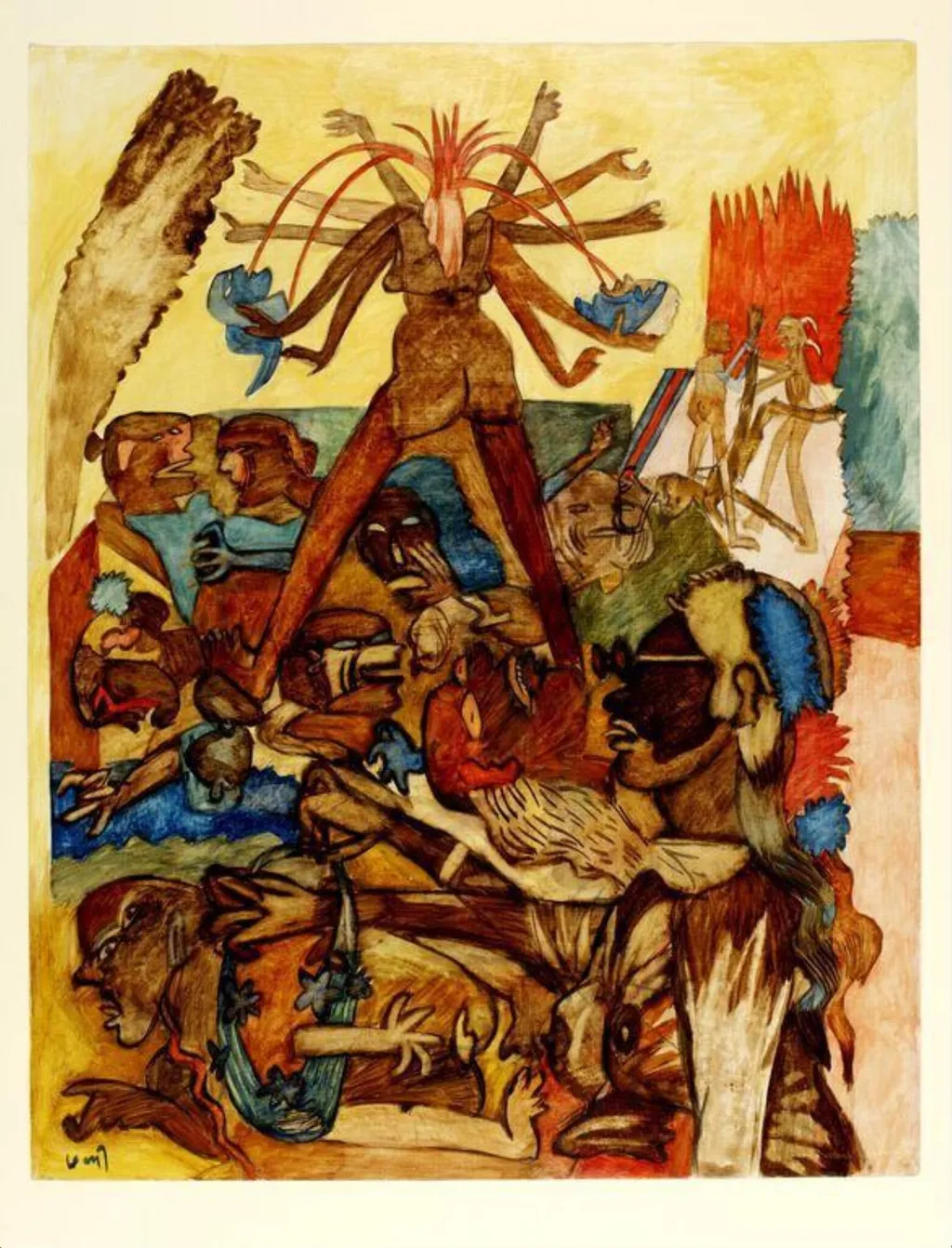
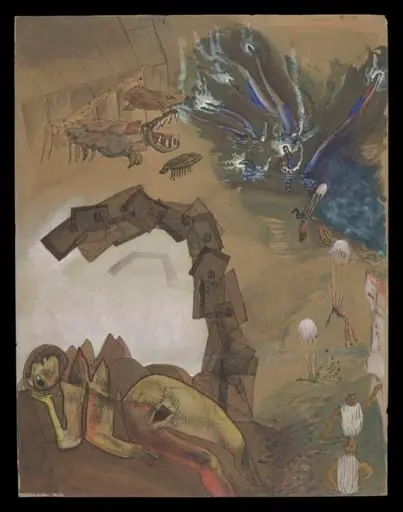
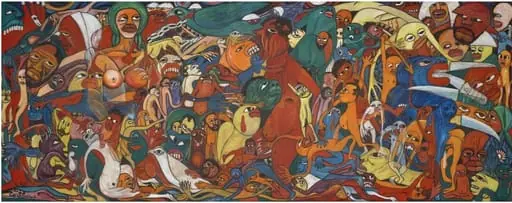
Chinnamasta is a paint painting by the Contemporary Abstract artist K. G. Subramanyan. It dates from 1991 and is held in the collection of the Victoria and Albert Museum.
About this work
Overview
This painting by Subramanyan portrays the Hindu goddess Chinnamasta, a figure from tantric tradition who is depicted with her head severed and held in her hand.
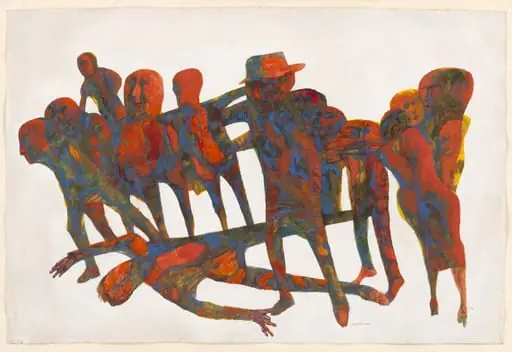
This painting by Subramanyan portrays the Hindu goddess Chinnamasta, a figure from tantric tradition who is depicted with her head severed and held in her hand. Blood flows from her neck in three streams: one feeds her own decapitated head, the others nourish two attendant female figures. She stands atop a copulating couple, surrounded by a group of entangled bodies, creating a dense, symbolic composition that merges themes of life, death, and energy.
Subject & Meaning
Chinnamasta represents the paradox of self-sacrifice and sustenance. By severing her own head, she embodies the transcendence of ego and the cyclical nature of creation through destruction. The blood feeding her and her attendants signifies the flow of vital energy, while the couple beneath her suggests the subordination of desire to spiritual power.
The imagery challenges conventional notions of femininity, presenting a deity who consumes and renews through her own dismemberment.
Technique & Style
The artist employs strong tonal contrasts to emphasize the visceral quality of the scene. Blood streams are rendered with sharp delineation against darker, shadowed forms, drawing attention to the flow of life-force. The figures are flattened and stylized, with minimal modeling, reinforcing the symbolic rather than naturalistic intent.
The composition is tightly packed, with overlapping limbs and blurred boundaries that heighten the sense of ritual intensity.
History & Provenance
The painting is part of Subramanyan’s engagement with Indian mythological themes during the late 20th century, a period when he sought to reinterpret traditional iconography through modern visual language. It reflects his interest in tantric texts and regional artistic practices, particularly those from South India. The work was created in the 1980s and has since been held in private and institutional collections focused on contemporary Indian art.
Context
Chinnamasta appears in tantric literature as a fierce manifestation of the Divine Mother, associated with the awakening of kundalini energy and the dissolution of attachment. Her imagery, often found in esoteric temples and manuscripts, was rarely depicted in modern painting before Subramanyan’s reinterpretation. His version diverges from traditional iconography by emphasizing psychological tension and abstracted form, aligning the deity with broader existential themes.
Legacy
Subramanyan’s depiction contributed to a renewed interest in non-Brahmanical goddess traditions within contemporary Indian art. By presenting Chinnamasta not as a grotesque figure but as a complex symbol of autonomy and transformation, he expanded the visual vocabulary of feminist and spiritual discourse in modern South Asian painting. The work remains a reference point for artists exploring the intersection of myth, body, and power.
Artist & collection
Artist
K.G. Subramanyan spent his 80s teaching students in Baroda how to paint with toy blocks, because, he’d say, “rules are for classrooms, not studios.” The artist’s later paintings, like Chinnamasta (1991), mix folklore…