Artwork
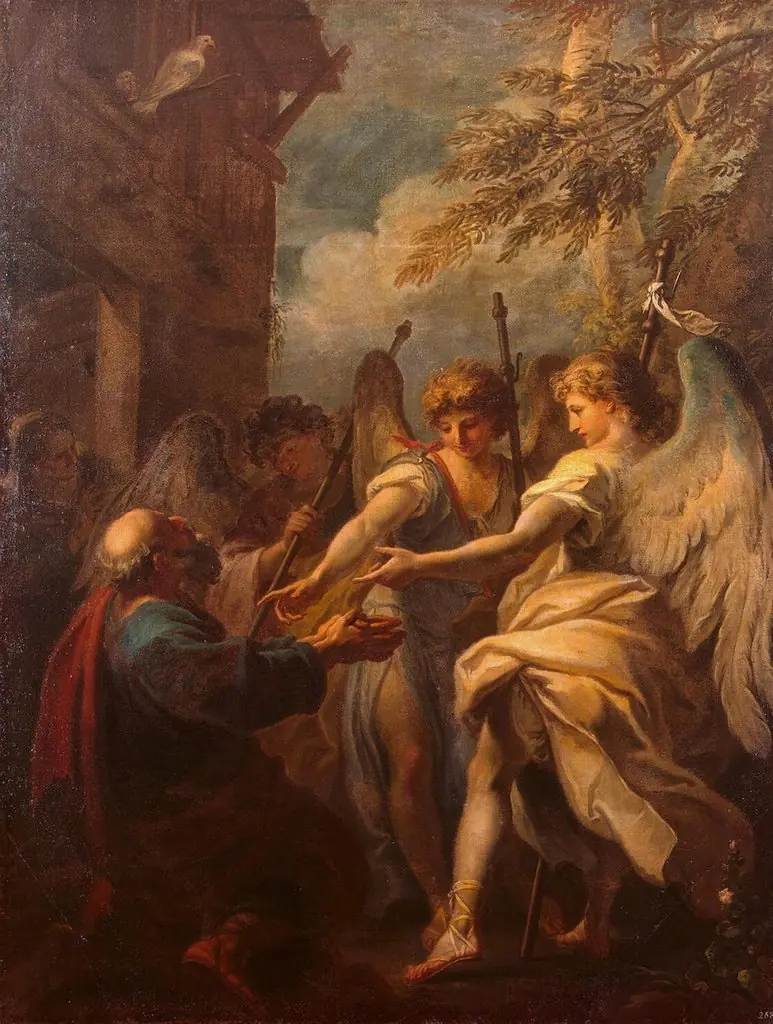
Abraham entertaining the three angels
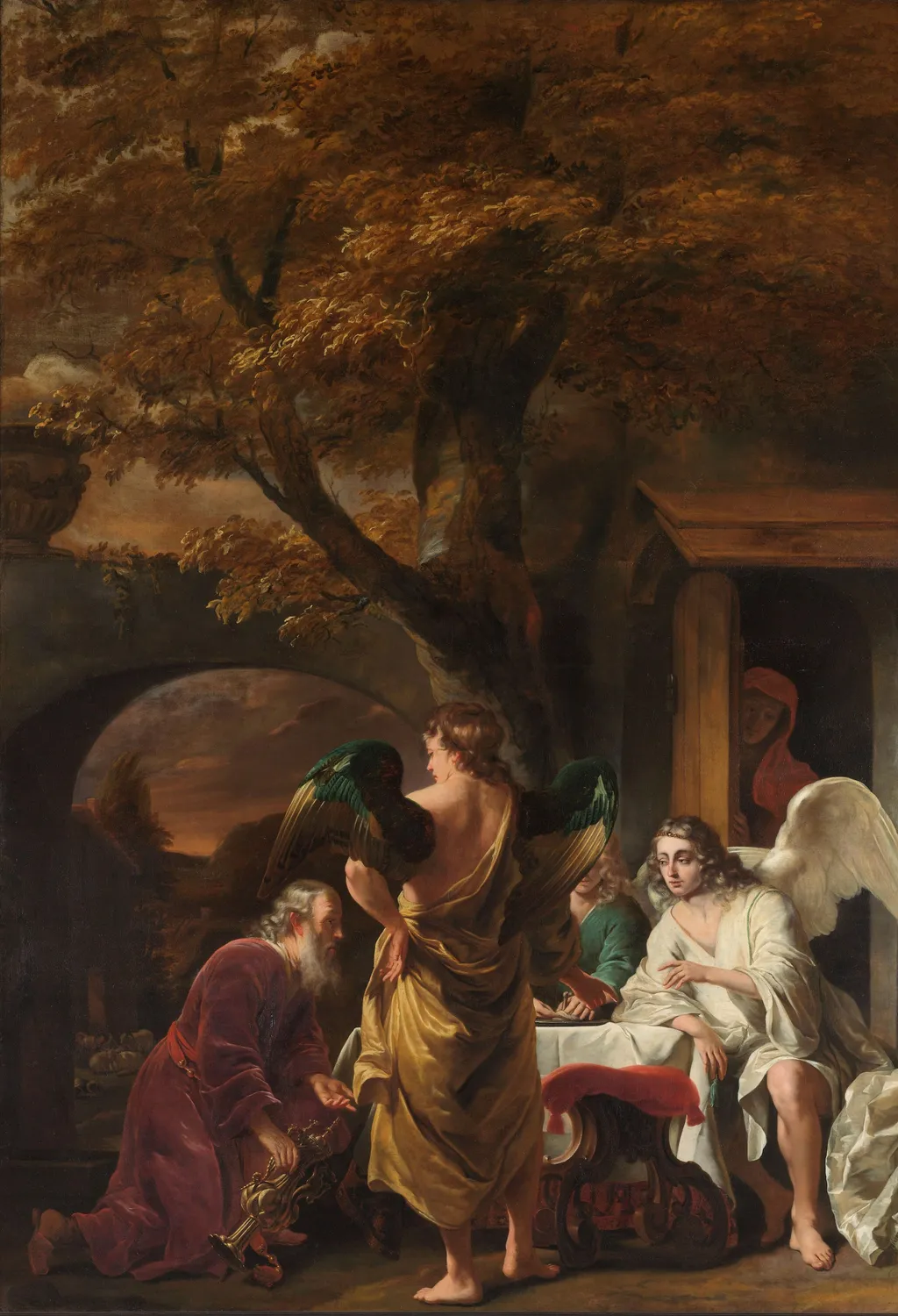
Abraham entertaining the three angels is an oil painting by the Dutch Golden Age artist Ferdinand Bol. It dates from 1662 and is held in the collection of the Rijksmuseum.
About this work
Subject & Meaning
The painting shows Abraham receiving three angels at his tent, an episode from Genesis where the Lord appears to Abraham by the oaks of Mamre.
The painting shows Abraham receiving three angels at his tent, an episode from Genesis where the Lord appears to Abraham by the oaks of Mamre. It depicts the moment of divine hospitality and covenant promise, emphasizing Abraham's faith and obedience. The composition reflects Counter-Reformation themes of spiritual receptivity and the sanctity of divine encounter, aligning with the religious art genre of the period.
Technique & Style
Abraham entertaining the three angels is an oil painting executed on canvas, a support and medium combination consistent with Ferdinand Bol's standard practice for large-scale religious commissions of the 1660s. The work is substantial in scale, measuring 404 cm in height and 282.5 cm in width, indicating a multi-figure composition rendered on a broad vertical format suited to its narrative scope.
Stylistically, the canvas belongs to the Dutch classicizing tradition associated with Bol's mature period, treating the Old Testament episode of Abraham's hospitality to the three angels through a religious genre framework. The painting was commissioned by Jacoba Lampsins, a patronage context that aligns with the work's ambitious dimensions and devotional character.
History & Provenance
Abraham entertaining the three angels by Ferdinand Bol, dated 1662, is held in the collection of the Rijksmuseum in Amsterdam. The painting was commissioned by and originally owned by Jacoba Lampsins before entering the museum's holdings. No accession number or details of past exhibitions are recorded in the available sources.
The work is executed in oil paint on canvas and measures 404 cm in height by 282.5 cm in width.
Context
Ferdinand Bol painted Abraham entertaining the three angels in 1662, a religious work now housed in the Rijksmuseum in Amsterdam. The composition draws from the biblical narrative of the Lord appearing to Abraham by the oaks of Mamre, reflecting Counter-Reformation emphases on divine hospitality. Scholarship situates the painting within Bol's oeuvre as an example of 17th-century Dutch biblical realism, emphasizing chiaroscuro and intimate narrative detail characteristic of his mature period. Its provenance traces to Jacoba Lampsins, whose patronage illustrates patterns of elite collection in the Dutch Republic.
Overview
Ferdinand Bol’s 1662 oil painting, titled Abraham entertaining the three angels, presents a biblical encounter set within an interior space. An elderly figure in a red robe kneels, cradling a small object, while two winged beings, one adorned with green feathers, the other in white, stand beside a woman reclined on a red couch. A third figure is seated at a table, gazing downward, and a leaf‑bare tree is visible through a window.
Own this work as a print
Artist & collection
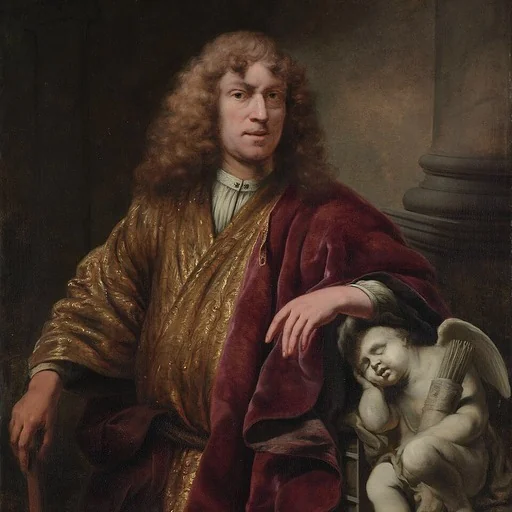
Artist
Ferdinand Bol (24 June 1616 - 24 August 1680) was a Dutch painter, etcher and draftsman.

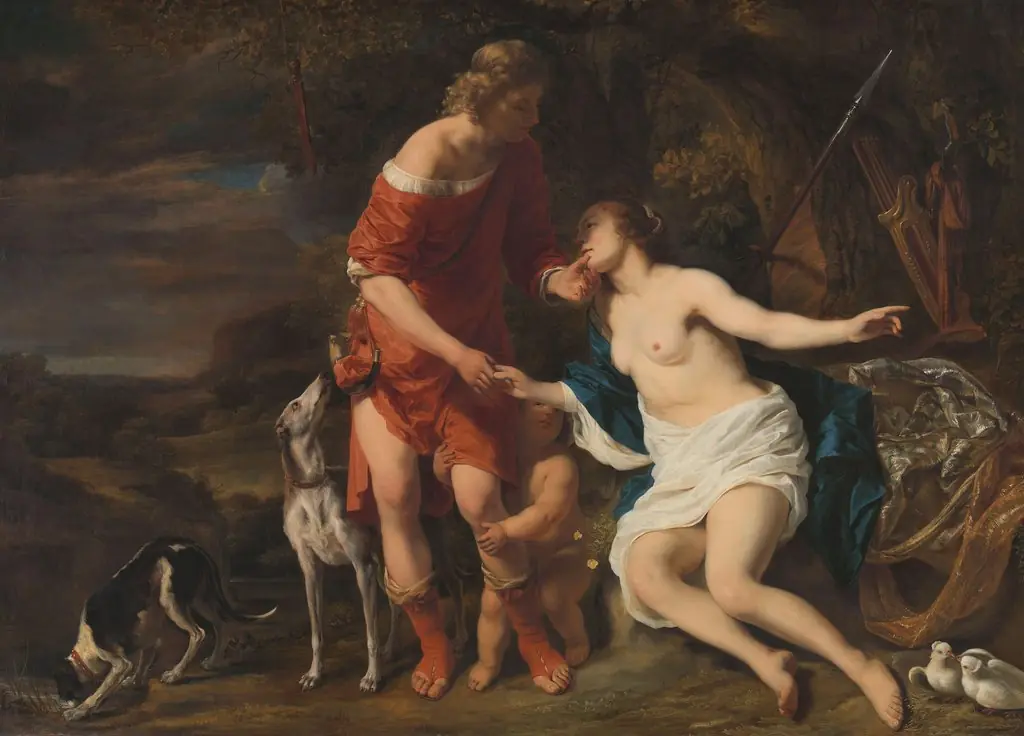 Venus and Adonis
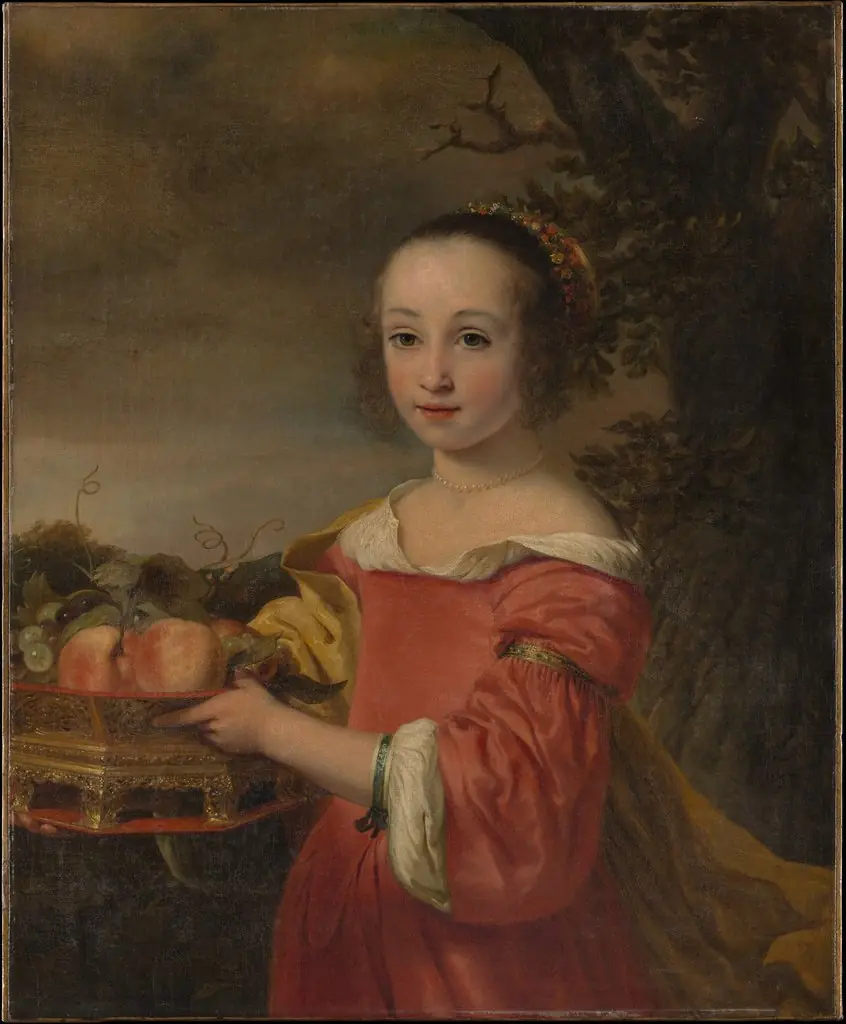 Petronella Elias (1648–1667) with a Basket of Fruit
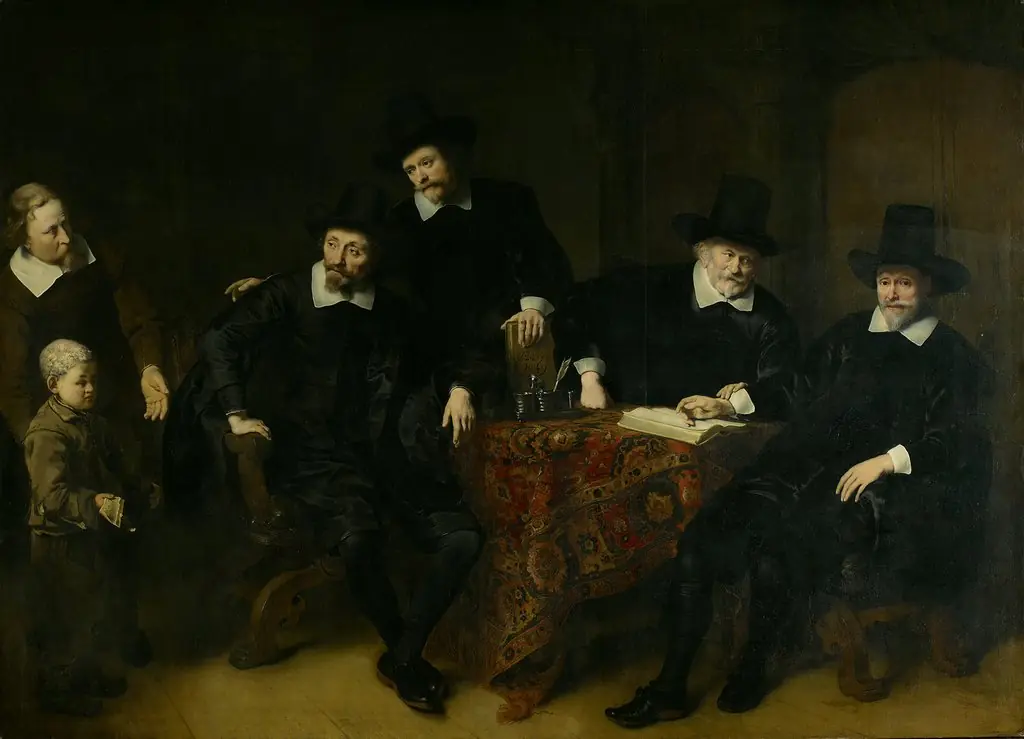 The Regents of the Leper's house in Amsterdam in 1649
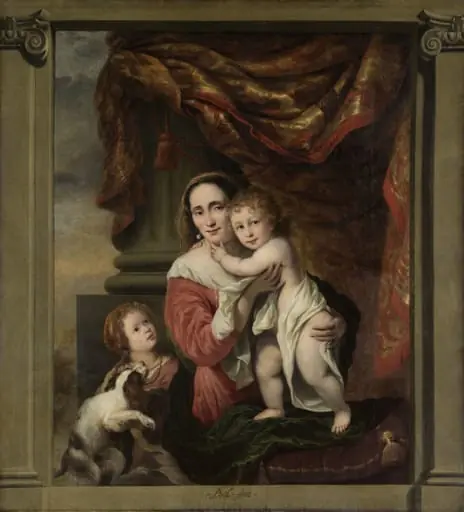 Caritas: Joanna de Geer (1629-1691) with her Children Cecilia Trip (1660-1728) and Laurens Trip (b. 1662)
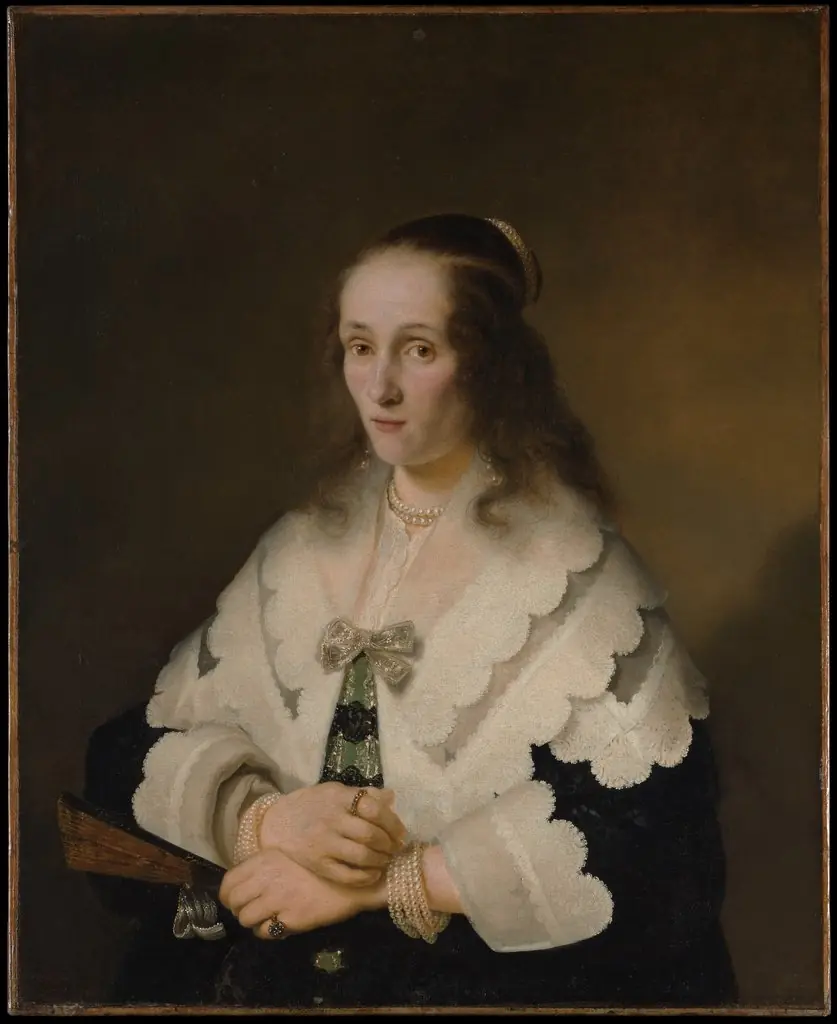 Portrait of a Woman
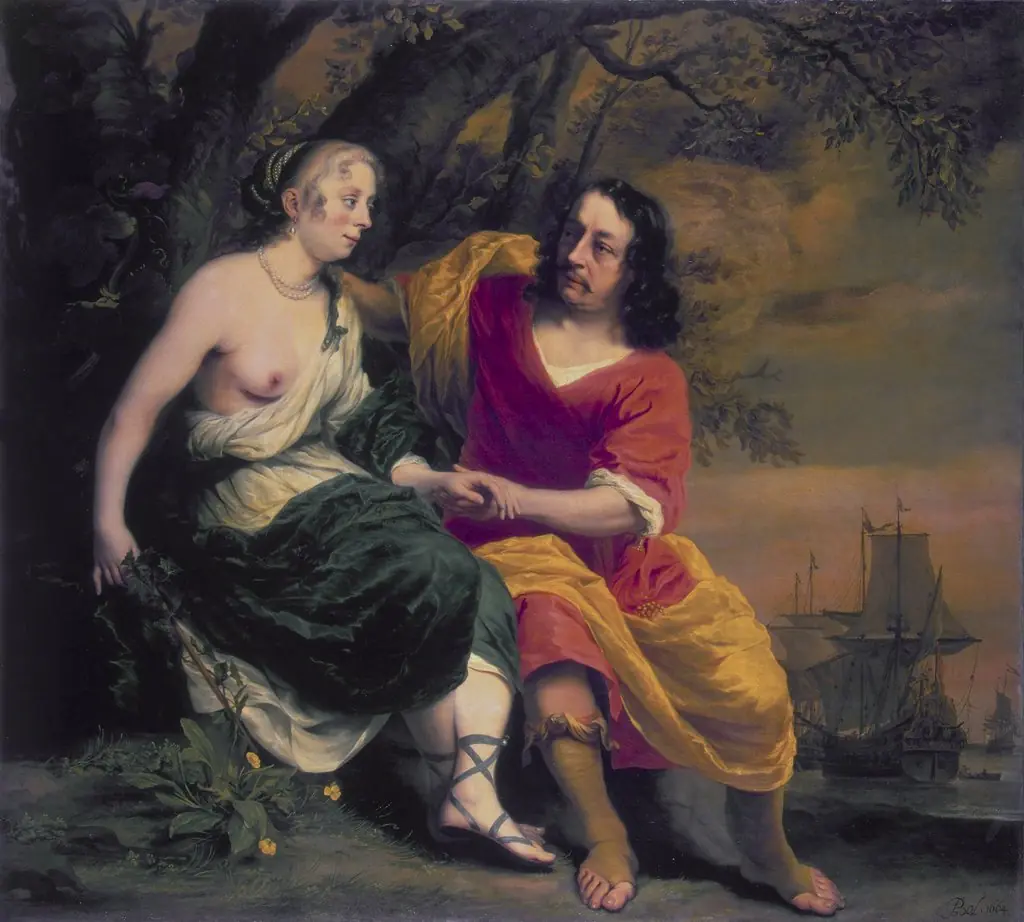 Bacchus and Ariadne
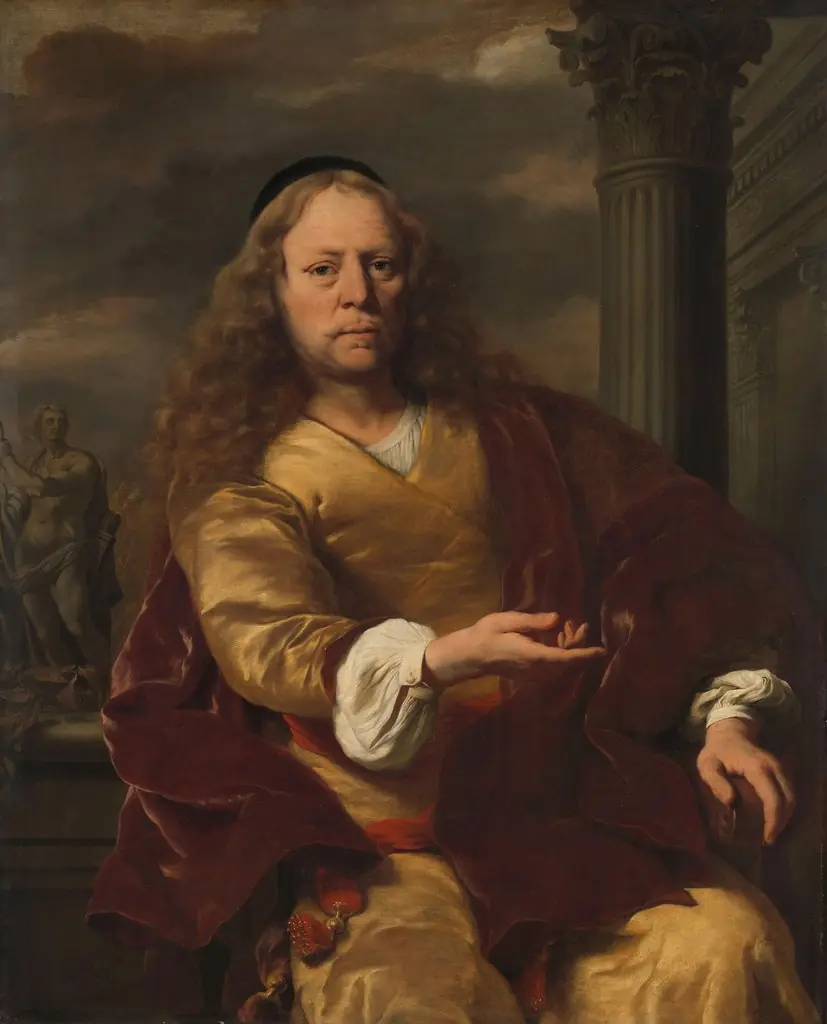 Portrait of a man
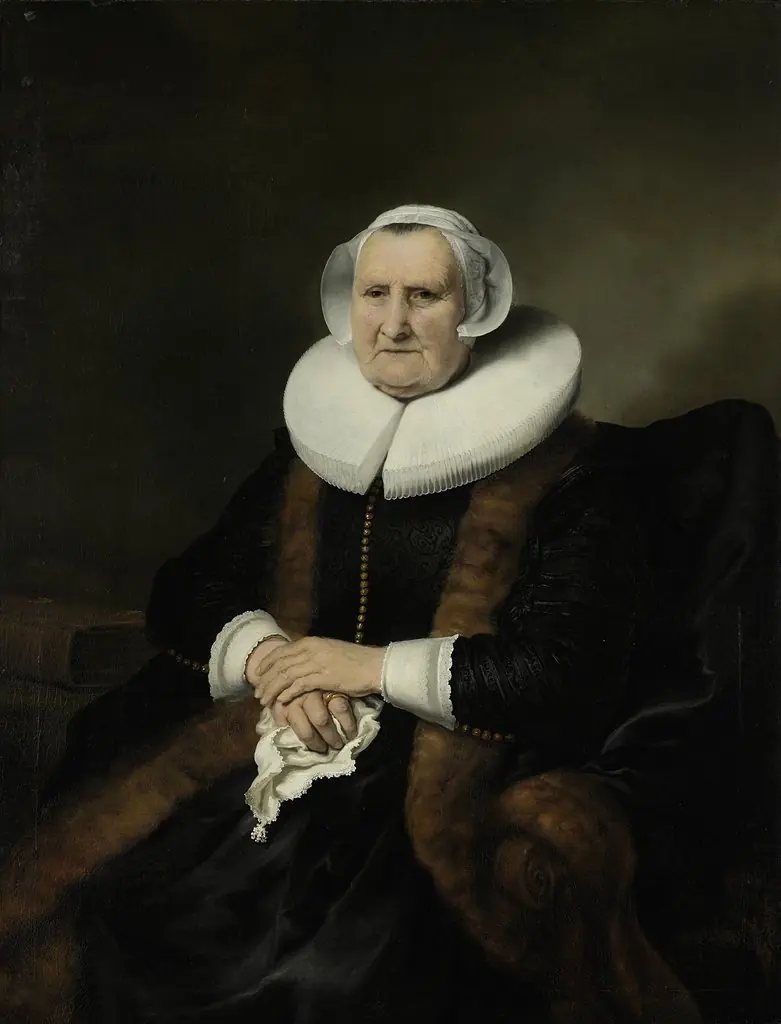 Portrait of an Old Lady, Possibly Elisabeth Bas