Artwork
Margarita Trip as Minerva, Instructing her Sister Anna Maria Trip
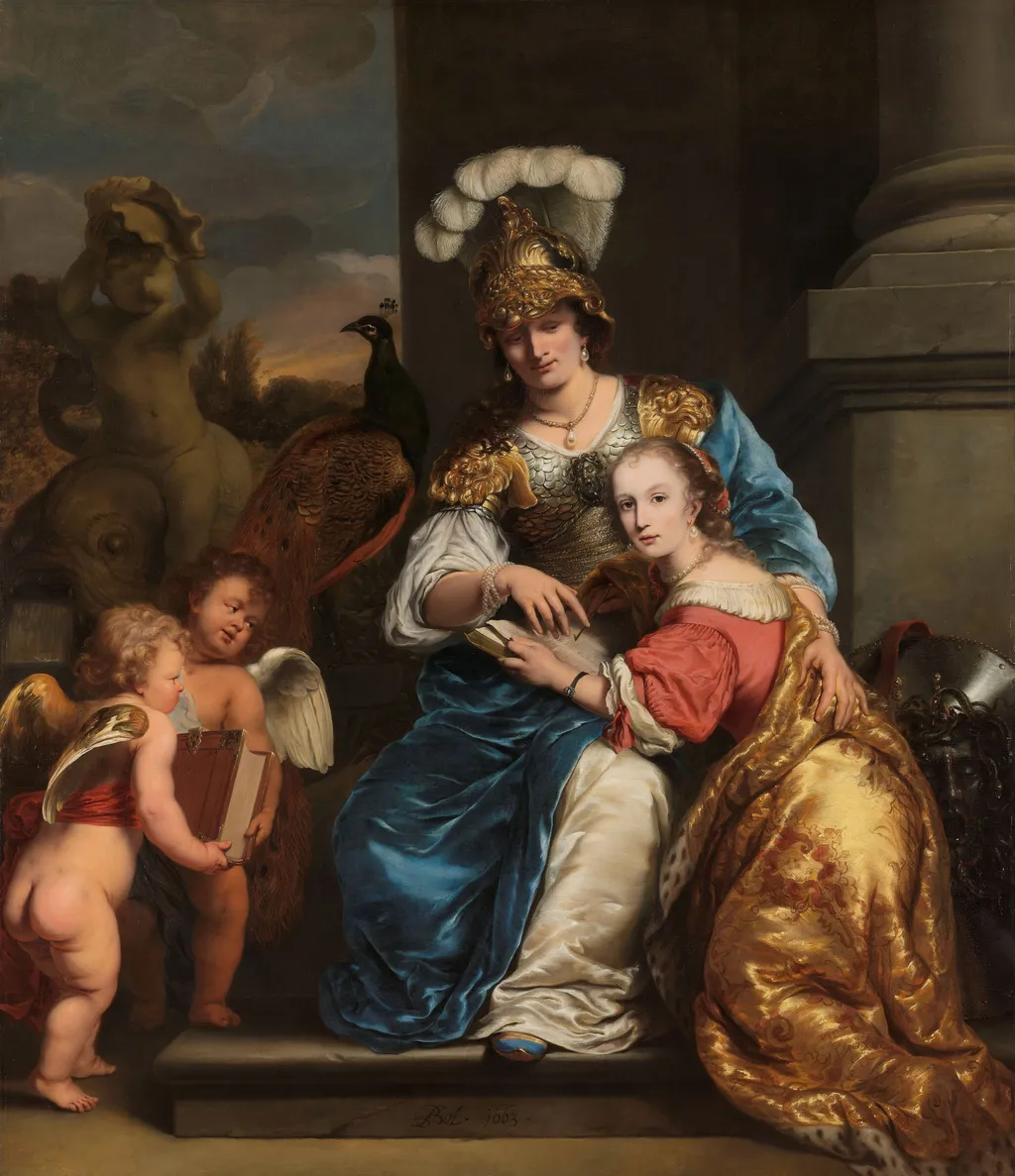
Margarita Trip as Minerva, Instructing her Sister Anna Maria Trip is an oil painting by the Dutch Golden Age artist Ferdinand Bol. It dates from 1663 and is held in the collection of the Rijksmuseum.
About this work
It belongs to the Rijksmuseum collection but is currently shown at the Royal Netherlands Academy of Arts and Sciences in Amsterdam.
Portrait of the Trip Sisters, also called Margarita Trip as Minerva Teaching Her Sister Anna Maria Trip, is an oil painting by Dutch painter Ferdinand Bol from 1663. It shows two women, with Margarita posed as the goddess Minerva.
The work is signed and dated by Bol. It belongs to the Rijksmuseum collection but is currently shown at the Royal Netherlands Academy of Arts and Sciences in Amsterdam. It is oil on canvas, a common medium for Dutch portraits of the time.
Look up the Rijksmuseum for more Dutch art.
Subject & Meaning
The painting portrays Margarita Trip (1640–1714) in the guise of the Roman goddess Minerva, instructing her younger sister Anna Maria Trip (1652–1681), daughters of the merchant Louis Trip and Emerentia Hoefslager. It belongs to the portrait historié tradition, in which sitters are depicted in mythological roles, a format common in seventeenth-century Dutch art.
Allegorical elements reinforce the theme of learning and wisdom. On the left, two putti carry a large book, likely alluding to the love of knowledge. The background features a balustrade opening onto a park-like setting with a fountain shaped as a putto or Cupid on a dolphin, a motif drawn from Roman art.
A peacock stands on the balustrade, and at the far right Minerva's shield bearing the head of Medusa leans against a wall, anchoring the iconography in the goddess's martial and protective attributes.
Technique & Style
The work is an oil on canvas painting created in 1663. It measures 208 cm in height and 179 cm in width. The surface is handled as a traditional canvas support typical of Dutch Golden Age portraiture, with the paint applied in thin, blended layers characteristic of oil technique.
Formal analysis notes a balanced composition with a central figure of Margarita Trip depicted as Minerva, flanked by allegorical elements such as a shield bearing Medusa's head, a peacock, and a balustrade with putti holding a large book. These motifs reference Roman art and underscore the painting's portrait historié character, merging mythological symbolism with familial education themes.
History & Provenance
The painting was created in 1663 for the Trippenhuis in Amsterdam, where it hung as a chimney-piece in the corner room on the first floor of the southern wing. It is signed and dated 'fBol 1663'. The work entered the collection of the Rijksmuseum, which occupied the Trippenhuis from 1817 to 1885, and is now displayed at the Royal Netherlands Academy of Arts and Sciences (KNAW) in Amsterdam as a long-term loan from the Rijksmuseum.
It was exhibited at the Frans Halsmuseum in Haarlem from 7 October to 31 December 2000 as part of "Kinderen op hun mooist. Het kinderportret in de Nederlanden 1500–1700." It also appeared in "Holländsk guldålder.
Rembrandt, Frans Hals och deras samtida" at the Nationalmuseum, Stockholm (22 September 2005 – 8 January 2006) and in "Rembrandt? The Master and his Workshop" at the Statens Museum for Kunst, Copenhagen (4 February – 14 May 2006).
Context
The work is a prime example of the Dutch portrait historié tradition, in which sitters adopt mythological guises to signal virtues or aspirations. Bol's depiction of Margarita Trip as Minerva instructing her younger sister channels classical pedagogy and erudition, aligning with the Trip family's mercantile prestige and their residence, the Trippenhuis, whose interiors were designed to showcase such allegories.
Scholarly attention has emphasized the painting's function as a chimneypiece within the Trippenhuis, where it flanked a companion piece by Bol depicting Charity. Its later history within the Rijksmuseum's early quarters (1817–1885) linked it to canonical Dutch art displays, reinforcing its status in national collections.
Overview
Ferdinand Bol’s 1663 oil on canvas depicts the Trip sisters, with the elder, Margarita, presented in the guise of Minerva while instructing her younger sibling, Anna Maria. The work bears the artist’s signature and date, confirming its authorship. It forms part of the Rijksmuseum’s holdings but is presently exhibited at the Royal Netherlands Academy of Arts and Sciences in Amsterdam.
Own this work as a print
Artist & collection
Artist
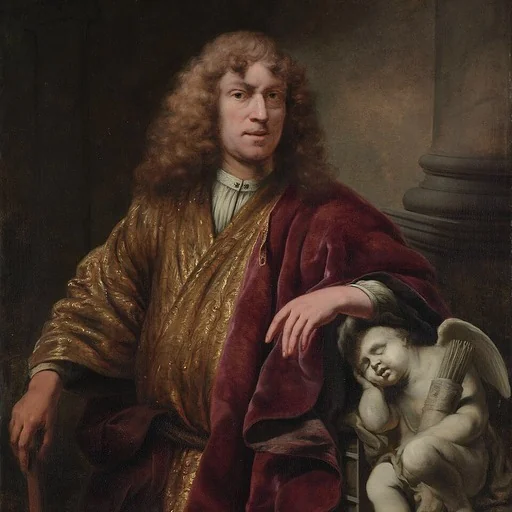
Ferdinand Bol (24 June 1616 - 24 August 1680) was a Dutch painter, etcher and draftsman.

 Venus and Adonis
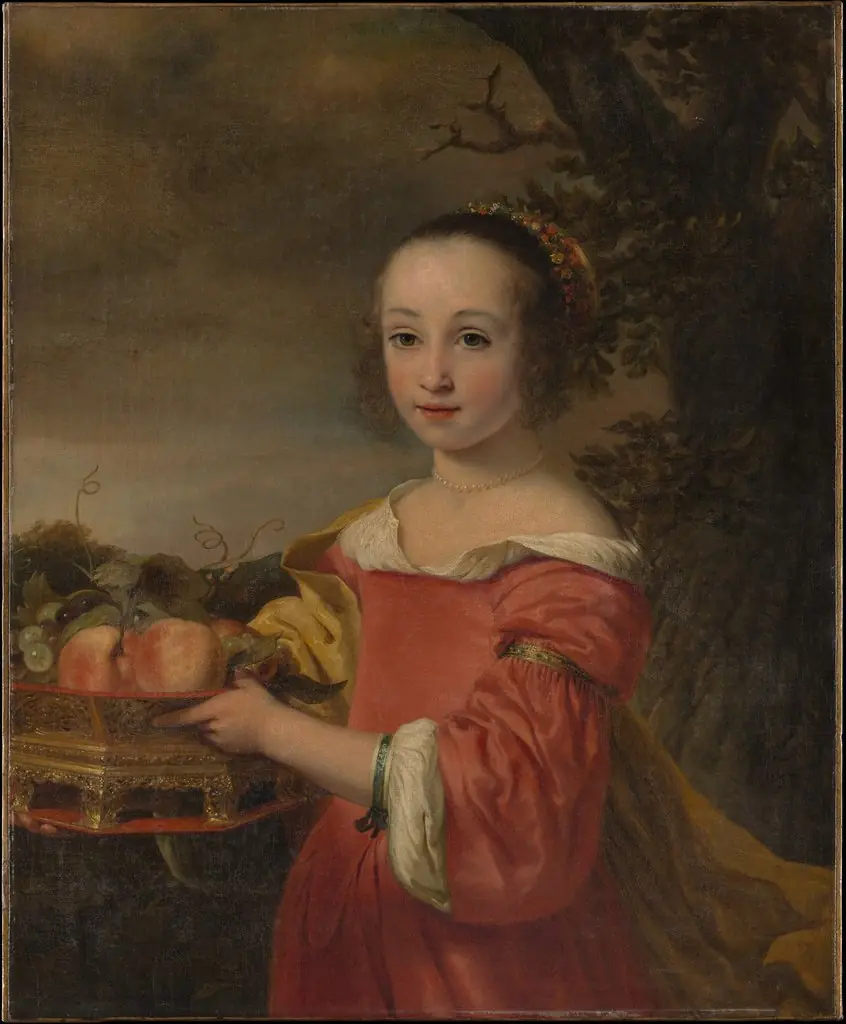 Petronella Elias (1648–1667) with a Basket of Fruit
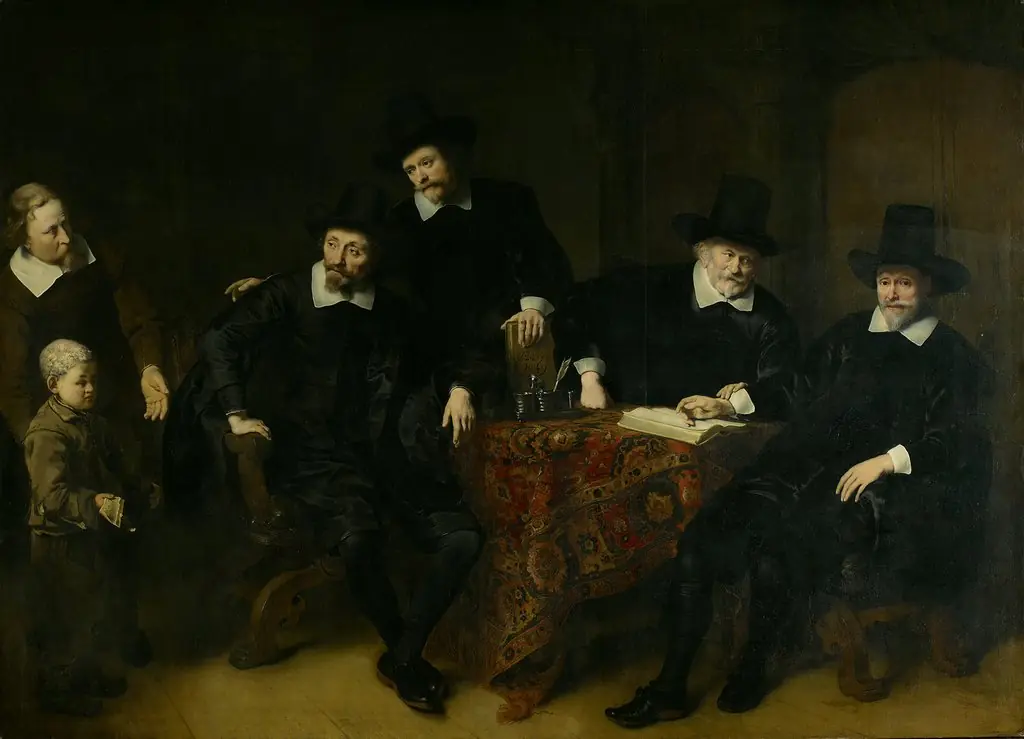 The Regents of the Leper's house in Amsterdam in 1649
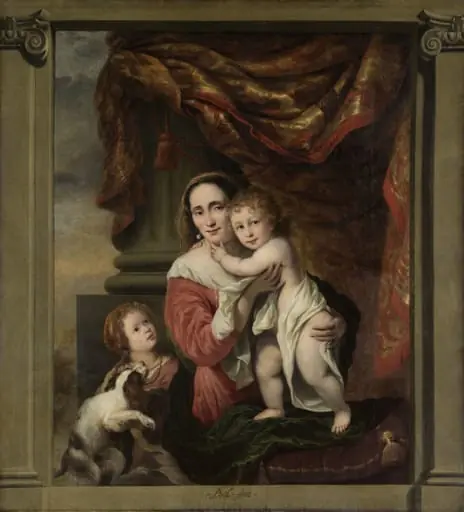 Caritas: Joanna de Geer (1629-1691) with her Children Cecilia Trip (1660-1728) and Laurens Trip (b. 1662)
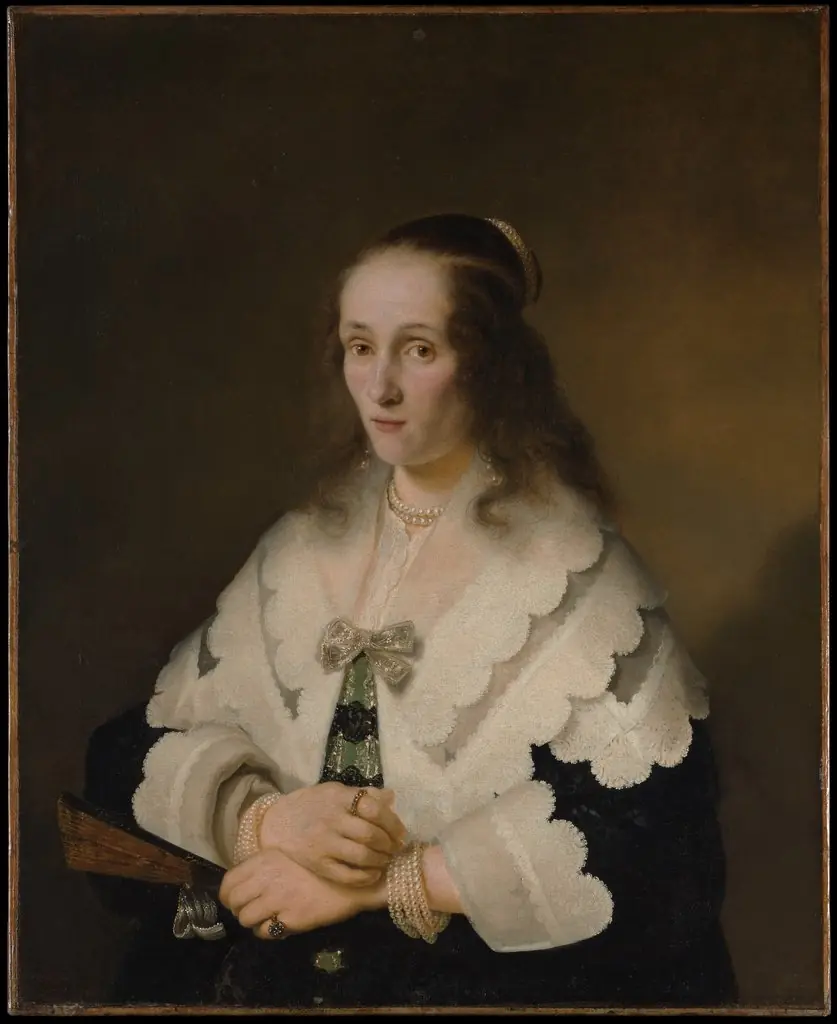 Portrait of a Woman
 Bacchus and Ariadne
 Portrait of a man
 Portrait of an Old Lady, Possibly Elisabeth Bas
- The Chastity Lesson
 Saint Cecilia playing the virginal
 Antony and Cleopatra
 Pandora
 Bethsabé en el baño
 Queen Christina Crowned with Laurels by Wisdom
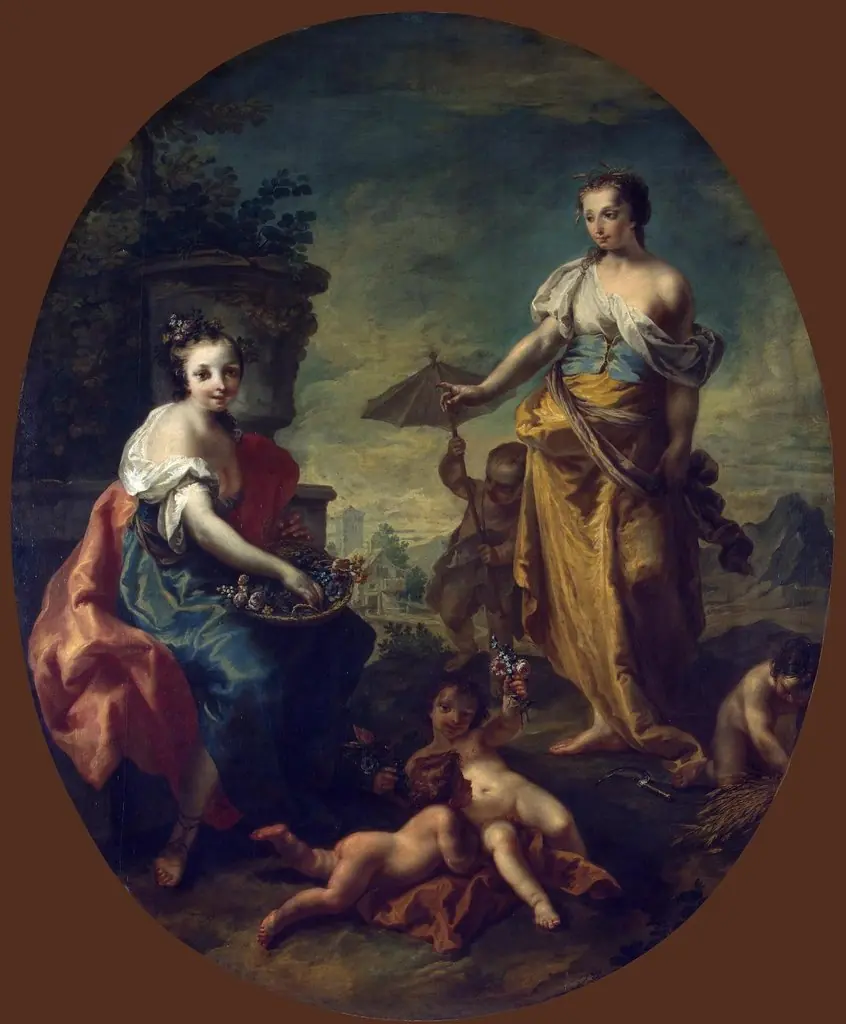 Summer and Spring
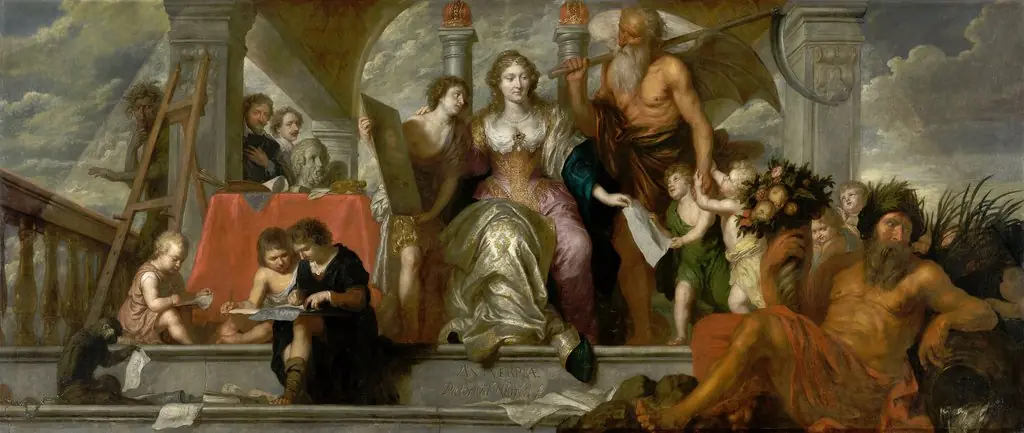 Antwerp, Nourishing the Painters
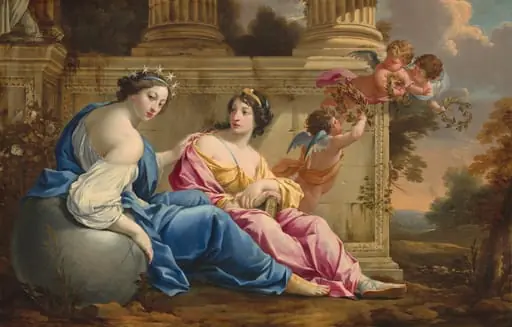 The Muses Urania and Calliope
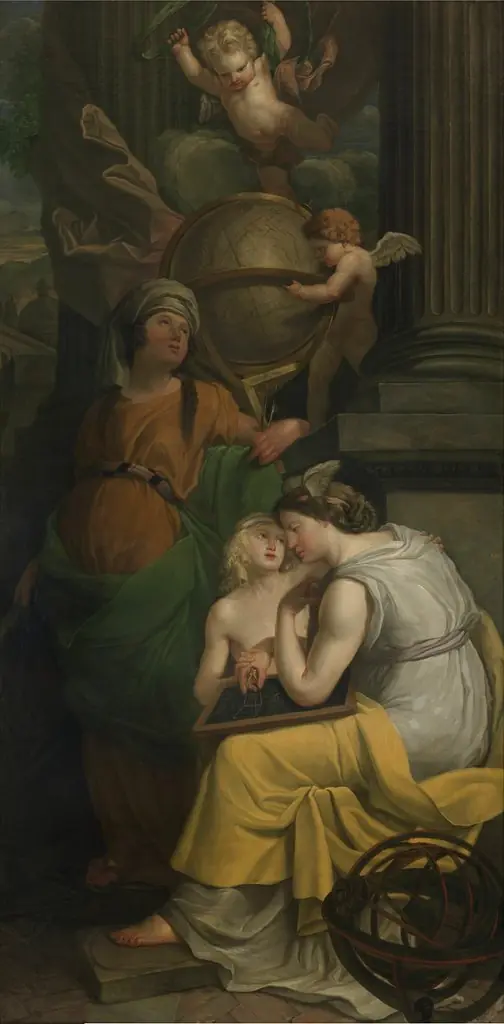 Geometry and Arithmetic
 Mrs. Hugh Morgan and Her Daughter
 Judith with the Head of Holofernes