Artwork
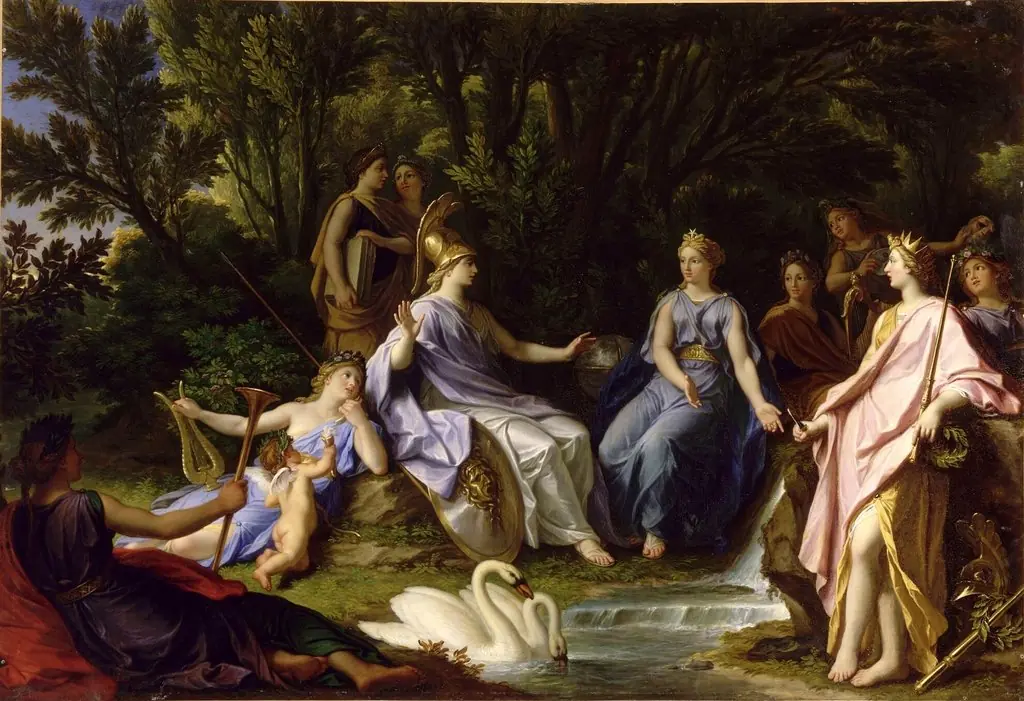
The Muses Urania and Calliope
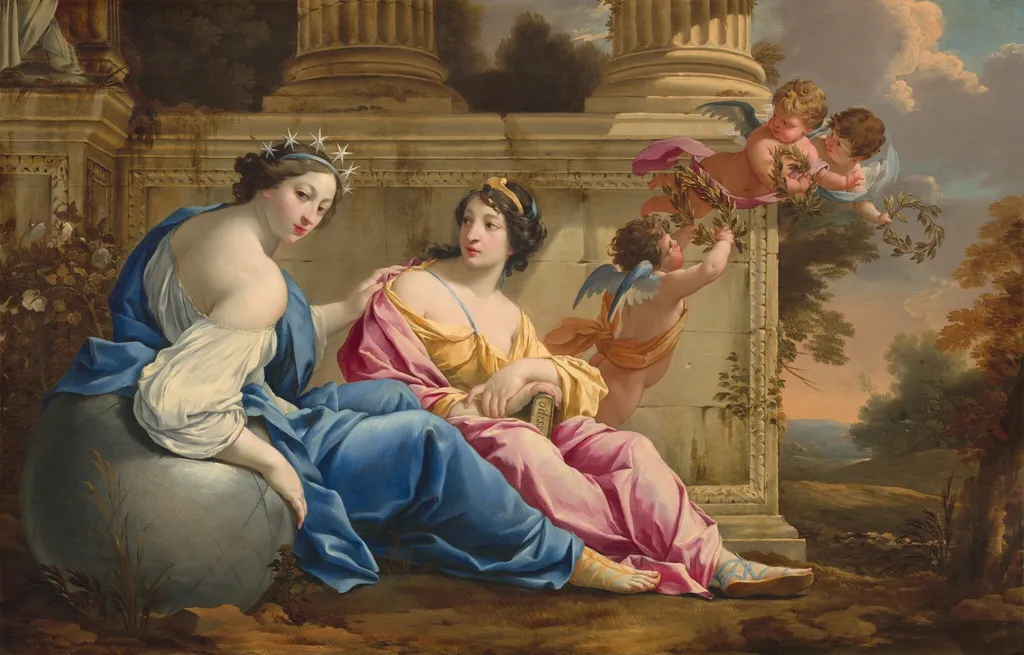
The Muses Urania and Calliope is an oil painting by the Barbizon school artist Simon Vouet. It dates from 1634 and is held in the collection of the National Gallery of Art.
About this work
Subject & Meaning
The work belongs to the genre of mythological painting, focusing on these female figures who personify the arts and sciences.
Simon Vouet's The Muses Urania and Calliope, painted in 1634, depicts two of the nine classical Muses from Greek mythology. The work belongs to the genre of mythological painting, focusing on these female figures who personify the arts and sciences. Urania is traditionally associated with astronomy, while Calliope represents epic poetry.
As a mythological subject, the painting serves as an allegorical representation of intellectual and artistic inspiration, a common theme in 17th-century European art, presented within a narrative context typical of Vouet's style during this period.
Technique & Style
The painting is an oil work on a wooden panel support, created in 1634. It depicts the figures of Urania and Calliope in a mythological scene, rendered in oil on a single wood board typical of French easel paintings of the early Baroque period. The recorded dimensions are a height of 79.8 cm and a width of 125 cm. No specific handling or conservation details are documented in the sources, and the current condition is not described beyond its status as a painted panel.
History & Provenance
Simon Vouet painted The Muses Urania and Calliope in 1634. Its early provenance includes M. de Mauméjan, from whose estate it was sold in Paris in 1825. By the mid-20th century it belonged to Miss E.M. Linton of Berkshire, England.
At Christie's, London, on 1 July 1955, it was acquired by H. Levat (or Cevat), likely acting for the David M. Koetser Gallery, which sold the painting in 1957 to the Samuel H. Kress Foundation, New York. The foundation gave it to the National Gallery of Art in Washington, D.C., in 1961, where it is held as part of the Samuel H. Kress Collection. The available sources do not list a specific exhibition history or inventory number.
Overview
Simon Vouet, a leading French painter of the early 17th century, completed The Muses Urania and Calliope around 1634. This oil on wood painting exemplifies his mature style, showcasing two mythological figures. The artwork reflects Vouet's significant influence in introducing Italian Baroque aesthetics to the French court after his return from Rome, establishing him as a pivotal figure in Parisian art circles.
Context
Simon Vouet's career was marked by a significant period in Italy, where he absorbed the innovations of the Roman Baroque. Upon his return to France in 1627 at the behest of King Louis XIII, he became the premier painter at court. Vouet played a crucial role in transforming French art, introducing the dynamic compositions, rich colors, and dramatic lighting he had mastered abroad, thereby shaping the aesthetic direction of Parisian painting.
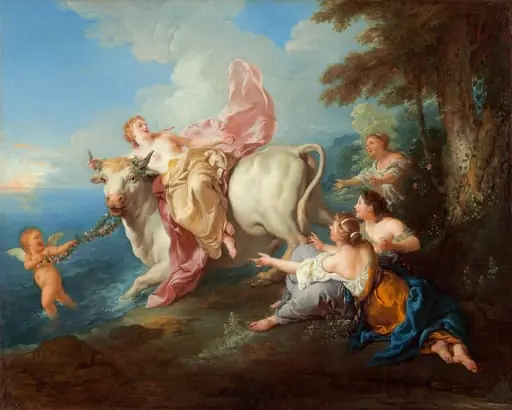
Own this work as a print
Artist & collection
Artist
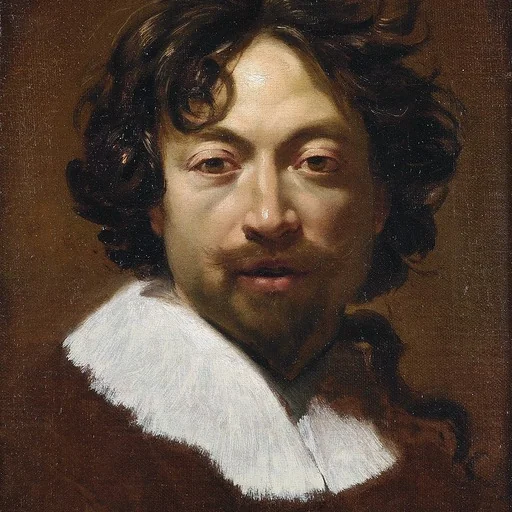
Simon Vouet (French pronunciation:; 9 January 1590 – 30 June 1649) was a French painter who studied and rose to prominence in Italy before being summoned by Louis XIII to serve as Premier peintre du Roi in France.

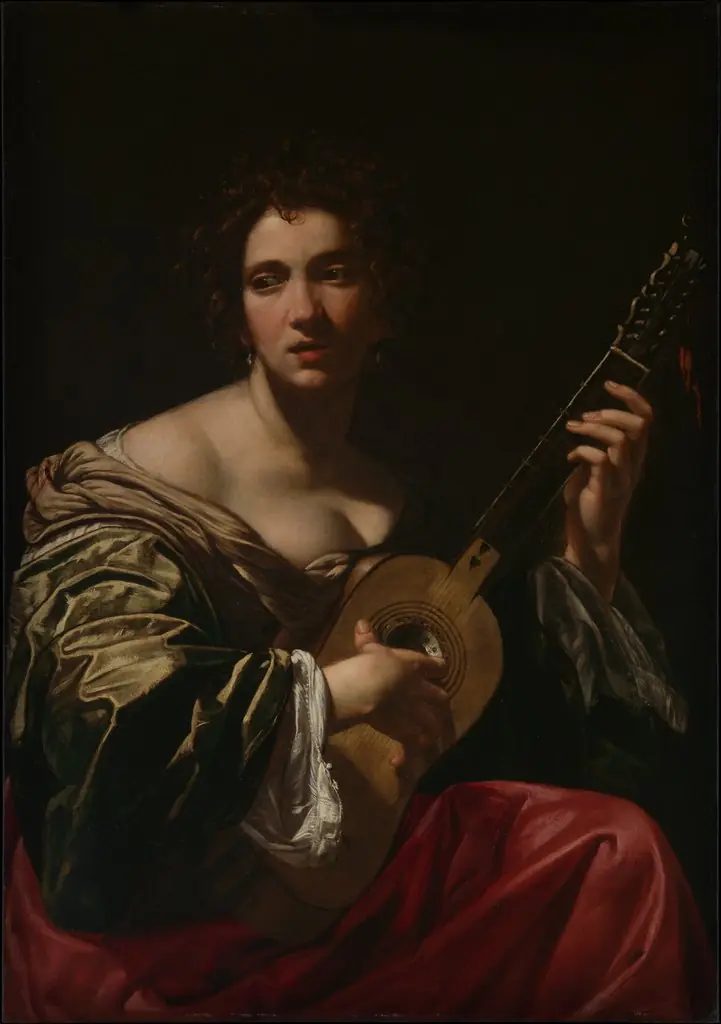
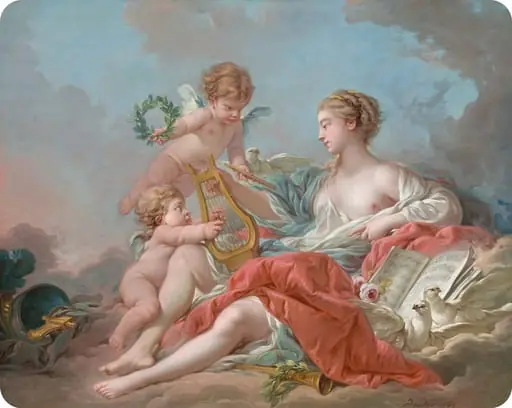 Allegory of Music
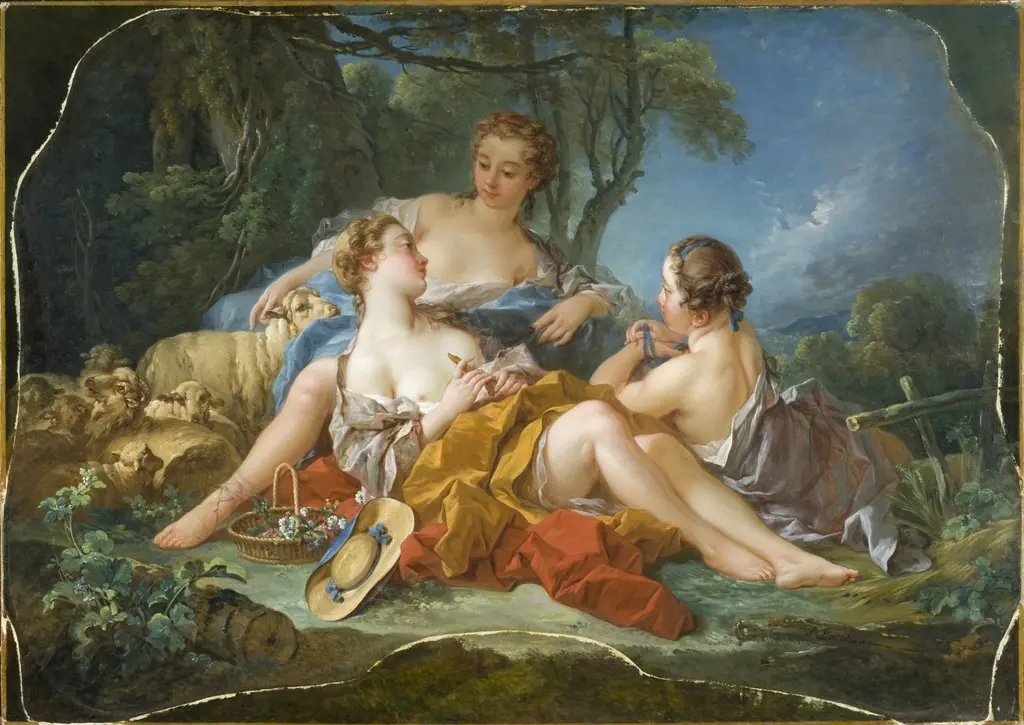 Les Confidences Pastorales
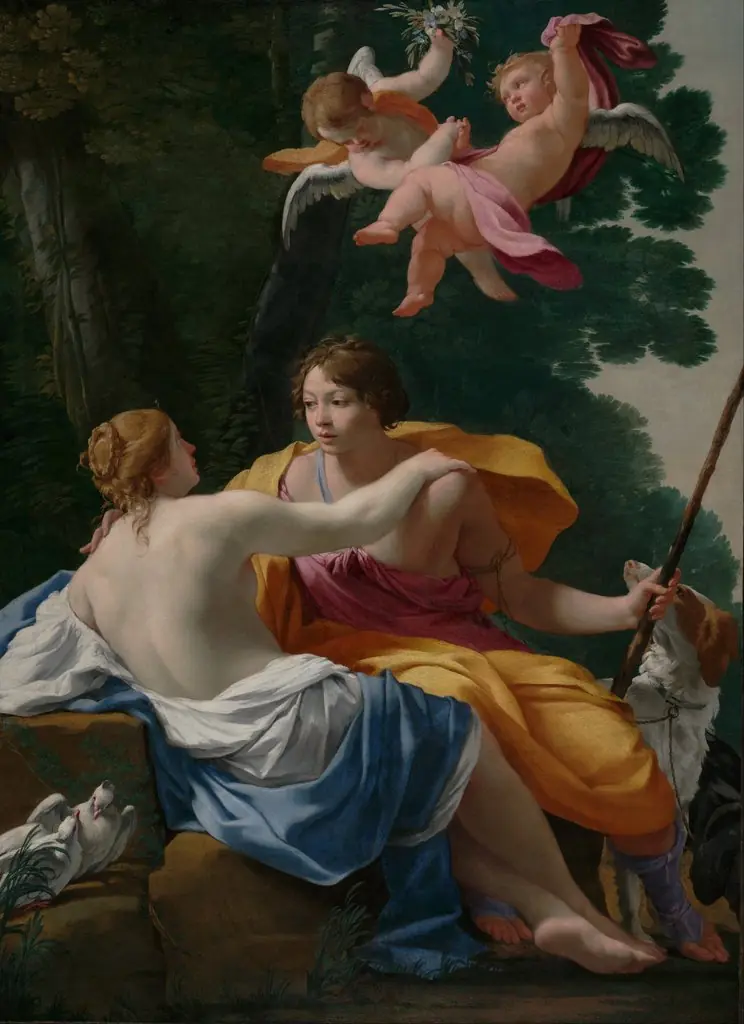 Venus and Adonis
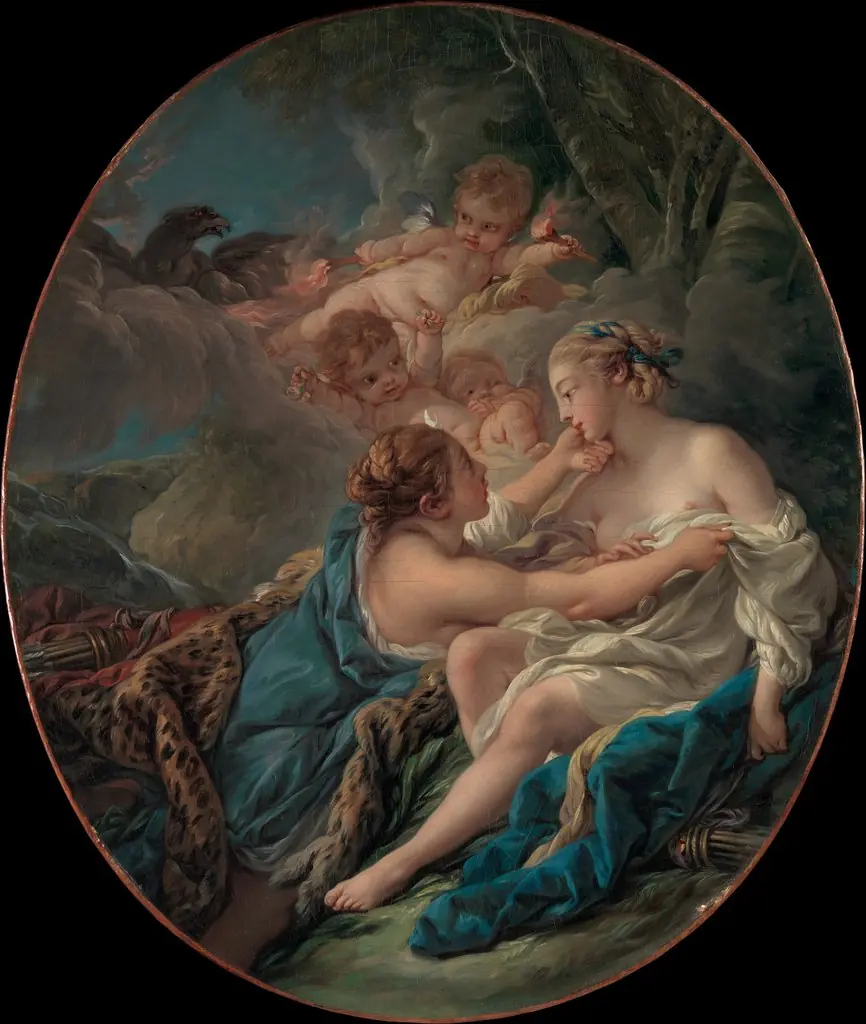 Jupiter, in the Guise of Diana, and Callisto
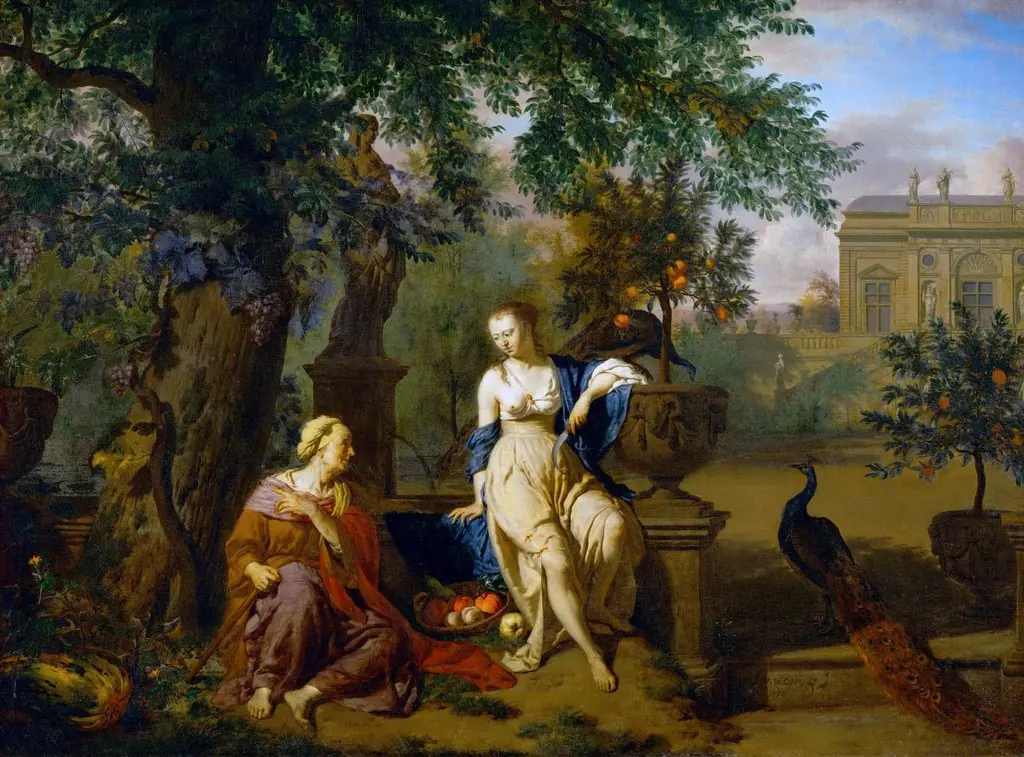 Vertumnus and Pomona
 Bacchus and Ariadne
 Venus Induces Helen to Fall in Love with Paris
 Hagar and the Angel
 Bacchus and Ariadne
 Story of Minerva - The Muses Showing Minerva Hippocrene Waters of the River that Brings Out Pegasus
 Diana and Endymion
- The Abduction of Europa