Artwork
Elias opvækker enkens søn fra de døde
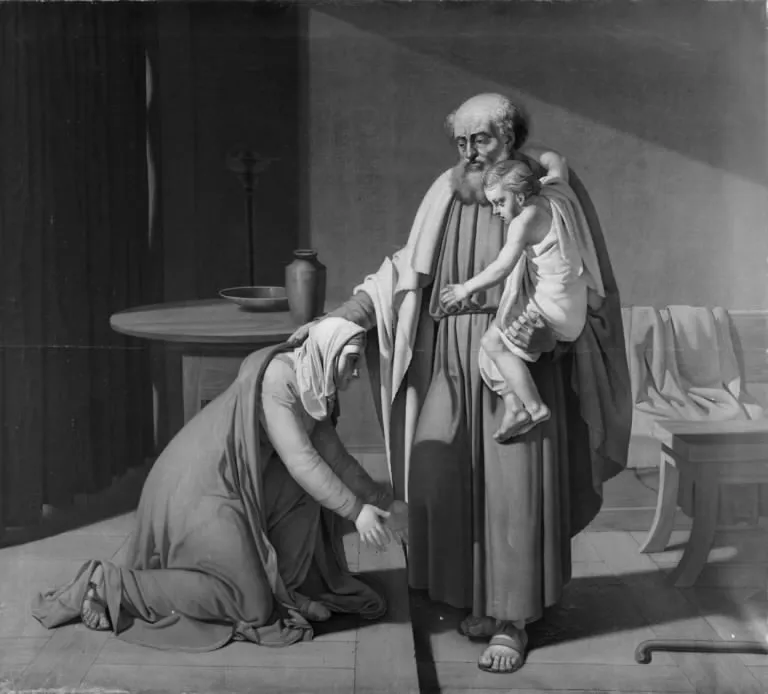
Elias opvækker enkens søn fra de døde is an oil painting by Ferdinand Wolfgang Flachenecker. It dates from 1812 and is held in the collection of the Statens Museum for Kunst.
About this work
Subject & Meaning
By choosing this episode, the artist engages with a longstanding typological subject that prefigures later resurrection imagery in Christian art.
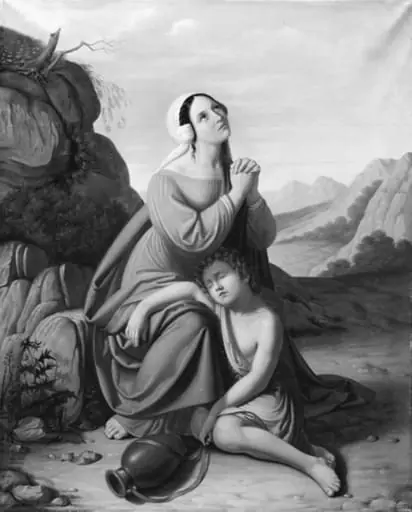
The painting depicts the Old Testament miracle of the prophet Elijah raising the son of the widow of Zarephath from the dead, a subject rooted in the First Book of Kings. Classified as religious art, the work renders this biblical narrative through traditional Christian iconography, presenting Elijah as the divinely empowered agent who restores life to the widow's child. The scene embodies themes of prophetic authority, divine compassion extended to a vulnerable outsider, and the power of faith to overcome death, themes that resonated within early nineteenth-century religious painting.
By choosing this episode, the artist engages with a longstanding typological subject that prefigures later resurrection imagery in Christian art.
Technique & Style
Executed in 1812, this religious painting by Ferdinand Wolfgang Flachenecker utilizes oil paint applied to a canvas support. The work presents a large-scale composition, measuring 156 cm in height and 174.5 cm in width. Visually, the piece depicts the biblical narrative of Elijah and the Widow of Zarephath, adhering to the conventions of religious art through its figural representation and subject matter.
History & Provenance
Elias opvækker enkens søn fra de døde is a religious oil painting completed by Ferdinand Wolfgang Flachenecker in 1812. The work depicts the biblical scene of Elijah raising the widow’s son from the dead and is executed on canvas. As a piece of religious art, it reflects the early‑19th‑century Danish interest in dramatic Old Testament narratives.
Since its creation the painting has entered the collection of the Statens Museum for Kunst in Copenhagen, where it remains on display as part of the museum’s holdings.
The work is held in the collection of the Statens Museum for Kunst, where it is catalogued under the accession number that matches its inventory record. It has been exhibited in museum presentations focusing on early 19th‑century religious painting, though specific exhibition titles are not detailed in the available records.
Context
Ferdinand Wolfgang Flachenecker painted Elias opvækker enkens søn fra de døde in 1812, an oil on canvas work measuring 156 by 174.5 centimeters, depicting the biblical figure Elijah alongside the Widow of Zarephath. The painting is classified as religious art and is held in the collection of the Statens Museum for Kunst in Copenhagen, where it remains on public view. As a work of the early nineteenth century, it reflects the enduring influence of religious narrative in European painting, situating Flachenecker within the broader tradition of genre and history painting.
Its reception has been shaped by both its devotional subject and its technical execution within the academic conventions of the period.
Overview
Elias opvækker enkens søn fra de døde is an oil painting executed in 1812 by the Danish artist Ferdinand Wolfgang Flachenecker. The work is part of the collection of the Statens Museum for Kunst, where it is displayed among the museum’s holdings of early‑19th‑century religious art.
Artist & collection
Artist
Ferdinand Wolfgang Flachenecker
Ferdinand Wolfgang Flachenecker (1792–1847) was an artist, born in Zirndorf.