Artwork
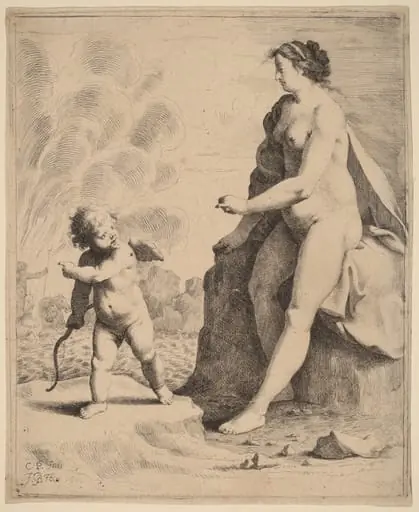
Venus with Cupid Whittling His Bow
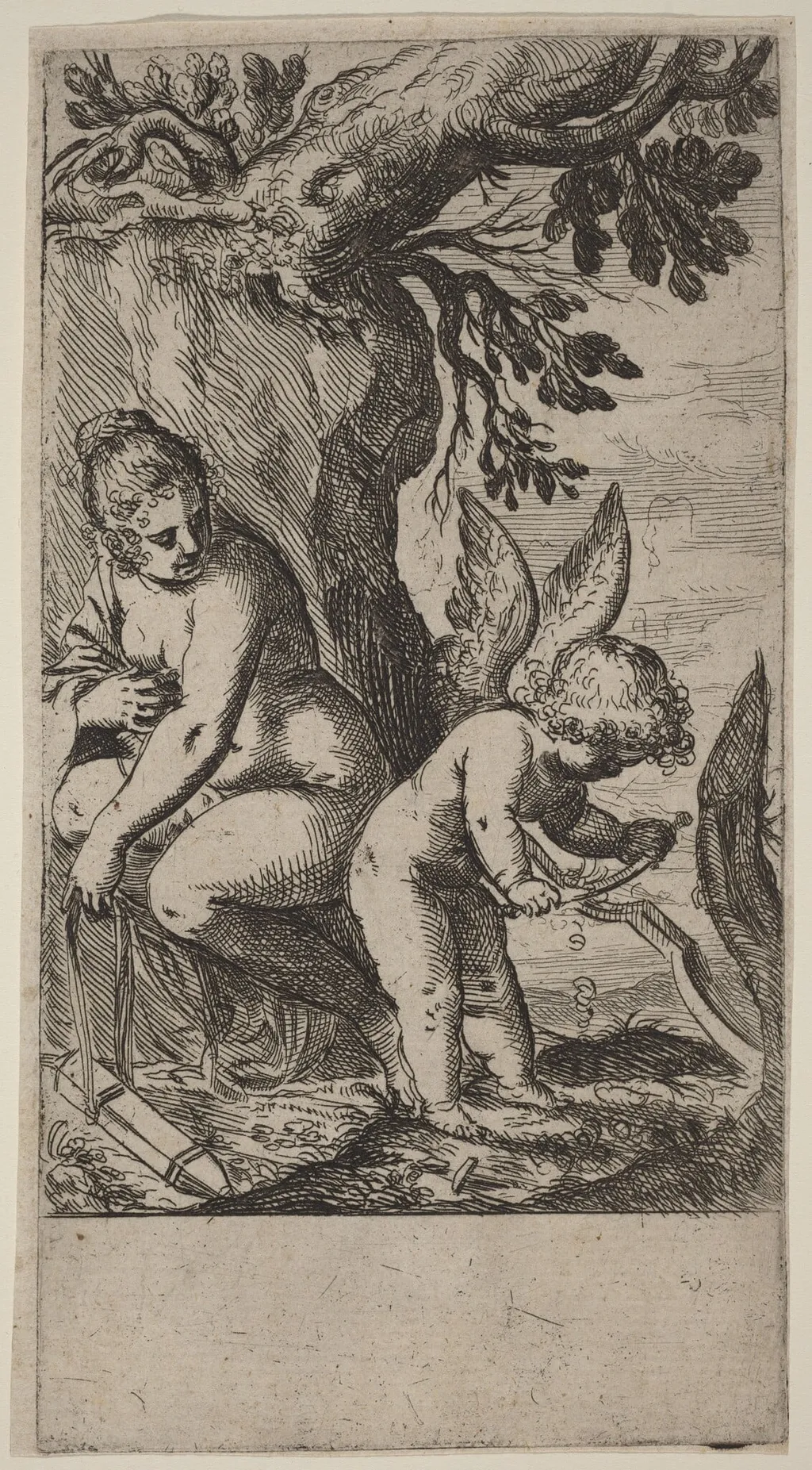
Venus with Cupid Whittling His Bow is an ink print by the Baroque artist Odoardo Fialetti. It dates from 1617 and is held in the collection of the National Gallery of Art.
- Inscription
- Inscribed:none
- Markings
- Marked:none
About this work
Overview
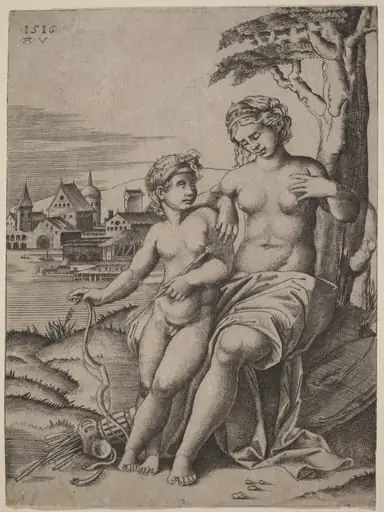
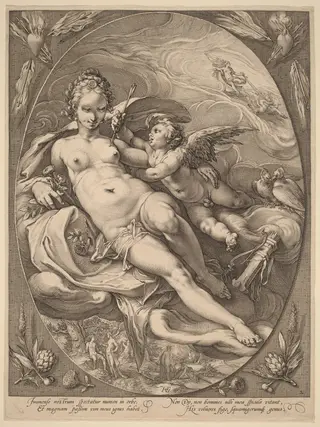
Venus stands calmly, observing as Cupid focuses intently on whittling his bow, a moment of quiet preparation rather than active conflict.
Created in 1617, Venus with Cupid Whittling His Bow is an etching on laid paper by the Italian Mannerist artist Odoardo Fialetti. The work depicts the mythological figures Venus and her son Cupid in an intimate, domestic setting. Venus stands calmly, observing as Cupid focuses intently on whittling his bow, a moment of quiet preparation rather than active conflict.
Fialetti employs the etching medium to render fine textures and subtle tonal variations, utilizing a network of lines and dots to model the figures' forms and the surrounding drapery. This piece reflects Fialetti's broader career interest in mythological subjects and his technical proficiency in printmaking, which was a significant vehicle for disseminating art in early 17th-century Italy. The composition balances the serenity of the goddess with the focused activity of the child god, capturing a specific narrative pause within classical mythology.
As a work from the late Italian Renaissance transitioning into the Baroque period, it demonstrates the continued popularity of mythological themes in Venetian art and Fialetti's contribution to the era's graphic arts.
Subject & Meaning
The composition juxtaposes the serene composure of Venus with the active, youthful labor of Cupid, suggesting a balance between divine calm and mortal endeavor. The act of shaping a bow may allude to the preparation of love’s instrument, reinforcing the mythic association of the pair.
Technique & Style
Fialetti employs fine lines and stippled dots to model forms, creating subtle gradations of tone that convey volume within the limited scale of the print. The intricate handling of texture demonstrates the artist’s command of the etching needle, achieving depth despite the medium’s inherent constraints.
History & Provenance
Created in the early seventeenth century, the etching reflects the period’s fascination with classical subjects rendered in print form. While specific ownership records are scarce, the work is catalogued among Fialetti’s known prints and has been cited in scholarly surveys of Venetian etchers.
Context
The piece belongs to a broader trend of mythological imagery popular in the Baroque era, where prints served both decorative and educational purposes. Fialetti, active in Venice, often blended academic drawing techniques with the expressive potential of etching, situating this work within his oeuvre of classical themes.
Artist & collection