Artwork
Lourdes, 1914, 25th International Eucharistic Congress
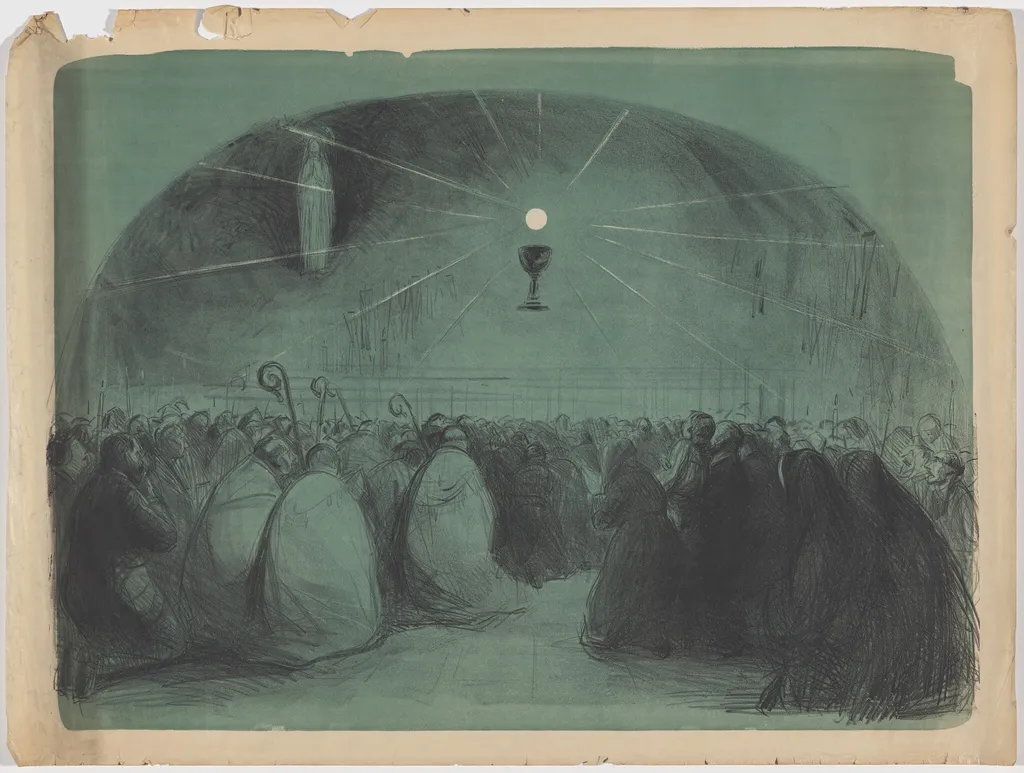
Lourdes, 1914, 25th International Eucharistic Congress is an ink print by Jean-Louis Forain. It dates from 1914 and is held in the collection of the National Gallery of Art. Created in 1914, this lithograph poster was commissioned for the 25th International Eucharistic Congress held in Lourdes.
- Inscription
- Inscribed:Not signed. Not dated. "35" lower right margin, graphite, unknown hand. Verso: none.
- Markings
- Marked:"National Gallery of Art" verso, black stamped ink, (Lugt 1932d). "73" [encircled] verso, black stamped ink.
About this work
This painting shows a scene from the 25th International Eucharistic Congress in Lourdes.
This painting shows a scene from the 25th International Eucharistic Congress in Lourdes. It's a lithograph poster with green and black ink on wove paper. The image is from 1914. The artist used simple lines and shapes to create the scene.
The poster has a lot of detail, like the crowds and buildings. It looks like it was made to advertise the event.
To learn more about how this was made, look into the technique: lithography.
Overview
Created in 1914, this lithograph poster was commissioned for the 25th International Eucharistic Congress held in Lourdes. Designed by Jean-Louis Forain, it employs a restrained palette of green and black ink on wove paper, characteristic of commercial printmaking of the era. Though known for his paintings and etchings, Forain frequently engaged with poster design, blending artistic sensibility with public messaging.
Subject & Meaning
The poster depicts a procession of pilgrims moving toward the grotto of Lourdes, framed by architectural elements of the sanctuary. Crowds are rendered with simplified forms, suggesting mass movement without individual detail. The composition serves a devotional and promotional function, guiding viewers toward the spiritual significance of the event while signaling its scale and solemnity through orderly arrangement.
Technique & Style
Forain used lithography to achieve sharp, flat areas of tone with minimal shading. Lines are clean and deliberate, emphasizing silhouette over texture. The limited color scheme, green and black, enhances legibility at a distance, a practical choice for outdoor display.
His approach reflects a modernist tendency to reduce forms to essential shapes, aligning with contemporary poster design trends.
History & Provenance
The poster was produced as part of a series of official graphics for the 1914 congress, a major Catholic gathering that drew international pilgrims. Few original prints survive, and those that do are held in institutional collections, including the Bibliothèque nationale de France. Its rarity stems from its ephemeral purpose: intended for temporary public use rather than artistic preservation.
Context
In early 20th-century France, religious events were increasingly promoted through graphic posters, merging civic pride with spiritual devotion. Forain, though secular in personal outlook, accepted such commissions as part of his broader printmaking practice. This work reflects a moment when art and public ritual intersected, and when lithography served as a primary medium for mass communication.
Legacy
While not widely exhibited today, the poster remains a documented example of how fine artists contributed to religious advertising in the pre-war period. It illustrates the fluid boundary between commercial and fine art in early modern print culture. Forain’s participation underscores the versatility of his career and the role of lithography in shaping public visual experience.
Own this work as a print
Artist & collection

Artist
Jean-Louis Forain (French pronunciation:; 23 October 1852 – 11 July 1931) was a French Impressionist painter and printmaker, working in media including oils, watercolour, pastel, etching and lithograph.

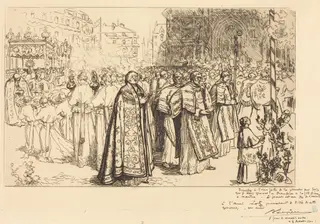 Return of the Procession to Nante Cathedral (Rentree de la Procession a la Cathedral de Nantes)
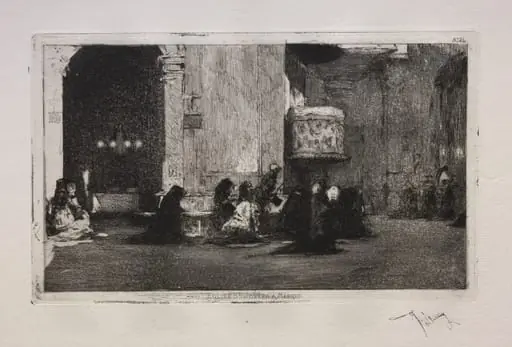 Saint Joseph Church, Madrid
 Untitled
 La mort des pauvres-Baudelaire
 Shadow (Ombre)
 Study after Old Master
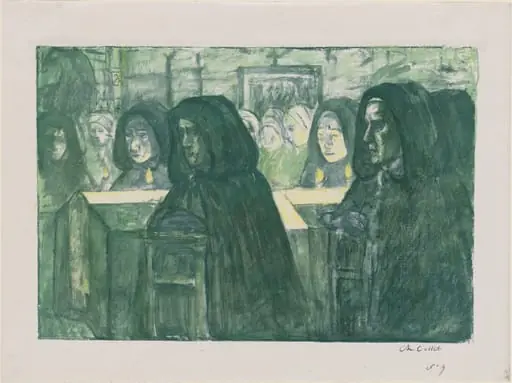 Burial in Brittany (L'Enterrement en Bretagne)
 Christ Crucified Between the Two Thieves: 'The Three Crosses'
 Shrine of the Annunciation, Nazareth