Artwork
Waterfront
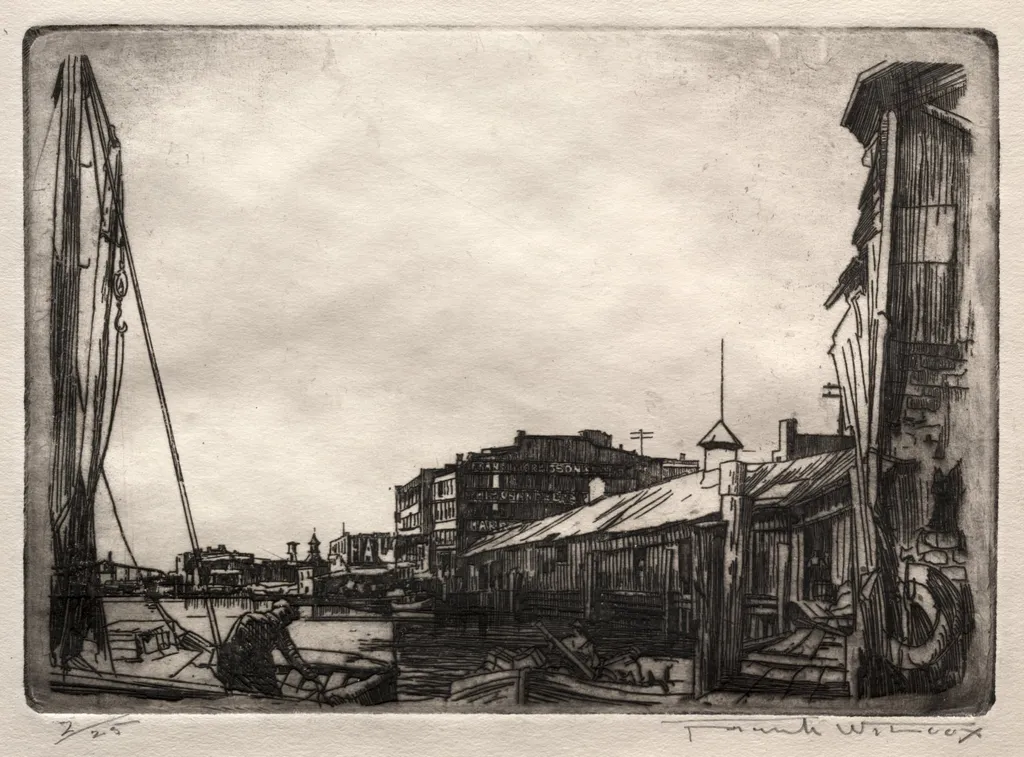
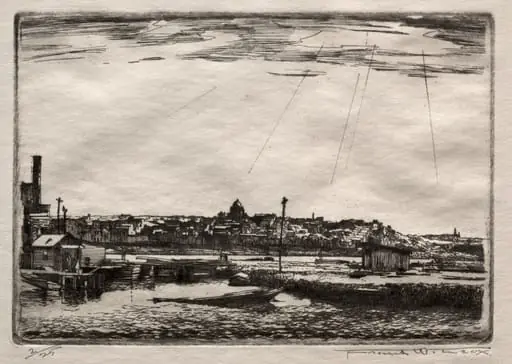
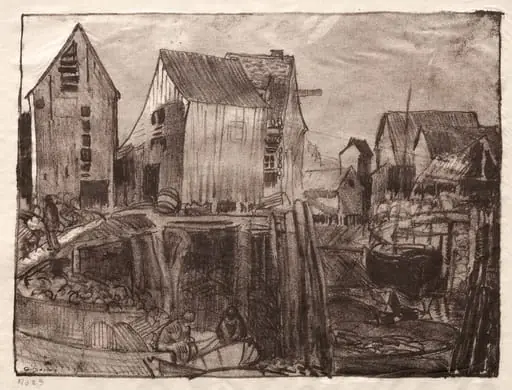
Waterfront is a print by Frank Wilcox. It dates from 1935 and is held in the collection of the Cleveland Museum of Art.
- Accession no.
- 1924.617
- Credit line
- Dudley P. Allen Fund
About this work
Overview
The scene centers on two towering cranes rising above wooden docks, with clustered buildings along the shoreline marked by signage.
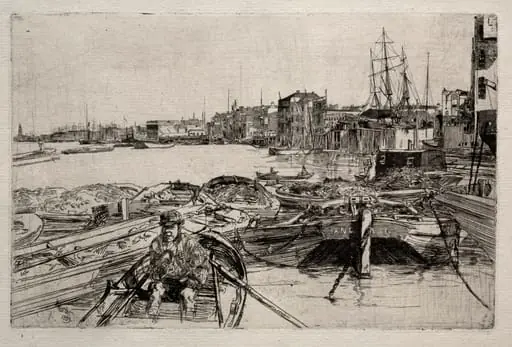
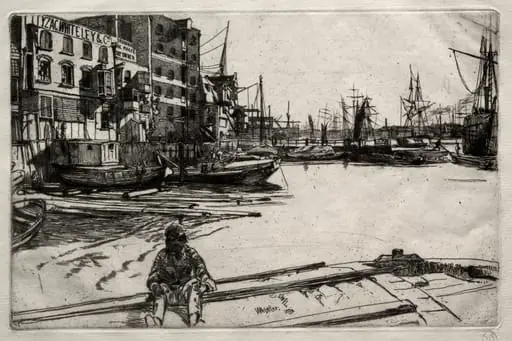
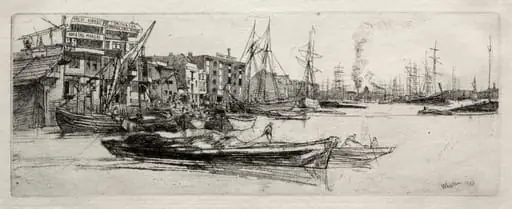
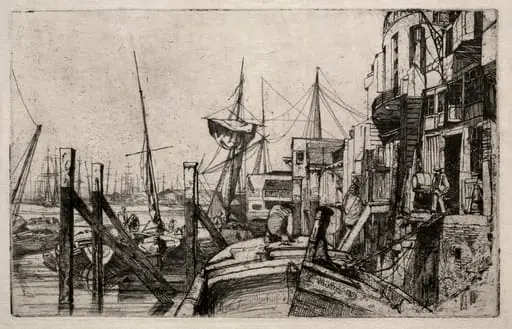
Waterfront, created around 1935 by Frank Wilcox, is a print depicting an active industrial harbor. The scene centers on two towering cranes rising above wooden docks, with clustered buildings along the shoreline marked by signage. The composition emphasizes the scale of labor infrastructure, rendered through precise linework and tonal contrast. The work is part of the collection at The Cleveland Museum of Art.
Subject & Meaning
The print captures the functional rhythm of a working port, highlighting machinery, cargo, and maritime activity. Cranes, stacked crates, and moored ropes convey the physical demands of shipping and trade. The inclusion of local identifiers like 'Cleveland' and 'Union' grounds the scene in a specific urban context, suggesting a quiet celebration of industrial labor rather than a dramatic narrative.
Technique & Style
Wilcox employed sharp, controlled lines and layered shading to define textures, rough timber, coiled ropes, and weathered metal. The use of chiaroscuro enhances spatial depth, modeling forms through deliberate contrasts of light and shadow. The print’s precision reflects a realist approach, prioritizing structural clarity over emotional expression, aligning with early 20th-century American printmaking traditions.
History & Provenance
Created during the Great Depression, the print emerged from a period when American artists increasingly turned to everyday labor and urban landscapes as subjects. It entered The Cleveland Museum of Art’s collection as part of its broader effort to document regional artistic responses to industrial life. Its provenance remains tied to the museum’s mid-20th-century acquisitions of regional prints.
Context
Waterfront reflects a broader interest among American artists in the 1930s in documenting industrial and working-class environments. Similar themes appear in the work of the Regionalist movement and WPA-era projects, which sought to elevate the dignity of labor. Wilcox’s focus on Cleveland’s waterfront situates the print within a local narrative of economic resilience during a time of national hardship.
Legacy
Though not widely exhibited beyond regional collections, Waterfront remains a representative example of mid-century American printmaking that valued technical precision and social observation. It contributes to the historical record of industrial America, offering a quiet but enduring record of port life before automation transformed such scenes.
Artist & collection