Artwork
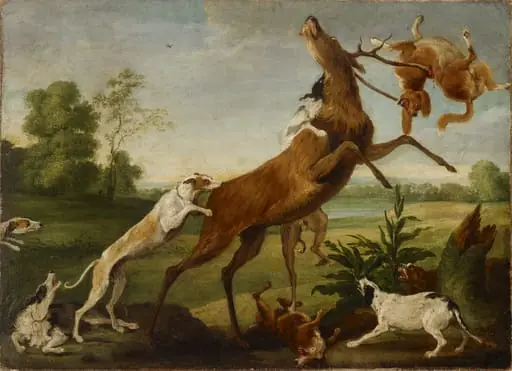
Two young lions chasing a roe
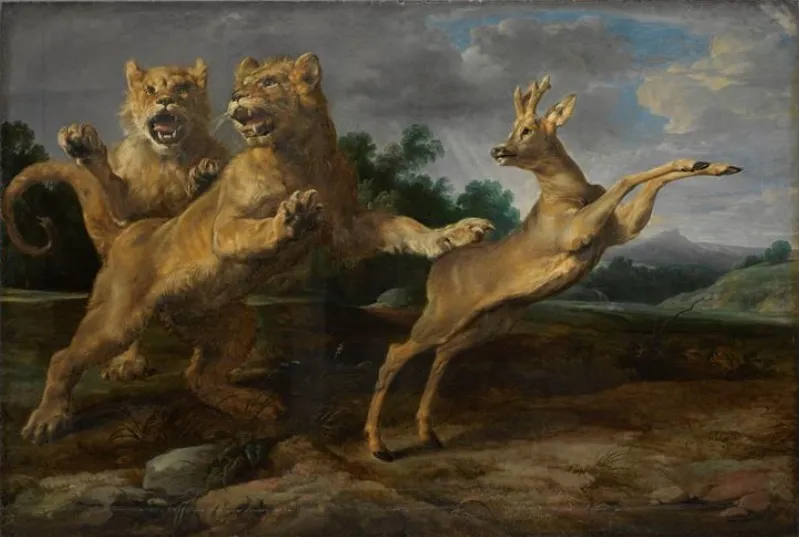
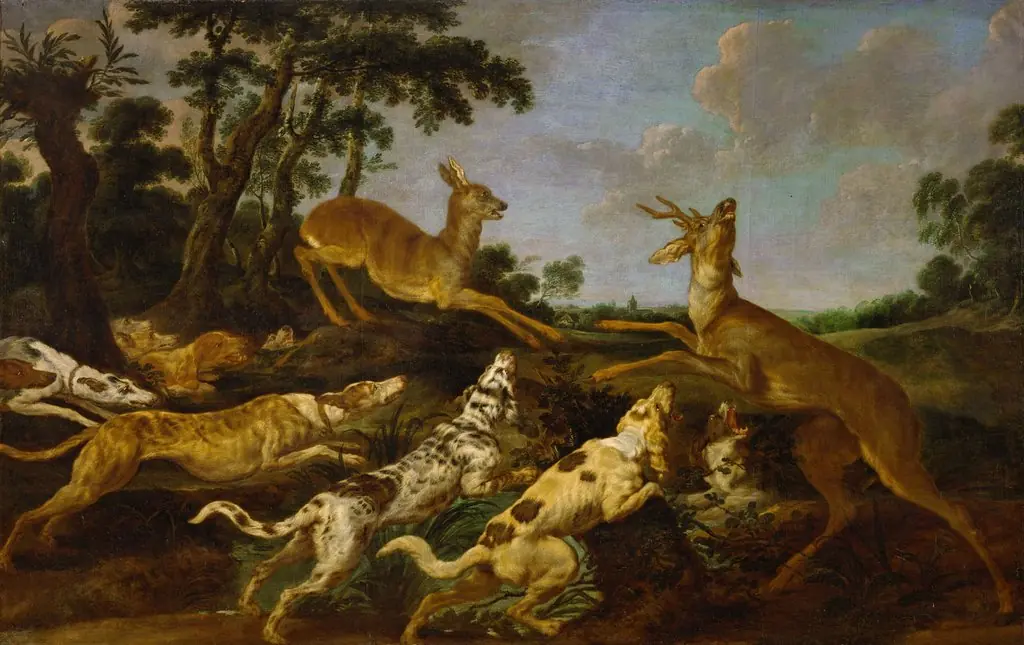
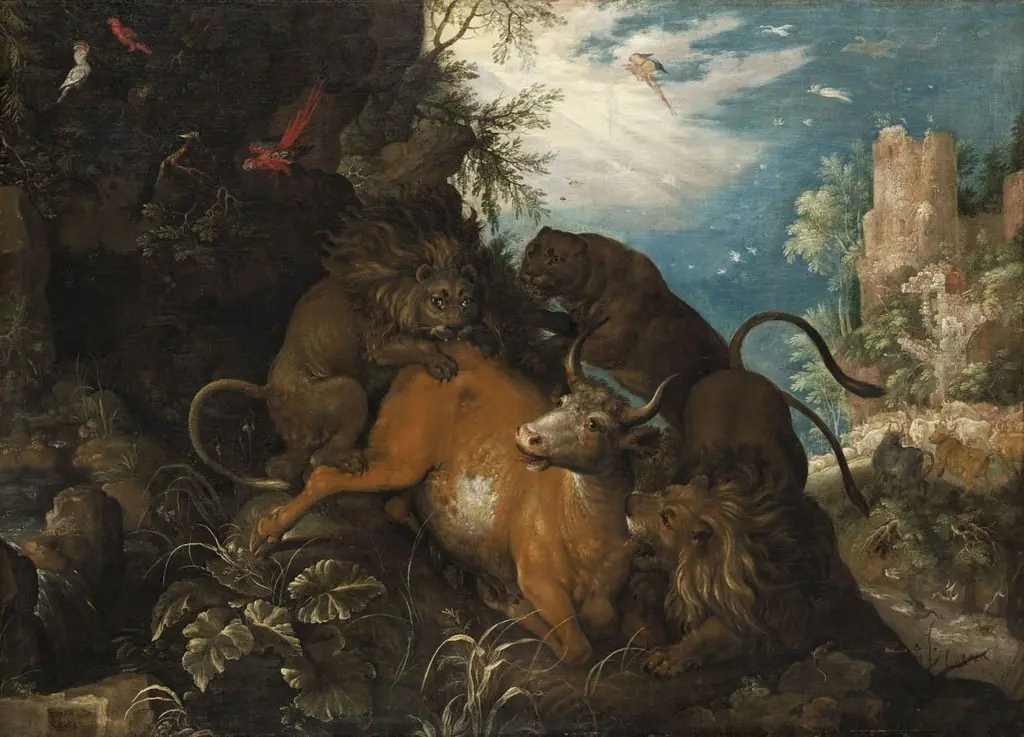
Two young lions chasing a roe is an oil painting by the Flemish Baroque painting artist Frans Snyders. It dates from 1650 and is held in the collection of the Bavarian State Painting Collections.
About this work
Overview
Frans Snyders’ oil painting titled Two Young Lions Chasing a Roe, executed around 1650, is part of the collection of the Alte Pinakothek in Munich. The work captures a dramatic moment in the natural world, portraying predators in the act of pursuit against a backdrop of a dimly lit forest and a storm‑filled sky.
Subject & Meaning
The composition centers on a pair of lion cubs lunging toward a fleeing roe deer. The animals are rendered with open mouths and extended claws, emphasizing the immediacy of the hunt. The deer’s elongated limbs convey frantic escape, suggesting the relentless cycle of predator and prey in the wild.
Technique & Style
Snyders employs a vigorous impasto technique, building up thick layers of paint to give the lions’ fur a tactile, three‑dimensional quality. The brushwork is energetic and gestural, especially in the blurred depiction of the deer’s legs, which creates a sense of motion while contrasting with the more solid, sculptural rendering of the predators.
History & Provenance
Created in the mid‑17th century, the painting entered the Alte Pinakothek’s holdings during the museum’s early acquisitions of Flemish Baroque works. Its provenance traces back to private collections in the Low Countries before being acquired by the Bavarian state, where it has remained on public display.
Context
Snyders, a leading Flemish animal painter, often collaborated with still‑life and genre artists, contributing dynamic animal figures to larger compositions. This work reflects his fascination with the drama of the hunt, a popular theme in the period’s visual culture, and showcases his skill in rendering animal anatomy and movement.
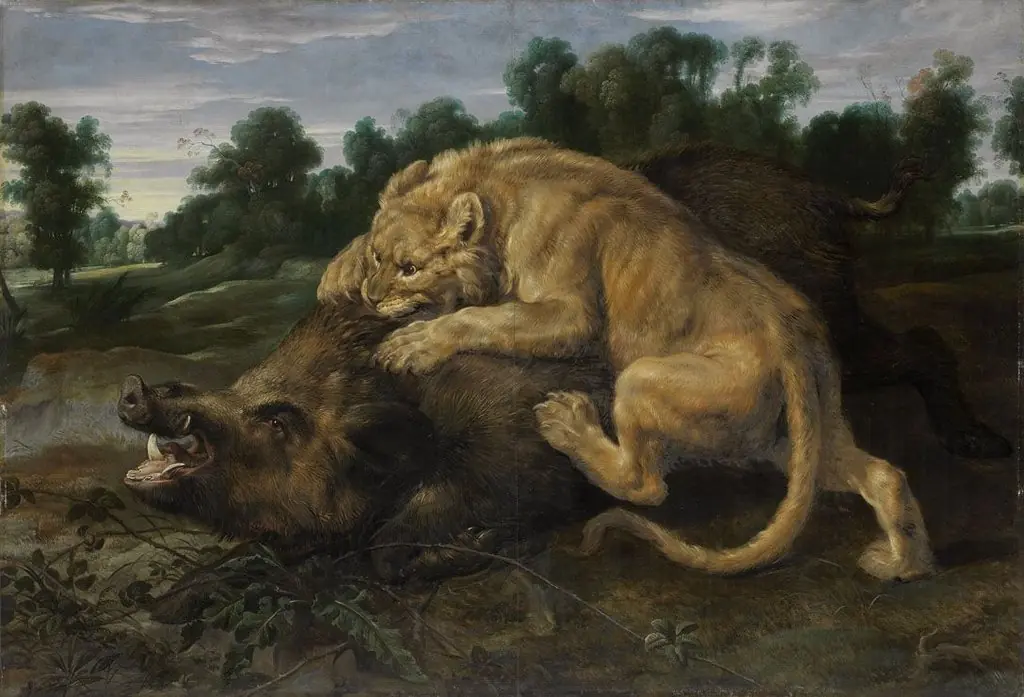
Artist & collection
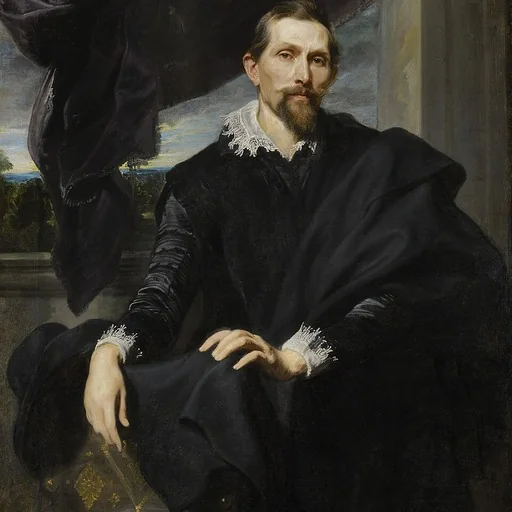
Artist
Frans Snyders or Frans Snijders was a Flemish painter of animals, hunting scenes, market scenes, and still lifes.

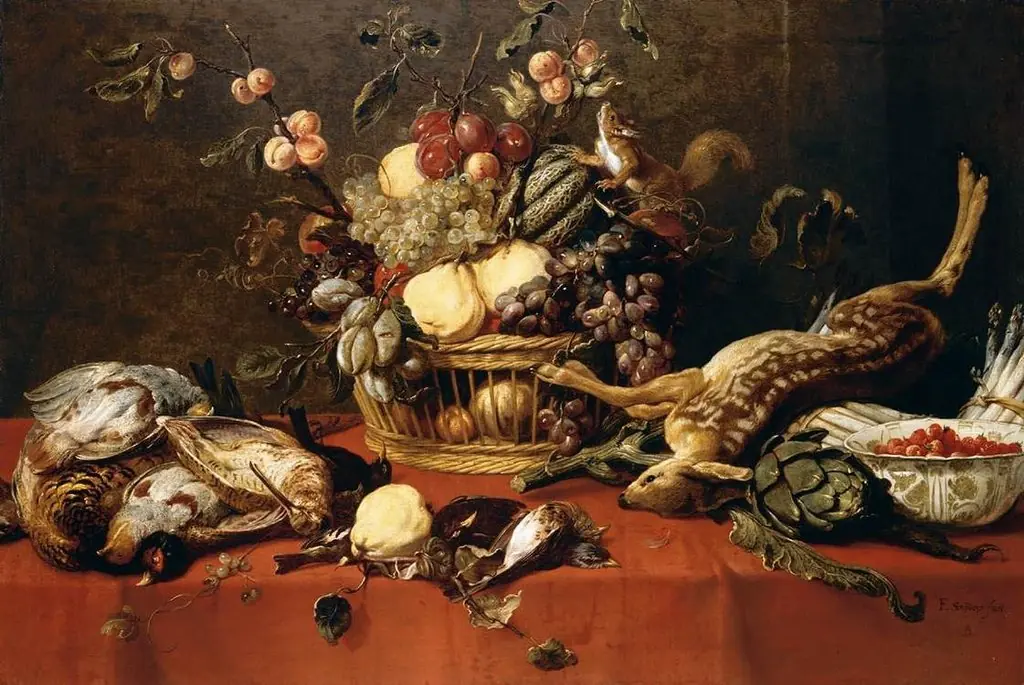 Still life of fruit in a basket together with game, a bowl of fraises-de-bois, artichokes, asparagus and a squirrel upon a table draped with a red cloth
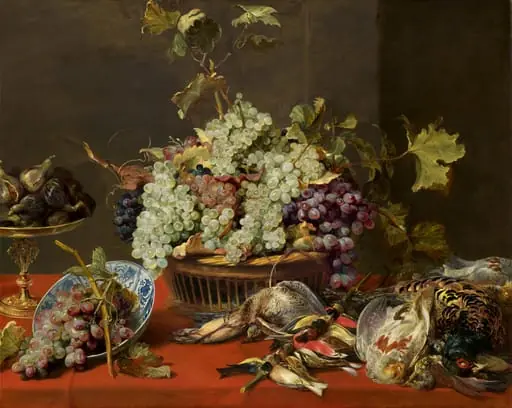 Still Life with Grapes and Game
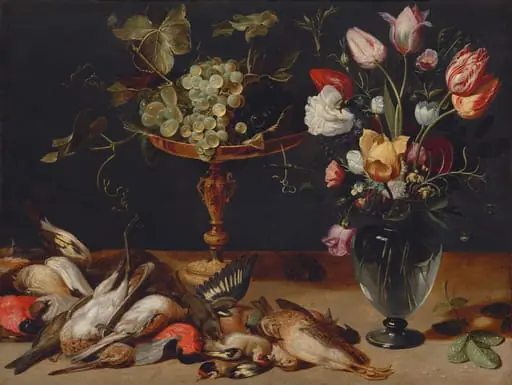 Still Life with Flowers, Grapes, and Small Game Birds
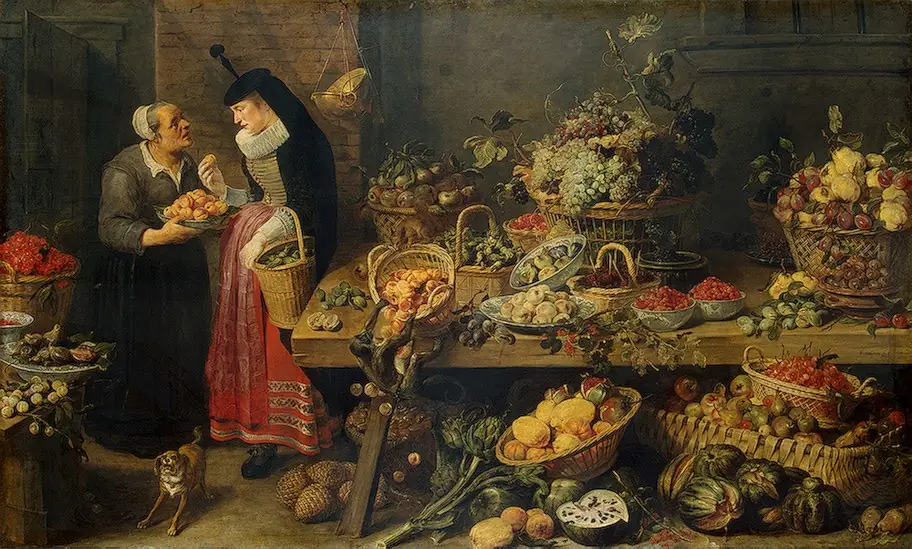 The Fruit Shop
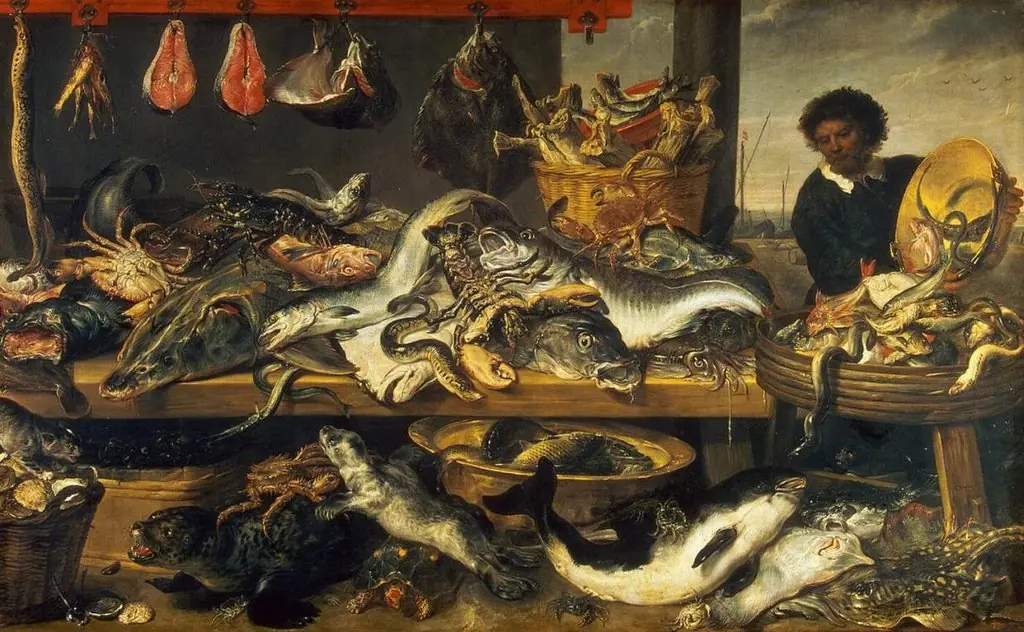 Fish Market
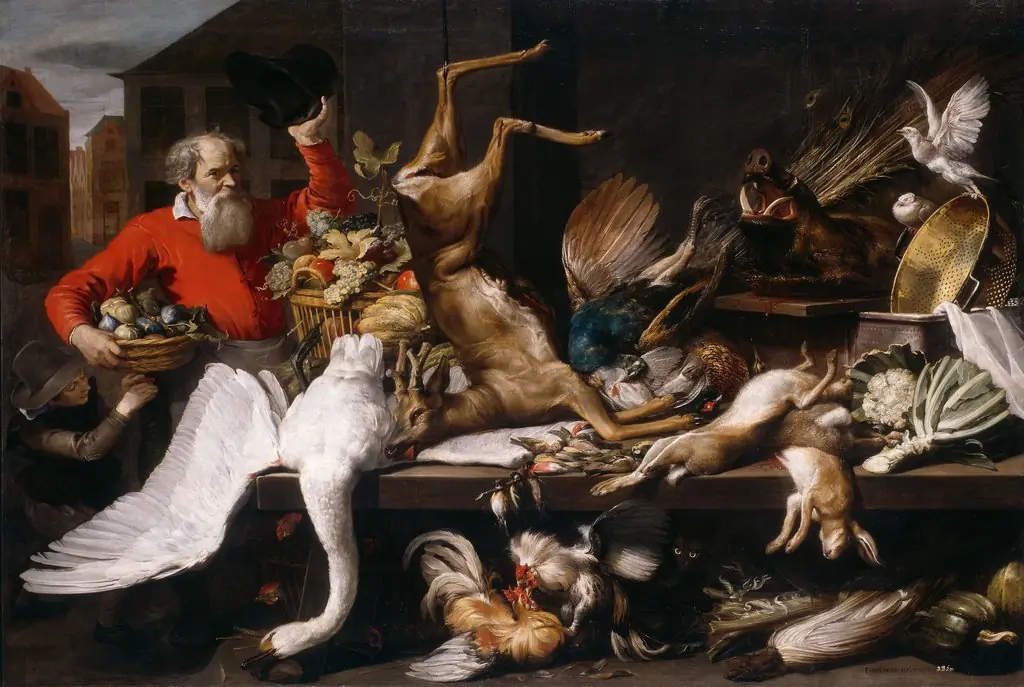 Still Life with Dead Game, Fruits, and Vegetables in a Market
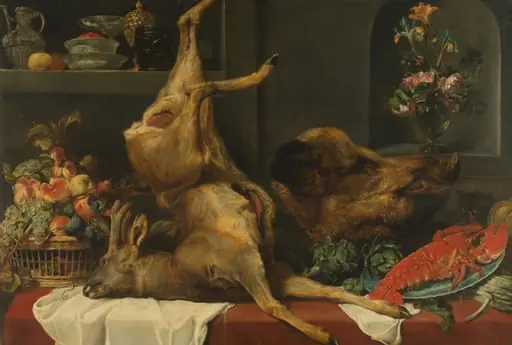 Larder Still life
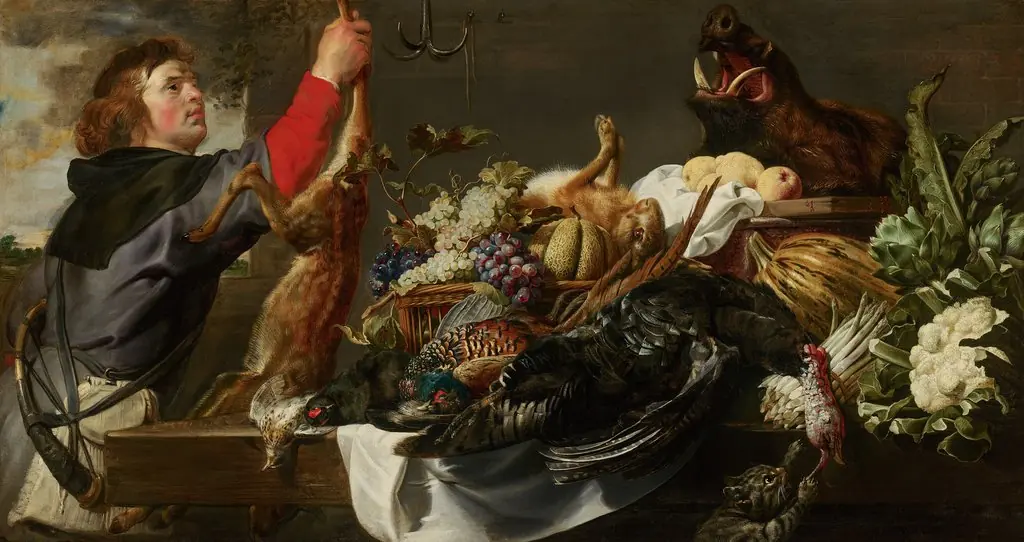 Still Life with Huntsman