Artwork
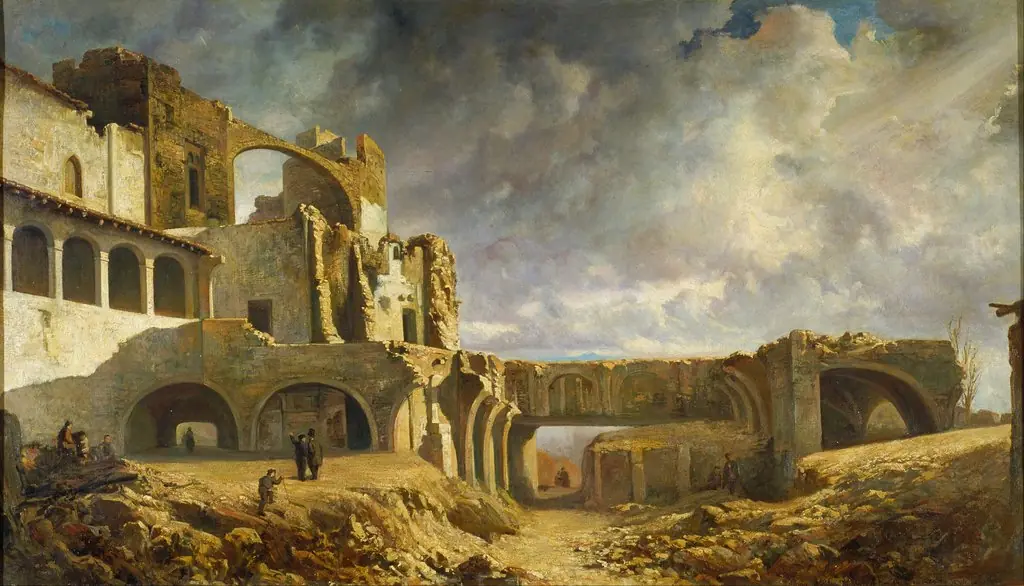
The Ruins of Brahehus near Jönköping, Sweden
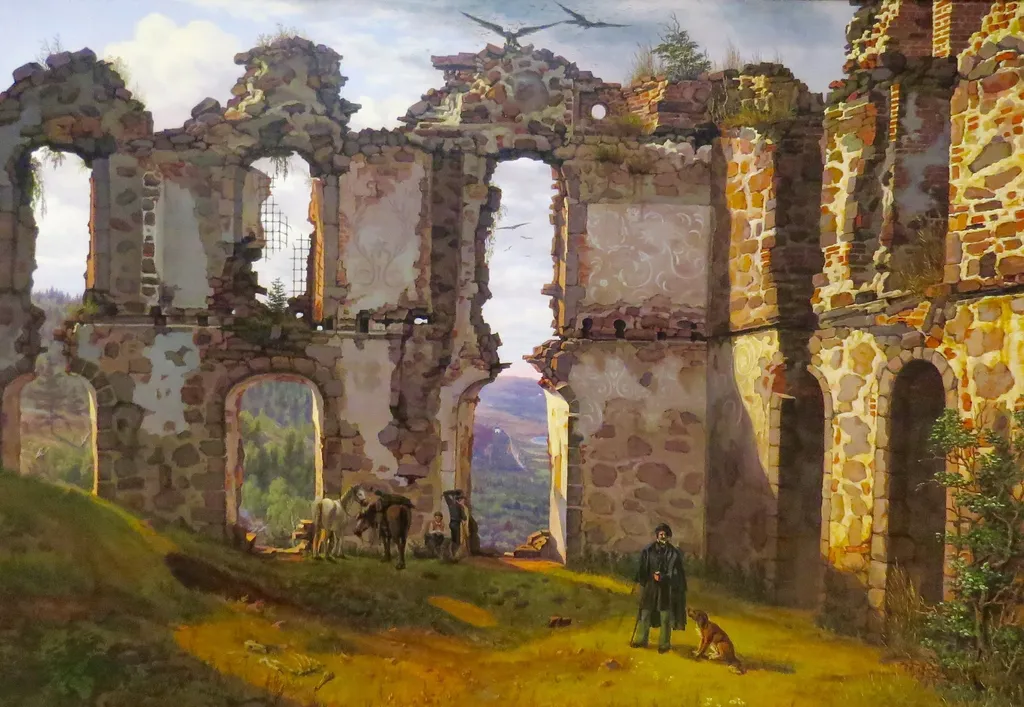
The Ruins of Brahehus near Jönköping, Sweden is an oil painting by Frederik Sødring. It dates from 1832 and is held in the collection of the Statens Museum for Kunst.
About this work
Subject & Meaning
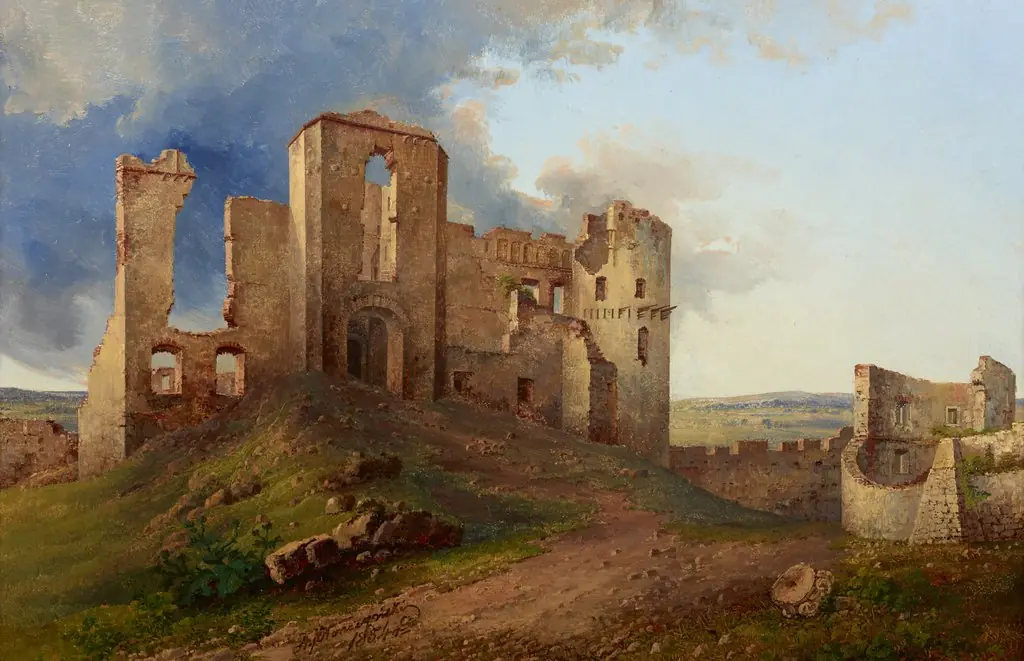
The painting depicts the ruins of Brahehus located near Jönköping, Sweden, presenting a scene that includes both architectural remnants and human presence.
The painting depicts the ruins of Brahehus located near Jönköping, Sweden, presenting a scene that includes both architectural remnants and human presence. The composition specifically features the dilapidated structure alongside a man and a dog, grounding the historical site in a moment of contemporary observation. By focusing on these elements, the work captures the physical state of the ruins while integrating living figures into the landscape.
This combination suggests a narrative of interaction between humanity and the vestiges of the past, set within the natural environment of the region.
Technique & Style
The Ruins of Brahehus near Jönköping, Sweden is an oil painting executed on canvas, a medium and support consistent with Frederik Sødring's broader landscape practice of the early 1830s;. The work is a sizeable composition, measuring 705.0 in height by 985.0 in width, a horizontal format suited to its expansive topographical subject. Its subject matter combines architectural and figurative elements, depicting the Brahehus ruins together with a dog and a man, suggesting a combination of topographical landscape with staffage figures set against the dilapidated structure. The painting is held in the collection of the Statens Museum for Kunst.
No further details regarding specific handling, brushwork, condition, or stylistic qualities are documented in the available sources.
History & Provenance
The work titled The Ruins of Brahehus near Jönköping, Sweden was painted in 1832 by Frederik Sødring. It is an oil on canvas measuring 705.0 cm by 985.0 cm and depicts the Brahehus ruins, a dog, and a man. The painting entered the collection of Statens Museum for Kunst, where it remains on display.
Legacy
The painting's reputation grew through its inclusion in the Statens Museum for Kunst collection, where it remains on display and has been reproduced in scholarly catalogues of 19th-century Nordic landscape art. Its depiction of Brahehus has influenced later interpretations of Swedish antiquarian subjects, cited in museum publications as a model for combining historical ruin motifs with Romantic-era compositional techniques. The work's technical execution in oil on canvas has informed conservation studies of early Danish painting practices, particularly regarding the rendering of atmospheric effects in ruin scenes.
The painting measures 705.0 cm in height and 985.0 cm in width, reflecting its large-scale presentation in the museum's exhibition spaces.
Overview
Frederik Sødring’s 1832 oil on canvas portrays the dilapidated Brahehus castle near Jönköping, Sweden. The composition centers on the crumbling stone structure, its broken walls and vacant windows illuminated by bright daylight, while figures and a dog occupy the foreground.
Context
During the early 19th century, Romantic interest in ruins and the sublime qualities of nature influenced many Scandinavian artists. Sødring’s focus on Brahehus aligns with this trend, using the castle’s decay as a symbol of historic grandeur and the natural world’s enduring presence.
Own this work as a print
Artist & collection

Artist
Danish painter Frederik Sødring made moody scenes of real places—Norway’s cliffs, Sweden’s ruins, Denmark’s chalk cliffs—all lit by moonlight or soft daylight.