Artwork
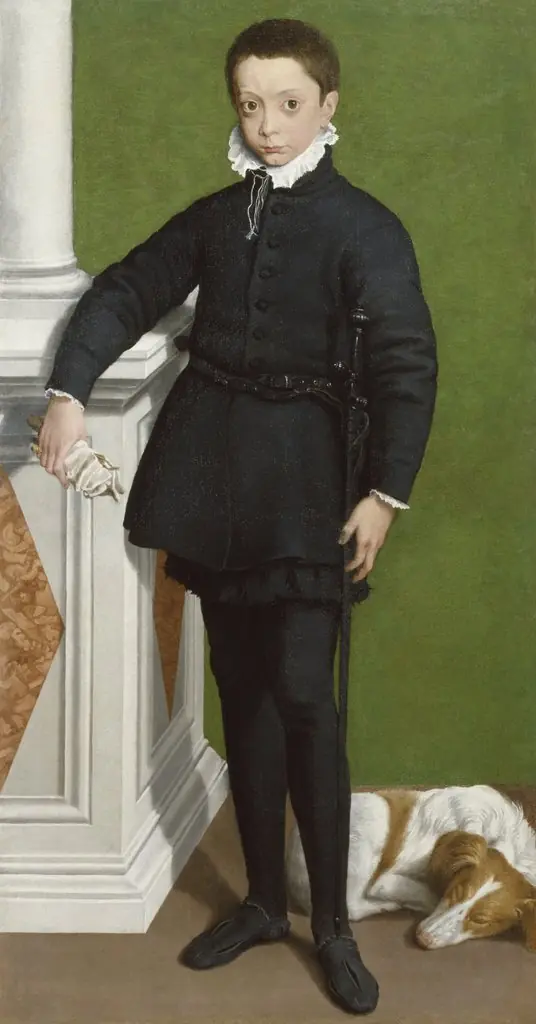
Prince Hercule-François, Duc d'Alençon
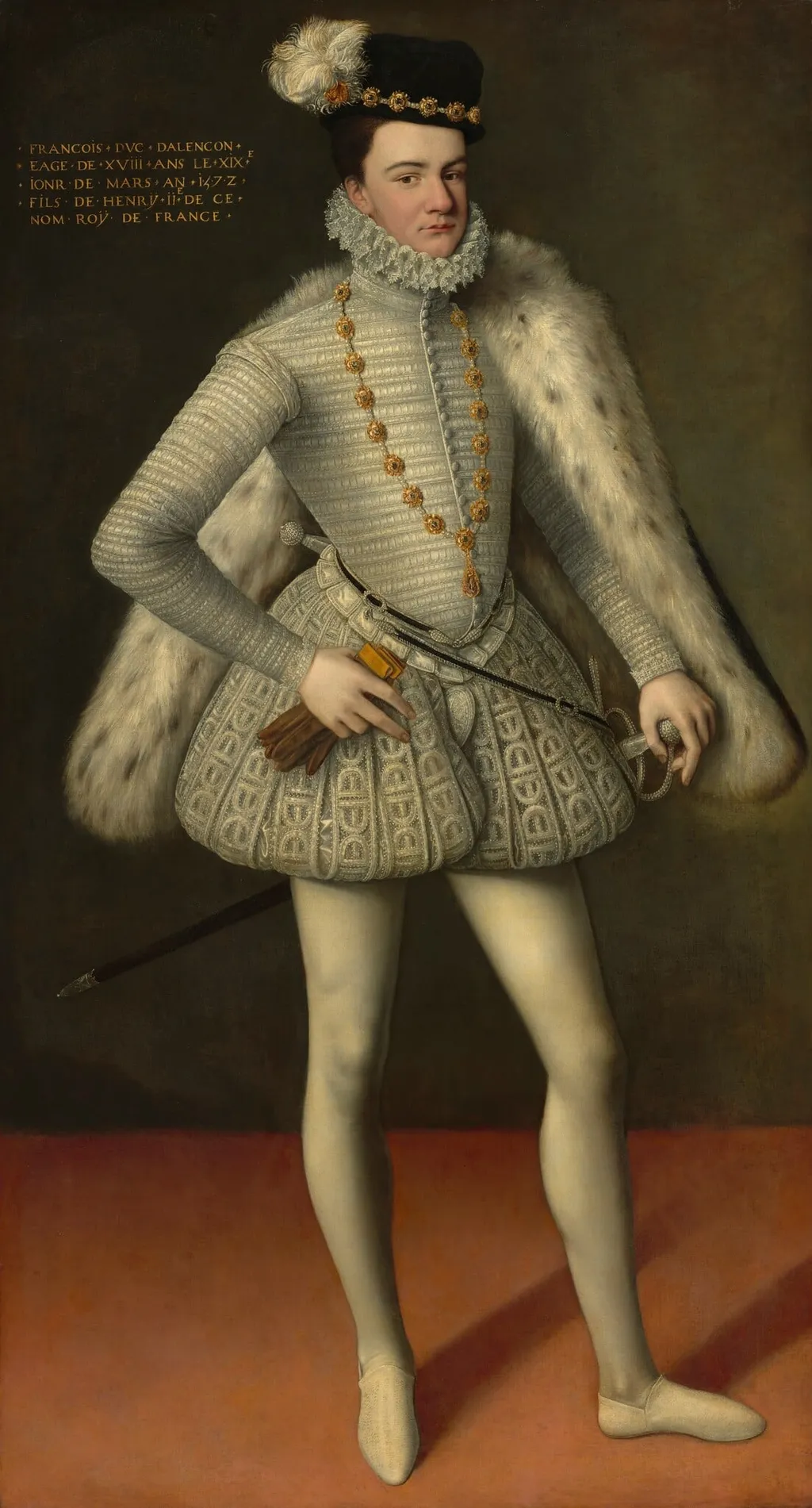
Prince Hercule-François, Duc d'Alençon is an oil painting. It dates from 1572 and is held in the collection of the National Gallery of Art.
- Inscription
- Inscribed:upper left: . FRANCOIS . DVC . DALENCON . / . EAGE . DE . XVIII . ANS LE.XIX.E / . IONR . DE . MARS . AN . 1572 . / . FILS . DE . HENRY II.EDE CE . / NO M . ROY . DE . FRANCE .
About this work
A young prince of the French royal family, Hercule-Francois, Duc d'Alencon, in formal dress and a serious pose. Painted by an unidentified French hand in 1572.
Subject & Meaning
The sitter’s attire, including a black doublet and white ruff, signals high status, while the direct gaze and composed demeanor convey dignity and authority.
The painting depicts Hercule-François, Duc d’Alençon (also known as Francis, Duke of Anjou), a French nobleman of the late Valois era, shown in a three-quarter view against a neutral ground. The portrait emphasizes courtly elegance through refined costume and poised gesture, aligning with sixteenth-century conventions for aristocratic representation. The sitter’s attire, including a black doublet and white ruff, signals high status, while the direct gaze and composed demeanor convey dignity and authority.
The work belongs to a tradition of royal and ducal portraiture that underscores lineage and political influence, reflecting the cultural emphasis on lineage and power in Valois France.
History & Provenance
Executed in 1572, this oil on canvas portrait depicts Francis, Duke of Anjou. The earliest secure provenance record dates to 1851, when Gustav Friedrich Waagen documented the work in the collection of John Stuart Bligh, 6th Earl of Darnley, at Cobham Hall. The painting remained within the Darnley family through two subsequent inheritances until it was sold at Christie's in London on May 1, 1925, attributed to François Pourbus.
Dealers M. Knoedler & Co. and P. & D. Colnaghi jointly purchased the piece before selling it to Otto H. Kahn of New York later that year. Following Kahn's death, his heirs consigned the work to Duveen Brothers in 1942, where it was cataloged as by Pieter Pourbus the Elder. The Samuel H. Kress Foundation acquired the painting in 1947, attributing it to François Clouet, and subsequently gifted it to the National Gallery of Art in 1961.
The painting entered the National Gallery of Art in Washington, D.C., in 1961 as part of the Samuel H. Kress Collection, following the foundation's 1947 purchase from Duveen Brothers, Inc., where it had been consigned in 1942 by the heirs of Otto H. Kahn, who acquired it in November 1925 through M. Knoedler & Co. and P. & D. Colnaghi. Prior to that, it was sold as by François Pourbus at the Darnley sale conducted by Christie, Manson & Woods in London on 1 May 1925 (lot 57). Earlier, it had descended through the Bligh family at Cobham Hall, Kent, from John Stuart Bligh, 6th Earl of Darnley, through his sons Edward and Ivo, with Gustav Friedrich Waagen documenting its presence there by 1851. The work has been exhibited in "The Tudors: Art and Majesty in Renaissance England."
Overview
This oil on canvas painting depicts Prince Hercule-François, Duc d'Alençon, a figure of the French royal family. The portrait captures the young prince in elaborate attire, conveying a serious and formal demeanor. Created during a period of significant societal shifts in France, the artwork reflects the gravity and decorum associated with his noble status and the era's political climate.
Context
This portrait was produced in France during the sixteenth century, a period marked by considerable political and social upheaval. The formal presentation of Prince Hercule-François may reflect the need to project stability and strength amidst these turbulent times. Such portrayals often served to reinforce the legitimacy and power of the monarchy in a changing national landscape.
Technique & Style
Executed in oil on canvas, this painting exemplifies the portraiture practices prevalent in 16th-century France. The medium allowed for rich color and detailed rendering of the prince's elaborate costume and features. While the specific artist remains unidentified, the work aligns with the period's emphasis on formal composition and the dignified representation of aristocratic subjects.
Artist & collection

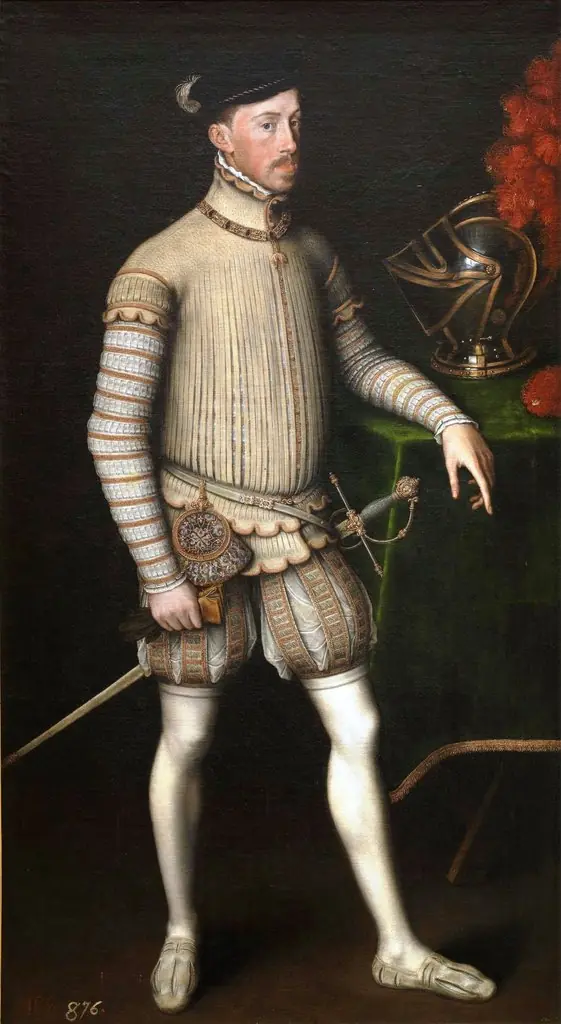 Emperor Maximilian II
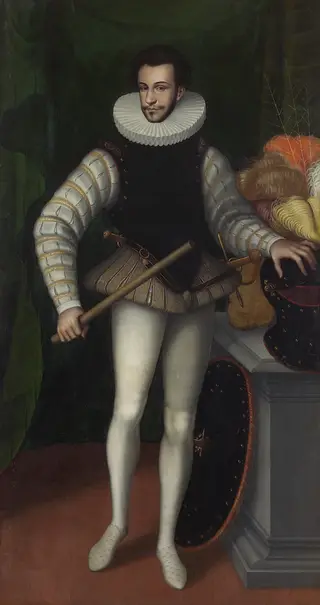 Herzog Francois von Alencon und Anjou (1555-1584)
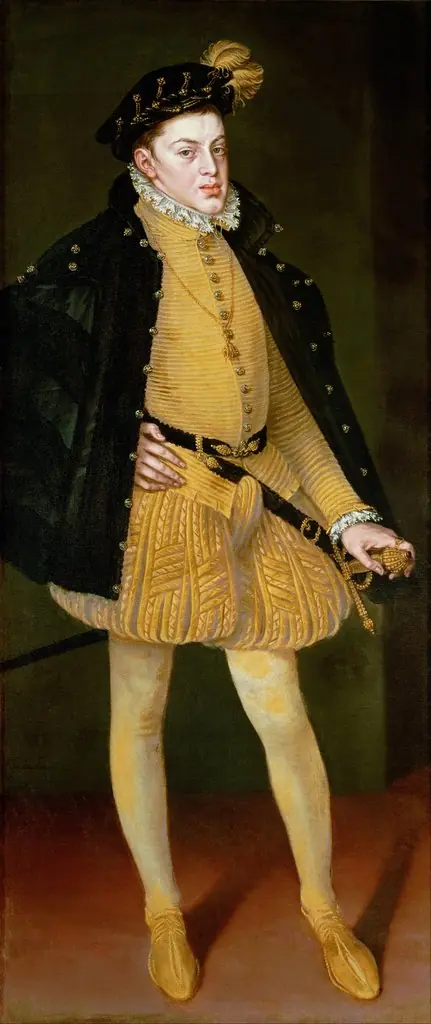 Infante Don Carlos (1545-1568)
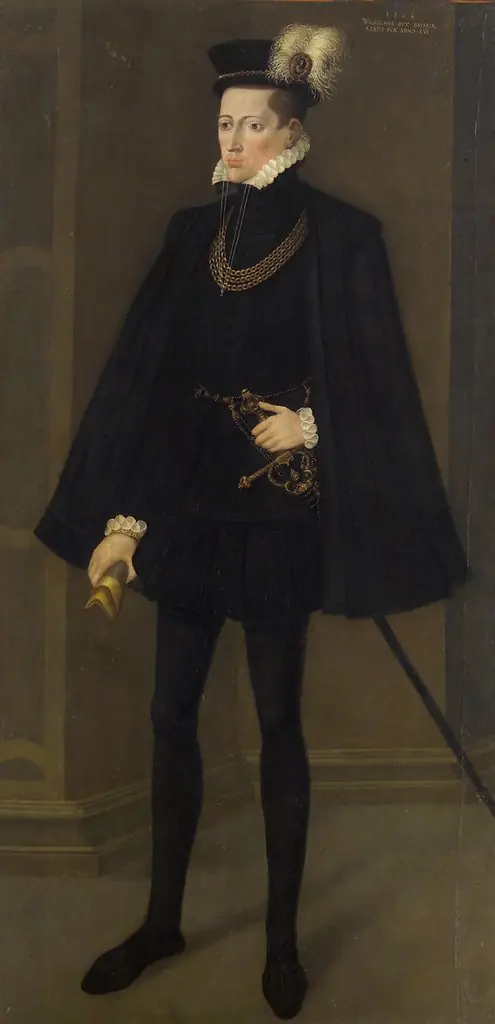 Herzog Wilhelm V. (1548-1626) von Bayern im Alter von 16 Jahren
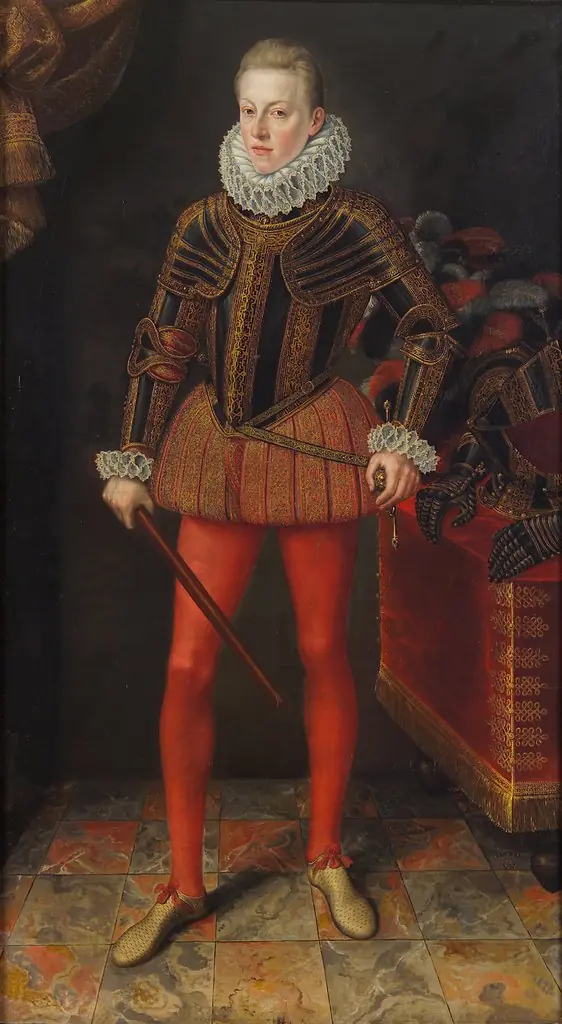 Portrait of Matthias II of Habsburg (1557-1619), the future Holy Roman Emperor
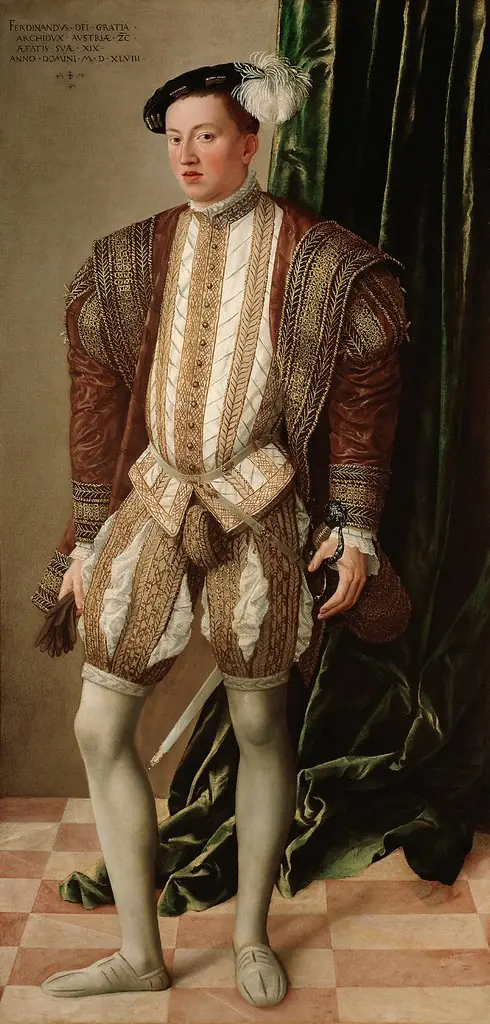 Erzherzog Ferdinand von Tirol (1529-1595)
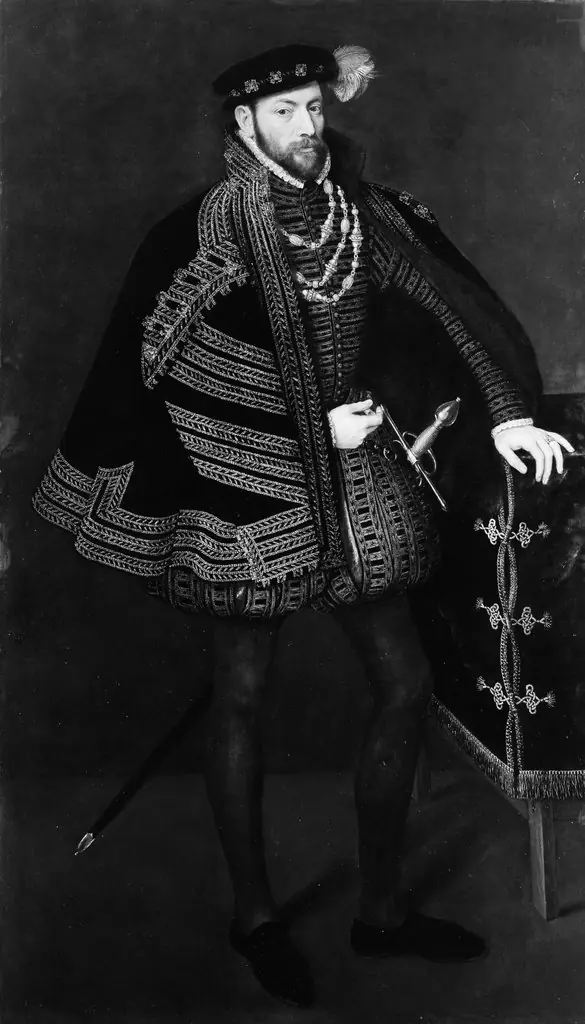 Portrait of a Man, Possibly Ottavio Farnese (1524–1586), Duke of Parma and Piacenza
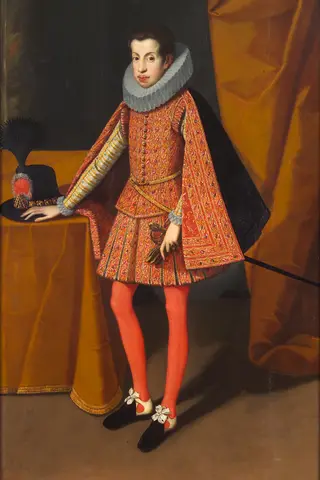 Kaiser Ferdinand III. (1608-1657)
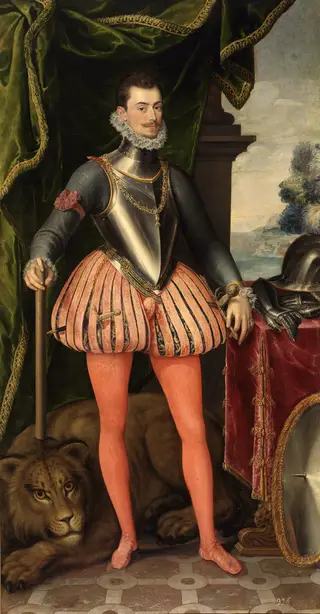 Don Juan de Austria
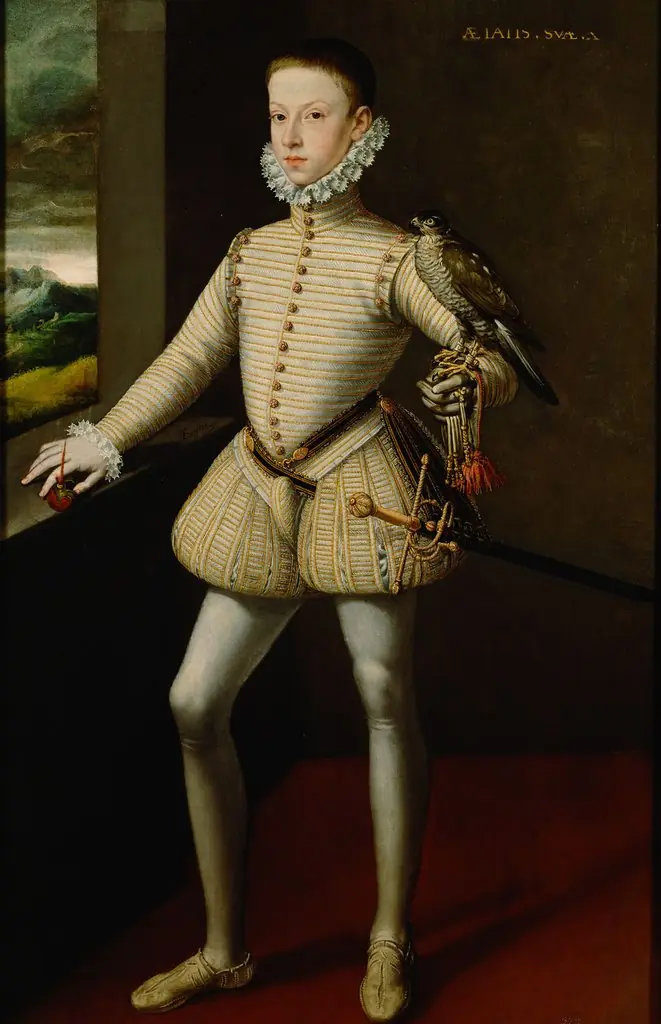 Archduke Wenceslaus of Austria (1561-1578)
 Portrait of Marquess Massimiliano Stampa
- A Nobleman of the Valois Court